Money flowing to the U.S. Treasury from a source other than taxpayers may seem like a benefit. Yet any company required to give away 15% of its gross revenue, which could equal its entire profit, has to compensate in some way.
The U.S. dollar has experienced a notable decline in value this year relative to a broad basket of foreign currencies. This depreciation has meaningfully affected the investment returns of U.S. based investors holdings in international stocks and bonds.
The largest company in the world, with a market capitalization of about $4.4 trillion, reports Q2 results today, after the market close.
Today is the day that analysts and investors have been waiting for the entire earnings season—earnings and updated Q3 guidance from NVIDIA Corp. (NVDA).
A federal appeals court ordered a review of US Securities and Exchange Commission rules that required investors to reveal far more about short selling and related stock lending.
he safety record of zeppelins was relatively unimpeachable prior to the Hindenburg, and that’s why the deadly disaster so shocked the public and devastated the rigid airship industry.
Fund managers say returns on emerging-market assets are set to power ahead of their developed peers, having moved in lockstep since US President Donald Trump unleashed his tariff blitz in April.
Boeing Co. resumed talks on Monday with union leaders to end a strike that most investors aren’t paying much attention to.
It's never a great sign when a central bank governor says his country's predicament is a “pretty sad story.” That's how Bank of England Governor Andrew Bailey described the UK at the Federal Reserve symposium in Jackson Hole, Wyoming, last week.
Finding attractively valued stocks that can overcome evolving conditions requires a new mindset.
International stocks have outperformed the broad U.S. stock market so far this year. If the U.S. dollar continues to weaken, it could boost international returns even more.
Nick Goetze discusses fixed income market conditions and offers insight for bond investors.
China’s economy has propagated itself through branches like trade, finance and infrastructure. But supply chains are where its roots have thickened into trunks, particularly across Southeast Asia.
As central bankers, economists, and policymakers gathered last weekend in Wyoming’s Grand Teton National Park for the 2025 Jackson Hole Economic Symposium, the Federal Reserve (Fed) found itself at a critical juncture marked by political pressures, personnel changes, and internal divisions over monetary policy direction.
When you show someone the mirror, you’re not just helping them see their problem. You’re helping them see themselves. You’re also giving them the gift of clarity, without adding to their pain. That’s what builds trust.
Market volatility can feel like an emotional yo-yo: sudden drops, sharp rebounds, and the unsettling feeling of not knowing what’s next. Feeling anxious, unsettled, or even tempted to take swift action to protect your investments is natural. But often, the best move is the one you don’t make.
Advisors can learn to grow organically, but not by just being told they need to do it and being given goals to get there. They need support and help, and once they get it, they often enjoy the process and are self-motivated to keep going.
Once a year, ideally in Q4, step back and look at the big picture of your marketing. Use this time to reflect on what worked over the past year, what didn’t, and what you want to start, stop, or continue.
“Buy Every Dip” has lately been the “Siren’s Song” for this market. Such is seen in the flows into ETFs over the course of this year. Retail investors treat pullbacks as temporary noise, and their behavior borders on mechanical. Every sell-off is seen as an opportunity, not a warning.
Travis Spence, Global Head of ETFs at J.P. Morgan Asset Management, walks through the firm’s expanding ETF lineup and shares his take on today’s markets. Jillian DelSignore, Head of Retail and Wealth Distribution Strategy at Nasdaq Indexes, highlights some of the hottest industry trends and offers insight into the evolving world of ETF distribution.
Amid the push to reshore, the United States faces a clear challenge when it comes to labor. Even though manufacturing has been contracting (PMI below 50 for more than two years), the U.S. still has 380,000 unfilled manufacturing jobs.
While the majority of the capital markets are anticipating rate cuts, certain economic data continues to run counter to the forecast. That’s why in times of persistent inflation, getting commodities exposure can be beneficial.
The shift away from pure robo models does not reflect a rejection of digital tools. Instead, the industry is increasingly embracing hybrid frameworks — combining automated portfolio construction with human advisory support.
Most FAs I see work long hours but spend less than two hours a week attempting to grow their business. One of the first things I do when coaching them is to learn five things.
Today we look like geniuses, but there will be times when, by making rational and unpopular decisions, we’ll look like idiots. There are few guarantees I can give in this business, but this is one of them.
A group of multi-billion dollar businesses could help stage a comeback for Europe’s market for initial public offerings this fall, compensating for the region’s slowest first half in more than a decade.
US orders for business equipment increased in July by more than projected, suggesting companies are moving forward on investment plans as some of the trade and tax policy uncertainty gradually diminishes.
Apple Inc.’s stock is showing signs of life after struggling through most of 2025, as the tariff-related risks that have weighed on the company start to ease.
China is in the midst a stock boom. The blue-chip CSI 300 Index is up 9% so far this month, while the tech-heavy ChiNext Index has soared 18%, leaving the S&P 500 in the dust.
If I told you Argentina is the world’s hottest new market for copper, you might be likely either to scratch your head or just laugh.
Last Friday, Jerome Powell gave the Fed Chief’s annual speech at the Kansas City Fed’s 2025 meeting in Jackson Hole, WY.
Nvidia, the biggest AI-chip firm, reports Wednesday. Watchlist items include the pathway toward resuming H20 chip sales in China, revenue guidance, and Blackwell growth.
Don’t Worry, Be Happy! Heading into summer, markets faced a wave of uncertainty—from shifting tariffs and debt ceiling debates to questions around the fate of the ‘Big, Beautiful Bill.’
Chair Powell’s speech at Jackson Hole was a proper and long overdue pivot—and the markets immediately rejoiced. This was the dovish signal investors had been hoping for, and even stronger than I expected Powell to deliver.
For nearly two decades, U.S. electricity demand was flat. Between 2005 and 2020, consumption barely budged, thanks to efficiency gains in appliances and slower economic growth. Utilities planned for more of the same.
The Federal Reserve notes the balance of risks to the U.S. economy may warrant a shift in policy stance – in other words, a rate cut.
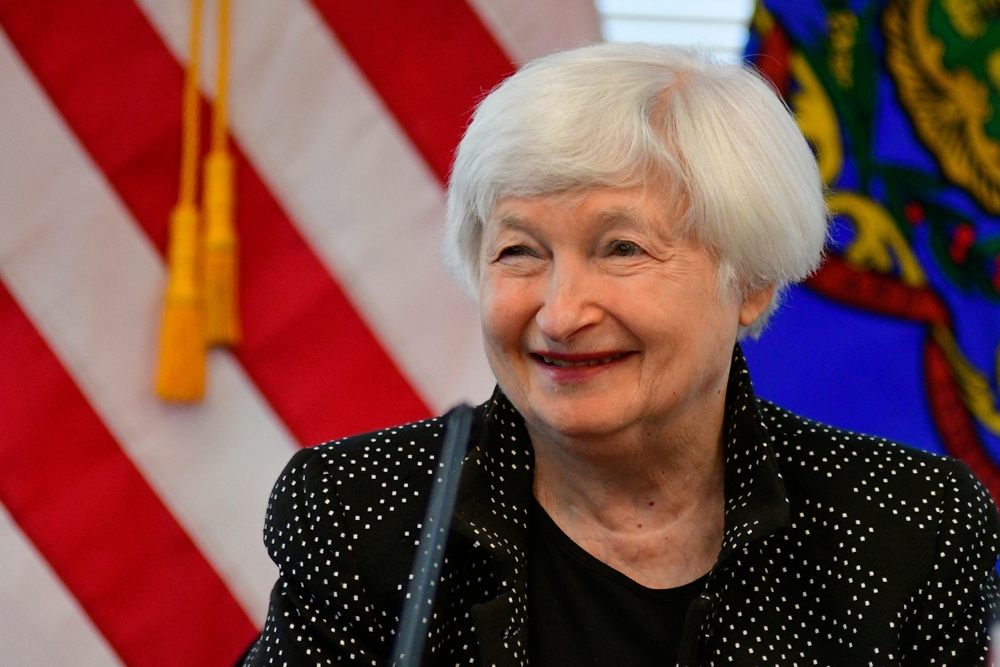
Few have accomplished as much as Janet Yellen during the course of their careers. She broke two significant glass ceilings, becoming the first woman to serve as the Chairman of the Federal Reserve and as U.S. Treasury secretary.
Last week, a tech rout that began on Tuesday led to notable declines in the Nasdaq Composite (-2.5%) and S&P 500 (-1.2%) by market close on Thursday, with the Dow Jones Industrial Average roughly flat. Investors engaged in profit-taking, amidst concerns about the high valuations of many technology companies.
The tariff recession is cancelled, but with the Fed strangling rates, we are nowhere near the boom Trump wants.
Are there enough options among foreign equities ETFs? Plenty of funds exist, but some regions and markets may lack options.
As financial planning becomes more digital, more automated, and more standardized, this human layer becomes even more critical. The ability to connect, to coach, and to support emotionally charged decisions will remain one of the most valuable skills an advisor can offer.
On this episode of the ETF of the Week podcast, VettaFi’s head of research Todd Rosenbluth discussed the NEOS Bitcoin High Income ETF (BTCI) with Chuck Jaffe of Money Life. The pair discussed several topics related to the fund to give investors a deeper understanding of the ETF overall.
The latest economic data suggests the US economy is decelerating. That means growth is slowing, jobs are shrinking, and households are spending less.
The Federal Reserve’s annual gathering in the Rocky Mountains is usually a time for central bankers and their wonky friends to kick back, discuss a few complicated economic topics and then go for a hike in the shadow of Grand Teton.
An avalanche of cheap Chinese stuff is landing on doorsteps across Latin America. Bargain-hungry consumers are giddy, local retailers are getting pummeled and customs agencies are swamped.
For years software companies were the toast of Wall Street. High profit margins, low capital requirements and vast runway for growth prompted the venture capitalist Marc Andreessen in 2011 to famously declare “software is eating the world.”
The difference in wealth and income between the top 1% and the rest of America tends to get more attention, but one of the more striking wealth gaps is generational: Older Americans are far richer than young Americans.
Our economic-number friends are behaving badly, leaving us unsure where to turn. Maybe in time we will see who was right and wrong. This week we’ll look at some of the data and then at the wide array of diverse opinions from my favorite sources.
At the risk of assaulting an already deceased equine, happy talk about decreased spending in retirement strikes us as the whistling-past-the-graveyard rationalization of those who fear they haven’t saved enough. In plain English, the average retiree spends less than while working because they have to, not because they want to. Advisors and prospective retirees should take care not to confuse the two.
Different clients may prefer different ways to invest in bonds. This article isn’t about identifying which fixed income vehicle offers the highest yield or lowest fee. It’s about matching strategies to real-world investor behavior.