Looking back over the past 20 years, airline equities have tended to outperform in the final three months of the year, with the NYSE Arca Global Airlines Index gaining over 3% on average in October; this is followed by an even stronger showing in November and a 3% increase in December on average.
Emerging-market currencies and stocks rose as expectations of an imminent US monetary policy easing pushed the dollar lower and strengthened investor appetite for riskier assets.
Over the past twenty years, in spite of incredible new technologies, US real GDP growth has averaged just 2.0% at an annual rate. By contrast, in the twenty years prior to the most recent twenty – from the mid-1980s thru the mid-2000s – real GDP grew at a 3.2% annual rate.
Bond investors may need to look elsewhere to supplant income lost from falling yields — they may want to try heading overseas. It's not just a weaker dollar that's been diverting attention to international bonds, but U.S. debt itself.
On this episode of the “ETF of the Week” podcast, VettaFi’s Head of Research, Todd Rosenbluth, discusses the JPMorgan U.S. Tech Leaders ETF (JTEK) with Chuck Jaffe of Money Life. The pair discusses several topics related to the fund to give investors a deeper understanding of the ETF.
A market-wide boom of private equity investment is turning small, local residential service providers into big business. From the outside, it's been easy to miss.
I am a retail advisor and an investment writer, and I have built and managed public funds. Therefore, I see this from multiple angles. But the only angle that matters is that of the retail investor. Let’s evaluate private markets based on liquidity, returns, transparency, and measurement standards.
The Federal Reserve may cut rates a couple of times by year-end, but the pace and magnitude of easing in 2026 is unclear. There are still some roadblocks to lower bond yields.
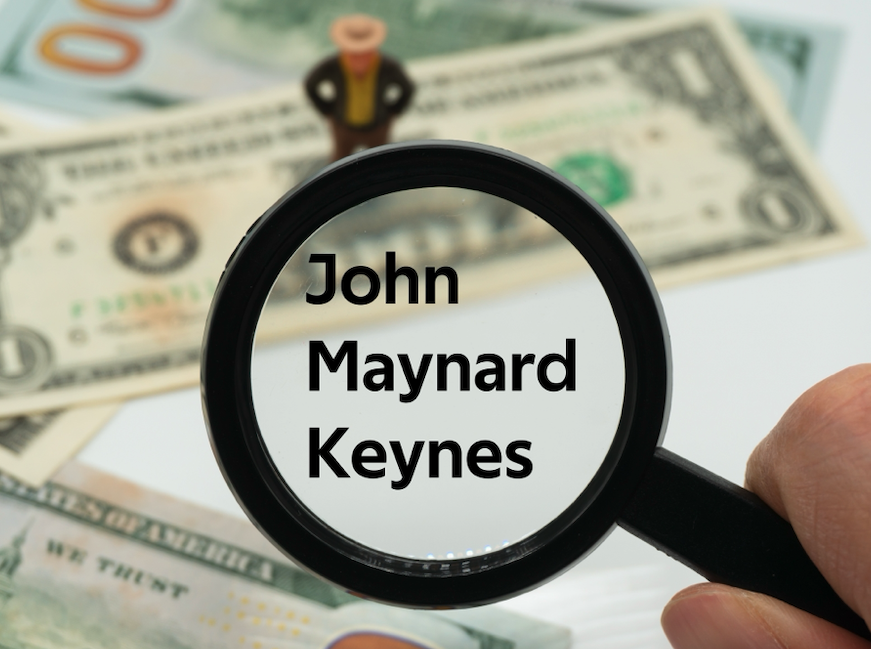
The failures aren’t isolated miscalculations but the predictable result of a flawed framework that policymakers have clung to for decades. Keynesian economics didn’t just “get it wrong” in 2025, but has repeatedly failed to deliver on its promises for over forty years. And the consequences are becoming impossible to ignore.
Based on valuations, there's no denying we're in a bubble. That's noteworthy by itself, but it doesn’t tell us what will happen next. I will explain why selling now might not be the best move.
The U.S. labor market continued to show signs of cooling, with all major labor indicators pointing to a softening trend and a weak hiring environment.
Is President Trump correct in his assertion that interest rates need to come down? Let’s look at the 99-year history of capital market returns spanning 1926–2024 as our
Ever since the birth of Bitcoin in 2009, China has tightened the screws on cryptocurrencies with unfailing regularity: once every four years, in fact. In the coming months, however, the People’s Republic could signal a change in its stance, and the world of money will have to take notice.
Treasuries edged higher, extending Friday’s gains, as investors shifted their focus to key readings on inflation due later this week.
Investors expecting Apple Inc.’s biggest product event of the year to serve as the next catalyst for its recently-revived stock are likely to come away disappointed.
BlackRock Inc. is exploring ways to attract more capital to emerging markets, where efforts to finance the transition to a low-carbon economy have so far been slowed by perceptions of risk.
Cryptocurrency asset manager CoinShares International Ltd. has agreed to go public in the US through a combination with blank-check company Vine Hill Capital Investment Corp.
The average household feels inflation as rising living costs, of which shelter is usually the largest. This will be today’s primary topic. What is going on with housing costs, and is there any hope for relief?
Discover how the One Big Beautiful Bill Act (OBBBA) may impact the municipal bond market, and find out which institutions are better positioned to overcome the sweeping policy reforms.
Higher gold prices have put a damper on central bank gold buying, but the World Gold Council still categorized August purchases as “firm.”
Franklin Templeton Emerging Markets Equity discusses recent developments in emerging markets, specifically examining the impact of tariffs on Indian exports, the resurgence of Chinese equities and potential US Federal Reserve interest-rate cuts that could benefit emerging markets.
Advisors and investors find themselves inundated with decisions and choices when investing in the crypto economy. Between deciding what cryptocurrency to invest in (bitcoin, ether, tether, solana, etc.) and how to gain exposure (direct exposure, indirect exposure, via an ETF), fitting crypto into a portfolio can be a complicated affair.
August brought with it a slowing in ETF launches from the summer spree, while inflows continued as investors increasingly bought into bonds.
With an interest rate cut looming this month, investors may be looking at their available options. For many, their passive bond funds have done well, but may not be well-positioned for one or potentially multiple cuts.
Packing for a child heading off to college? Don’t forget the legal documents.
Investors betting that a torrid rally in gold miners has room to run face a test of their conviction as the US government gets set to deliver jobs data from August.
Independent central banks are a relatively recent concept.
If you want a glimpse of a changing global order, go to Singapore. That’s what I did last month, when I served as the S. Rajaratnam Professor of Strategic Studies at the Rajaratnam School of International Studies and met extensively with leading thinkers and government officials.
Is China’s artificial intelligence sector finally taking the plunge and shifting away from Nvidia Corp. in favor of homegrown chips?
Much of the data we see today indicates the economy is fine. Stocks continue making new highs. Consumer spending is shattering records. Unemployment rates remain low. Yet a single anecdote can dispel the illusion that everything is truly fine for the average American.
Unlike Donald Trump, Chinese President Xi Jinping is not known for caring about stock-market returns.
The Dutch have long been famous — at least to pension nerds like me — for their retirement system, which is well-funded and well-managed. Now that reputation is in jeopardy: As it turns out, providing generous, guaranteed pensi
Goldman Sachs Group Inc. is making one of the biggest pushes into Middle Eastern private credit yet, betting that a growing need for non-bank lending in the region will open the door for a slew of deals for its clients.
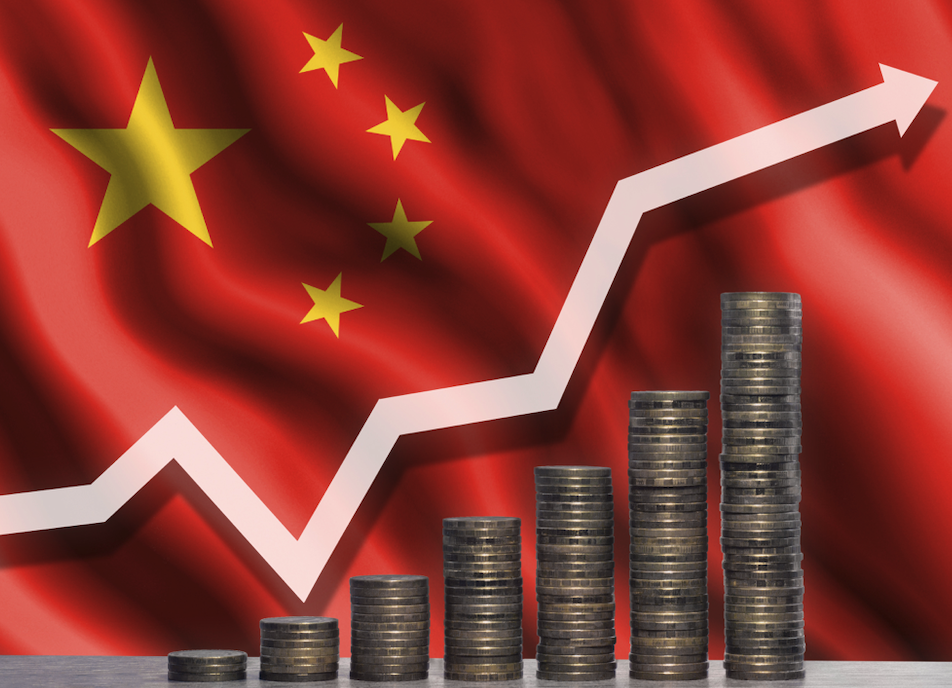
Count stocks from China among this year’s international standouts. Widely observed gauges of equities in the world’s second-largest economy are outpacing both the S&P 500 and the MSCI Emerging Markets Index by comfortable margins since the start of this year.
To paraphrase Churchill, financial markets are a “long, dismal catalogue of the fruitlessness of experience and the confirmed unteachability of mankind.” But we hope you had a wonderful summer.
Advisors have looked to international markets for much of this year for a crucial source of diversification amid U.S. uncertainty.
The AI adoption case is gaining momentum across an array of industries. A trend that largely started in the financial services and healthcare sectors is spreading rapidly to other realms.
From a revenue perspective, we were also encouraged by sales coming in +2.1% higher than analysts expected, with all 11 sectors showing positive revenue surprises. This also allays our fears that tariff impact might be worse than the analyst community feared.
Alphabet Inc. shares are suddenly unshackled after a long-awaited antitrust ruling removed a key risk that’s weighed on the stock for months.
Cantor Fitzgerald LP is planning to hire dozens of bankers in the Middle East in the coming years after the Wall Street firm appointed a veteran EFG Hermes rainmaker to lead its business in the region.
In this video, Chuck Carnevale, co-founder of FAST Graphs (“Mr. Valuation”), examines five managed healthcare stocks (companies) to assess whether they have recovered from recent industry challenges or remain “sick.” The companies analyzed are UnitedHealth Group (UNH), Elevance Health (ELV), Humana (HUM), Centene (CNC), and Molina Healthcare (MOH).
Apple Inc. is planning to launch its own artificial intelligence-powered web search tool next year, stepping up competition with OpenAI and Perplexity AI Inc.
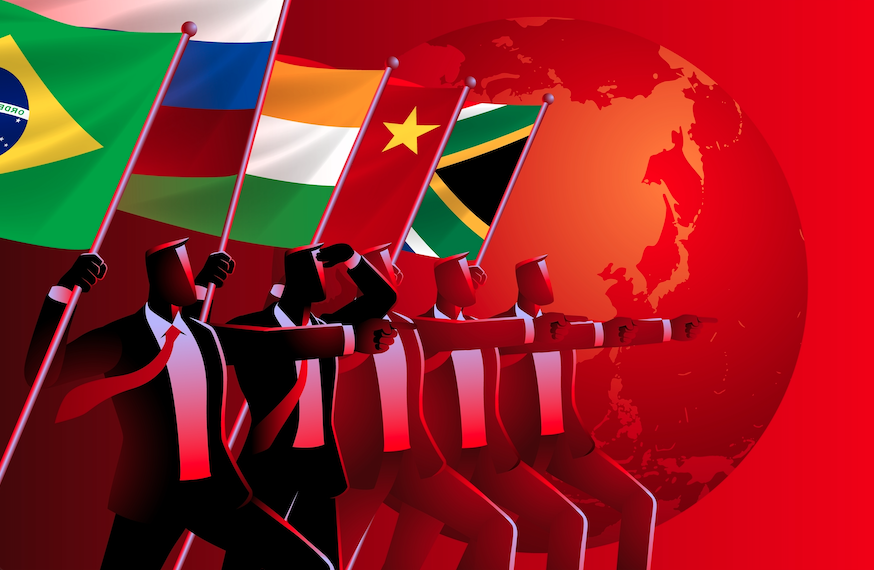
As emerging markets navigate deglobalization, tariffs and regional conflicts, they are pivoting toward domestic drivers of growth and intra-regional trade
Whether you’re building your portfolio, trying to diversify or considering new investments, understanding the difference between active and passive funds is extremely helpful. Both mutual funds and exchange-traded funds (ETFs) can be either active or passive.
When equity markets rise to record highs, it’s natural for investors to feel a twinge of anxiety about putting more money into stocks. The fear of an impending correction often looms large.
The house of pain continues with small caps, at least on a relative basis. Year-to-date, the S&P 600 index has posted a 3.0% gain, so it's not like money is being burned. But still, even the Bloomberg Aggregate Bond index is up 4.9% YTD and the S&P 500 is up 10.9%.
Late last Friday, the Court of Appeals for the Federal Circuit (CAFC) largely affirmed the Court of International Trade’s (CIT) May ruling blocking President Trump’s tariffs imposed under the International Economic Emergency Powers Act (IEEPA).
This past week, we saw a sweeping change in U.S. trade policy come into effect with the termination of the long-standing “de minimis” exemption on small, imported parcels.
Something close to the best-case scenario emerged for Google on Tuesday when a federal judge outlined its punishments for running an illegal search monopoly. The company will not be forced to sell its Chrome browser or Android operating system.
The U.S. stock market continues to trade near all-time highs, with performance again concentrated in a handful of the largest, predominantly tech-oriented companies in the S&P 500 Index. Meanwhile, active managers are continuing to underperform.