AllianceBernstein

What Are Investors Really Getting from Private Markets?

Private markets have become integral to modern portfolios, with many investors searching for higher returns and diversification, including from public markets. But recent fund redemptions have reinforced that illiquidity isn’t theoretical, raising questions about the benefits of giving up liquidity. We see several—but investors must understand the trade-offs.
How Investors Can Navigate the Maze

Artificial intelligence (AI) poses many ethical issues that may translate into risks for consumers, companies and investors. AI regulation, which is developing unevenly across jurisdictions, adds to the uncertainty. The key for investors, in our view, is to focus on transparency and explainability.
Allocate with Intent: Active Equity Strategies for Changing Markets

Equity investors are facing monumental questions about their allocation strategies in a new market regime. Market concentration has risen sharply, valuations have climbed to record highs in parts of the market and factor volatility has dominated returns.
Three Reasons to Stick with Growth Stocks in Rotating Markets

US growth stocks underperformed in early 2026 amid AI disruption fears and an unresolved conflict in the Middle East. But these stresses could create favorable conditions for selective, diversified investors to unlock long-term growth potential in a rotating market.
How to Recognize Alpha Potential in Active Equity Portfolios

Chasing performance by deviating from a benchmark has long been the hallmark of active managers. But it may be time for a rethink. Our research suggests that investors allocating to core equities should consider refreshing the criteria they use to identify portfolio managers that can consistently beat their benchmarks.
NAV Loans: Flexibility for Private Equity When Holding Periods Extend

For private equity firms, capital flexibility is prized today. Merger-and-acquisition (M&A) activity has cooled, while commodity prices and artificial intelligence (AI)-driven disruption have heated up, creating uncertainty for investors. This makes it more challenging to sell portfolio companies, so private equity firms are holding investments longer. As a result, many firms are turning to net asset value (NAV) loans for capital needs.
Renewable Energy Could Define Winners and Losers in Emerging Markets

Emerging markets (EM) are using low-cost renewables to cut fuel imports, stabilize power costs and improve energy security—positioning EM as the growth engine of the energy transition. Countries and companies that leverage their dominance in critical minerals and green technology could pull ahead, creating dispersion in potential outcomes for investors.
Equity Market Rotation Reveals a Wider World of Return Potential

It’s human nature to allow familiar patterns to guide our decision-making processes. But it’s just as important to recognize when changing conditions warrant a rethink. Return patterns in global equity markets appear to be shifting in ways that should prompt investors to revisit their allocations.
Five Timely Opportunities in Today’s High-Yield Market

With tensions simmering in the Middle East and the global economy feeling the pinch of high energy prices, high-yield bonds might not be on every investor’s radar. In our view, they should be.
Can Value Stocks Offer Resilience to AI Disruption?

High-growth technology stocks still dominate the investment landscape, fueled by the promise of AI. But recent signs of a broadening market are revealing that more industries beyond just tech are positioned to benefit. We think large-cap value stocks are well-poised for this shift, especially since AI can be both a disruptive and driving force in today’s dynamic market.
The Next Frontier for AI Disruption?

Artificial intelligence (AI) leadership is no longer a developed-market monopoly. Emerging markets (EM) now have their own AI champions, and productivity gains may follow. For bond investors, we expect the implications to differ by country—driven by industry composition, capital intensity, digital infrastructure and speed to adoption.
Iran War Fallout: The Real Market Risks Aren’t Just Oil

With the war in Iran dragging past the original ceasefire deadline, how might the situation impact global energy markets—and other sectors—from here? To cut through the noise, we asked Luke Pryor, Security of the Future Portfolio Manager and Co-Portfolio Manager of Strategic Equities, to share his oil and gas industry expertise.
Medical Technology Stocks: Innovation Endures as Valuations Reset

Investors are questioning the staying power of medical technology (medtech) stocks, which have fallen from grace since the COVID-19 pandemic. Yet we think innovation continues to create exciting opportunities in companies that march to a different beat than the rest of the healthcare sector.
Carbon Emissions Compliance May Redefine Corporate Strength

The European Union (EU), pursuing ambitious decarbonization goals, is significantly recalibrating its emissions compliance regime with the Carbon Border Adjustment Mechanism (CBAM). This new border tax intends to promote fair competition amid varying emissions rules and costs. Our research suggests it could also offer insight into profitability as the rising costs to meet carbon limits weigh on corporate financial health, creating winners and losers.

Commercial Real Estate: It’s More Diverse Than You Think

Investors often view commercial real estate (CRE) through the narrow lens of the office sector. We think this office-only focus understates how broad the asset class is and its potential. Offices may face well-documented headwinds, but many other CRE segments appear more resilient.
How Bond Optimizers Can Work More Optimally—and Why It Matters

Technology is transforming bond investing, across research, trading and—through optimizers—portfolio construction. We believe optimizers based on advanced digital investment platforms have a major advantage—and can create new levels of insight for portfolio managers that have them.
Tax-Loss Harvesting with Bonds vs. Stocks: Different Rules, Same Goal

Tax management is about more than just deferring taxes to reduce this year’s bite. It’s also about managing where and how taxes show up over time. For high-net-worth investors with diversified portfolios, permanently reducing taxes versus deferring them may bolster long-term after-tax wealth. Many investors overlook a potent tax reduction tool: bonds.
How Equity Income Can Cushion Inflation and Create Durable Returns

Dividend-paying stocks offer an effective hedge against inflation—as well as solid long-term return potential in other environments when actively sourced from the right parts of the market.
AI’s Hidden Cost: Why Water Risk Belongs on Every Investor’s Radar

AI’s rapid growth is driving demand not only for electricity but also for the clean water needed to run its physical infrastructure. As data centers expand, rising water intensity is straining supplies and testing long-term sustainability. In our analysis, these pressures create both risks and opportunities for active investors.
Middle East War, Energy Shock Test Fragile Markets

Global equities declined during a volatile first quarter as the war in Iran roiled energy markets and fueled inflation fears that destabilized the economic growth outlook. Mounting geopolitical hazards add to existing worries around concentrated equity markets and the potential for AI to disrupt businesses.
From Oil Shock to Oil Spillover?

Oil prices are the key transmission channel, and how far they rise and how long they remain elevated could shape the outlook for growth, inflation and policy, with implications for bond markets.
A New Dawn for Non-US Stocks? Rethinking Equity Allocations
Join us on Wednesday, April 1 at 11:30 a.m. CT where we will look further into this differentiated way of investing outside the US.
Bridging the Sustainability Funding Gap

The United Nations (UN) warns of a roughly US$4 trillion annual shortfall in financing for its sustainable development goals—a gap too large for the public sector to fill alone.
A Brief History of Volatility and Recovery

Emerging-market (EM) equities have been hit hard since the Iran war began, as investors worry about fallout from the conflict. Yet, history suggests that periods of heightened market stress—when volatility is elevated and uncertainty is still being priced—have created favorable entry points for EM investors in the past.
Three Reasons Why It Pays to Be Active as a Muni Investor

In today’s era of automation, some situations demand a more active approach. Municipal bond investing is one.
Want Lasting Multi-Asset Income? Consider Expanding Sources

The multi-asset playing field presents income investors with broad opportunities across asset classes. But investors that rely only on traditional stock dividends and bond interest may be missing out on other attractive income sources.
Finally Coming Into View? ‘Old-Economy’ Stocks Show Their Colors

The artificial intelligence (AI) trade that has dominated equity markets in recent years is showing signs of fragility. As investors reexamine the scale of the AI infrastructure build-out and optimistic assumptions around AI adoption, a group of “old-economy” sectors is quietly reasserting itself.
In Private Credit, Illiquidity Is a Feature, Not a Flaw

Private credit is a key pillar of debt capital formation alongside public credit markets and bank balance sheets. But an important part of its value proposition—to borrowers and end investors—is its illiquidity relative to public markets. That distinction is by design, and we think it should stay that way.

Staying Grounded: Reducing AI Hallucinations

Five techniques can help human experts tame hallucinations and make models more effective.
Maintain a Growth Equity Engine in a Multi-Asset Income Strategy

A healthy mix of income and growth potential may yield a more effective equity allocation.
What Middle East Conflict Could Mean for the Global Economy

The size and duration of the oil-price shock are key variables in determining the ultimate impact.
Software’s Big Sell-Off: Structural Risk or Narrative Noise?

Software stocks have suffered a rude awakening amid fears that artificial intelligence (AI) will upend the industry. While the outlook is highly uncertain, the indiscriminate market response may be conflating structurally exposed software businesses with more durable companies.
Boosting After-Tax Returns: An “All of the Above” Effort

Improving after tax returns is rarely as simple as boosting pretax returns or reducing tax expenses. It’s actually quite a bit more involved than that. As we see it, maximizing after-tax performance requires an “all of the above” approach, applying a range of techniques in a holistic way.
Small-Cap Stocks Are Stirring on Policy Shifts, Earnings Edge

After years of trailing their large-cap peers, small-cap stocks have tested the patience of even seasoned investors. But we believe a dramatic improvement in earnings growth driven by lasting change in the US economy is creating sustainable recovery potential for small companies of all types.
SFVegas 2026: What Happened Doesn’t Have to Stay in Vegas

As industry experts convened at SFVegas 2026, the world’s largest structured-finance conference, insurers showed up in large numbers, underscoring growing exposure to securitized assets and private credit in portfolios. We also attended the event and returned with a few key takeaways.
Emerging Market Engines Shift Into High Gear for Equity Investors

After underperforming for much of the last decade, emerging-market (EM) equities rebounded nicely in 2025. Is it too late to invest? We don’t think so. With valuations still attractive and earnings growth forecasts looking up, this could be the right time to give the developing world a closer look.
Spotlight Turns to Governance in Transition Year

The agenda is being reset for US shareholder meetings in 2026. Regulatory shifts have led to a steep decline in overall shareholder proposals while governance issues are becoming the biggest battleground.
A Broader Toolkit for Defense in Multi-Asset Income

The playing field presents broad opportunities for income investors today, with income and growth potential across asset classes. But an effective defense is also critical in capturing that potential. When it comes to the tools of the trade, we think broader is better.
Energy Demand Overpowers Policy Shifts

The global energy transition is accelerating, and 2026 is shaping up to be an active year for renewable energy development. As we see it, private credit’s central role in financing the power build-out and its ability to structure flexible solutions for borrowers is likely to generate attractive return opportunities for investors.
Why Today’s Environment Favors Mortgage-Backed Securities

It can sometimes be hard to tell whether the US housing market is hot or cold. Currently, existing-home inventory is tight and prices are stable—indicators of a hot market—while sales volume is down and home price appreciation has slowed. So, what’s the temperature?
Emerging-Market Corporates: Renowned for Resilience

Emerging-market (EM) corporates have a track record of resilience across market cycles. For over a decade, EM corporate bonds have allowed for participation in rising markets, while exposing investors to less downside during market downdrafts.
Private Credit: What It Is and Where It Fits

Private credit has been in the news lately. That’s nothing new. For years, investors have read about the potential opportunities the asset class offers and how it works. Let’s dig a little deeper into what private credit is, what it isn’t and how it can fit into a diversified investment portfolio.
Harnessing Yield—and Growth—in Multi-Asset Income

Income investors face a promising landscape today. But we think income investing should be more than simply combining the highest yielders in each asset class, which could create unintended risks. In our view, an efficient multi-asset approach can help find the right balance between income, growth and diversification.
Pathways to Private Asset Exposure in DC Plans

Private assets are gaining traction in many portfolios, as investors seek new frontiers given a more challenging market landscape. Returns of traditional asset classes in the years ahead are likely to be lower on an inflation-adjusted basis, and public markets offer fewer options for diversification today, at a time when managing risk is becoming increasingly important.
Sizing Up the Federal Reserve Chair in Waiting

As the economy struggled in the wake of the crisis, Warsh was primarily concerned about the risk of inflation—even as unemployment pushed near 10%—and indeed, over the next decade the primary policy concern turned out to be inflation consistently running below target.
How Tomorrow's Natural Disasters Can Inform Today's Investment Decisions

New research connects intensifying natural perils to their future implications for asset classes.
A Closer Look: How Insurance CIOs See the World

Despite an aging credit cycle, private credit still plays a starring role.
Four Pillars for a Robust AI Strategy

Even though it’s still early days in the age of artificial intelligence (AI), it sometimes feels like this innovation has been around forever. In that short time, the pace of change has been staggering.
Why Market Timing Feels Right—and Often Goes Wrong

Stock market volatility has a way of triggering powerful emotions. Rising prices foster confidence. But when markets fall, fear can take over, leading investors to make decisions that may undermine long-term returns.
A New Dawn for Non-US Stocks? Rethinking Global Equity Allocations

The US is coming off a period of remarkable equity-market dominance. Over 11 of the past 15 years, US equities outpaced their non-US peers—sometimes by sizeable margins. But last year, the pattern reversed dramatically.
Stalemate? The US Dollar Caught in a Tug of War

Former Federal Open Market Committee Chairman Alan Greenspan famously observed that forecasting foreign exchange was like flipping a coin. Last year proved him right. What happened, and what lessons can it teach us about the dollar in 2026?
A Case Study in Assessing Portfolio Biodiversity Risk

The importance of biodiversity as a nature-related risk in investors’ portfolios has become better understood in the past few years. Investors are beginning to appreciate how complex and nuanced biodiversity risk can be.
Are Healthcare Stocks Poised to Recover as Policy Fears Stabilize?

Healthcare stocks were rattled by US policy uncertainty in 2025. But signs of resilience have surfaced as the sector reaffirms its defensive strengths and growth potential, sparking a shift in investor sentiment.
Taming the Hidden Hazard to Core Equity Returns

When investors think about risk in equity portfolios, the usual suspects come to mind: market risk, sector risk or maybe even macroeconomic risk. But lurking beneath the surface is a less obvious, often underestimated threat—style and factor risk.
Why Mortgage Loans Fit Insurance Balance Sheets

Residential mortgage loans offer insurers a combination of yield, diversification, capital efficiency and liquidity that we think is difficult to replicate elsewhere in private credit. In a market shaped by structural housing undersupply, strong borrower credit and expanding non-agency issuance, we believe residential mortgages present a timely and scalable opportunity.
What Makes DC Plan Participants Tick?

Most DC plan participants share the same goal of a comfortable retirement. It’s the journey that differs and much depends on personal investment knowledge, risk comfort level and other qualities, according to the latest research by AllianceBernstein (AB).
Where the Rubber Meets Return: The ESG Factors That Matter

The materiality of ESG factors differs across sectors and markets. Investors need to understand how.
Lifetime Income May Unlock a More Fulfilling Retirement

Retirement planning often focuses on risks: not saving enough or outliving hard-earned savings, enduring a sharp market downturn and possible surprise expenses. While these pitfalls are very real, it’s understandable that they may make individuals hesitant to spend their savings in retirement.
Why Factor Selection Is Vital in Systematic Fixed Income

Well-known factors such as value and momentum are widely recognized to have predictive power. Advanced systematic approaches, however, seek to identify additional drivers of performance—including proprietary factors—to integrate into their multifactor models.
Multi-Asset 2026 Outlook: Navigating Key Controversies

In a turbulent 2025 dominated by US trade policy shocks and geopolitical tensions, the global economy proved resilient. Fears of tariff-related slowdown and renewed inflation proved misplaced, as growth surprised to the upside and inflation continued to soften.
European Fixed-Income Outlook 2026: Fair Winds as Currents Shift

The backdrop for Europe’s bonds remains favorable—even as technological change creates new challenges.
Mapping a New Spectrum of Return Drivers

Our playbook for 2026 aims to address real risks by expanding allocations in new directions.
A Maturing Market Enters Its Next Phase

As the private-credit market matures, it’s also becoming more accessible to a wider range of investors. But variation in outcomes has increased. In our view, that’s a byproduct of growing scale and competition.
Merger Arbitrage: Riding the Wave Into 2026

Driven by a more predictable regulatory backdrop and a surge in large-scale deal flow, 2025 has delivered the strongest merger arbitrage returns since the post-pandemic boom. This resurgence, characterized by narrowing spreads and a notable lack of failed deals, has set a robust foundation for continued activity into 2026.
Multi-Asset Income Outlook: Three Key Questions for 2026

After a turbulent start to 2025 defined by US policy shocks, attention shifted to AI optimism and corporate fundamentals, with earnings and capex intentions often eclipsing traditional data releases. Despite these twists, returns were solid across asset classes.
How Private and Public Markets Are Combining to Fund the AI Buildout

Private credit is expanding beyond its traditional niche to finance major infrastructure projects for investment-grade corporate borrowers, a trend particularly notable among hyperscalers building AI infrastructure.
Tracking the Great Value Shift in the Global Equity Landscape

While the AI-driven rally in US mega-cap growth stocks grabbed attention in 2025, a very different story was unfolding far from Wall Street. Outside the US, from Europe to Japan, value stocks shed their perennial underdog status to stage a dramatic recovery—one that we think may just be getting started.
At the Threshold of Affordable Housing, Municipal Bonds Step In

Municipal housing bonds are presented as a critical dual solution to America's deepening affordable housing crisis, especially as federal support diminishes. These tax-exempt bonds significantly lower financing costs for developers, making affordable units viable while offering investors compelling tax-exempt income and social impact.
How US Dollar Weakness Could Buoy Emerging Markets

The US dollar (USD) has weakened over the last few months, fueling strong emerging-market (EM) stock and bond returns in 2025. Now, with more clarity around tariffs and the record-long US government shutdown resolved, will the greenback strengthen and flip the script on EM? We don’t think so.
Recent Progress Boosts Lifetime Income Latitude

Despite the increasing need for retirement income security, many defined contribution (DC) plan sponsors hesitate to adopt new lifetime income solutions due to concerns over fiduciary liability and plan flexibility.
The Quality Quandary in European Equities

It’s been a tough year for high-quality stocks in Europe. Yet despite vexing market conditions, the underlying business features that define quality stocks often remain intact. For investors, there are compelling reasons to maintain conviction in companies with robust profitability and resilient business models—even when short-term returns disappoint.
Detecting Hidden Risks in Disruptive Markets

While passive portfolios have excelled recently due to mega-cap dominance, the article warns that market disruption and concentration make them vulnerable to a sudden reversal in sentiment. It asserts that skilled active management is essential now to identify future winners and benefit from a potential broadening of the equity market.
The Modern Risk Paradox in Equity Portfolio Theory

In today’s equity markets, investors face a paradox: share price swings are more dramatic than ever yet often have little to do with a company’s underlying health or earnings. So how can investors achieve true diversification and risk reduction in a world driven by fickle market forces?
Regulatory Reboot Could Transform Taiwanese Insurers’ Portfolios

Taiwan-based insurers are gearing up for a big overhaul in their regulatory framework. The transition to the Taiwan Insurance Capital Standard (TW-ICS) is slated for January 2026, though some provisions will have a lengthy phase-in period.
The Exceptional US Equity Test: Cutting Through Mounting Risks

Even amid rising markets, US investors should be aware of the hazards of a fast-changing environment.
How Private Credit Handles the Cycle

Credit cycles happen. Defaults happen. But negotiated loan structures, lender protections and long-term capital make private credit uniquely resilient
Revisiting the Case for Active Investing in an AI-Heavy Market

High concentration makes it hard for diversified active portfolios to outperform. While the mega-caps include great businesses, active strategies may avoid or underweight popular stocks over concerns about valuations, business models and interrelated risks, or because of regulations on weighting individual holdings.
Anti-Involution: Getting China’s Snake to Let Go of Its Tail

China’s “anti-involution” policy to tackle deflation, announced in 2024, is still in its early stages. Some effects are already visible, but compared with China’s last deflation fight in 2014–2015, the policy may take longer to work, in our view.
Japan’s Fiscal Reset: Responsible Expansion in a New Political Era

As policy priorities evolve, Japan’s focus on “responsible fiscal expansion” could reshape bond dynamics.
ABS East 2025: Seeking Clarity in Complex Markets

The consumer sector was in sharpest focus during the conference. That wasn’t surprising, given the negative headlines surrounding fraud allegations at subprime auto financer Tricolor Auto Acceptance and its subsequent bankruptcy filing.
From Trade Shocks to Rate Clarity—Positioning Fixed Income Now
Register now and join AllianceBernstein’s fixed-income experts as they discuss how to navigate today’s shifting market landscape.
How Adding High-Yield Bonds Could Ease Equity Volatility

Stocks have surged since their April lows, with demand especially high for higher-risk equities and technology stocks—including those issued by firms with unproven profitability. But economic growth is slowing, and trade-related uncertainty has yet to be resolved.
The AI Boom: Bubble or Bonanza?

Technology stocks have continued to benefit from enthusiasm over the transformative potential of artificial intelligence (AI). Yet many investors are concerned that share prices and valuations may reflect overly exuberant earnings expectations.
Why Systematic Fixed Income Requires Wide-Ranging Expertise

By contrast with traditional discretionary approaches, systematic fixed-income models are exclusively data-driven and operate autonomously—ranking securities, constructing optimized portfolios and managing risk without traditional inputs or discretionary overlays.
Beyond the Warning Light: A Nuanced US Housing Outlook

Over the last few years, the US housing market has defied expectations as prices, helped by constrained supply, have remained resilient—despite high mortgage rates and affordability challenges for homebuyers. But the outlook appears to be darkening, with recent headlines seizing on potentially adverse trends.
Why Data Centers May Help Drive ESG-Labeled Bond Issuance

Bond issuance linked to environmental, social and governance (ESG) purposes dipped in the first half of 2025 following a strong second half in 2024. But we expect issuance of ESG-labeled bonds will pick up for several reasons.


How a Stewardship Lens May Help Sort Corporate Leaders from Laggards

Water scarcity, supply-chain risk and board-level decisions underscore the importance of a stewardship lens.

Embracing Consistent Growth in Erratic Equity Markets

Companies with dependable growth profiles might be just what equity portfolios need in turbulent times.
Don’t Let the US Mega-Caps Obscure Profits Across the Market

Earnings expectations for the Magnificent Seven (or Mag Seven) mega-caps remain optimistic, but profits may face pressure as spending rises. Equity investors should carefully evaluate each of the mega-caps while searching across other sectors for solid sources of profitable growth.
Reslicing the Pie: Making Room for Private Credit Exposure

How should investors think about integrating private credit into their portfolios?
Up and Away? Tracking Equity Markets After Record Highs

When equity markets rise to record highs, it’s natural for investors to feel a twinge of anxiety about putting more money into stocks. The fear of an impending correction often looms large.
Keeping Cool in Volatile Markets

It’s a deeply ingrained investing maxim that risk and return go hand in hand: to get more return, you must accept more risk.
From Problems to Playbook: Tackling DC Plan Participant Concerns

The adage “don’t borrow trouble” advises us against distressing over problems yet to occur. But we don’t think it should apply to retirement planning. In fact, digging into what concerns DC plan participants now may help them avoid retirement pitfalls down the road.
Governance Matters: Don’t Overlook Board Oversight

Director elections can be a powerful tool for investors to weigh in on ineffective boards.
Value Investing in Volatile Times: Strategies for a Shifting Landscape

Finding attractively valued stocks that can overcome evolving conditions requires a new mindset.
The Magnificent Seven: No Longer a Monolith

As their share price patterns diverge, selectivity among the US mega-caps is paramount.
Solvency II: Opening New Securitization Lanes for Insurers

Revamped insurance regulations could bring securitized investments back into play.
High Yield: When Boring Is Better

Elevated yields and conservative balance sheets are helping high yield stay resilient amid trade uncertainty.


Relative-Value Macro: Finding Friends Outside the Trend

Trend-following may struggle in range-bound markets, but it’s not the only macro approach.
Will the Fed Stay in the Monetary Policy Driver’s Seat?

Efforts to reduce the central bank’s autonomy would likely disrupt markets.
Healthcare Pipelines and Paychecks: A Formula for Assessing Executive Pay

Our research suggests that firms with sound executive pay practices yield healthier returns.

Harnessing AI for the DC Plan Participant Experience

Technology offers plan sponsors powerful retirement planning and engagement tools.
A Weaker Dollar? It May Be Time to Get Used to It

Policy shifts may create an incentive to diversify.
Redefining Dividend Dynamics for Equity Income Investors

Income-seeking equity investors don’t need to sacrifice growth to capture the power of dividends.
Capital Markets Outlook 3Q 2025: Red Light, Green Light…Yellow Light?

We’re not surprised by the macro and market resilience, but it’s too soon to say we’re out of the woods, especially as the impact of uneven fiscal policy comes into sharper focus. Opportunities are out there, but context and discipline are critical.
Resisting Temptation in Volatile 2025 Markets

Volatility often evokes emotional responses from investors. Two big sell-offs in early 2025 reminded us why it’s important to fight those responses and stay invested through downturns.
Change Your Price (and Keep the Change!)

Many advisors undercharge out of fear, but increasing fees to match your value strengthens client relationships and ensures you’re rewarded for the services you provide.
Multi-Asset Income Midyear Outlook: Income and Resilience Among the Bumps

Compelling bond yields and diverging equity returns offer building blocks for effective strategies.
Multi-Asset Midyear Outlook: Selectivity Matters

As the second half gets underway, we think a modest overweight to risk assets is called for.
Need Income? Europe’s Commercial Real Estate Debt is Worth a Look

Investors looking for cash flow from commercial real estate may want to check out the debt side.


Equity Outlook: Applying Timeless Insights for Volatile Times Ahead

This year’s formidable challenges have clarified strategic lessons for equity investors to apply in the coming months
Strategies for Equity Growth Investors

Newsflow and misperceptions can obscure the drivers of profit growth—especially during a volatile year like 2025.
How Market Concentration Shapes Passive and Active Equity Returns

Market concentration rewarded passive investors who held market weights in the surging mega-caps. Since late 2014, passive index returns ranked in the 10th percentile of all portfolios in eVestment’s US Large Cap Growth Equity universe. In other words, only 10% of active managers outperformed.
More Income, Less Volatility? The Case for Going Global

Fixed-income investors concerned about tariffs and US exceptionalism may find opportunities in hedged global bonds.
The Mind in the Machine, Part One: From Silicon to Sentience—Mapping the AI Supply Chain
In this latest installment of the AB Disruptor Series, we’ll look behind the algorithms and output to examine the critical ecosystem that underpins AI. We’ll explore the key links in the AI supply chain—from raw materials and semiconductors to data centers and energy demand—and why they matter to investors. And of course, we’ll also look at how geopolitics, trade policy and tariffs are reshaping this landscape, creating both risks and potential across the value chain.
Japan’s Corporate Reforms Create a Catalyst for Equity Returns

Seven Questions Before Hiring a Systematic Fixed-Income Manager

The Long Game: Why Private Markets May Thrive in Market Turmoil

Private investments demand patience, but the rewards could be worth the wait.
Can Tomorrow’s Natural Hazards Inform Today’s Investment Decisions?

New research connects intensifying natural perils to their future implications for asset classes.
Renewable Energy and Insurers: Tailor Made?

Matching assets to long-term liabilities without compromising on return potential can be a challenge for insurers with long-duration liabilities.
House Budget Bill Signals Higher US Deficit Trajectory

Proposed tax-cut extensions and higher debt costs could amplify fiscal concern.
High-Yield Bonds: Why Shorter May Be Smarter

Looking to reduce volatility without sacrificing income potential? Consider short-maturity high yield.
Materiality Matters: The ESG Factors That Count

The materiality of ESG factors differs across sectors and markets. Investors need to understand how.


Would a Weaker US Dollar Support Emerging Market Assets?

Emerging market equities and bonds could benefit if the US dollar weakens—a possible scenario amid tariff turmoil.
Software Recurring Revenue Lending: Flexibility and Skill Required

It may seem risky to lend against recurring revenues, not earnings. With proper underwriting, it doesn’t have to be.
Is US Exceptionalism Over for Equity Investors?

Over years, the US cemented its position as an exceptional source of earnings growth that fueled outsize equity returns. Many investors are now questioning whether the US will retain its advantages as President Trump’s trade policies add uncertainty to the outlook across industries.
Staying Diversified When Turbulence Makes Cash Tempting

A tense global trade war, policy uncertainty and other investor concerns in recent weeks have unleashed the sharpest market swings in years, with the CBOE Volatility Index (VIX) spiking to 52.3 on April 8.

How US Small-Cap Stocks Can Overcome the Market Stress Test

Small-caps have suffered in early 2025, but increased market breadth could support a recovery.
Trade Winds and Bond Yields: Navigating the New Market Reality
Register now and join AllianceBernstein’s fixed-income experts as they discuss how to navigate the current economic landscape characterized by these issues.
High-Yield Bonds: An Antidote to Volatility?

High-yield bonds may be an attractive choice for investors looking to rebalance portfolios.
European Tariff Talks: Does the US Hold All the Cards?

The US is running a substantial net trade deficit with the European Union (EU). Europe has a surplus—but with more exports at risk, it also has the weaker position in a potential trade conflict.
Defense and Discipline: How to Stay Calm in Unruly Equity Markets

A well-planned defensive strategy can position equity portfolios to be resilient in a very harsh market environment.
Chinese Equities: Investing in Stocks That Transcend Tariff Turmoil

A raft of reciprocal tariffs between China and the US could bruise China’s export revenues in the short term. But its domestically focused economic engine and shrinking dependency on US trade should minimize fallout in the long run.
Anatomy of a US Treasury Sell-Off

The bond market has been extremely volatile the past couple of weeks since the introduction of global tariffs by the US. Bond yields have sold off almost 50 basis points, and today we'd like to examine why did that occur, what's next, and how should investors think about duration in this environment?
Capital Markets Outlook 2Q 2025: At the Intersection of Fear and Hope

Coming off a wild ending to a disappointing first quarter, investors must navigate unsettled capital markets and decipher a wave of incoming policy news.
Gauging the Fear Factor: From Volatility Peaks to Equity Returns

Stock markets have been rattled by trade war tensions and economic uncertainty driven by US tariff policies. Yet history suggests that equities have usually performed well in the aftermath of peak market volatility.

How Tariff Troubles May Hurt Europe’s Growth

President Trump’s tariffs bring déjà vu for the euro-area economy: it’s back to slower growth and lower rates.
Why Does Volatility Often Lead to Strong Emerging Equity Returns?

Emerging-market (EM) stocks might not seem an obvious choice for anxious investors during a trade war. But history suggests that past volatility peaks have created favorable moments to invest in EM stocks.
Gauging the Fear Factor: From Volatility Peaks to Equity Returns

Stock markets have been rattled by trade war tensions and economic uncertainty driven by US tariff policies. Yet history suggests that equities have usually performed well in the aftermath of peak market volatility.
Finding Silver Linings in Very Cloudy Markets

Global equities faced fresh challenges in the first quarter of 2025 amid growing trade-war concerns and developments in artificial intelligence (AI).
The Tale of Tariffs Round Two for the US Economy

How might the recently announced US trade measures translate into economic reality?
What Raising The Trade Drawbridge Means for The World Economy

The early days of the Trump administration have brought sweeping tariff announcements. While the situation is fluid, the direction is clear: trade restrictions are likely to increase, with China as a primary target.
Finding Silver Linings in Very Cloudy Markets

As volatility rises, staying invested is a strategic priority for capturing long-term return potential in a broadening market.
Global Macro Outlook: Second Quarter 2025

Uncertainty is the watchword for the global economy. Dramatic policy shifts—tariffs in particular—by the Trump administration 2.0 have so far surprised financial markets and softened consumer sentiment. But we see a global economy well positioned to absorb potential shocks in the months ahead.
Fixed-Income Outlook: Six Strategies to Thrive in Turbulent Times

Since mid-January, a new political regime in Washington has shaken the geopolitical landscape and global markets. In this volatile environment, bonds have performed well, resuming their traditional role as ballast against falling stock prices and attracting strong demand from investors.
US Equities: Perspectives on Recent Volatility

It’s been a rough start to the year for US equity investors. Yet the volatility hasn’t been too far out of the ordinary in historical context.
Emerging-Market Equities: The Steep Cost of Missing Out

Emerging-market (EM) equities are off to a strong start in 2025, up 4.5% through March 14 in US-dollar terms. But investors could be excused for being wary. After all, emerging markets have struggled over the past decade.
Municipal Bonds: Built to Withstand Federal Funding Cuts

Muni issuers are generally sound, so cuts in aid would be felt but dealt with.
Can European Equities Regain Footing amid Global Adversity?

European equities have started 2025 on a positive note. Several factors could help support the market overcome challenging conditions.


Power Play: How to Invest Smarter in the Race for Electrification

Though the new US policy focus is on oil and gas, wider opportunities still beckon.
Commercial Real Estate Debt: Time for Insurers to Take a Closer Look?

A holistic approach may help insurance investors navigate an expansive opportunity set.
What Does the DeepSeek Halo Teach Us About Chinese Stocks?

The AI breakthrough spotlights some of China’s distinctive features that deserve closer attention from investors.
Multi-Asset Positioning in a Trump 2.0 Policy Regime

With major US policy change unfolding, flexibility across and within asset classes will be critical.
Outcome Bonds: Seeing the Wood for the Trees on Greenwashing Risk

Measuring the effectiveness of ESG-labeled bonds can be a challenge, particularly with “outcome bonds,” which have specific environmental or social goals but lack standardized assessment criteria.
Seeking Stocks with Vitality in the Volatile Healthcare Sector

Healthcare stocks were hurt by volatility from factors that include policy-related uncertainty, which hasn’t faded since the US election.
In Sickness and in Wealth: A Closer Look at Executive Pay in Healthcare

Our research suggests that healthcare firms with sound pay practices may yield healthier returns.
Investing for Security in Unstable Times: Energy and Supply Chains

Efforts to secure supply chains and energy sources are creating powerful and enduring themes for equity investors—even in these turbulent times.
Why It May Be Time to Lean Into Securitized Assets

Building a bond portfolio these days isn’t easy. Interest rates have been volatile. Credit spreads are tight. And sweeping change in US fiscal, trade, and regulatory policy is underway. We think securitized assets deserve a closer look.

Bringing the Private-Asset Dimension to Target-Date Glide Paths

Integrating private assets may enhance target-date glide paths, but know your exposures.
Three Reasons Why It Pays to Be Active as a Muni Investor

In today’s era of automation, some situations demand a more active approach. Municipal bond investing is one.
California Wildfires: Municipal Bond Investors Can Make a Difference

Impact investors can help devastated communities recover and build resilience.


Finding Growth in US Stocks Beyond the Technology Sector

Technology stocks have been the poster child for growth in recent years. Other sectors deserve a closer look today.
China Seeks Wiggle Room for Growth in Year of the Snake

China’s efforts to steer between domestic and international growth challenges in 2025 could be good for bond investors.
Five Questions to Ask About Quality in Equity Portfolios

Quality has become a popular buzzword in equity investing. But what does it really mean?
Capital Markets Outlook 1Q 2025: Mind the Gaps

In our view, active investors face opportunities to outperform created by looming policy changes and the macro landscape.
How to Invest in Emerging Market Equities as New US Policies Bite

Not all companies in emerging markets will be hurt by President Trump’s agenda. Here’s what equity investors should look for.
Municipal Outlook 2025: Battling Headwinds, Harnessing Tailwinds

Four strategies for navigating crosswinds in the municipal bond market.
Multi-Asset 2025 Outlook: Expanding Horizons

As growth extends to more regions, we see expanding opportunities across countries and assets.
Can European Stocks Overcome Fallout From “America First” Agenda?

European equity markets may look vulnerable to fallout from new US policies. But some companies offer investors reasons to cheer.
Tariffs, Tempests, Turnarounds: What’s Next for Renewable Energy?

A look at how the renewable energy opportunity may and may not change.
2025 Credit Outlook: On Firm Ground, Despite Shifting Political Sands

New policies could disrupt markets, but high starting yields and strong demand for income should provide ballast.
Assessing the Potential Impact of California’s Wildfires on Municipal Bonds

Natural disasters test—but don’t break—municipalities’ resilience.
Early Groundwork Is Key for Implementing Lifetime Income Solutions

Engaging up front with four key workstreams may smooth the process of adding a solution.
Private Credit Outlook: Expanding the Universe

The journey from niche asset to core allocation looks set to continue.


Equity Outlook: Preparing for Profound Policy-Driven Change

Political uncertainty and volatility create fertile ground for active investors to find companies that can successfully navigate a new era.
Fixed-Income Outlook 2025: Fertile Ground

Continued volatility, falling yields, and other expectations for the year ahead, plus seven strategies to take advantage.
Multi-Asset Income 2025 Outlook: Broader Is Better

We expect the opportunity set to widen for income investors in 2025, though less clarity around the second half requires a dynamic approach.
World Economy to Continue Rebalancing in 2025

The range of potential economic outcomes is wide, but a solid starting point suggests resilience.
US Election Could Create a Small-Cap Opportunity for Multi-Asset Investors

If history repeats itself, this trend could be especially pronounced in 2025, given the potential for lower US corporate tax rates and domestic-friendly policies.
Sugar Rush or Sustained Gain? How Tax Cuts Mislead Equity Investors

Tax cuts alone can’t save a weak business, but high-quality companies can put a tax-break windfall to good use for investors.
Pets, Pop and Sin Stocks: Not Every Fad Is a Thematic Portfolio

Many hot trends have been turned into equity portfolios. But fads aren’t investing themes and may be flawed as standalone investments.
Seeking Sterling Bond Exposure? Look Beyond the UK

To improve potential returns and mitigate risks, investors should choose from the widest range of opportunities.
European Interest Rates: How Far to R*?

When the ECB’s rate-cutting cycle ends, should the neutral rate be far higher than pre-pandemic? Not in our view.
The ABCs of Introducing Yourself

Do you recall the famous line from the movie Glengarry Glen Ross? “Always Be Closing.” This may be good advice later in the process of working with a prospective client, but in the first conversation, try this instead: Always Be Curious.
European Interest Rates: How Far to R*?

When the ECB’s rate-cutting cycle ends, should the neutral rate be far higher than pre-pandemic? Not in our view.
In Sickness and in Wealth: A Closer Look at Executive Pay in Healthcare

Our research suggests that healthcare firms with sound pay practices may yield healthier returns.
Human Rights and Portfolio Risk: Why Investors Should Think Big

With human rights regulations expanding, investors need a broader approach to assessing risk and opportunity.


Three Ways Investors Can Capitalize on Election-Driven Rate Volatility

In the weeks surrounding the US election, US bond yields climbed sharply, reflecting speculation that President-elect Trump’s policies could lead to higher inflation and a widening federal deficit.
Lifetime-Income Lessons from Retirees Can Move the Needle for DC Plans

Some retirees say they could have planned better for lifetime income—helpful insight for current participants.
Fiscal Futures: Gauging the Potential Impact of Post-Election US Policy

We take an early look at how a new policy platform could factor into the US deficit and debt.
Balancing Risks as the Credit Cycle Turns

Balancing credit risk with interest-rate risk in a dynamically managed portfolio can be an all-weather approach.
How to Build a Thematic Equity Portfolio

From stock picking to benchmark selection, the construction of an active thematic equity portfolio will play a crucial role in its ability to deliver on a theme’s return potential.
What Happens After the Top 10 Stocks Outperform?

The 10 largest stocks in the S&P 500 returned a staggering 104.6% from January 2023 through June 2024—more than double the broader index return
Why Healthcare Investors Shouldn’t Bank on Drug Pipelines

Healthcare companies often grab headlines for their exciting drug innovations. But we think the focus should be on business fundamentals.
Emerging-Market Corporates’ Most Underappreciated Quality? Resilience

Emerging-market (EM) corporates have a track record of resilience across market cycles.
Four Questions to Narrow the Field of Retirement Income Solutions

For DC plan sponsors, developing a short list of income solutions is a good first step.
Thank Goodness for Volatile Markets!

Instead of dreading volatile markets, the savvy advisor understands that during these times, her professional skill is most valuable and she can fulfill the vital role that she was hired to accomplish.
Why Are Investors Drawn to Thematic Portfolios?

Thematic portfolios that tap into big global trends offer exciting opportunities for equity investors. But the devil is in the detail.
Healthcare Investing Finding Growth Beyond Pharmaceuticals

Drugmakers don’t have to dominate a healthcare portfolio. Equity investors should cast a wide net across the sector to find innovation and growth.
As Climate Change Gets Hyperphysical, Investors Should Too

Integrating the physical toll of climate change helps investors spot key risks—and opportunities.


The Case for Multigenerational Corporate Boards

Just 5% of board directors are under the age of 50. But research indicates that more age-diverse boards may possess unique business advantages.
How Jobs Growth Informs the Backdrop for Multi-Asset Investing

As the Fed begins cutting rates, October’s surprisingly strong US employment report only adds to the data pointing to a soft landing, despite lingering concerns of a downturn. We expect the economic expansion to continue, which has important implications for multi-asset strategies.
Private Credit Outlook: Keep Calm and Diversify

Interest rates are falling but growth is holding up. Still, we see ways to proactively shore up private allocations.
The US National Debt: Debt or Alive?

The US debt is near its highest level in history and on track to grow. Neither political party currently seems intent on making it more sustainable.
Global Macro Outlook: Fourth Quarter 2024

Monetary policy began to transition from restrictive to neutral last quarter, and we’re optimistic that continued easing can prevent a hard landing.
Equity Outlook: As Volatility Rises, Resist the Tactical Temptation

Market conditions are shifting fast. But making impulsive changes to equity portfolios and allocations can be counterproductive.
The Hidden Hazard in Climate Portfolios: Equity Concentration Risk

If climate portfolios are positioned in the same giant US stocks held in broad equity allocations, investors may unwittingly double down on risk.
Fixed-Income Outlook: Strategies for a Controlled Descent

We expect bond yields to trend gradually lower—but it may be a bumpy ride. These seven strategies may help investors take advantage.
Why the Euro High-Yield Market May Be Worth the Risk

We think it would be a mistake for investors to let tighter spreads and upcoming maturities deter them from the euro high-yield market.
Emerging Markets: Five Opportunities for Equity Investors

Emerging-market stocks are showing signs of life amid hints of earnings improvements. Where should investors look?
2024 US Election Outlook: Politics Don’t Matter?
he 2024 US presidential election is still months away and already entrenched as one of the most eventful in the country’s history. What started as a historic contest between the current president and former president has evolved into a flurry of poll-changing, momentum-shifting developments.
The exclamation mark: President Biden’s late-cycle decision to withdraw his candidacy. But behind the sensational headlines and endlessly debated storylines, we see a few core tenets at the center of this year’s battle of the ballot box. They hold implications for all of us—as investors and voters.
Thematic Investing: More Than Just a Good Story

Strategies and best practices for equity portfolios.
Demystifying Private Credit

A new wave of opportunity seems set to flow into private credit markets, which could enhance risk-adjusted returns and diversify portfolios. What's driving this potential?
Core Score: How a New Approach to Credit Investing May Harness More Alpha

Historically, investors have struggled to add meaningful alpha through security selection. A dynamic new credit scoring approach could change that.
Is Your Multi-Asset Strategy Equipped for an Economic Surprise?

With their unrivaled depth and breadth, US capital markets lend themselves well to multi-asset strategies. The US equity market is a key portfolio building block and has outpaced the stock markets of other developed markets over the past decade.
High-Yield Opportunity Persists, Despite Tight Spreads

High-yield investors put off by today’s narrow spreads could be missing out.
The 2024 US Election and Municipal Bonds: What to Know

Candidate tax policies could affect municipal bonds, but the bigger picture is important too.
Chinese Equities: How Investors Can Unlock the Power of Dividends

As more Chinese companies get comfortable paying dividends, investors may find new sources of equity return potential.
Expanding the Hunt for Attractively Valued Equities

When global equity markets tumbled in early August, investors got a glimpse of what a deeper correction could like for the US giants, and it wasn’t pretty. The so-called Magnificent Seven have dominated US and global equity market returns since late 2022—and valuations have soared—as earnings growth rebounded and on expectations that they will be the big winners from artificial intelligence (AI).
Debt Burdens, Elevated Rates to Test Equity Investors

An extended period of elevated interest rates may have long-term implications for both consumers and businesses—affecting how investors value company shares.
So Why Don’t You Own It?

Portfolio managers should always have good explanations for their underweight positions. These days, it matters more than ever.
In an AI Arms Race, Investors Should Focus on Profit Potential

As the AI halo begins to fade, equity investors are seeking companies that can profit from—and not just pontificate about—artificial intelligence.
Should Retirement Income Planning Be “Do It Yourself” or “Just Do It for Me”?

Most DC plan participants pursue retirement readiness unassisted, but few grasp what’s required, according to our latest survey.
The Forgotten Style: What Ever Happened to Value?

Value has been in a protracted slump versus growth for years, but it’s been undergoing something of a makeover during that time.
Consumer Debt: Not a One-Size-Fits-All Investment Strategy

It’s a good time to check on consumer health.
China's Nuanced Outlook May Favor Corporate Bonds

China’s two-speed economy and the internationalization of the renminbi suggest long-term opportunities may be found amid near-term challenges.
Dynamic Landscape for Multi-Asset Income Seekers

Multi-asset strategies must adapt to a promising—but changeable—environment for generating income.
Lessons from Equity Investing with a Very Long Lens on Growth

Four interlinked principles form a compelling investment philosophy for uncovering promising growth companies.


Capital Markets Outlook 3Q 2024: Distinguishing Signal from Noise

With growth moderating and inflation cooling, the US seems on track for a soft landing—as markets digest a stream of incoming information. Equity performance may be on the verge of broadening beyond a handful of stocks, and still-sizable bond yields bolster return potential.
Why the Fed’s Picking Up Speed Toward Rate Cuts

Earlier interest-rate cuts would come as good news for the US economy.
European Bonds: Have France’s Elections Changed the Game?

Across Europe, ruling parties are under pressure. Bond investors should stay active and invested, in our view.
Overcoming Inertia: How Home Bias Hurts US Investors

US investors often stick to US markets. But that could be a costly mistake—especially today.
Charting a Collective Path Forward on Retirement Income

Diverse stakeholders shared perspectives at AB’s Advancing Retirement Income symposium.
Private Credit Outlook: The Heat Is On

Private market growth in recent years has been remarkable. We think there's more to come.
Is AI a New Engine for Emerging-Market Equity Investors?

There’s more to artificial intelligence (AI) than the US tech giants. Equity investors can find overlooked opportunities in emerging-market companies.
Municipal Mid-Year Outlook: End the Waiting Game

With high yields and compelling opportunities, we think the muni market looks exceptionally attractive today.
Profits and Persistence: The Secret to Investing for Long-Term Growth

What should equity investors look for to find companies with strong economic profits, backed by clear business advantages?
Global Macro Outlook: Third Quarter 2024

There’s more evidence that growth is slowing, but it appears manageable and unlikely to lead to recession. While rate cuts have begun outside the US, we expect the Fed to follow suit by December. Political developments, especially the election cycle, are now coming into frame.
Equity Outlook: Making Way for the Magnificent Others

Despite narrow market concentration, we see opportunities in high-quality stocks that haven’t yet been rewarded.
Midyear Equity Outlook: Investing Beyond the Megacaps

If you told me at the beginning of the year that we were going to go from starting with six interest-rate cuts to now we’re hoping to get one, I would be shocked to say that the equity markets are up 15%.
Fixed-Income Midyear Outlook: Sail with the Tide

Don’t miss out. Prepare to take advantage of opportunities in the second half.


Prompting AI: Can Better Conversations Drive Better Investment Research?

A richer dialogue between human experts and large language models may improve outcomes.
Calculated Risk Management: Strategy, Tools and Culture for Equity Portfolios

Investors need a better grasp of risk-management tools to gauge a portfolio’s strategic resilience in a rapidly changing world.
The New Frontier in Fixed Income: Systematic Investing

Bond investors have been looking for an approach that delivers attractive, repeatable, uncorrelated active returns. Is their wait over?
Mix of Participant Optimism and Anxiety Offers DC Plan Sponsors New Avenues for Engagement

Confidence is up, but inflation and other worries offer ways to work toward better outcomes.
European Industrials: A Hotbed of Growth for Equity Investors

Today’s industrial business models offer surprising sources of consistent earnings growth.
What’s the Next Step for the Bank of Japan?

Passive quantitative tightening could be the Bank of Japan’s next step toward normalization. Here’s why.
Income…with a Side of Growth Potential

We think today’s market landscape calls for a different mix in multi-asset income strategies.
Premium Municipal Bonds: Myth vs. Fact

Higher coupons and interest payments can make premium municipal bonds worth the extra upfront cost.
AI Ethics and Regulation: How Investors Can Navigate the Maze

From potentially brand-damaging ethical risks to regulatory uncertainty, AI poses challenges for investors. But there is a path forward.
Value Stocks: Cracking the Quality Code

Today’s value stocks offer a magnificent mix of quality, forward-looking profitable firms.
Underwriting the Underwriters: Finding Opportunity in Consumer Loans

When it comes to investing in consumer debt, headlines may be misleading. We see opportunity.
Quality and Growth: Striking a Balance

When the economy is picking up steam, growth stocks offer the potential to capture market gains. But hallmarks of quality—including sustained earnings growth and sound underlying fundamentals—may help weather economic headwinds.
Office Space: Looking Past the Doom and Gloom

Will Americans return to the office? It may depend on where it is and what it offers.


How to Capture AI Innovation in a Risk-Aware Equity Portfolio

Technological disruption creates opportunity—and volatility. But there are ways to capture AI innovation while managing risk.
Asset-Based Finance: Private Credit’s Key Diversifier

Private capital is increasingly being used to finance consumer spending.
How Should DC Plans Deliver Lifetime Income to Typical Participants?

Steady income and access to remaining assets are key considerations for DC plan sponsors.
Healthcare Stocks: Testing the Vital Signs of Managed Care Providers

Questions are being asked about the US managed care industry, but some businesses are equipped to rise to the challenge.
Update on Fiscal Policy—the “Other” Policy to Watch

Investors have seemed transfixed lately by endless news headlines on the path of monetary policy. But fiscal policy outcomes have far-reaching impacts on long-run growth and fundamentals in the world’s economies. On that score, many regions continue to wrestle with the challenges of deficits and debt.
Active or Passive? Seeking Solutions to ESG Confusion

Active management can help investors address some of the especially tricky issues in sustainable equity portfolios.
Resilient US Housing Market Defies Lofty Rates

US housing has weathered surging mortgage rates. Thin inventory and pent-up demand could create opportunity.
Capital Markets Outlook: 2Q 2024

We think the intersection of hope and fear offers opportunity across asset classes and market segments. Tapping into it, however, requires in-depth research and a discerning eye. Waiting for a clarion bell to ring before deploying capital might leave investors a step behind.
Actively Managing the Fed: How to Fix Your Fixed Income
Register now to hear from AllianceBernstein’s fixed income experts, who will tackle those questions and more.
What’s Up With Short-Maturity High-Yield Bonds? Yield.

It makes sense that longer-maturity bonds typically provide higher yields than shorter-term bonds. After all, more bad things can happen in a longer period than a shorter one, and visibility is poorer for the next 10 years than for tomorrow. Investors expect to be paid for these risks.
Opportunity Knocks: The Case for Emerging-Market Corporates

Emerging-market (EM) corporate bonds are too-often overlooked by investors who presume the asset class is too niche or too risky. But the aggregate fundamentals of EM corporates are stronger than those of their developed-market counterparts.
Decisive Factors: Understanding the Drivers of Equity Returns

Stocks have been buoyant this year, but market conditions are still in flux. Looking at equity factors can help investors make informed judgments about how allocations are prepared for different scenarios.
Reading the Room: Harnessing AI to Uncover Equity Investing Clues

If investors are detectives seeking clues for outperformance in the US large-cap equity market, natural language processing is a team of tireless assistants.


Inflation Progress May Be Bumpy, But Is Likely to Continue

Inflation, one of many inputs to multi-asset decision-making, cooled substantially last year, but upside surprises in early 2024 for the US and Europe have many investors concerned that the path back to normal has hit a roadblock.
AI-Driven Spending Boom Is No Dot-Com Bust for Investors

Today’s technology boom is being driven by real efficiency gains, which is why we think comparisons with the dot-com bubble are misguided.
Painting a Fuller Picture: A Framework for Comparing Lifetime Income Solutions

It can be a tall task to compare diverse lifetime income solutions. Applying a comprehensive framework may enable a level playing field.
Are the Stars Finally Aligned for US Financial Stocks?

Market and industry trends are shining on US financial stocks, whose fortunes might be changing for the better across diverse sub-industries.
Private Credit Outlook: The Bright Side of Higher Rates

More clarity on interest rates means more clarity on the investment outlook and the opportunities across private markets.
Just Transition and Emerging Markets: Weighing the Risks

Understanding the social risks posed by climate transition requires discipline, nuance and a systematic approach.
Tesla’s Troubles Signal a Speedbump for Investors in the EV Story

Competition for electric vehicles is mounting, but demand persists. So how can equity investors capture the potential of the fast-changing industry?
Responsible Investing: Four Themes to Follow in 2024

From biodiversity and blended finance to a just transition and the cost of drugs, we preview the key ESG issues we’re targeting through research.
Global Macro Outlook: Second Quarter 2024

An economic soft landing in 2024 remains our base case. Inflation continues to cool, which we think will prompt central banks to follow through on rate cuts by late in the second quarter. Meanwhile, political and policy risks could rise, as over half the world holds key elections in the coming months.
Why Investors Need Inflation Protection Now

Investors have been selling inflation protection in the mistaken belief that it’s no longer needed. They’ve helped create a unique opportunity.
Equity Outlook: Earnings Step Back into the Market Spotlight

Too many companies with solid earnings growth haven’t been rewarded in narrow equity markets. That may be about to change.
Fixed-Income Outlook: Don’t Miss the Forest for the Trees

Bond investors who are overly focused on individual data points may lose sight of the bigger opportunity picture.
How Does Global “Friend-Shoring” Affect Chinese Manufacturers?

Geopolitical tensions in recent years have prompted companies to reconfigure their supply chains, with US firms increasingly moving production outside of China.
Ahead of the Fed: Don’t Delay Return to the Muni Market

Many investors seem content to sit in cash. But with the market pricing in rate cuts by July, we think it’s time for muni investors to jump back in now. Here’s why.
AB Disruptor Series: The US Banking Transition Accelerates
But a bigger story has been afoot: the incredible shrinking US bank sector. Its numbers, which have withered for decades, are the lowest in over a century. The current environment should accelerate that decline, raising multi-trillion-dollar questions: Why? What does it mean for consumers and investors?
Finding Pockets of Growth in Europe’s Overlooked Equity Market

Attractive growth companies are scattered across Europe’s otherwise lackluster market landscape. Here’s how to find them.
Taking Flight: The Opportunity in Aircraft Financing

Investments in aircraft can offer steady cash flow and a return profile that’s uncorrelated to broad market indices.
Governance Matters: The Proof Is in the Proxy

Our research shows a correlation between strong governance and higher stock returns.
Could ECB Rate Cuts Beat the Fed to the Punch?

Although markets expect both the Fed and the ECB to cut rates in June, macro developments could change that forecast.
Investing with Impact: How Municipal Bonds Are Leading the Way

Issues like water scarcity are felt most intensely at the local level. That makes it incumbent on municipal bond issuers to lead the response.
The Time Is Now: Rate Cuts Could Add Fuel to Muni Gains
Register now to join Matt Norton, AB’s CIO for Municipal Bonds, and Municipal Portfolio Manager Daryl Clements as they discuss how to best position muni portfolios in today’s environment.
Designing Multi-Asset Income: It’s Complementary

Multi-asset income strategies are becoming more popular, but some may bake in more risk than expected. The key is designing complementary exposures.
European Sovereign Debt: Is the Periphery a Problem?

Sovereign debt levels soared during the pandemic, and countries at the eurozone’s periphery may look high risk. But appearances can be deceptive.
Are Healthcare Stocks a Risky Prescription in a US Election Year?

Despite conventional wisdom, political uncertainty doesn’t necessarily pose acute risks to the healthcare sector.
Keeping an Eye on Liquidity as Risks Converge

The Fed’s close monitoring and well-signaled tapering of QT should prevent disruptions to the short-term funding markets—despite converging risks.
Apples and Oranges: Understanding Lifetime Income Options

Secure lifetime income is a top wish-list item for defined contribution plan participants, and it has benefits for plan sponsors too. But there are very different ways to deliver it.
Climate-Focused Investing Two Approaches for Equity Portfolios

There's been a lot of focus, especially in the media, around things like renewable energy and electric vehicles. But if you think about the challenge of reducing emissions, we're going to have to do that across a diverse set of solutions, including things like heating and cooling, manufacturing, infrastructure, agriculture.
Finding Hidden Value in the Future of Global Security

Companies supporting efforts to create a more secure and stable world could provide equity investors with an attractive source of long-term returns.
Concentrating on Earnings Perspectives on Profit for Equity Investors

Earnings haven’t been consistently rewarded in equity markets recently. That could change faster than you think.
Breaking the ESG Barrier Empowering Credit Investors Through Better and Faster Data

A new approach to environmental, social and governance (ESG) research could ease investors’ frustrations with sourcing and evaluating the data required for objective credit analysis. Thanks to a surge in company reporting, ESG metrics can now be quantified and incorporated into analyses that were historically rooted in fundamental research alone.
European Bonds: Will Cash Stay King as Rates Reverse?

Investors who stay too long in cash may find they’ve missed out.
Nurturing Nature: Why Investors Should Care About Biodiversity

Investors face an urgent challenge in understanding, analyzing and managing biodiversity risks.
The Fed’s Rate Message Makes the Sidelines Risky

The Fed poured cold water on a March rate cut, but the underlying message still has rates coming down—by a lot. Waiting for the starting point can be risky for investors.
Rethinking Three Misconceptions About Emerging-Market Equities

Emerging-market equities have a bad rap. But a lost decade may have set up promising conditions for a recovery.
Could Falling US Rates Elevate Emerging-Market Returns?

Emerging-market (EM) assets were resilient in 2023, gaining ground despite conflict in the Middle East, concerns over slowing economic growth in China, and the US dollar’s strength against other regional currencies. Now, with the Fed signaling rate cuts in 2024, the news could get better.
Why High Yield Belongs in Your Investment-Grade Income Portfolio

Many investors limit their mandates to credits rated BBB or higher. But they could tap high-quality high yield—without adding to overall risk.
Is the “Vibe-cession” for US Consumers on Its Way Out?

Falling inflation hasn’t yet translated into good feelings among US consumers. Based on the latest data, that might be changing.
It’s Time to Say Goodbye to ‘T-Bill and Chill’

Investors who wait too long to get off the sidelines may find they’ve missed out.
Downs and Ups: Managing Equity Volatility Goes Both Ways

Defensive equity strategies that limit downside losses but lag too much in up-markets may be missing the mark. Is there another way to reduce volatility?
China’s Struggling Economy Masks a Promising Investing Landscape

Investor sentiment toward China has soured after a tough year for the economy and stock market. But the painful economic transition is also creating real opportunity.
Multi-Asset Investing in a Post-Peak Rate Climate

Rate cuts don’t happen in a vacuum—staying nimble with asset allocation can help investors adapt.
Muni Investors, Take Heed of Fed Pause

Still doing “T-bill and chill”? As a strategy, rolling Treasury bills may have worked well so far this year, but history suggests it’s time for municipal bond investors to get off the sidelines and back into the market—and soon.
The Weather Is Changing for Climate-Focused Investors

As equity investors hunt for opportunities, why should they consider climate-focused investing?
ESG Opportunities: Emerging Markets and Biodiversity

AB’s Chief Responsibility Officer previews areas of research focus for our Responsible Investing teams in 2024.
Private Credit Outlook: Evolution and Opportunity

Private credit has in a little more than a decade evolved from a niche asset class to a key component of a diversified investment portfolio. We think it will be even more important in 2024 as banks’ reluctance to lend widens the opportunity set for investors.
Investment Strategies for Generating Efficient Income

Bond yields are up—that’s good news for income investors, but secular forces still pose headwinds for inflation-adjusted returns. We think an efficient way to generate income is by carefully assembling mixes of interest-rate and credit building blocks—and incorporating private-market exposure for additional diversification and return potential.
Equity Outlook: Three Questions for Investors in 2024

It’s hard to chart a course through equity markets in times of uncertainty. Here are our thoughts on some of the big questions on investors’ minds today.
Equity Investing in 2024: How to Position in a World of Uncertainty

So it was a very strong year for broad equity benchmarks around the world, but it perhaps didn't feel like a great year for many investors. There's economic uncertainty for sure.
Fixed-Income Outlook 2024: Bonds Roar Back

The tide has turned for bonds. Here’s what we think is in store for 2024.
Market Concentration in Magnificent Seven Distorts Index Exposures

US equity market returns have been disproportionately driven by the so-called Magnificent Seven (Mag 7) stocks this year. Their dominance has created style imbalances within large-cap benchmarks that deserve closer attention from investors.
Will Hawks Still Rule the Roost at Europe’s Central Banks?

As European inflation rates converge with targets, markets expect rate cuts. But central banks are set on a decisive victory over inflation.
Reflections on COP28: Opportunities Amid Challenges

Investors are warming to opportunities stemming from climate change, and other takeaways from COP28.
Multi-Asset Income Investing in a 2024 Slowdown

For multi-asset income investors, adapting portfolios for equity defense, credit potential and duration exposure should be on the docket for 2024.
DC Plan Participants Want Lifetime Income…but Need Help

A secure lifetime income solution can seamlessly continue the “do it for me” structure that has helped DC plan participants save in their working years.
When Disaster Strikes: Gauging the Investment Risk of Natural Hazards

Investors need to understand the potential physical damage from natural hazards before they can assess their financial implications.
Can AI Hallucinations Be Tamed for Investing Models?

Generative artificial intelligence has a reliability problem. Here’s how investors can gain confidence in portfolios that deploy the technology.
Labor Squeeze: Auto and Airline Deals Drive US Margin Challenges

Recent labor agreements in the auto and airline industries spotlight the profitability conundrum facing US companies—and equity investors.
Is Equity Risk Worth the Reward in a World of Higher Bond Yields?

Equities have an important role to play in a diversified allocation today, to help hedge against inflation and to navigate a lower-growth environment.


A Changing World: The New Psychological Workplace Contract

A new psychological contract is transforming the modern workplace, highlighted by an increase in collective actions and changing employee expectations.
Taking the Temperature of Healthcare Stocks

Healthcare stocks have underperformed the global market this year. But taking a closer look under the sector’s hood reveals a more complex picture. In key industries, earnings growth forecasts are healthy and valuations look attractive.
Muni Investors, Take Heed of Fed Pause

Still doing “T-bill and chill”? As a strategy, rolling Treasury bills may have worked well so far this year, but history suggests it’s time for municipal bond investors to get off the sidelines and back into the market—and soon.
Six Metrics Light the Path to Sustainability for Emerging-Market Sovereigns

Just six metrics can effectively assess sovereign issuers’ sustainability and provide guidance for both issuers and investors.
Investing Lessons from Climate School, Class of 2023

We’ve always intended for the unique collaboration between AllianceBernstein (AB) and Columbia University to serve the broader asset-management industry. Asset owners and managers alike are eager to explore the complex issues of climate change and its potential effect on investments and investment decision-making.
US Equities: Which Stocks Have Outperformed in a Weaker Market?

Weakness in US equity markets since July reflects ongoing uncertainty about the macroeconomic outlook. Despite the concerns, stocks with quality and defensive features have performed relatively well and could help portfolios surmount shaky conditions ahead.
4Q: 2023 Capital Markets Outlook

Following a strong first half of 2023, third-quarter returns were more challenged across almost all asset classes. One outlier was high-yield debt, which often serves as a way to de-risk equity exposures when stocks are under pressure.
Thoughts from the Digital Fixed-Income Evolution

The data science wave is here, and bond managers must adapt traditional investment processes to harness new technologies and amplify human talent.
Diversity of Thought A New Approach to Equity Alpha

The world is becoming an increasingly diverse place, especially the societies that we live in and we invest in. It’s not just about social equity that companies need to focus on diversity, equity, and inclusion; it’s really about business fundamentals.
Pain Reliever: The Behavioral Case for Defensive Equities

Human behavior can lead to irrational investment decisions, but a well-planned low-volatility strategy may be the antidote.
Investment-Grade Corporates: A Tale of Two Markets

Investors are accustomed to getting a snapshot of the market by looking at the latest index statistics. But today, average spreads and yields for investment-grade corporate bonds are deceptive. A look under the hood reveals that intermediate-maturity corporates are a much more compelling opportunity than long-maturity ones.
Opportunity Knocks: Investing in Dislocation

Tight lending standards and rising yields, along with concern about an approaching turn in the business cycle, have put opportunistic credit in the spotlight. But what, exactly, does opportunistic credit mean? Here’s how we look at it—and what we think it may offer investors.
The View from Muniland: Once in a Generation

It feels like Groundhog Day, with yet another challenging quarter for muni investors. The index was down about 4%, bringing year-to-date returns to –1.4% for the year. So what happened in August and September?
Healthcare Investing Finding Growth Beyond Pharmaceuticals

Drugmakers don’t have to dominate a healthcare portfolio. Equity investors should cast a wide net across the sector to find innovation and growth.

Seeking Balance in Sustainable Multi-Asset Investing

A multi-asset approach to sustainable investing brings a broad and more balanced palette to paint with.
Private Credit Outlook: Room to Run

Slower growth and rising interest rates have tapped the brakes on private deal activity this year. But as banks continue to retreat from lending, we see plenty of opportunity for investors to pick their spots across the broad private credit universe.
Finding Balance in US Equities as Macro Threats Mount

In a market burdened by uncertainties, a flexible approach can help equity investors strike the right balance between short-term risks and long-term opportunities.
Persistent Anomaly? High Yields on Short Bonds

With yield curves still inverted, a short-dated high-yield strategy continues to make sense for return-seeking investors with a defensive mindset.
Japan Equities: Inflation May Be Just What the Doctor Ordered

Japanese stocks have outperformed global equities by a wide margin this year. Is this a false dawn or can inflation continue to breathe life into the market?
How to Invest in Stocks for the Next Phase of China’s Evolution

In an era of new economic challenges, we expect value investing to trump growth-oriented strategies for investors in Chinese equities.
Fixed-Income Outlook: The View from Higher Elevations

Good news for bond investors: yields are likely to stay higher for longer. We share strategies for making the most of this environment.
How Muni Impact Investors Can Help Issuers Ace Their ESG Tests

The degree of success of muni impact bonds often stems from showing issuers how they’ll be graded.
China’s Growth Is Slowing: What Does it Mean?

China’s growth has slowed, but the context is important—an intentional transition to a more balanced economy that relies less on investment and exports.
Healthcare Stocks Invest in Business, not Science

Even the best scientists in the world cannot reliably forecast drug-test results, so why should investors gamble? Quality businesses are key for healthcare stocks.
Offense or Defense? Direct Lending Can Play Both

A balanced portfolio needs assets with strong return potential and those that may provide downside mitigation. We believe direct lending can deliver both—a potentially valuable feature, particularly in today’s uncertain market.
Barbie, Beyoncé, Taylor Swift and the Economic Outlook

Now, is it an oversimplification to say that the upgrade to GDP growth is just down to Taylor Swift and Beyoncé? It is, to a degree, no matter how popular they are—and they are very popular indeed.
Why Global Bonds Make Sense for US Investors

Although US bond yields are well above their lows of the past decade, it’s always a good idea to think globally.
Inflation Is Coming Down. Will Treasury Yields Be Next?

The 10-year Treasury yield has climbed steadily over the past two years. But we believe fixed-income investors should be prepared for lower yields ahead.

What Is It About the US Consumer?

Resilient consumer spending has been a pillar of the US economy. While activity may soften, we think the consumer will help the coming slowdown stay mild.
How Can Companies Turn AI Promise into Profits?

Equity investors should look beyond the hype for companies with clear strategies to profitably monetize the benefits of generative AI.
Systematic Fixed Income: A Breakthrough in Bond Investing
Bond investors have been looking for an approach that delivers attractive, repeatable, uncorrelated active returns. Is their wait over?
BRICS' Expansion: A Journey of a Thousand Miles

The BRICS’ invitation to six more nations to join their group is an important initiative promoting greater global influence for major EM countries.
Argentina May Be Headed Down the Dollarization Path

The favorite in Argentina’s presidential election has vowed to eliminate the central bank and dollarize the economy. Which path will the country follow?
Investors Beware—Earnings Forecasts Omit Stock Compensation

Adjusted earnings forecasts tend to overshadow reported earnings and add uncertainty to corporate outlooks.
US Housing: As Rates Rise, Homeowners and Prices Stay Put

Despite softening demand, US home prices remain elevated. The culprits are high interest rates, limited supply and owners' reluctance to take on new mortgages.
Energy Addiction: AI's Next Big Challenge

Investors should take a closer look at companies that help create a more energy-efficient ecosystem for AI.
Financing a Sustainable World: Global Banks Take Center Stage

Progress toward a sustainable world would be hamstrung without the backing of global banks and their sponsorship of green and sustainable bonds.
Navigating Generative AI? Consider a Framework

AI development is racing ahead. A thoughtful framework to making decisions and leveraging tools can help investors stay on course.
Broader Horizons? More Stocks Help Fuel US Market Gains

Ten stocks have dominated US equity market gains for most of this year. But the rest of the market may be waking up. That’s good news for active managers who seek to tap diversified sources of long-term returns that can withstand challenging macroeconomic conditions.
Multi-Asset Trends to Watch

With the second half of 2023 underway, how are the macro and market landscapes unfolding?
The Two Speeds of the US Economy

Recession? Soft Landing? Getting a read on where the US economy is headed hasn’t been easy.


Will Sweden’s Woes Shake Europe’s Real Estate Markets?

Investors are taking fright at commercial real estate risks in Sweden. But we think the situation is less threatening than feared.
Why ESG Investors Should Look Beyond the Obvious Choices

Companies that are on course to overcome ESG controversies deserve closer attention from investors.
Multi-Asset Income Opportunities with an Inverted Yield Curve

In any environment, multi-asset investors should prudently balance risks across equity, corporate credit and government bonds. But near-term tactical shifts can help take advantage of ever-evolving market conditions in the pursuit of long-term returns.
From Valuable to Referable: Becoming the Trusted Advisor

The more painful the situation, the more motivated we are to act. Here, we share an example of how an advisor can build a relationship with a client to become a trusted advisor and how that trust helps inspire referrals.
Record Heat, Climate Policies Energize Low-Carbon Investing

New public policies reflect growing urgency to address climate risk, which equity investors should emphasize, too.
Capital Markets Outlook: 3Q 2023

Markets posted a strong first quarter, though it was a rollercoaster ride. The path forward will likely stay turbulent, with bank turmoil likely tightening credit conditions and the Fed still wrestling with inflation.
2023 Multi-Asset Midyear Outlook: Rounding the Corner

Over the past 18 months, high inflation drove rapid monetary policy tightening, which weighed heavily on consumer spending power and corporate margins. As inflationary pressures now abate, we see eventual improvement in both real incomes and profits, which should enhance prospects for multi-asset investors.
How to Prepare for Market Volatility Before It Strikes Again

When markets are rising, investors don’t always prepare for turbulence. Yet we think the best time to build a defensive plan for an equity allocation is before volatility strikes.
The Case for Corporate Credit

Solid fundamentals, decent valuations, and attractive income potential make a case for continued exposure to corporate credit even in an uncertain economic environment.
From the Ground Up Sowing the Seeds of Biodiversity Investment

Biodiversity is taking on increasing importance as a consumer concern, but it isn’t always top of mind for investors. We think that could soon change. Beyond the obvious environmental benefits, there’s an economic case to be made for protecting biodiversity.
ESG-Labeled Bonds: Are Greeniums Doomed to Dwindle?

Investors in ESG-labeled bonds expect well-structured issues with strong green or social credentials to command higher prices than the same issuer’s conventional bonds.
Do Financials Have a Role in Sustainable Equity Portfolios?

Financial companies that help address some of the world’s most pressing socioeconomic challenges deserve attention from sustainability-focused investors.
Nasdaq Rebalance Spotlights Risks from Supersized Set of Stocks

Even benchmark-makers are starting to address the supersized influence of heavyweight stocks. Nasdaq’s plan to reconfigure the weights of its constituents should prompt investors to think about the broader concentration risks in US equity markets, particularly in passive portfolios.


AI Alone Won’t Magically Unlock Earnings Power

Artificial intelligence has quickly become a hot topic around dinner tables and in corporate boardrooms. But delivering business benefits from AI will take time. Investors should proceed with caution.
Investing Beyond the Headlines 3Q 2023 Equity Outlook

Global equity markets have had a very strong first half of the year, but it’s a pretty unusual time because, on the one hand, equities are contending with a pretty difficult macro backdrop.
Emerging Markets from the Asset Allocator’s View

We’re tactically cautious on developed-market equities with a broadly risk-off stance, but we have a relative preference for emerging-market (EM) stocks over a 6- to 12-month horizon.
Global Macro Outlook - Third Quarter 2023

Steadfast global resilience to recession highlighted the quarter, although the outlook hasn’t necessarily improved. But with labor markets tight and wages keeping pace with inflation, consumers are navigating the economy’s rough patches. Still, we expect growth to slow in time.
Don’t Look Back The Next Emerging-Market Decade Will Be Different

For over a decade, emerging markets (EMs) have been full of promise—and disappointment. Year after year, investors have waited for the powerful growth trends of the past that drove developing markets from Mexico to Malaysia to reassert themselves.
Fixed-Income Midyear Outlook: Surfing Lessons

Surf’s up! Elevated yields and negative correlations are good news for bond investors. We share strategies for making the most of today’s opportunities.
Equity Outlook: AI Stars Eclipse Broader Earnings Resilience

Excitement over AI has driven equities this year. Yet investors should maintain a disciplined, long-term focus amid uncertain market conditions.
Higher for Longer: Getting Comfortable with the New Policy Regime

Central banks in the developed world have raised interest rates higher and faster than at any time in recent memory. But until labor markets start to slow, policymakers are unlikely to take their feet off the brakes.
How Insurance Investors Can Adapt to a Low Liquidity World

Lower bond-market liquidity and insurance investors’ unique needs raise the stakes for liquidity management in what’s likely to be a volatile environment.
Return to Normal? Surveying the Landscape for Emerging-Market Bonds

After the disruptions of the past few years, many of us are looking for a return to normal. For investors in emerging-market bonds, normal would mean a world in which global inflation is in check, interest rates are no longer rising, China is healthy, and traditional asset correlations resume.
Keeping Your Balance as the Credit Cycle Turns

Striking the right balance between interest rate and credit risk can be a good idea in the late stages of a credit cycle. We think it’s a particularly good idea in this credit cycle.
Will the Emerging Markets’ Financial Sector Trigger a New Crisis?

Naturally, the recent banking crises in the US and Europe raise concerns about EM exposure to financial sector risks too. We’ve found that the EM financial sector overall looks strong and resilient—but that several individual EM countries’ banks could be vulnerable.
Help Wanted: Why Smart Companies Recruit for Diversity

Recruiting talent is a basic ingredient for business success. Companies that are more inclusive in their recruiting will discover better-qualified employees, which can bolster competitive advantages and help deliver better outcomes for investors.
Sustainability-Linked Bonds: The Good, the Bad and the Ugly

Corporate bonds that fund environmental, social and governance (ESG) initiatives continue to capture investor hearts and minds. But ESG-labeled bonds come in different stripes, so investors need to discern among the good, the bad and the occasional ugly ones merely posing as ESG bonds.
Will AI Transform the Healthcare Industry for Investors?

Healthcare companies are beginning to explore how artificial intelligence (AI) might unlock efficiencies for patients and medical systems. But to transform science fiction into reality, AI applications in the sector must prove that they can improve business profitability to deliver returns for investors.
Are Clients Getting Paid to Wait? Why Sitting in Cash is Risky
According to the ICI, assets in money markets have ballooned to $5.3 trillion—the equivalent of the world’s 5th largest economy. And with so much cash sitting on the sidelines, a fundamental question persists. Are investors being compensated to wait? Find out why sitting in cash could be a risky proposition as inflation and economic growth show signs of slowing.
Don’t miss an in-depth conversation with fixed income experts from VettaFi and AllianceBernstein, who will share insights on how to position portfolios amid a challenging market environment.
Topics will include:
- Is the battle with inflation over and what is the likely path of Fed policy going forward?
- Is the most televised recession in recent history likely to happen?
- How do you maximize return while mitigating risk in your client’s portfolios?
Home Bias Could Be Costly for US Equity Investors

When it comes to their equity portfolios, US investors have historically exhibited a high degree of home-country bias. But in today’s fast-changing global market landscape, they may find that there are good reasons to rethink regional allocations to stocks.
How the Yen Drives Japan's Monetary Policy

If price stability is the legal mandate of the Bank of Japan (BOJ), and the central bank’s official target for price stability is 2%, as measured by the Consumer Price Index (CPI),* then why are fluctuations in prices the norm for Japan?
What Comes After the Debt Ceiling Debacle? Opportunity.

The standoff between the White House and Congress over raising the US debt ceiling has been the talk of the town for months. Now that the government has reached an agreement, savvy investors will be on the hunt for opportunities—and we think there will be some attractive ones.
Defensive Stand: Investment-Grade Corporates Hold the Line

The financial markets are giving off mixed signals of late, and credit investors may wonder whether to be downbeat or optimistic.
Learnings from Earnings: Macro Crosscurrents Make Growth Elusive

Here’s what we learned in earnings season about how companies are coping with a particularly tricky set of macroeconomic conditions.
Taking a Time Out? The High Price of Idle Cash

Parking your fixed-income assets in cash may seem like a safe choice in today’s volatile investing environment, but it’s actually a risky proposition. Here are three reasons why sitting on the sidelines can be a dangerous game.
Connecting the Disinflation Dots in Multi-Asset Strategies

The Federal Reserve’s latest 0.25% interest-rate hike has likely capped one of its most aggressive policy-tightening cycles in 40 years. And the cumulative 5% policy rate increase in just over a year is now starting to have an effect on rate-sensitive sectors and inflation.
Will California's Budget Woes Have a Hollywood Ending?

Muni investors have more reasons for optimism than concern as California tackles a projected $31.5 billion budget deficit.
Five Reasons to Invest in High-Yield Bonds Today

As the US economy begins to feel the weight of the Federal Reserve’s rate hikes, investors have grown leery of US high-yield corporate bonds. On the surface, that makes sense. Historically, credit conditions soured when growth slowed.
Homing in on Quality in Climate Investing Strategies

Stock selection in a climate investing strategy takes more than just avoiding companies exposed to global warming risks. The process should intersect with an active search for diverse opportunities among companies helping to fight climate change, but with high-quality business models, too.
Like 10,000 Interns: How ChatGPT Can Liberate Investment Analysts

ChatGPT is generating excitement about the power of artificial intelligence (AI) to reshape the business. For investment firms, AI can help execute many menial functions to free up analysts for deeper research dives, armed with more information than they could ever process alone.
The Fed and ECB Go Their Own Ways with Interest Rates…for Now

The big picture is that this week’s adjacent decisions by two major central banks point to a near-term divergence in policy paths between the US and Europe: the Fed is on hold and the ECB is still raising rates.


US Commercial Real Estate Outlook: Seeking Calmer Waters in Quality

The pandemic hurt small retailers by hastening the transition to digital commerce and emptied office buildings by turning living rooms into workspace. But it also fueled a warehouse building boom and unleashed a torrent of pent-up travel-and-leisure spending when economies reopened, underscoring the diversity of commercial real estate.
Why Your Grandmother Was Right

My grandmother always had something witty or wise to share. One of her favorites had me imagining vivid pictures of pounds of medicine in bottles and spoonfuls of colorful liquids.
India’s New Look: Paving Roads to Efficiency and Investment

India’s ability to attract foreign investment has long been hampered by subpar infrastructure and excessive bureaucracy. But reputations can obscure real change.
Is Europe Facing Another Banking Crisis?

Investors in European bank shares have been rattled by recent turmoil in the sector. But many banks are in much better shape than widely perceived, and the sector is subject to much tighter regulation than in the US.
Compelling AMT Muni Bond Yields: Hiding in Plain Sight?

For years, investors seeking tax-efficient income grappled with a key question: Are municipal bonds that are subject to the alternative minimum tax (AMT) worth their higher yields? After all, an attractive bond yield didn’t hold as much luster once the AMT shaved off up to 28%.
The Picture Brightens for Government Bonds as Multi-Asset Diversifiers

The lack of diversification benefits of government bonds in 2022 was painful for multi-asset investors. The sell-off in US Treasuries in particular was sharp, and we saw correlations versus stocks move well into positive territory.
Dividend Investing: Broader Is Better for Multi-Asset Strategies

We think dividend-income strategies can be effective across multiple environments, provided that they’re designed to tap into a wider opportunity set beyond traditional dividend payers alone.
Equity Outlook: Banks Deliver Message on Hidden Rate Risks

Global equities were volatile in the first quarter, as turmoil in the banking sector jolted markets.
From Anomaly to Opportunity: High Yields on Short Bonds

Stock and bond markets were shaken by the recent banking crisis in the US and Europe.
With Banks in Focus, the Fed Signals (Cautious) Optimism

Yesterday, the Fed raised its benchmark interest rate 25 basis points to a 4.75%–5.0% range and signaled that one more hike is likely this cycle.
Taming Biases in High-Dividend Equity Strategies

Income-seeking investors are accustomed to casting wide nets after years of low yields.
China’s Green Enablers Deserve a Place in Equity Funds

Investors focusing on climate change often overlook Chinese firms.
Are Cheap Burgers in Emerging Markets a Good Sign for Investors?

Investors in emerging markets (EM) have endured a decade of poor performance. But things may be changing. Based on The Economist magazine’s data comparing hamburger prices across countries, many EM currencies look cheap today—as they did 20 years ago before an extended rally of EM stocks and bonds.


Want to Know How Advisors Are Sabotaging Themselves?

As the financial services industry has evolved away from transactions and toward financial planning, an interesting shift has happened: more couples have started showing up in advisors’ offices to discuss their investments and their financial plan.
Activating Equity Portfolios for Higher Rates and Inflation

Passive equity investing has retained its dominance and outflows from active portfolios have continued amid the market and macro shocks of the past year.
The Outlook for Income: Balancing Rates and Credit in 2023

When we think about generating income for our clients, for over 30 years we’ve thought the most efficient way to do this is to blend the two key risks of fixed income into one portfolio.
Weakening Growth Outlook to Eventually Favor Euro Rate Risk
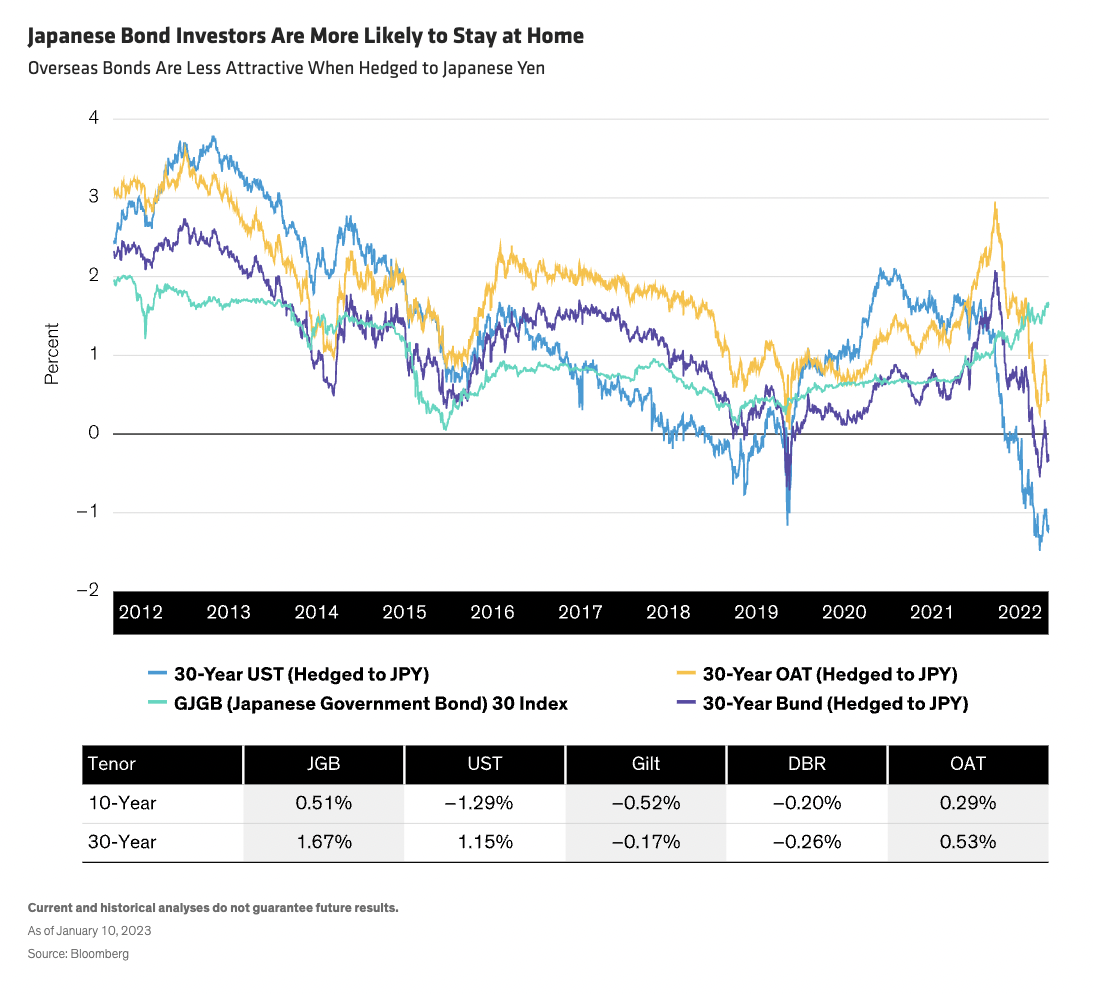
European policymakers face a dilemma: continue to hike interest rates to combat inflation or ease off to stimulate growth.
Healthcare Stocks: An Innovative Antidote for Volatile Times

Healthcare stocks have remained in vogue through volatile markets, driven by increased interest in the sector during COVID-19.
European Fixed-Income Outlook: Stay High Quality in 2023

European bond-market performance was among the worst on record in 2022, as Europe ran the gamut of geopolitical, economic and market storms.
Global Macro Outlook - First Quarter 2023

After a year defined by inflation and the policy response to it, we expect 2023 to be a year of transition.
Are Small-Cap Stocks Further Along the Road to Recovery

Small-cap companies are usually the most vulnerable to volatility, with their stock prices and earnings getting hit particularly hard and early in economic downturns, much like what occurred in 2022. Yet they also tend to lead the way on both fronts during recoveries.
Carbon Handprint: It's What Firms Don't Do That Counts

As global warming worries approach critical mass, corporate bond investors expect issuers to be part of the solution.
Can European Credit Ride Out the Storm?

As Europe struggles with war, costly energy, record inflation and slowing growth, it’s no surprise that European corporate credit is out of favor.
Global Stocks: Look Beyond Home Base to Find Growth

In this year’s global economic crisis, no two regions are having identical experiences. While inflation rages across much of the world, price rises have been more moderate in some countries than others. Similarly, the scale of rate hikes and the degree of recession fears aren’t uniform.
What's Behind the Drop in Treasury Market Liquidity?

With the year winding down, investors might think they’ve seen it all. But one element of market dysfunction that’s largely flown under the radar is increased friction within the US Treasury market. Treasuries are experiencing a liquidity decline on the back of economic uncertainty and higher volatility, with large blocks of government debt increasingly hard to trade.
Three Income Themes for Multi-Asset Investors in 2023

In one of the most challenging years for markets, 2022 brought persistently high inflation, aggressive central bank tightening and heightened geopolitical risks, leaving investors with few places to hide.
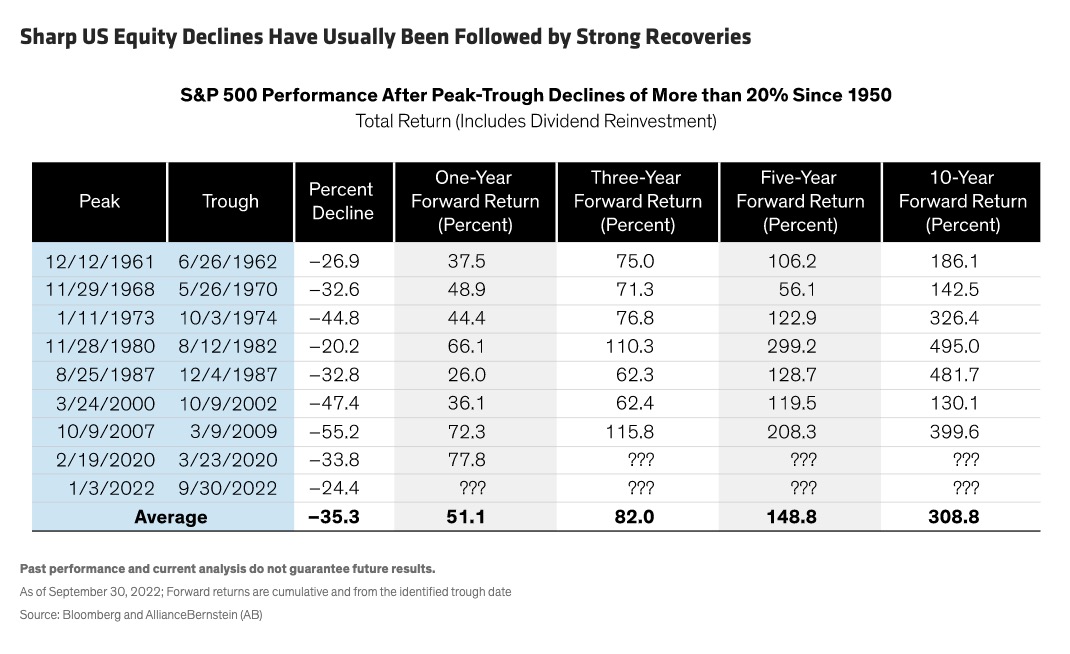

10 Reasons to Stay Invested in Equities

Equity investors have sustained significant losses this year and are facing a long list of new uncertainties.
Rates and Stocks: How Low Can Valuations Go?

Equity valuations have fallen substantially as central banks hike interest rates to combat inflation.
Drug Innovation Can Surmount New US Law's Price Caps

The cost of prescription medicine is a constant strain for many Americans.
Market Collapse Raises Stakes for Active Equity Investors

Equity investors are trying to figure out whether steep share-price declines have led to attractive valuations, given mounting threats to fundamental business performance. The answer varies from company to company and requires an active equity investing approach to separate winners from losers.
Investing in Technology Stocks After the Big Blowout

Technology stocks have been pummeled this year, leading some investors to question the sector’s future.
Can the Sell-Off in Sterling Corporate Bonds Last?

UK government bonds prices have plunged recently. Sterling-denominated corporate bonds have also fallen sharply and are looking cheap.
Can China Revive Economic Growth Post-Congress?

China's 20th National Congress could help air ideas for more growth-supportive policies.
Capital Markets Outlook: 4Q 2022

The difficult capital markets saga of 2022 continued through the third quarter with few safe harbors as rates rose and growth slowed.
Fixed-Income Outlook: Stormy Weather and Silver Linings

2022 has been a stormy year for bond investors, and the forecast calls for more of the same. We address today’s biggest investment challenges—from persistent inflation to rising rates to a looming recession—the silver linings of higher yields, wider credit spreads, and strategies for navigating bad weather.
Equity Income: The Dividend Defense Against Inflation

Many investors are searching for assets that can help protect portfolios from inflation.
Equity Outlook: Charting a Course Beyond Uncertainty

Equity market volatility persisted in the third quarter as investors came to terms with a new reality of high inflation and rising interest rates.
Growth Stock Rout Resets Valuation Landscape

It’s been a tough year for investors, particularly in growth stocks.
Fourth Quarter 2022

Inflation remains persistently high, dominating everything else in the macro outlook.


Rates and Supply in Tug of War

With interest rates on the rise, the once red-hot US housing market is finally showing signs of cooling.
Finding Stocks with Staying Power

In a time of uncertainty, we believe that quality is the key to investing in equities.
The Future of Energy

Energy prices have been on a rollercoaster ride the past few years, and the invasion of Ukraine upended the entire supply/demand framework. The path ahead for energy—and related investment opportunities—will be defined by how today’s “power problems” are resolved. Listen to the latest from the AB Disruptor Series Podcast as Rick Brink, our Chief Market Strategist, and a panel of energy experts zero in on critical issues in the energy story.
Europe's Policymakers Grapple with Soaring Natural Gas Prices
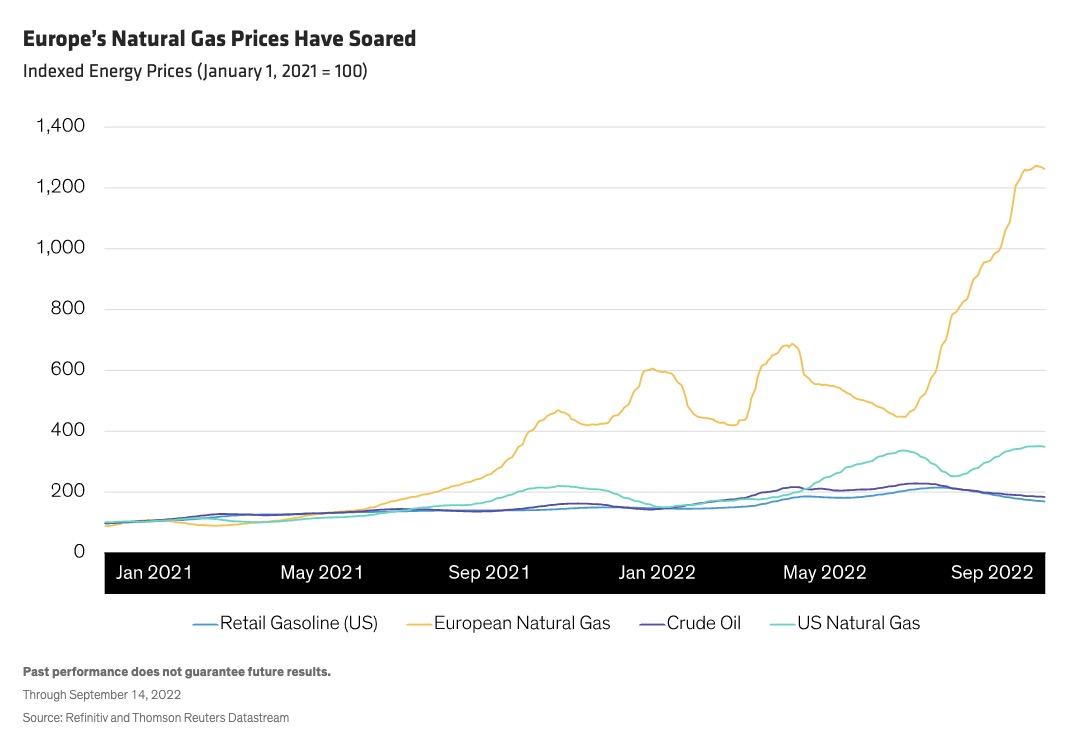
As surging natural gas prices stoke inflation throughout Europe, policymakers are responding to both reduce the economic damage of high energy prices and clamp down on blistering inflation rates.
AB Disruptor Series: The Future of Energy
Energy prices have been on a rollercoaster ride the past few years, and the invasion of Ukraine upended the entire supply/demand framework. The path ahead for energy—and related investment opportunities—will be defined by how today’s “power problems” are resolved.
China’s State-Owned Enterprises Hold Keys to Carbon Neutrality

China has pledged to reach carbon neutrality by 2060, and state-owned enterprises (SOEs) are responsible for half the country’s CO2 emissions.
Turning Less into More: Revisiting Equity Risk in a Volatile Year

During this period of economic uncertainty and market stress, investors may be surprised to discover how a strategy targeting stocks that lose less in a downturn can beat the market over time.
Three Reasons Why Investors Need to Source Income Efficiently

Investors naturally gravitate toward higher-income segments as a way to boost traditional core bond yields.
What’s Next for the Bank of Japan?

Across the developed markets, central banks have embarked on a tightening path—with one exception: the Bank of Japan (BOJ).
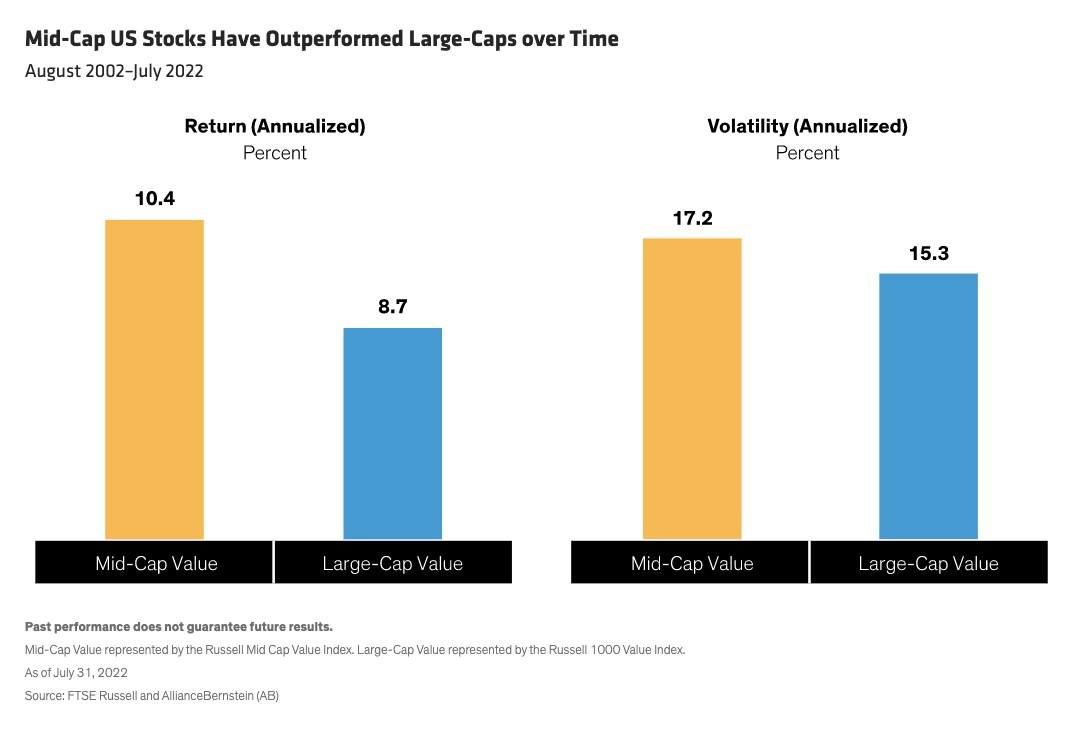
Finding the ESG Edge in Global Small-Cap Stocks

In small-cap markets, fundamental research is in short supply—and good environmental, social and governance (ESG) research is even scarcer.
Practice Management Edition: A 6-step Model to Turn Client Trust into Action in a Down Market

The first six months of 2022 have served as a stark reminder that market outlooks can quickly shift. Advisors who want to retain business must now prepare clients for the possibility of greater volatility, abiding inflation and muted returns. Clients have many reasons to be skeptical of change and financial advisors (FAs) who don’t have these conversations now risk having painful discussions with disappointed investors. AllianceBernstein Advisor Institute’s, Ken Haman discusses key insights about human decision-making and research in behavioral finance to look at the practical challenges of managing client trust during uncertain times.
3Q: 2022 Capital Markets Outlook

As prologues go, the first six months of this year have been a doozy.
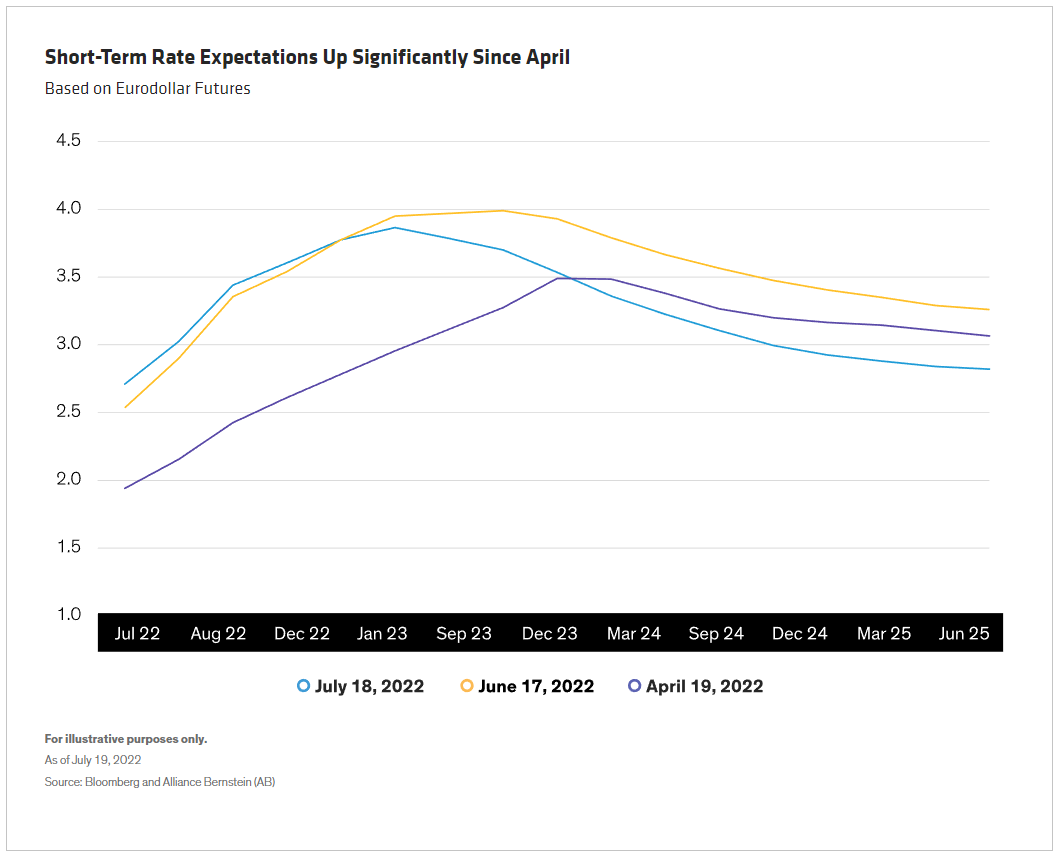

Deglobalization and the Future of Portfolio Construction

For decades, globalization has been on an inexorable rise, a key pillar fueling economic growth, driving inflation and yields down, bolstering corporate profit margins and supporting an upward climb in market valuations. Over the past few years, though, cracks have started to develop in globalization, as populism has seen a resurgence and trade wars have erupted.
Three Reasons It’s Time to Add High-Yield Bonds

With central banks tightening aggressively to beat down inflation, growth is beginning to slow—and the risk of recession is ticking higher. Historically, creditworthiness has soured when growth slows. But instead of bracing for a wave of downgrades and defaults, we think income-seeking investors should embrace the high-yield corporate bond sector.
Don’t Lose Your Nerve: Four Ways to Reduce Equity Risk

Equity investors are anxious about the future after sharp market declines in the first half of 2022.
Equity Outlook: Bracing for an Economic Slowdown

Spiking inflation, rising interest rates and growing fears of a US recession dominated global equity markets in the second quarter. While the outlook is very cloudy, it’s important to evaluate what types of strategies can help investors in an economic downturn.
Energy Crunch vs. Consumer Freeze: What Are Stocks Signaling?

US energy stocks are outperforming consumer discretionary stocks by the widest margin in more than 30 years. Does this mean surging energy prices will trigger a deep freeze in consumer spending?
Lifetime Income Fees vs. Costs: Look Beneath the Tip of the Iceberg

Lifetime income solutions are high on the wish lists of defined contribution (DC) plan participants, with the certainty of a guaranteed lifetime income stream ranking as the top feature in our surveys over the past decade.
Deglobalization, Reversals in the Supercycle and What it Means for the Future of Portfolio Construction

Have COVID-19 and geopolitics hastened the decline of globalization and other tailwinds that drove an era of exceptional returns? That's the question on the agenda in the next installment of the Disruptor SeriesSM from AllianceBernstein. Our experts tackle the big issues facing capital markets and look closer at the challenges to a powerful mix-including globalization, automation and demographics-that fueled profits and drove capital markets for decades.
Practice Management Edition: Seven Steps to Managing Client Anxiety in Volatile Markets

Market headlines in 2022 have been dominated by inflation, tightening monetary policy, ongoing volatility and the Russia-Ukraine conflict. To get ahead of client concerns, financial advisors need to develop creative ways to turn difficult conversations into opportunities to build confidence. A clear and concise presentation on the capital markets can help solidify and restore lost credibility—and trust. Hear from Ken Haman, Managing Director, and Scott Tatum, CIMA, CFP, Director, as they discuss seven steps to organize a compelling capital-markets narrative.
Will Corporate Credits Crack as Growth Slows?

Investors are shifting their focus from runaway inflation to slowing global growth as central banks hike rates to tame price pressures.
Capturing Persistent Growth in Volatile Equity Markets

Growth stocks are under acute pressure as rising interest rates change the dynamics that drive equity valuations.
Inflation: Higher but Not Forever

High inflation and the consequences of attempts to curb it are a top concern for today’s investors.
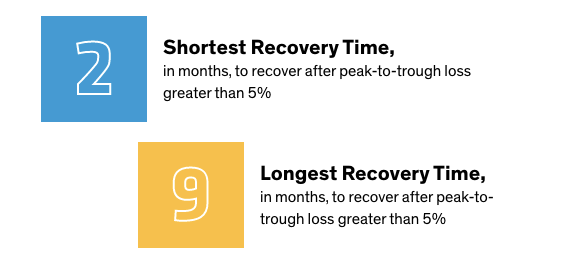
FAANG Is Dead: A Timeless Lesson for Equity Investors

For several years, the largest US technology and new media companies were widely seen a cluster of similar stocks.


How the Financial Industry Can Help Stop Modern Slavery

Modern slavery is a lucrative business that can’t exist without the financial system.
Investment Strategies for Generating Efficient Income

An unfriendly macro and market landscape is making life harder for investors today, with traditional core bonds coming up short on income. In our view, focusing on generating efficient income is an effective approach to tackling the challenge of mixing the key building blocks of rates, credit and growth.
Investing for Growth in a Decelerating World Economy

With the world facing inflationary and geopolitical hurdles, economic growth is poised to slow. In this environment, investors in growth stocks must identify companies with the right features to overcome headwinds to earnings.
China’s Economic Outlook: COVID Impedes GDP Growth
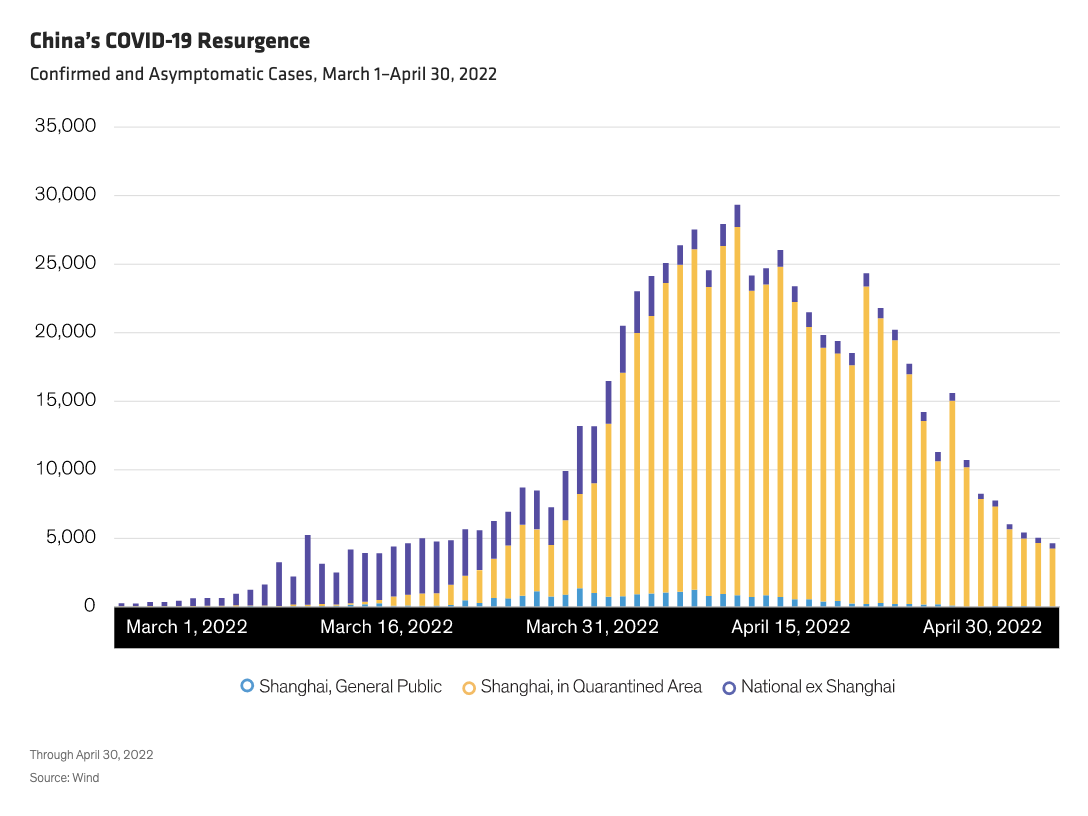
COVID-19’s resurgence in China has cast doubt over the government’s ability to meet its 2022 growth target of around 5.5%, which officials affirmed in March, before the scale of the latest outbreak became clear.
An Investor’s Guide to Evolving Supply Chains

Many companies are rethinking supply chains amid disruptions from the war in Ukraine and the pandemic.
A Different Kind of Volatility

As of this writing, Russian forces are reorganizing in eastern Ukraine, and fighting is well into its second month. Supply chain disruptions continue, gas prices are reaching all-time highs, inflation has become a constant concern, and some analysts are predicting that the Fed will aggressively raise rates.
ESG Ratings: Solution or Starting Point?

Environmental, social and governance (ESG) ratings are a popular way to search for companies that meet specific criteria in a responsible investing agenda.
The One Metric All High-Yield Investors Should Know

High-yield bonds have a reputation for volatility.
Near-Term Renminbi Outlook: Steady as She Goes

China’s currency, the renminbi (RMB), remains strong even though many of the factors that have driven its performance over the last two years have weakened.
How Synthetic Biology Can Help Fix the Supply Chain Crisis

Supply-chain disruptions are testing companies around the world.
Understanding Your Bond Portfolio’s Carbon Footprint

Transitioning to a net-zero carbon economy* is vitally important, and corporate bonds will play a critical role in the transition.
Balance Is the Watchword with Commodities Exposure

The highest inflation in 40 years has spurred more investors to search for assets that can help offset its bite.
Can the World Live Without Russian Oil?

Russia’s power on the world stage is supported by its vast reserves of oil and gas.
Carbon Handprints: A New Approach to Climate-Focused Equity Investing

How can investors gain confidence that an equity portfolio is invested in companies that are really helping to address climate risk? Focus on a company’s carbon handprint, which measures the positive impact, or carbon avoided, by using its products.
Rising Prices and the Big Trade-Off: Inflation Protection vs. Market Participation

Dormant for many years, inflation has returned with a vengeance—fed by pandemic-related challenges and easy-money policies. Inflation may end up as a temporary condition or a longer-lasting issue, but in either case it’s top of mind for many investors today. Hear from AB experts as they tackle inflation in the inaugural edition of the Disruptor Series by AllianceBernstein.
Looking Beneath the Turmoil in European Equity Markets

European markets have been turbulent because of the region’s proximity to the war in Ukraine and economic links with Russia.
Do Your Clients Know These Three Things About You?

When I meet with a financial advisor in her office, I look around and think, “What do the displayed items tell me about you? Who or what is in the pictures, and why do they matter?”
ECB’s Surprise Taper Decision Comes with Economic Risk
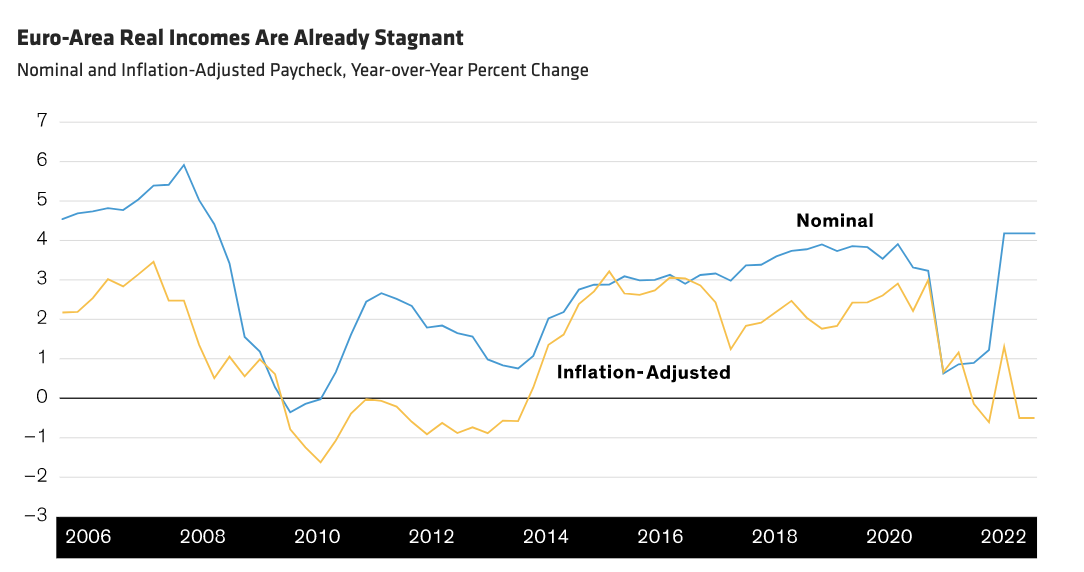
At its March 10 meeting, the European Central Bank (ECB) surprised the market by announcing an acceleration of its tapering program—wrapping up securities purchases earlier than anticipated.
SFDR Unpacked: What to Look for in Article 8 and 9 Portfolios

European investors are struggling to understand new rules designed to confirm the environmental, social and governance (ESG) credentials of portfolios.
The Long View: Russia-Ukraine War Has Lasting Implications for Investing

When Russian president Vladimir Putin sent troops into Ukraine, he unraveled decades of efforts to cement peace in Europe after the Cold War.
Inflation TIPS for Fixed-Income Investors

What happens when you combine the tipping point of two deflationary forces—globalization and demographics—with a pandemic, epic supply-chain disruptions and an invasion in Europe? Inflation of a magnitude not seen since the 1970s. Some of the contributing factors may be transitory, but not all, and lingering inflation is likely to be higher than before. How should bond investors adapt?
Russia Invasion Energy Shock Prompts Monetary Policy Rethink

Russia’s invasion of Ukraine has shocked the global economy, in particular by fueling further spikes in energy and commodity prices. The new inflationary catalysts will have differing effects on monetary policy moves because regional economies are starting from different places, which will determine their ability to withstand higher commodity prices.
How Green Bonds Will Fund a Green Future

More securities labeled as environmental, social and governance (ESG) bonds are being issued by a wider variety of companies than ever before.
Four Counterpoints to ESG Investing Critics

Sustainable investment funds are mushrooming. Assets under management in Morningstar’s global sustainable fund universe surged to $2.75 trillion at December 31, 2021, nearly three times the pre-pandemic level, according to Morningstar.
What Could Go Wrong? The Case for Governance

Environmental, social and governance (ESG) factors are all important to the sustainability of an investment.
Inflation Protection: Weighing Your Options

Given the dominance of inflation in today's capital markets discussion, it should be no surprise to anyone watching this video that one of the most common questions I get is, “How do I inflation-protect my portfolio?” And that's what we're going to focus on today: what to think about when you're thinking about inflation protection.
Finding the Middle Path in Extreme Equity Markets

Equity markets were jolted in January amid growing concerns about macroeconomic threats.
How DC Plan Sponsors Can Engage Diverse Participant Personas

Millennials often say their biggest challenge is being lumped into one category, as if everyone’s needs and aspirations are identical.


Five Ways Technology Companies Offer Inflation Protection

From the advent of electricity to the adoption of the internet, technology has often been a catalyst for cost reduction.
Why Banks' Balance Sheets Are in Better Shape

The COVID-19 pandemic looked set to batter the world’s banks—and yet banks’ balance sheets are now the strongest they’ve been since the global financial crisis (GFC).
Bolstering Asset Allocation Defenses Against COVID-19
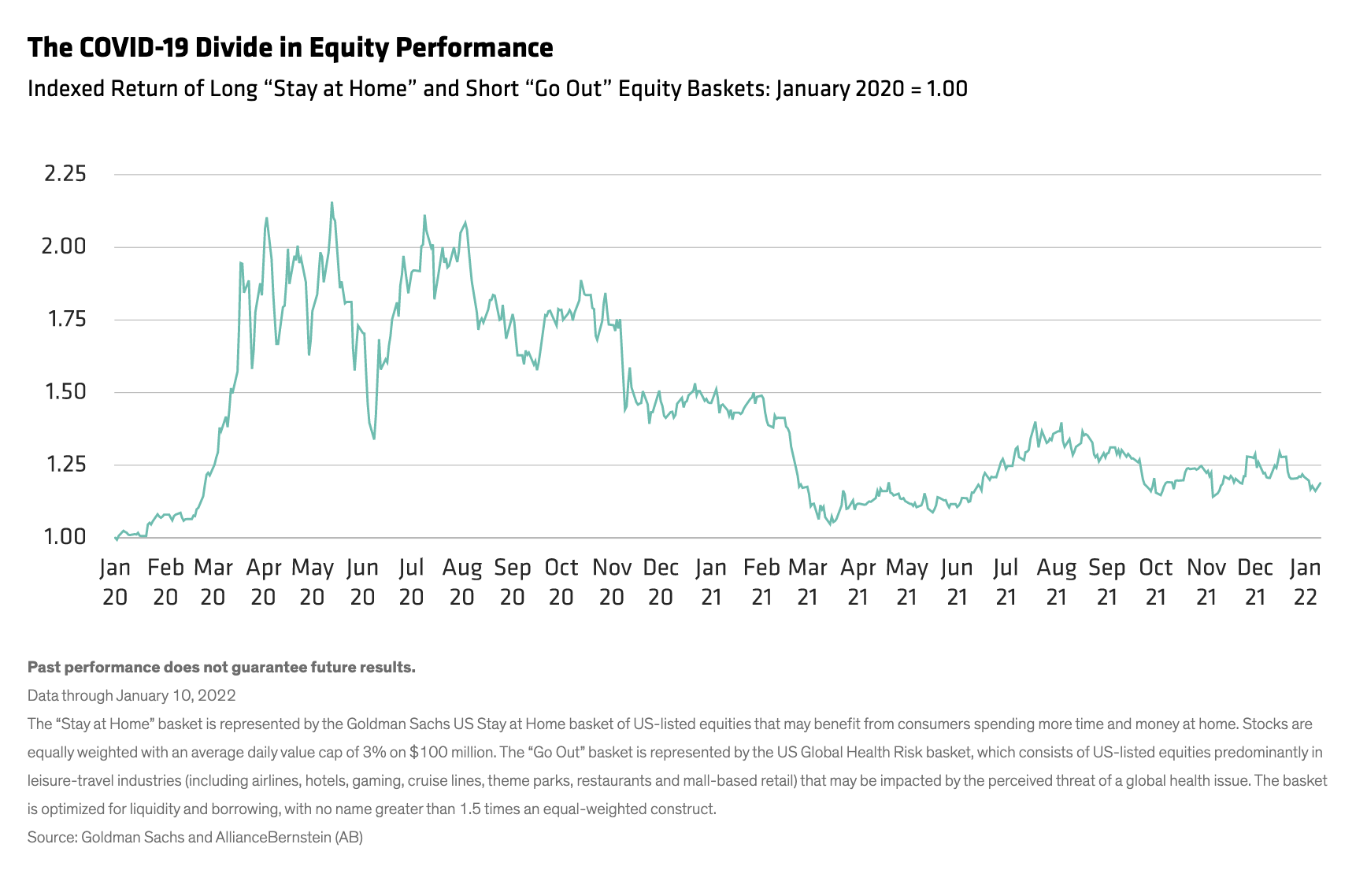
The surge of the coronavirus omicron variant has implications not only for broader asset-class allocations but also for macro exposures within asset classes.
China’s Economy in the Year of the Tiger
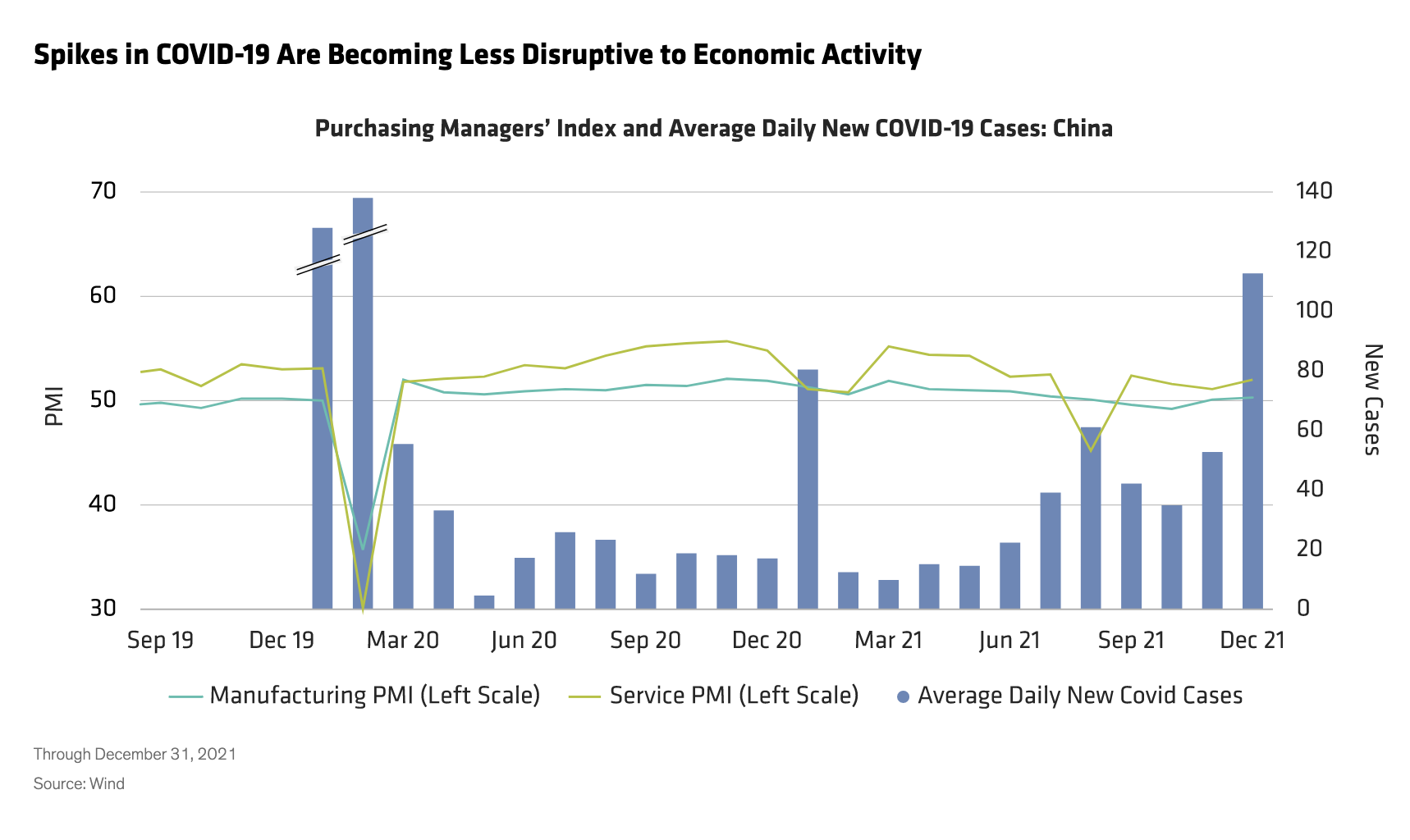
For China, the year ahead holds special political and economic significance.
Emerging-Market Investors Can't Afford to Ignore ESG Factors

Most investors need little persuading that emerging markets offer exciting opportunities.
Municipal Impact Investing: Making an Impact on Education

One of the things that we like to do is to make sure that our investments are very specific—that they have intentionality behind each investment.
Solid US Value Equities

As we go into 2022 and ’23, we’re going to have an economy that’s going to be quote-unquote normal.
European Fixed-Income Outlook: Euro Markets Will Stand Out in 2022

Rising inflation is troubling bond investors worldwide, but European bond markets will likely experience comparatively weaker inflation pressures and stronger central bank support.
Emerging-Market Debt Outlook: Mixed Conditions in 2022

For emerging-market debt (EMD), 2022 is shaping up to be a contest of conflicting forces.
2022 Equity Outlook

Few investors would’ve anticipated the very strong returns we’ve seen, particularly in the US market.
Equity Outlook: Get Ready for Another Year of Surprises

Global equities surged in 2021 during a year full of surprises.
Why High-Yield Investors Are Rooting for Rates to Rise

High-yield investors should actually root for rates to move higher, rather than lower. And that’s because if rates are moving higher, it means the economy is doing well and companies are generating a lot of earnings, and therefore their credit risk is actually coming down. Which is a really good thing for us as credit investors.
Fed Accelerates Rate Hike and Taper Game Plan

The Federal Reserve responded to stubborn inflation pressures in the US economy by doubling the pace at which it’s tapering its QE purchases. It also ramped up the number of rate hikes it expects will be needed to bring the economy back into equilibrium in the medium term.
Central Banks Push the Levers Toward Tighter Monetary Policy

The world’s central bankers have had to manage competing priorities during the COVID-19 era. Now that COVID-related threats to global economic growth look to be receding, the risks from higher inflation are becoming more prominent in their thinking.
Bond Investors Can Help Hold Companies Accountable Post COP26

The United Nations Glasgow Climate Change Conference, also known as COP26, concluded in November with 200 nations signing the Glasgow Climate Pact (GCP), an agreement that could accelerate climate action and drive big carbon cuts.
Climate Change: The Commodities Dimension

Commodities, by virtue of their fungibility and broad uses, have infiltrated nearly every facet of human life, making the world enormously reliant on their ready availability.
Will Real Estate Stocks Build on Brisk Recovery?

Real estate stocks posted a sharp recovery this year, despite disparate effects of the pandemic on different property types. Improving trends in key US market segments show how investors can gain confidence in property stocks as a diversifying source of solid long-term returns and an effective hedge against inflation.
Six Best Practices for Carbon Offsets

As investors and companies increasingly seek to address the risks of climate change, there is growing debate about the use of carbon offsets in achieving net-zero emissions. We think there’s room for a measure of offsets to achieve carbon neutrality, provided best practices are followed.
Fixed-Income Opportunities in 2022 The Outlook for Income

So, when you think about the end of 2021, and looking forward into 2022, we’re reasonably optimistic about the backdrop. Growth should be set up pretty well for 2022.
Impact Investing: Addressing Local Needs with Precision and Purpose

Impact investing, which seeks to make a direct—and measurable—social or environmental impact while generating a financial return, has historically been synonymous with the private debt and equity markets. But that ignores the hugely important public market of municipal finance.
Modern Slavery: How Investors Can Help the Victims

With profits from forced labor estimated at US$150 billion a year, some companies in global portfolios could be unwittingly associated with modern slavery. The good news: businesses and investors can help tackle the problem—individually and through collaboration.
Rethinking High Yield

In high yield specifically, investors tend to think about it as a risky way to play fixed income. But we like to turn that thinking on its head, actually: that you should think about it as a way to de-risk your overall portfolio rather than to re-risk your fixed-income side.
Four ESG Myths About Emerging-Market Corporates

As one of the fastest-growing bond sectors, emerging-market (EM) corporate debt has become too big to ignore. With US$2.7 trillion outstanding across more than 600 companies, it’s now larger than the entire EM sovereign sector and is equal to the US-dollar and euro high-yield markets combined.
Low-Carbon Investing Needs an Active Eye on Quality

Equity investors focused on a low-carbon strategy needn’t compromise on company fundamentals. When quality and compelling valuations are equally considered, joining the global fight against climate change and generating strong return potential can work hand in glove.
The Synthetic Biology Revolution - Investing in the Science of Sustainability

The revolutionary technology of synthetic biology is poised to make a profound impact on the way a vast array of products are manufactured, from lab-grown meat to cosmetics to biodegradable packaging. Yet investors are paying relatively little attention to the huge business potential.
Disrupting Inflation: Innovative Companies Can Light the Way

Inflation and rising interest rates have prompted many equity investors to reconsider technology and high-growth companies. But this inflationary environment is different, and so are the companies best poised to rise above it.
How to Create a Memorable Client Experience

One advisor whom I coach uses a color-coded checklist with every client to track which areas of a financial plan have been completed and which tasks are pending. It’s a brilliant way to shift a client’s attention from portfolio performance to the larger, more important elements that make up a holistic financial plan.
Making ESG Second Nature in Asset Allocation

It’s not uncommon for stakeholders in large organizations to have different views on the meaning of ESG and the importance of its pillars in defining organizational success. That’s understandable, and in fact, diverse perspectives can be a source of strength when making investment decisions.
360°-View Helps Track Progress in Snarled Supply Chain

After years of anxiously watching for inflation, it’s here. Unfortunately, what many expected to be a short, COVID-19-induced visit has turned into an extended stay, thanks to robust demand and a snarled supply chain. The question now is does the supply chain pose a threat to our economic outlook?
Putting Client Cash to Work—Efficiently
Investors are sitting on a mountain of cash as household reserves now stand four times higher than pre-COVID-19 levels, while money market reserves rose to all-time highs. However, a trifecta of concerns from rising interest rates, persistent inflation, and an evolving US tax picture are making investors reluctant to deploy that cash.
China’s Quest for Common Prosperity: Reading the Tea Leaves

Renewed impetus behind China’s goal of “common prosperity” has raised concerns that Beijing plans a redistribution of wealth that could hurt growth and investment. The reality, however, is more nuanced—and a good deal more positive for China’s long-term growth ambitions.
Global Transition to Renewable Energy is a Complex ESG Journey

Soaring energy prices highlight the challenges of shifting toward renewable power sources. The continuing need for oil and gas during the transitional phase raises complex questions about balancing environmental needs and social concerns on the journey to a net-zero world.
Evaluating Earnings Quality as Inflation Bites

Inflationary pressures are threatening corporate profitability. As third-quarter earnings season winds down, we’re gathering intelligence to identify companies that will have advantages sustaining quality earnings and margins amid rising prices.
Stay Flexible as Rates Rise

When rates are rising, investors need portfolio protection. But it’s no time to sit idly in cash and wait things out. Every day spent on the sidelines means income and opportunities lost. A passive, set-it-and-forget-it investing approach isn’t ideal either. Buy-and-hold laddered portfolios tend to lock in low yields that disappoint if the market begins to offer more.
AllianceBernstein's Guide to Investing in the Time of COVID…and Beyond

Investing is about to get a lot harder, with thinner return streams and potential pitfalls from inflation, rising rates and market volatility dominating the landscape. In our view, the solution is to build a portfolio that has better up/down capture. Getting that balance right is the challenge for every investor—and requires three main elements: better beta, efficient structure and targeted alpha. Each element can create a favorable return sequence and be even more powerful in combination.
Download AB’s guide to get our views on how to design a portfolio around these elements in the post-pandemic environment.
Do Your Equities Have Pricing Power?

When I look at the opportunity, it’s all about how well corporate America has done in terms of increasing profit margins. We’re at record levels now, so the revenues have come back, but all the costs haven’t come back. And that means tremendous earnings growth. That’s the positive.
For DC Plan Participants, Solving for Retirement Income Is a Challenge

After decades of saving for a comfortable retirement, plan participants eventually face the question of how to create an income stream from those savings. Most aren’t sure how to do that, even though income is the main reason they’re saving in the first place...
A Flexible Approach to Equity Investing

Well, on the surface, it's been a very solid year for the second year in a row. But under the surface, it's been unusually volatile.
Sustainability and Investing: Lessons Learned in the Pandemic Era

When the history of COVID-19 is written, the pandemic period will be seen as more than just a health and economic crisis. Both contributed to a social reckoning, with a growing focus on inequality around the world, while the intensifying global climate crisis has added new and unpredictable threats.
Sustainable Investing Through the Supply Chain Electric Vehicles

The shift to electric vehicles means major changes across the supply chain and involves multiple ESG challenges. As the auto industry strives to institute sustainable practices, investors need to engage with governments and corporates to encourage and accelerate the process of change.
How to Take Control of Your Bond Portfolio’s Interest-Rate Risk

Interest rates are rising, and bond investors are worried about the potential impact on their portfolios. But they’re not entirely at the mercy of the markets.
Connecting the Dots on China’s Growth Outlook

Concerns about China’s slowing economy have focused on issues affecting property and manufacturing. But these are only part of the story. Investors seeking a fuller understanding of the risks and opportunities need to take a broader perspective.
Capital Markets Outlook: 4Q:2021

The strong economic and market trends of the first half of 2021 wavered during the third quarter. The coronavirus delta variant caught up with the US at the height of the summer, just as vaccinations slowed and concerns grew that inflation might flare and persist.
Self-Help for Companies Unlocks Equity Return Potential

In business as in life, a healthy sense of self-awareness is often the first step to meaningful change. Companies that are conscious of their flaws and eager to address the root problems offer a source of solid return potential for equity investors who identify the turnaround stories early.

Keys to Maximizing Yield in a Low Interest Rate World
The US high-yield market has staged a strong comeback since its downturn at the onset of the COVID-19 pandemic and—despite historically tight spreads—fundamentals for credit continue to improve. Along with a strong global economic recovery, credit spreads are getting positive tailwinds from declining default expectations, falling levels of distressed debt, and improving access to capital.
Don't Fear a Taper Tango

The US Federal Reserve will soon slow its open market purchases of fixed-income securities. These purchases have served to keep rates low and liquidity flowing, but as the post-pandemic economy heals, it’s time for the Fed to taper. As they step back from buying, who is going to step forward?
Encouraging Effective Executive Pay Structures

Executive pay is a powerful motivating factor. But investors need to consider whether executive pay incentives are fully aligned with the goals of the business. We find that companies with meaningful ESG goals embedded in their executive compensation schemes tend to have a better understanding of the ESG factors that are material to their business, use specific key performance indicators (KPIs) and are more likely to achieve them.
COVID-19 Strained Participant Financial Wellness - Can Employers Help Them Recover?

With COVID-19 still a top employer concern, protecting workers’ health and well-being naturally comes first. But the pandemic’s impact isn’t limited to only physical and mental health: financial wellness is also ailing. The crisis has exacerbated the problem, but it’s not exactly a sudden occurrence.
ECB Strategy Has the PEPP Had Its Day?

In December, the European Central Bank (ECB) is likely to announce the retirement of its Pandemic Emergency Purchase Programme (PEPP) next March. But how will the central bank manage this process? And what will this mean for euro-area bond yields?
Hidden Dangers Navigating Climate Risks in CMBS

One of the most crucial components of investing in commercial mortgage-backed securities (CMBS) is assessing the underlying collateral value. But what if investors are disregarding risks that threaten a property’s very existence?

How Populism May Sway Policies in Emerging Markets

COVID-19 has increased inequality and aggravated social problems across emerging market economies, fueling populist pressures—but several emerging countries share features that make them particularly vulnerable. Assessing key environmental, social and governance (ESG) metrics can help identify potential pressure points.
When Will Inflation Lift Off?

Disruptions and dislocations associated with COVID-19 mean current economic data may not be a reliable guide to the future. But by turning to the past, we find compelling evidence that inflation regime change is accelerating.
What’s the Policy Playbook for the Inflation Endgame?

A single-minded approach to price stability is under threat as policymakers start to focus on what are—arguably—more pressing concerns.
Finding Defensive Stocks Ripe for Recovery

Defensive stocks are often misunderstood. In recent years, even when they have delivered strong and steady earnings, returns have disappointed.
Smaller Stocks Defy Emerging-Market Weakness

Emerging-market (EM) stocks have hit a rough patch, but shares of smaller companies have held up well.
China Inc.: Understanding Risk in China’s Credit Markets

Much of the volatility that has recently shaken China’s credit markets has been associated with government interventions.
Technology Enables Municipal Investing at the Speed of Alpha

What You Need to Know
Municipal bonds are the cornerstone of many portfolios, but efficiently navigating today’s complex, fragmented and ever-changing muni market can be overwhelming. Unfortunately, many managers research, evaluate and trade municipal bonds like it’s 1995, missing out on opportunities because they can’t find them in the chaos. The right technology can change that.

What to Expect When You’re Expecting a Taper

Many investors, perhaps scarred by 2013’s “taper tantrum,” are focused on the likelihood that the Federal Reserve will start reducing its bond purchases in the next few months.
Five Questions to Ask Your Muni Bond Manager

Today’s complex, fragmented, fast-moving muni market is rapidly outpacing the capability and capacity of traditional portfolio-construction methods.
Time Is Money: Restoring Investor Confidence in Long-Term Cash Flows

As equity style winds shift, investors are still debating the merits of growth versus value stocks.
The New IQ: Investing in Quality

What we’ve seen this year is an exceptionally high rate of earnings growth across markets, but that’s not going to persist.
Vacation Variants: Travel Indicators Mark Different Recovery Paths

As the summer progresses, US vacationers are out in force while the European and Asian holiday scene remains relatively subdued.
Will Policy Changes Open the Door to Higher Inflation?

Central banks are being forced to address many challenges—inequality, climate change, and debt management to name but three.
Taking Muni Bonds to the Next Level: Where Cutting-Edge Tech and Fundamental Research Meet
There’s considerable uncertainty in today’s municipal market. Questions persist about the likelihood of rising interest rates, inflation that may not be transitory and the impact on municipalities once the benefits of fiscal stimulus fades. Active bond managers have many decisions to make and need to be nimble in a changing landscape. What’s next for municipal bonds, and how can trading and portfolio management technology help investors navigate this changing environment?
Is Your Target-Date Fund Providing Enough Inflation Protection?

Inflation has been on the rise recently, raising concerns about long-run inflation and its impact on the spending power of those who can least afford it—investors approaching or already in retirement.
Could China’s Regulatory Crackdown Be Good for Credit?

China’s regulatory crackdown on education and tech companies led early this week to a dramatic sell-off that started in Chinese stocks and extended into offshore Chinese currency and credit markets.
Can Onshore Stocks Offer Shelter from China’s Market Storm?

Chinese stocks have tumbled amid a regulatory crackdown on education and technology companies.

Why Investors Shouldn’t Take a Time-Out from High Yield

The US high-yield market has seen a strong comeback since its panic-driven downturn at the onset of the COVID-19 pandemic.
Quality Enhances Value for Investors After Market Crises

Market crises and macroeconomic recessions typically create fertile ground for value stocks to outperform in a recovery.
Looking Back and Ahead: Eventful Decades for Emerging Markets

In 2010, 68% of the companies in Fortune Magazine’s Global 500 were domiciled in Group of Seven (G7) countries, compared with 17% in the E20* emerging-market (EM) countries.

Earnings Bounce Poses Quality Test for Equity Investors

As the world convalesced from the pandemic, stocks advanced in the second quarter and earnings rebounded across sectors.
What Are Bond Investors Thinking? Their Three Top Concerns

Bond investors are worried, and who can blame them?

This Too Shall Pass: The Micro Case for Transitory Inflation

US inflation continued to soar in May, with the Core Consumer Price Index (CPI) up 0.7% month over month and 3.8% year over year—its highest annual rate in more than 25 years.
Japanese Stocks Regain Luster for Post-Pandemic Markets

Japanese equities have long been overlooked by many global investors.
ESG Managers to High-Yield Issuers: Don’t Stand Still

Environmental, social and governance (ESG)-linked bond structures have become very popular in investment-grade bond markets.
Muni Strategies for an Inflationary Climate

With the post-pandemic US economy on the mend, a new threat has emerged: inflation.
Healthcare Stocks: Four Questions for the Recovery

Disappointing returns for healthcare stocks through the market’s recovery from the pandemic have raised concerns about the sector.
The Fed Will Likely Taper…but Don’t Expect a Tantrum

With the US economy accelerating and price pressures rising, investors have started wondering when the Federal Reserve will start to wind down, or taper, its current QE asset purchases—a pillar of accommodative monetary policy since the global financial crisis.
Uncovering Hidden Risks in Passive Equity Portfolios

Passive equity portfolios continue to gain popularity, but some investors might not know that a small group of outperforming stocks have driven most of the gains in recent years.
Making Sense of ESG Bond Structures

We’re optimistic that environmental, social and governance (ESG)-linked bonds will help create a better, more sustainable world.
Why Munis Should Hold Their Shine Amid Higher Rates

Municipal bonds have held up well this year, despite rising interest rates and inflation. Munis’ long-term outlook is strong too. What accounts for their outperformance in today’s environment?
Will COVID-19 Accelerate Euro-Area Integration?

Widespread lockdowns have resulted in record output declines and soaring debt across the euro area. But the political response to the COVID-19 crisis may be positive for the European integration project—and for euro-area bond markets.
Back to Business: Spending Surge Signals Demand

Global indicators continue to signal a sharp business recovery from last year’s COVID-19 pandemic lows. While inflation expectations are increasing as a result, business improvements offer multi-asset investors good reasons to remain tilted to equities for the next stage of the recovery.
The Current State of Retirement Income

Retirement planning has evolved from a singular focus on savings to ensuring that account values provide income for life. Multiple generations of DC plan participants are concerned that they’ll outlive their retirement savings, and they’re turning to plan sponsors for solutions.
Value Stocks—Still Plenty of Fuel in the Tank

After a strong rally for value stocks in recent months, some investors are wondering if the rebound will continue.
What Could US Corporate Tax Hikes Mean for Share Buybacks?

As the US economy continues to reopen, economic growth is accelerating in line with our above-consensus forecasts.
Will Household Savings Provide an Upside Growth Surprise?

Developed-market (DM) household savings recorded a significant gain last year, with an increase equivalent to 10% of combined gross domestic product (GDP).
Are We in the Middle of a Paradigm Shift?

Paradigm shifts are driven by creativity and innovation. Innovation is attracted to and stimulated by inefficiencies in a big, lucrative marketplace, such as financial services. Recently, our industry has seen a growing number of innovations in how financial-services products are delivered to consumers.
Stock Compensation Adds Risks for Growth Companies

Many US technology companies use stock compensation to help align workers’ performance with shareholder interests.
Will the Sweet Spot for Smaller Value Stocks Persist?

US small-cap value stocks have enjoyed considerable success since value stocks began to outperform growth in October 2020.
Resilient Recovery Stocks Transcend the Growth-Value Divide

Investors are reassessing which types of companies will thrive in the next stage of the recovery amid the recent rebound of value stocks.
Future-Income Focus May Boost Current DC Plan Savings

Planning for retirement has historically been focused on saving as much as possible.
Global Equities: Reviewing the Risks to Recovery

Global stocks rose in the first quarter, but volatile trading patterns reminded investors that the road to normal will be bumpy.
Three Strategies for Navigating Turbulent Bond Markets

Today’s market environment taps into bond investors’ primal fears.
Stocks Can Surmount a Return of Inflation

As US inflation expectations grow, many investors are concerned about the potential impact on stocks.
Beyond Renewables, Low-Carbon Investing Eyes Energy Efficiency

Across the industrial sector, low-carbon investing naturally leans toward renewable energy opportunities, like wind and solar power.
Delivering a Net-Zero World—on Time

Companies globally are racing to reduce their carbon emissions. But what does it really take to achieve ambitious green targets?


Four Things Investors Should Know About US Inflation in 2021

US core inflation likely will be volatile during 2021, as underlying economic forces continue to rebalance from the pandemic.
Crisis Dashboard: Big Data Helps Paint the Big Picture (March Update)

Our crisis dashboard includes signals from three areas: 1) public health, 2) the consumer sector and 3) financial markets. By pulling big data from traditional sources (earnings growth and gross domestic product, for example) and nontraditional sources (like Google Trends and Glassdoor), we can create a better mosaic of the road back.
Raising Equity Defenses for the COVID-19 Recovery

The exit from the pandemic will be bumpy. Defensive stocks with attractive valuations can help provide balance through an uncertain recovery.
Are Growth Stocks Attractive in a Post-Pandemic World?

The recent selloff of US growth market darlings reflects increasing questions about whether their growth potential still justifies exceptionally high valuations. Away from the froth, growth investors can still find solid return potential in quality companies with profitable, sustainable business models.
As Retirement Income Needs Grow, DC Plan Sponsors Weigh Solutions

As more plan participants worry about retirement income security, demand for guaranteed income solutions is growing—and plan sponsors are pondering the options.
Can Mario Draghi Recharge Italy’s Economy?

Italy’s new prime minister, Mario Draghi, has a well-earned reputation for turning around difficult situations. But can he reverse Italy’s relative economic decline? And what does his program mean for Italian bond yields?
Five Things Investors Should Know About Hydrogen

Hydrogen’s potential as an energy source is attracting renewed attention. It may take 20 years or so for the potential to be realized. But the effects are likely to be felt within the planning horizons of most long-term investors—a good reason to start thinking now about the investment implications.
Will the Energy Sector Evolve or Devolve?

The energy sector is beginning to adapt to the realities of climate change. Who is best positioned for the future?
Muni Credit Plays Defense When Rates Rise

As COVID-19 vaccines roll out and resrictions lift, a US economic rebound could lead to tighter Federal Reserve policy and higher yields. Municipal bond investors may worry about how rising yields could hurt their portfolios.
Four Things Investors Should Know About US Inflation in 2021

We expect US core inflation to surge in the months ahead, as comparisons to low price levels of a year ago cause sizable fluctuations. Ultimately, supply should respond to recovering demand, bringing inflation down and facilitating easy Fed policy.
The Green Transition: Implications of the European Recovery Plan

Despite questions over financing the European Union’s (EU’s) new Green Deal, the green transition is now under way.
Cold Cash? How to Redeploy in Hot Markets

Investors have parked record piles of cash on the sidelines amid concerns about valuations and volatility. But short-term safety comes at a price. By defining long-term goals, investors can put idle cash to work despite uncertainty about the path to recovery.
Will High-Dividend Payers Make a Comeback in 2021?

Having strongly underperformed the wider stock market in 2020, high-dividend stocks have shown early signs of a rebound in recent weeks.
The Future of Bond Trading—and Why It Matters

The pandemic has accelerated an evolution in bond trading, and it is already making a difference for investors—if bond managers have embraced tech-enabled trading.
GameStop Frenzy Reinforces Need for Quality in US Stocks

The GameStop drama that has rattled US stocks reflects the growing power of individual investors to shape market events. But there are lessons for traditional, long-term investors, too. When markets ignore fundamentals, redoubling a focus on quality is the best way to produce consistent returns while reducing volatility.
Better Stimulus Odds Are Shot in the Arm for US Growth Expectations

The probability of more fiscal relief from Congress has risen—good news for the US economy and a boost to our growth forecast. While risks remain, and it’s too early to talk about the pandemic in the past tense, we’re optimistic the economy can return to more normal footing soon.
How to Choose a Sustainable Equity Portfolio

As inflows to sustainable equities break new records, here’s what investors should look for to identify portfolios that align with their responsible investing goals.
How Shopping—and Investing—Might Be Enabling Modern Slavery

It may seem shocking, but a simple trip to the local store to pick up fresh produce or clothing could enable human exploitation. For investors, those same connections can exist within their portfolios—and it takes more than a passive effort to root them out.
China’s Uneven Equity Rally Opens New Roads to Recovery

As China begins the year of the Ox, many investors are wondering whether another bull run is possible in 2021. Given that last year’s rally was extremely narrow, we believe many parts of the market still offer pent-up recovery potential.
Should Bondholders Keep Faith in Europe’s Banks?

For European banks’ stockholders, 2020 was a year to forget. But bank bondholders enjoyed positive returns and may overcome COVID-19 challenges again in 2021, backed by solid balance sheets and supportive regulatory conditions.
When Markets Are Recovering, Don’t Ignore Volatility

Global stocks rebounded sharply from the coronavirus market crash in 2020, but the ride was rocky. With so many risks clouding the outlook, we believe that investors should focus on generating a smoother pattern of returns through the recovery from COVID-19.
Rediscovering the Appeal of Emerging Market Equities

Emerging-market stocks rebounded in 2020 even as the COVID-19 pandemic spread globally. As vaccines and other favorable conditions unfold, investors have good reasons to consider EM equities in 2021 while strategically considering their potential risks.
2021 Municipal Outlook: Reasons for Optimism

Municipal bond issuers’ financial health and resiliency—which helped in 2020—should support opportunities for active muni investors in 2021.
US Recovery Reveals Hidden Value in Smaller Stocks

Small-cap US stocks rebounded sharply in the fourth quarter. Yet the recovery may still be in its early stages—particularly for smaller-cap value stocks—as pandemic risks recede and earnings drivers kick in during 2021.
2021 Outlook: Will Global Credit Be in the Sweet Spot?

Credit markets have staged an epic rebound from the depths of March 2020. But in a low-growth, low-yield world, we believe there may be more room to run in 2021.
It’s 2021: What’s Ahead?

Now’s the time to put the challenges of 2020 behind us and start the new year with a fresh perspective. While we can’t predict the future, we can break away from old behaviors and be intentional about our choices in the new year.
Emerging-Market Sovereigns: Pandemic Aftermath Sets Stage for Cyclical Uplift

Emerging-market sovereign debt has rebounded sharply off the lows, but this hard-hit sector offers attractive yields and compelling growth opportunities to discerning investors.
Why Should We Remember the Year of the Missing Toilet Paper?

The events of 2020 remind us that life is complicated and fragile and that being prepared really does matter. Could this inspire you to become a character of great significance in the lives of your clients because of how you comfort, lead and inspire them?
Could Chinese Bond Defaults Benefit Investors in the Long Run?

Recent SOE bond defaults signal Beijing’s willingness to let markets price risk more accurately.
ESG Lens Enhances Pursuit of Equity Income

Income-seeking investors have been frustrated in recent years as US dividend-paying stocks underperformed. But companies that offer strong payouts in a sustainable manner can help investors source surprisingly robust streams of income and equity returns.
Low Rates Rev Up Technology Innovation for Equity Investors

Low interest rates and massive stimulus-fueled debt raise investor concerns about potential long-term fallout. But when the cost of capital is this low, it revs up funding for innovation that ultimately fills the pipeline with robust opportunities, especially in technology.
A Road Map to the Coming US Economic Cycle

With a greater level of clarity than we’ve had since the COVID-19 pandemic, we’re getting a better sense of how the US economy might shape up over the next few months, into 2022 and beyond. We see three distinct stages over that time frame.
Will 2021 Mark the Launch of a Durable Global Recovery?

After a difficult winter, we expect the global economy to rebound strongly next year. But structural headwinds remain. Will the post-pandemic bounce trigger a durable and broad-based global reflation?
Vaccine Hopes Shouldn’t Drive Healthcare Investing Strategies

Healthcare stocks are once again in focus as a result of promising news of COVID-19 vaccines. But investors shouldn’t hunt for the pandemic’s panacea. Focusing on business fundamentals is a much better way to find healthcare stocks with long-term potential than searching for the next big drug.
Will US-China Relations Shift Under Biden? China Seems to Think So

Global investors have been watching US President-Elect Joe Biden closely for clues as to how his administration intends to conduct relations with China.
The Growing Case for Broader Investment Beyond Domestic Equities
Despite lingering uncertainty about corporate earnings growth and economies around the world, global stocks have rebounded from the COVID-19-driven downfall in March. But even following that bounce back, international stocks have lagged their US counterpoints for over the last decade. Could they be reaching an important inflection point? If so, how are astute investors casting a broader net to pinpoint the right companies outside the US?
Join us to hear from an interactive panel of investment experts from AllianceBernstein, who will cover:
- Key catalysts that could signal improved performance outside the US
- The benefits of going abroad, including less-crowded trades, lower valuations, and sourcing different alpha
- Why consider a high-conviction approach for international stock selection
- How benchmark-agnostic strategies can help identify forward-looking thematic opportunities
Crisis Dashboard: Big Data Helps Paint the Big Picture (November Update)

As investors look for signs of a return to normalcy from the coronavirus crisis, they have a dizzying array of indicators to choose from. We’ve assembled a group of signals, with the help of big data, that may point the way.
Elections? Vaccines? What They Could Mean for the US Economy

Two recent developments could have big implications for the US economic outlook: general elections and news of very promising progress on a COVID-19 vaccine. To understand the ramifications, we have to distinguish near term from longer term.
Municipal Bonds: The State of the States

States face revenue shortfalls from COVID-19 costs and shutdowns. We look under the hood to assess how some of the most indebted states are faring.
Intangible Assets Provide Tangible Defenses for Equities

Defensive equities are usually found in sectors that have withstood market shocks, such as utilities and real estate. But as COVID-19 shakes up investment conventions, companies with intangible assets are being more appreciated for their volatility cushion.
Is There Light at the End of the COVID-19 Tunnel for the Euro Area?

A fresh round of lockdowns means a difficult winter lies ahead for the euro area. But three factors caution against excessive pessimism.
Capital Markets Outlook: 4Q:2020

The roller-coaster ride of 2020 still has a few twists and turns to navigate. But the massive policy response to the COVID-19 pandemic brought a quick, though incomplete, recovery. With volatility expected to continue, where can investors look for opportunities?
2020 US Election: Inside the Candidates’ Retirement-Savings Policies

There have been plenty of headlines exploring what the November US elections might mean for the economy and markets. But it’s just as important to look at what they might have in store for defined contribution (DC) and other retirement vehicles, which more Americans than ever rely on.


Emerging-Market Debt: Opportunity in a Volatile Environment

Emerging-market debt has rebounded sharply off March lows, but attractive yields and compelling opportunities persist. We provide a roadmap for what may lie ahead.
Do US Elections Matter for Equity Investors?

Even if this US election has a bigger impact on markets than in the past, we would advise against building an investing strategy based on a potential political outcome for several reasons.
Why European Fixed Income Has Become More Attractive

Euro-area countries were struggling to achieve growth and inflation even before the coronavirus pandemic. Now global lockdowns and trade disputes have compounded their problems. Still, we believe euro fixed-income markets offer active investors attractive opportunities and worthwhile income.
10 Active Angles on Today’s Market Challenges

Investors should consider many angles when evaluating what active managers can offer through a global crisis and an indefinite period of uncertainty.
Will US Sanctions Disrupt China’s Credit Market?

Escalating trade tensions between the US and China could affect Chinese corporate bonds, but not all credits are vulnerable.
Why Does March Feel So Long Ago?

It seems like ages ago that our firms closed their doors and we scrambled to set up home offices. We weren’t sure what challenges lay ahead, and the market took our breath away in those first intense weeks. But while we don’t like having to cope with a disaster, human beings tend to do well in a crisis and to adapt quickly to massive disruptions.
US Economy Still Faces a Long Path Back to Normal

US third quarter GDP was better than expected, though our updated economic forecasts still show a quick but incomplete recovery. Over time, this should give way to a more gradual, lengthy path back to “normal.” But there are a lot of moving parts.
Investing in Two Battered European Equity Sectors

European equity markets are still struggling to overcome the effects of the pandemic. But diligent investors can find surprising investment candidates.
How to Reap the Most from Your Bond Allocation

Can bonds continue to play defense and provide income when yields are at historic lows? We think so.
Global Equities: Finding Broader Paths Through Narrow Markets

Equity markets advanced in the third quarter but pulled back during September. Market moves were dominated by a small group of giant US stocks. How should investors react?
Low-Carbon Investing Doesn’t Have to Mean Low Return

Investing in businesses that strive for a better climate through decarbonization doesn’t necessarily assume a lower bar for performance. Just the opposite. Besides contributing to a healthier environment, low-carbon equity investing can also offer attractive return potential.
For DC Plans, Pandemic Reinforces Value of Consultants and Advisors

Guiding Defined Contribution (DC) plans through economic cycles is challenging enough without harsh headwinds from a global health crisis. But more plan sponsors are getting invaluable expert help to navigate through current challenges while keeping a long-term perspective.
The 2020 US Election: How Tax Policy May Impact Municipal Bonds

What will a Trump or Biden win mean for munis? From taxes to infrastructure, the candidates differ—sometimes dramatically—on policy.


Corporate Culture: The Secret Sauce for Growth Success

Investors don’t often pay much attention to corporate culture. But cultural norms can make the difference between success and failure, especially for growth companies.
Making Sense of ESG Bond Structures

Investors are eager to buy bonds that help create a better, more sustainable world. Here’s how to navigate the evolving landscape.
Rational Exuberance? Explaining Global Equity Market Gains

Global stock markets seem to be defying the reality of recessions this year. Despite recent volatility, we think market gains for the year are more rational than perceived, given the powerful impact of stimulus and low rates on stock valuations.
Brexit Negotiations: One Minute to Midnight

The Brexit negotiations are growing more adversarial with no signs of agreement on key issues. The most likely outcomes are now the hardest and most disruptive Brexit scenarios—leading to further potential weakness for the UK’s currency.
How to “Keep Your Close On”

The best reason to conduct a virtual meeting is to motivate some kind of action. This means that a well-managed meeting is always moving toward a clear and specific close. There are six steps to a meeting’s flow that will help you “keep your close on.”
The End Game: How Governments Might Tackle Debt Burdens

A wave of policy support to stabilize the world economy has left developed nations with a growing public debt load. What path will governments follow to address the issue? History offers several debt-reduction templates.
For Multi-Asset Investors, Defense Is Now a Team Effort

Sovereign bonds have long been the prime defensive asset for multi-asset portfolios. But in today’s extraordinary market conditions, should investors make more extensive use of other defensive choices?
Smaller Stocks Open Broader Windows to Emerging Markets

Equity investors in emerging markets (EM) typically focus on large-cap companies. But allocating to smaller companies can help broaden an EM allocation by providing a different mix of exposures to opportunities across countries and sectors—and can bring potential for higher added value.
Smaller Stocks Open Broader Windows to Emerging Markets

Equity investors in emerging markets (EM) typically focus on large-cap companies. But allocating to smaller companies can help broaden an EM allocation by providing a different mix of exposures to opportunities across countries and sectors—and can bring potential for higher added value.
2020 US Election: What the Polls Could Mean for Policy and Markets

With US elections about two months away, investors are intensifying their focus on the presidential and congressional contests. Historically, political transitions haven’t had much impact on the economy and markets, but this time could be different.
Crisis Dashboard: Big Data Helps Paint the Big Picture (August Update)

Many investors are looking for emerging signs of a return to normalcy from the coronavirus crisis. While there are many indicators to choose from, we’ve assembled a group of signals, with the help of big data, that may point the way.
Debunking the Myths of “High-Priced” Tech Stocks

As technology stocks of all shapes continue to surge, many investors are questioning whether they’re now overpriced. But even at high valuations, we think the tech landscape is still dotted with long-term growth potential.
Style Tilt: Growth Surge Reshapes US Stock Market in 2020

During the coronavirus downturn and rebound, US growth stocks outpaced value stocks by a record margin. Now growth stocks seem expensive, but that depends on how you look at it.
Is There Opportunity in COVID-19 Valuation Dislocations?

Capital markets have rebounded from their COVID-19-induced lows, but impacted industries have lagged substantially. That pessimism may be overdone in some cases, creating opportunities for multi-asset investors to exploit dislocations.

Don’t Shun Global Bonds

Interest rates are at extreme lows around the world, and they’ll likely stay low for some time. Does this mean US-based investors should revert to a US-only bond strategy?
Is It Instagrammable?

One of the biggest differences between live and virtual meetings is the importance of visual illustrations. Virtual interactions are the perfect medium for using pictures to support a sales presentation. In fact, illustrations can make the difference between a successful encounter and a waste of time.
Is Concentrated Investing Riskier in Today’s Uncertain Environment?

In a world of uncertainty, many investors choose to diversify, rather than investing in a concentrated strategy. But this year, a portfolio of just the five largest US stocks would have significantly outperformed. So, is there a way to reduce risk and to capture long-term growth in a concentrated portfolio?
Are You Sick of COVID-19? Then Here’s What to Do

Cut off from meeting in person. Reliant on videoconferencing. Trying to stay interesting and relevant. Advisors are searching for ways to be useful to clients and prospects. Here are four techniques that can help.
Fintech: The Rapid Rise of Cashless Commerce

Cash may still be king, but cashless commerce is rapidly becoming the new king. The revolution in digitalization of commerce is already generating growth in transaction value of roughly 24 percent per year over the last three years.
Crisis Dashboard: Big Data Helps Paint the Big Picture (August Update)

Many investors are looking for emerging signs of a return to normalcy from the coronavirus crisis. While there are many indicators to choose from, we’ve assembled a group of signals, with the help of big data, that may point the way.
Can Value Stocks Recover Without Help from Financials?

Growing challenges to banks have weighed on recovery hopes for value stocks. But our research of Japan’s experience and global value trends suggests value stocks don’t necessarily need financials to turn the corner.
Why the US Economy Needs More Stimulus Very Soon

US household income has held steady, but only because of stimulus checks and enhanced unemployment benefits. As Congress debates the shape and scope of the next package, economic data show a clear need for more help sooner rather than later.
China’s Higher Bond Yields Buck the Global Trend

Government bond yields have tumbled globally but China’s yields have risen to pre-COVID-19 levels. The RMB hasn’t yet reacted to the favorable rate difference, and we think bond yields are likely to decline moving forward—a favorable landscape for China bonds.
Do COVID-19 Subsidies Threaten Shareholder Value?

As more companies tap government stimulus funds, questions are being asked about how shareholders may be affected. To answer these questions, investors must assess how corporate behavior and stakeholder engagement will shape a company’s long-term outlook.
Capturing the Ups and Downs in Coronavirus Equity Markets

Several equity factors diverged significantly from their typical performance patterns during the COVID-19 crisis. By understanding how factor returns behaved in this market correction relative to their historic norms, investors can not only prepare for future volatility but also take advantage of short-term market dislocations.
The Trillion-Dollar Question: Will the Corporate Borrowing Binge Cause Lasting Damage?

US Investment-grade corporate bond issuance has rolled past US$1 trillion so far in 2020. What are the long-term effects of this explosive borrowing?
Mastering the Virtual Practice: Virtual vs. Face-to-Face Meetings

Virtual meetings significantly reduce the role of social instincts, and attendees often feel the freedom to multitask or disengage. However, by taking a proactive approach, you can keep virtual meetings on track.
Small Ways Muni Investors Can Make a Big Difference

Investors increasingly want to align their financial goals with a commitment to improving the lives of others. Two recent projects showcase how municipal bond investors are making an impact.
EU Recovery Fund: No Gamechanger but a Clear Positive

After four days of intense negotiations, EU leaders have reached agreement on a €750 billion recovery fund to help repair the economic damage from COVID-19. It took several concessions to EU creditor countries to break the deadlock. As expected, total grants in the deal have been reduced to €390 billion from an original €500 billion proposal.
Income Assets Are Down but Not Out

Higher-income assets underperformed in the second-quarter rebound. But that also means there’s pent-up potential in income-generating assets that may begin to show in later stages of the recovery.
Emerging-Market Equities: Looking Past the Pandemic

In emerging markets, some industries and countries are in better shape than others. And many businesses have the right qualities to benefit from structural changes now and long after local conditions improve.
The Ripple Effect: COVID-19 and Multi-Asset Portfolio Construction

In addition to its tragic human toll, COVID-19 triggered the sharpest recession in recent history, and efforts to control its spread have transformed the way we work, the way we shop and how we connect with others. We think these changes will last awhile—with implications for asset allocation.
US Banks Look Better than Fed Stress Tests Suggest

The Fed’s recent stress tests raised concern about solvency risks to US banks. But as second-quarter earnings season begins, investors may find that some banks are much more resilient than expected.
Mastering the Virtual Practice: 10 Reasons Why Virtual Meetings Are Harder

Virtual meetings are inherently different from face-to-face encounters, largely because they eliminate many of the social obligations that deeply influence interpersonal behaviors. Experience with conducting virtual meetings in a variety of contexts has revealed that they are typically harder to manage than live meetings.
Midyear Outlook: Bond Investing in the Era of Low and No Yield

Low yields plus rising defaults seemingly leave little ground for bond investors seeking safety or income—or both. But for investors who remain flexible, those objectives aren’t as distant as many think.
Brexit in the Coronavirus Era
Reaching a mutually beneficial Brexit deal has so far been beyond the reach of UK and European Union (EU) negotiators. Now that COVID-19 has struck, can they avoid a damaging split?
Lopsided Equity Rally Highlights Growing Market Risks
Global equities rebounded sharply in the second quarter. But new risks are looming as companies and countries count the costs of the pandemic.
The Credit Barbell Isn’t Broken. Here's Why.
Even with today’s low yields, credit barbell strategies can still meet their objectives of downside protection, upside participation and efficient income.
Record US Index Concentration Adds Hazards for Investors
The five largest US growth stocks now comprise more than a third of the Russell 1000 Growth Index. Investors should be alert to the risks of high benchmark concentration.
The One Metric All High-Yield Investors Should Know
One simple statistic can help high-yield investors gauge how their bonds may perform down the road.
Unlocking REIT Potential Amid COVID-19
Economic fallout from the coronavirus crisis was especially hard on real estate, mostly from misperceptions that the asset class is dominated by hotels, malls and office parks. But a look inside shows a diverse group of sectors that are more pandemic resilient than investors may think.
ESG Research Helps Reveal Resilience amid COVID-19
Companies are coping with diverse challenges through the coronavirus crisis. Investors who integrate environmental, social and governance (ESG) factors into their research can gain important insights on how businesses are adapting—and how future return potential might be affected.
Crisis Dashboard: Big Data Helps Paint the Big Picture (Update)
Many investors are looking for emerging signs of a return to normalcy from the coronavirus crisis. While there are many indicators to choose from, we’ve assembled a group of signals, with the help of big data, that may point the way.
Coronavirus May Shake Up DC Plan Participant Benefits
The COVID-19 crisis poses a big challenge for employers to rationalize the benefits they offer to employees. With budgets stretched and every dollar scrutinized, tough choices loom on DC plan offerings, in addition to programs like financial wellness.
Mastering the Virtual Practice: Why Advisors Will Prefer Virtual Meetings
The new normal—working from home and curtailed travel—is painful for extroverts. Conducting virtual meetings using videoconferencing makes people seem less real, and extroverts crave the physical presence of others. While you may prefer to be face-to-face with your clients, this blog may convince you of the benefits of virtual meetings.
Mid-Grade Munis Have Room to Rebound
Municipal bonds—especially higher-quality issues—bounced back after a rough March. But not all munis have rallied. We see potential among overlooked mid-grade issues.
How Target-Date Funds Can Use Equities for Stability
Target-date portfolios that use carefully chosen defensive equities are best equipped to protect from coronavirus market turmoil and volatility in general.
How Will European Government Bond Markets Navigate the New Era?
COVID-19 is triggering a new era of central banking. We believe this will play out just as powerfully in the euro area as elsewhere.
Mastering the Virtual Practice: Prospecting Remotely
The COVID-19 pandemic has significantly impacted an advisor’s ability to prospect for new business. But with turbulent markets, clients may be willing to consider a new financial relationship. Recognize this opportunity and offer an immediate, problem-solving approach: the Financial Uncertainty Preparedness Checklist.
The Fed Didn’t Ease More...Is That a Missed Opportunity?
The Fed gave its updated economic outlook this week, but not the additional policy support markets were looking for. We think this was a misstep...but one we hope will be corrected if the outlook doesn’t improve.
The Fed Didn’t Ease More...Is That a Missed Opportunity?
The Fed gave its updated economic outlook this week, but not the additional policy support markets were looking for. We think this was a misstep...but one we hope will be corrected if the outlook doesn’t improve.
Five Reasons Municipals Have Rarely Defaulted
Municipal bond defaults have been rare, making them a remarkably resilient investment over the years. The reasons range from the very services muni issuers provide to the fundamental characteristics of municipalities.
Are Tech Stocks the New Utilities for Investors?
As the coronavirus crisis reinforces technology’s fundamental role in our lives, investors can find sources of risk reduction and growth potential in companies that have become digital utilities enabling global networks.
Mastering the Virtual Practice: Why Your Clients Will Prefer Virtual Meetings
The term “new normal” now widely applies to everyone’s lives. One facet is attending virtual meetings. It’s our view that web-based conversations are here to stay because they are better than live interactions. Here is a list of 10 reasons why your clients prefer virtual meetings.
Can AT1s Survive Coronavirus?
European banks’ additional Tier 1 securities should survive a short bout of the coronavirus. But even in a prolonged pandemic, the risk/reward trade-off might be better than perceived.
Can the Coronavirus Crisis Bring Positive Change to Emerging Markets?
Emerging markets (EM) are at a crossroads. The impact of COVID-19 aggravates pre-existing challenges. But it also enables those EM economies that respond effectively to create better conditions for the future.
Why Have Chinese Stocks Held Up So Well?
Chinese stocks have been resilient this year because of relatively modest earnings downgrades amid an early recovery from the virus-induced shock.
Don’t Fear Government Bonds in Multi-Asset Portfolios
Today’s bond yields are extremely low, and some multi-asset investors may be struggling to rationalize exposure to interest-rate driven assets such as government bonds. But past experience suggests that they can still be effective diversifiers over the near term, even at low yield levels.
The Compassion Paradox
As the COVID-19 crisis and the challenge of the economic recovery process continue, it’s critical to understand how to care about our clients without caring too much. Don’t risk your own well-being and become unable to help those who need you.
Preparing Chinese Holdings for Potential US Action
Tensions between the US and China are flaring up again. With pressure mounting on Chinese stocks listed in the US, including those widely held in emerging-market portfolios, investors need to consider how to prepare for the mounting risks.
Why Have Chinese Stocks Held Up So Well?
Chinese stocks have been resilient this year because of relatively modest earnings downgrades amid an early recovery from the virus-induced shock.
How Will the Coronavirus Change the Role of Central Banks?
COVID-19 has supplied the catalyst for a secular change in the role of central banks. Providing governments with ammunition to fight the virus is now the overriding goal, and this means keeping bond yields pinned close to zero for the foreseeable future.
Credit Risk-Transfer Securities: Finding the Way Forward
As fixed-income markets have started to recover following the massive selloff and liquidity crunch in March, credit risk-transfer securities (CRTs)―agency mortgage securities not guaranteed by Fannie Mae and Freddie Mac―have been slower to do so. Investors are wondering: Where do CRTs go from here?
Can Smaller Stocks Recover from Coronavirus Blow?
Small-cap stocks were hit harder than large-caps in the coronavirus sell-off. But given the extreme market dislocations, select smaller companies with innovative advantages could offer investors a surprising source of diversification for the uncertain times ahead.
US Retail Innovators to Prosper in Post-Coronavirus Recovery
Economic fallout from the pandemic is devastating US retail. But companies that were already adapting well to seismic changes in the industry should prosper over time.
The Market and Negative US Rates: Right Idea, Wrong Tool
The Fed continues to dismiss the idea of negative US rates but the market keeps pricing them in. We don’t expect negative rates: in our view, the market is using them as a proxy for Fed measures that may be needed but aren’t yet identified.
Decisions, Fast and Slow
Many human decisions are driven by impulses known as heuristics, such as the simple-and-familiar bias. When mental energy is depleted, as during a crisis, advisors may employ this bias to select investment solutions that are easy to explain (simple) and that they’ve used before (familiar).
What We Can Learn from China’s Rapid Normalization
China is further along the coronavirus curve than much of the rest of the world. What does its path to normal look like, and what are the big unknowns?
Asian Stocks: Value Appeal Revealed in Coronavirus Recovery
Asian businesses are gradually rebooting after governments quelled the initial wave of the pandemic. Conditions may be improving for regional value stocks that were beaten down before and during the pandemic.
Of Hawks and Doves—and Why Neither Is Right
As an advisor, you have protective instincts, so COVID-19 is likely to activate your emotions and push your thinking toward extremes. Your brain is probably searching the world for dangers and building a decidedly negative worldview. Psychologists call this catastrophizing: seeing the future in a negative light. This reduces your ability to sort available information.
Systematic Target-Date Rebalancing: Taking Emotion out of the Equation
The turmoil in the first quarter of 2020 reinforced the importance of rebalancing in target-date design. As we see it, a finely tuned, systematic approach can help keep emotions in check and risk under control—benefits that translate to many types of multi-asset solutions.
Do Healthcare Stocks Protect Portfolios in a Pandemic?
Healthcare stocks usually are defensive for a portfolio during market downturns. Given the extent of the pandemic’s impact, more questions are being asked about the sector’s resilience.
Crisis Dashboard: Big Data Helps Paint the Big Picture (Update)
Many investors are looking for emerging signs of a return to normalcy from the coronavirus crisis. While there are many indicators to choose from, we’ve assembled a group of signals, with the help of big data, that may point the way.
The Coronavirus Policy Wave: When Will the Bill Come Due?
The onslaught of the coronavirus forced the Federal Reserve and lawmakers to take desperately needed measures. The US economy will eventually recover, but the effects of these drastic policy decisions will be felt for a long time.
How to Invest in Equities When Guidance Disappears
As an unprecedented number of US companies suspend earnings guidance, equity investors should rethink the overly precise game of predicting short-term estimates.
Corporate Debt: Defaults, Downgrades and Fallen Angels
Coronavirus-led economic uncertainty is forcing downgrades, defaults and fallen angels. Could this spell opportunity for credit investors?
Coronavirus Challenges the European Project
The coronavirus has exposed the European Union’s (EU’s) fault lines. For now, European Central Bank (ECB) bond purchases should hold things together. But ultimately, national governments will need to take some tough decisions to secure the EU’s future.
Managing Risk Models in the Coronavirus Crisis
The spread of the COVID-19 virus has blindsided conventional risk models. By understanding what went wrong, investors can develop a more forward-looking approach to risk management that considers multiple scenarios for a highly uncertain market environment.
Crisis Dashboard: Big Data Helps Paint the Big Picture
Many investors are looking for emerging signs of a return to normalcy from the coronavirus crisis. While there are many indicators to choose from, we’ve assembled a group of signals, with the help of big data, that may point the way.
What Plunging Oil Prices Mean for Energy Bonds
Oil prices briefly turned negative this week. What does it mean for energy bonds? And why does the long view for oil matter more?
Defensive Stocks Redefined in COVID-19 Sell-Off
Following the market meltdown, investors seeking to bolster defensive positions could end up finding them in some unusual places.
Coronavirus and the US Economy: How Big Will the Hit Be?
The decline in US economic activity from social distancing measures and forced shutdowns is likely to be bigger than our initial guess. While we expect a recovery once the coronavirus crisis eases, we don’t have enough information yet to dimension it.
Fed Actions May Stabilize Global Corporate Markets
Under the CARES Act, the Fed has expanded supports for corporate bonds. Could this bring a regime shift in volatility for global credit markets?
Coronavirus Crisis Adds Urgency to Sustainable Investing Agenda
Companies with strong ESG credentials will play an essential role in addressing the dramatic changes being triggered by the COVID-19 pandemic.
Advice for Advisors While Working from Home
Working from home is the new normal for most of us these days. Are you taking mindful action to take advantage of opportunities presented by today’s environment?
Don’t Panic! Bear Market Communication Tips for DC Plan Sponsors
The bear market is challenging defined contribution (DC) plan sponsors to reinforce timeless investing principles while also conveying new rules that bring relief to participants. Good communication practices are a key ingredient to achieving success in both these areas.
Bond Investing as Coronavirus Crisis Intensifies
Most of the bond market sold off in March as the coronavirus crisis intensified. But as past crises have shown, indiscriminate selloffs can generate big opportunities.
Big Market Selloff? Stay Dynamic With Risk Positioning
As risk assets tumbled in late February and March, it intensified the focus on risk management: How can multi-asset strategies defend against turbulence while positioning for an eventual rebound? The answer: Be ready to adapt—and to do it quickly.
Five Investing Perspectives for the Coronavirus Crisis
Following these guidelines can help equity investors navigate the uncertainty created by the COVID-19 pandemic when selecting stocks and positioning portfolios.
The Key Part of the US Fiscal Relief Package? Willingness to Act
The historic US fiscal aid package isn’t a quick fix, but it provides welcome relief and will make it easier for the US economy to rebound when the coronavirus crisis eases. More important, it shows that Congress is willing to act swiftly and dynamically.
Stress Testing Companies for an Impending Recession
In the midst of a historic crisis, it’s hard to see through the fog. But investors who ask the right questions now will be able to identify companies that can make it through.
Five Ways Policymakers Can Beat the Coronavirus
Policymakers cannot avert a big near-term economic hit. But they can build the foundations for recovery—if they take the right steps now.
Is Vietnam Ready to Fill China’s Supply Chain Gaps?
Postcard from Vietnam: On a research trip to Vietnam before the coronavirus crisis, our analysts discovered what it takes for manufacturers to outsource successfully.
Remembering Walter Cronkite
Television remains one of the most influential distributors of information and ideas, yet the majority of Americans distrust the reports they get from TV. This distrust may stem from the fact that there is a lot of fear in the news today. How can advisors help clients make sense of the news and help them get back on rational footing?
Could US Municipals Suffer as Coronavirus Spreads?
Are municipal bond issuers vulnerable to the COVID-19 pandemic? We assess key sectors, from states to hospitals to airports.
How Can European Policymakers Beat the Coronavirus?
Europe has changed swiftly from spectator to front-line combatant in the battle against the coronavirus. The potential damage from its spread is severe, but European policymakers are reacting robustly to the threat.
China’s Coronavirus Experience: Lessons for Global Investors
The current market outlook is bleak. But if the US and Europe take the right steps and follow China’s playbook, we believe the world could ultimately follow the Chinese markets’ road to recovery.
The Fed and Coronavirus: Is Fiscal Help Needed, Too?
With markets reeling from concerns over the coronavirus and plummeting oil prices, the US Federal Reserve took another step Monday to shore up markets. The Fed has more in its toolbox, but fiscal policy may also be needed to fill a gap in the US economy.
Broadening ESG Perspectives in European Equities
European investors were recently reminded how tricky it is to evaluate a company’s environmental, social and governance (ESG) credentials. Tesla’s plans to chop down a forest to build a manufacturing facility for electric cars in Germany reinforced the need for independent research and engagement to assess the risks and opportunities created by ESG controversies.
How Will the Coronavirus Impact World Economies?
The coronavirus is dominating the news and sparking panic in markets. We believe the options for policymakers are clear—but will they implement them?
Fed May Cut Rates Further to Counter Coronavirus Headwinds
This week’s Fed rate cut helped steady financial markets reeling from the expected impact of the coronavirus on the US economy, and we think more cuts are coming—in March and beyond. The economy should rebound in the second half of the year, though at a lower full-year pace.
US Equity Valuations Rebooted by Coronavirus
After recent sharp declines, US stock valuations look more attractive, especially compared with bonds. While the current volatility is unsettling, heightened uncertainty over earnings because of the coronavirus crisis could create opportunities for long-term investors who distinguish between winners and losers from the shock.
High-Yield Investors Should Look Beyond US Corporates
Investors who want bigger returns from their high-yield strategies should consider a global approach.
The China-US Tech Rivalry: Beyond Doom and Gloom
As China steps up efforts to achieve technological independence, there may be a silver lining for some global companies in the sector.
Making the Most of Merger Arbitrage
Merger arbitrage can create highly attractive returns. But there’s a big problem: hedge-fund managers typically take 30%–50% in fees. We advocate a smarter way to approach merger arbitrage investing, with much lower fees.
Tech Stocks Should Be Prominent in ESG Portfolios
The Wall Street Journal criticized ESG portfolios earlier this month for being dominated by big technology stocks. But we think technology stocks are integral to a responsible investing agenda when chosen as part of a well-defined process targeting companies that foster environmental, social and governance (ESG) improvements.
Revisiting China’s Equity Markets as Coronavirus Spreads
Growing fears about the coronavirus have hit Chinese stocks. While markets will remain unstable until China gets the outbreak under control, equity investors should revisit lessons from previous epidemics and consider the potential longer-term effects of the current crisis.
Navigating Political Risk in Latin America’s Andean Region
Late in 2019, Chile, Colombia and Peru saw an uptick in political turmoil that was unusual, given that they’re perceived as politically stable countries with “market-friendly” policies. With several key elections on tap in 2020, we’re watching closely for potential risk flare-ups.
Are High-Yield Returns Predictable? Key Metric Suggests Yes
One way for high-yield investors to gauge how their bonds may fare down the road has been with this simple, accessible and historically accurate tool.
Brexit: It Ain’t Over till It’s Over
At long last, the UK has left the European Union (EU). But now tough and unpredictable negotiations lie ahead. In our view, the probability that they end in a negative short-term economic outcome is greater than 50%.
Revisiting China’s Equity Markets as Coronavirus Spreads
Growing fears about the coronavirus have hit Chinese stocks. While markets will remain unstable until China gets the outbreak under control, equity investors should revisit lessons from previous epidemics and consider the potential longer-term effects of the current crisis.
Should Investors Avoid US Healthcare Stocks in an Election Year?
US healthcare is always a political hot potato, and volatility is expected to rise as the November elections approach. But investors can find good opportunities in the sector in companies with strong long-term business drivers that are relatively immune to political noise.
Beyond Green Bonds: Innovations in Sustainable Investing
ESG investors, take note: a controversial new bond format that links a company’s sustainability goals to its bottom line could be a game changer.
Can US Stock Investors Rely on Earnings Growth?
With US equities trading at relatively high valuations, earnings growth will be essential for investors to generate returns in 2020. That’s a tall order in today’s environment. Finding standout companies with sustainable growth potential will be especially important.
High-Income Outlook: Setting a Course for 2020
Late-cycle markets can unnerve high-income investors. But we see ways to generate a healthy level of income while potentially decreasing overall portfolio volatility.
Valuing Equities in a Low-Growth World
As we enter a period of lower growth globally, investors have given higher valuations to companies that can achieve consistent growth. This seems logical, but are we in danger of overpaying?
Will the Wuhan Coronavirus Infect China’s Economy?
A virus is spreading across China, causing disruption, severe illness and even death. In addition to the tragic human cost of an epidemic, widespread disease can cause significant macroeconomic damage. We estimate the potential impact of the Wuhan coronavirus on China’s GDP growth.
Five Multi-Asset Strategies for 2020’s Challenges
The last decade produced great performance across most asset classes. But in the 2020s, we expect investment market returns will be lower and risk harder to manage. Looking forward, a disciplined multi-asset approach will be especially valuable to identify opportunities and help mitigate setbacks.
How to Balance Your Bond Portfolio in 2020
In a low-yield, late-cycle environment, the right mix of credit securities and government bonds can help fixed-income investors boost income and tame volatility.
Are Low-Volatility Stocks Too Expensive?
Even as global stocks climbed in 2019, market volatility persisted. By some measures, lower-volatility stocks now look quite expensive. But in fact, high-quality stocks that can help protect portfolios can be found at reasonable prices, if you know where to look.
The Phase-One US-China Trade Agreement: Cease-Fire, Not Peace Treaty
The US and China formally signed a phase-one trade deal Wednesday after several months of negotiations. We see the deal as a near-term positive for markets—but it also leaves the thorniest issues between the two countries unresolved.
Finding Valuable Opportunities in US Value Equities
So as we stand today, the opportunity in value stocks is quite significant. The spread between value and growth stocks is as wide as it’s been at any point in the last almost 20 years.
Fixed Income Outlook: Keep an Eye on Systemic Risks in 2020
With bond yields near record lows, can fixed-income markets generate solid returns in 2020 without forcing investors to take too much risk? From a fraught geopolitical landscape to a global slowdown, we assess today’s biggest challenges—and opportunities.
Equity Outlook: Between Optimism and a Hard Place in 2020
Global stock markets rallied in 2019, defying political and macroeconomic uncertainty. Will investors be as fortunate in 2020? Since many risks remain, maintaining style diversity and finding investing themes that are detached from volatility drivers will be important ingredients for equity allocations.
Lifetime Income: Weighing Costs vs. Benefits
With the likely passage of the SECURE Act within the new government appropriations bill, annuities will gain safe harbor protections. This—and presumed cost concerns—has been a sticking point making some plan sponsors hesitate to offer a lifetime income solution in their defined contribution plans.
Three Possible Paths for Fed Interest Rate Policy in 2020
The US Fed held rates steady in December and plans to continue that stance through 2020. But a lot can happen to change the Fed’s mind—after all, it entered 2019 expecting to hike rates and ended up with three cuts. What does 2020 have in store?
Investing in Chinese Stocks After the Trade Truce
Now that the US and China have agreed to begin easing trade tensions, the fog over China’s markets is starting to lift. Investors should consider Chinese equity opportunities that have been overlooked because of tariff fears.
Now Boris Can Get Brexit Done—But How?
After a decisive victory in the UK’s general election, Prime Minister Boris Johnson has a strong mandate to “get Brexit done.” But the eventual shape of his Brexit deal is still far from clear.
Beyond Green Bonds: Innovations in Sustainable Investing
Environmentally minded investors, take note: a controversial new bond format that links a company’s sustainability goals to its bottom line could be a game changer in building a more sustainable future.
The Phantom Metric: What Really Drives US Equity Valuations?
Investors continue to question whether US equity valuations are too high, particularly for growth companies and versus other global markets. But standard valuation metrics don’t tell the whole story. Understanding the cost of capital can provide essential insight on valuing stocks.
For Growth Stocks, Profits Are the New Normal
After a series of disappointing initial public offerings (IPOs), private and public equity investors are becoming more discerning about earnings. And for good reason. Profitable companies outperform by a wide margin over time, even among high-growth companies, which often post losses early in their lifecycles.
Four Reasons Investors Shouldn’t Shy Away from Illiquid Alternatives
Many investors are somewhat skittish about illiquid alternatives because they’re worried about tying up their money for a long time in an investment that they can’t trade or exchange easily. However, illiquidity may actually work to investors’ advantage.
Big Tech Faces Big Test on ESG Issues
As big tech and media companies face growing concern about the power of their businesses, more questions about environmental, social and governance (ESG) issues are likely to be raised. Social and governance issues deserve greater attention amid increasing regulatory scrutiny of industry giants.
Does the American Shopping Mall Have a Future?
Black Friday is around the corner. Will US shoppers head to the mall? Or are malls out of fashion for good? The debate about the retail apocalypse is playing out in a single bond index.
Energizing Europe: Regional Markets Show Signs of Recovery
European stocks have outperformed US equity markets in recent months, after several years of underperformance. Is this the start of a longer trend? It’s too soon to say, but some unfolding developments could signal a reversal of fortune for a long-unloved asset class.
Fed Next Steps: What’s Likely, What’s Not
The Fed has signaled it is unlikely to cut interest rates again in December, but we expect further rate cuts next year. We believe the Fed has not yet done enough to protect the economy against headwinds. While we don’t forecast a US recession, we think additional monetary policy easing will be needed to stabilize growth.
This is No Time to Ditch Duration
It’s easy to overlook government bonds today with yields so low. But their interest-rate sensitivity, or duration, can provide vital protection when riskier assets such as stocks and credit struggle.
ESG: A Key Component of Quality Companies
Today, ESG issues may be more prominent in investors’ minds and approaches, but quality investors have been asking these questions for some time.
In a Post-Cycle World, Earnings Growth Is King
Investors are increasingly asking whether the macroeconomic growth cycle still exists, and, if so, where are we in it? The answers to these important questions have real implications for the way equity investors should think about their portfolios.
Are Private Equity Blowouts Good for Stock Investors?
There’s growing evidence that private equity markets are beginning to overheat after several high-profile IPO flops. Investors in stocks should pay attention because private funding troubles are also a very public market affair.
A High-Income Survival Guide for Late-Cycle Markets
It’s easy to get spooked in late-cycle markets. But we think there’s a way to de-risk your portfolio and still generate a decent level of income—no magic spells necessary.
Four Signals that Could Point to a Bigger Value Rebound
US value stocks staged a strong recovery in September after an extended period of underperformance. While value slipped again in early October, we’re monitoring four signals that might indicate whether we’re on the cusp of a bigger value rebound.
Muni Investors: Listen to the Market
The market is moving very quickly. I can’t say that there’s one aspect that we’re looking at, but one thing I will tell you that I do believe is that we’re a Tweet away from—fill in the blank. It’s just the world that we’re living in at this point.
Five Lessons Packaged Target-Date Solutions Can Learn from Customization
As defined contribution (DC) plan sponsors know, the US Department of Labor recommends considering both packaged and custom target-date strategies when choosing a solution. As we see it, packaged solutions can learn a few things from fully customized target-date solutions, which are generally used by large and megasize plan sponsors.
Illiquid Investments: Getting the Formula Right
Alternative investments have the potential to enhance portfolio returns and reduce risk, but it isn’t easy to determine which alternative works best—and how much of it to own. To get accurate answers, it’s necessary to look beyond traditional asset-allocation approaches.
Why It’s Time for a Barbell Strategy
As economic cycles enter their later stages, investors sometimes find that they’re taking too much risk to generate income. There’s a strategy that can help—and we think now is the time to use it.
Will Municipal Bonds Continue to Deliver?
Despite the municipal market’s strong year-to-date rally, an aging US expansion and low yields continue to top municipal investors’ concerns as we enter the home stretch of 2019. When conditions are evolving and visibility is limited, active and flexible strategies can help balance risk and reward.
Global Equities: Keeping Balance in a Wobbly World
Global stocks advanced in the third quarter, but investor sentiment wobbled amid puzzling signals on macroeconomic growth and monetary policy. Political uncertainty and a cloudier outlook point to more volatility, which should compel investors to intensify their focus on stock fundamentals.
Is The Brexit End Game Finally In Sight?
As the People’s Republic of China (PRC) celebrates its 70th anniversary, manufacturing data shows that factories in the world’s second largest economy improved marginally in September, despite the impact of the ongoing U.S.-China trade war.
The Fed is Cutting Rates. Will That Be Enough?
The Fed cut rates again and indicated that one more cut should be enough to shore up growth. We think more will be needed. But will rate cuts work? And if not, what else can the Fed do?
How to Invest in Technology As Regulators Defang Giants
US state attorneys general recently stepped up their scrutiny of big tech’s business practices. With corporate mammoths likely to be in the crosshairs of regulators for some time, equity investors should consider looking beyond the titans for opportunities in the sector.
Choosing Better Investing Ingredients for a Turn in the Cycle
What sources of market returns can withstand late-cycle uncertainty? By identifying the right ingredients, we think investors can create an allocation with the potential to overcome new challenges and perform well over the long term.
How High Yield May Reduce Portfolio Risk
Want to reduce overall portfolio risk without giving up on income? Consider high-yield bonds.
US Equities: Take Care with Leverage
When we think about how much leverage is being used right now by corporates, I reflect on the old saying: “It’s all fun and games until someone loses an eye.”
How Balanced Income Can Help in Today’s Markets
If clients have income needs, then it makes most sense today to look at a balanced approach.
Out of Balance? Growth vs. Yield in US Stock Valuations
In today’s highly uncertain market environment, investors in US stocks are paying a premium for companies with high-dividend yields. But how much is too much—especially if interest rates stop declining? Stocks with resilient high-growth profiles deserve a closer look.
To Hedge or Not to Hedge? With Currency, It’s a Vital Question
With global markets growing more volatile, we’re often asked what we think are the most underappreciated risks that investors face today. One in particular stands out: currency risk—especially for non-US dollar–based investors.
Selecting Insurers for Lifetime Income: Help Is on the Way
When it comes to implementing a secure lifetime income solution for a defined contribution (DC) plan, sponsors may balk at the task of evaluating insurers and different types of retirement income options. But fiduciary help is already available, with additional services and innovations on the way.
Income Investing When (Trade) Tensions Run High
Trade tensions—and the volatility they bring—are forcing investors to think about new ways to generate low-volatility income. A mortgage income strategy that balances high-quality securities with historically high-returning ones can help.
Washington Helps Retirement Plan Quest for Secure Income
Washington legislators have crafted some substantive support for defined contribution (DC) plans to offer secure income solutions for participants. The Secure Act, currently under Senate review, may be a key component in clearing away some hurdles that have previously made DC plan sponsors hesitant to incorporate lifetime income solutions.
Does Your Target-Date Glide Path Suit Your Workforce?
Plan sponsors evaluating packaged and custom target-date solutions should take a close look at the demographics of their plan participants and how they stack up against those of a “typical” plan. It’s critical information when making a glide-path decision.
Three Ways to Manage Fixed-Income Liquidity Risk
Liquidity risk grabbed headlines this summer on the heels of several high-profile fund implosions. The hunt is now on to find ways to manage market liquidity risk and to protect portfolios against liquidity crunches. We’ve pinpointed three essential practices.
Why EM Corporate Debt Deserves a Place in Your Portfolio
Investors recognize that emerging markets are at the core of the global economy and belong in a fixed-income allocation. Still, many investors are underexposed to emerging-market corporate bonds. We think that’s a mistake.
Investors Can Hold US Companies Accountable to Roundtable Pledges
Leading US CEOs recently pledged to redefine the role of the corporation in society. But will they make good on their promises? Responsible investors need a clear way to evaluate whether a company is really making progress by doing good for both society and investors.
Are Distressed Small Banks Putting China’s Banking System at Risk?
It’s been 20 years since a Chinese bank failed. But recent bailouts of three regional lenders have raised concerns about systemic problems in China’s financial sector. While risks have grown for China’s smaller banks, we believe that the Chinese banking system remains robust.
The Investor’s Survival Guide to a Long Life
Rejoice—people around the world are living longer! But pause the festivities—that means they need more retirement money. To ensure they don’t run out of cash, savers need to adjust their investment strategies as their needs change, both before and after retiring.
Why Today’s Inverted Yield Curve Isn't Necessarily a Recession Warning
The most closely watched part of the US yield curve inverted this week for this first time since 2007, suggesting that a recession may be around the corner. We’re not convinced that’s true.
Are European Energy Companies Sustainable Investments?
Oil and gas producers are often seen as vulnerable to global efforts aimed at curbing climate change. But some European energy groups might become part of the solution to climate change rather than part of the problem.
Does Sustainable Investing Constrain a Portfolio?
Sustainable investing is often misunderstood. Many investors think a sustainable agenda limits a portfolio to a narrow piece of the market. In fact, plenty of stocks can help investors create social benefits while generating strong returns—if you know how to find them.
China’s Currency Weakness: Not as Bad as it Seems—Yet
China’s currency depreciated this week, with the exchange rate rising to more than 7.0 renminbi per US dollar, unnerving investors worldwide. Here’s the good news: we don’t think the decline is as worrisome as it may seem.
Is a New Front About to Open in the US-China Trade War?
Financial markets are focused on the ongoing trade war between the US and China—which goods and services are in play and what measures are being taken or threatened in each case. But the trade conflict could spill over into currency markets—and that’s a risk that bears watching.
Midyear Municipal Outlook: Stay Flexible Late in the Cycle
Municipal bonds have had a good run since the beginning of the year, but there’s still room for additional positive performance in 2019. That’s particularly true for investors who choose active strategies with the flexibility to move money around the bond market as conditions evolve.
Rising Risk of No-Deal Brexit
With the pound sliding to two-year lows, currency markets are signalling a higher probability of a no-deal Brexit. But the fallout from no deal would hurt the rest of Europe, too, and add to downward pressure on euro-area bond yields.
Postcard from Japan
When people talk about Japan, they often do so in the context of ‘lost decades’ and warnings of limited growth opportunities. Nearly one-third of the population is over age 65, inflation is stubbornly low and predictions for future economic growth are not encouraging.
Will Easy Monetary Policy Keep the Global Economy Afloat?
Global markets have taken heart from a truce in the trade war and signs of yet more monetary-policy stimulus. Easy money may well give a short-term lift to asset prices, but longer-term prospects look more challenging, especially for Europe.
Do Weak Stock Flows Point to Equity Gains Ahead?
The 11-year equity bull market is certainly getting long in the tooth, but several important indicators suggest we may not be at the end yet.
US Corporate Cash Is Down: Should Investors Worry?
The recent decline in US corporate cash hasn’t raised a lot of eyebrows, but it has caused one of our equity-quality indicators to flash a warning. Since equity quality is one of the signals with a strong track record of predicting market sell-offs, should investors be worried?
Finding Growth in a Low-Growth World
When macroeconomic growth slows, investors get edgy. But the economy isn’t the only thing that drives revenue and earnings growth for companies. Some industries are poised to expand at a rapid clip even if GDP growth is subdued or decelerating.
Will Dovish Fed Policy Fuel US Stocks?
Equity markets recovered in June as the US Federal Reserve turned decidedly dovish, coming in line with most central banks around the world. But after posting strong gains, to end the quarter close to a record high, how much more steam do US stocks have left?
Global Equities: Searching for Symptoms of Three Mounting Risks
Global equities advanced in the second quarter, but the path was rocky. Incoming earnings reports will provide important clues about how companies are coping with mounting challenges—from trade wars to global growth—and how investors should position.
The ESG Edge to Concentrated Equity Investing
There are many ways to apply responsible investing principles to portfolios. But some investing approaches may be more conducive to creating a portfolio with strong environmental, social and governance (ESG) qualities than others. Concentrated equities are a case in point.
What’s the Long-Term Oil Outlook? Watch How the Majors Invest
What’s the long-term outlook for oil in a world shifting to renewable energy? Oil majors publicly say supply-and-demand dynamics will support the market. But their investment choices suggest that they’re preparing for a much weaker oil price in the distant future.
European Automakers – Trade War Woes Add Pressure on Bonds
Trade war fears have dominated the headlines recently, but European automakers already face other serious headwinds. We believe bond investors should tread warily in this sector.
Combining Big Data and a Human Touch for Equity Insights
Figuring out how to use big data is the next frontier for the asset-management industry. Equity investors must have the right culture—and ask the right questions—to successfully integrate data science into research and investment processes.
Postcard from… West Africa
When I landed in the brand-new airport in Nigeria’s capital of Abuja I was taken by the modern and cavernous nature of its terminal, a reflection of the country’s future ambitions. One of Africa’s best airports, in Accra, Ghana, also boasts a new terminal.
Why a Barbell Income Strategy May Help Late in the Cycle
Earning income without taking excessive risk is a balancing act—and it can be hard to pull off in the late stages of a credit cycle. A credit barbell strategy can help investors stay on their feet.
Following UN Goals to Sustainable Equity Themes
The United Nations Sustainable Development Goals (UN SDGs) offer a good guide for investing in companies making a positive impact on society. But where do you begin? Start by drilling deeply into the SDGs themselves to identify investible themes.
Fed Looking for an Ounce of Prevention with Rate Cuts
The Fed left its benchmark rate unchanged this week, but also signaled a very high probability of cuts later this year. Historically, rate cuts have been a sign of trouble—typically made in response to slower growth and rising unemployment. But this time around, growth data aren’t showing much weakness. What’s the story?
Funding the Future: Putting Purpose in Your Bonds
Creating a sustainable fixed-income portfolio isn’t just about avoiding harm–it’s about doing good. The UN’s Sustainable Development Goals provide a road map for selecting companies that offer products and services that help the environment and create a more equitable, just world.
ECB Struggles as Central Banking World Turns Upside-Down
As global growth prospects have weakened, the world of central banking has been turned upside-down. But while the US Federal Reserve (Fed) has already hinted at a change of course, the European Central Bank (ECB) is still struggling to adapt to the new reality.
Healthcare Stocks: Invest in Business, not Science
Healthcare stocks served as powerful painkillers during last year’s market declines. Yet the sector offers much more than just downside protection for investors who focus on business potential and resist the urge to predict scientific breakthroughs.
Trade Wars Likely to Change the Fed’s Interest-Rate Game Plan
The trade war has taken a harsher turn, threatening to further dampen economic growth. We expect the Fed to respond with sizable rate cuts, but the timing and amounts are more speculative than normal. Why? Economic data haven’t yet taken a major downward turn, and there’s uncertainty over how the Fed will react.
Trade Wars Likely to Change the Fed’s Interest-Rate Game Plan
The trade war has taken a harsher turn, threatening to further dampen economic growth. We expect the Fed to respond with sizable rate cuts, but the timing and amounts are more speculative than normal. Why? Economic data haven’t yet taken a major downward turn, and there’s uncertainty over how the Fed will react.
Equities: Concentrate on Right Risks for Right Reasons
Investors shouldn’t avoid risk: it’s how you generate return. One solution is to find good companies that have the right risks for the right reasons and for the right time horizon. With a concentrated portfolio, you can spend more time on fewer companies, get to know them better and see if they’ve got a great runway for growth.
Will Modern Monetary Theory Go Mainstream?
Modern Monetary Theory (MMT) has moved from the fringe to broader public discussion recently, fueling concern from some investors about growing debt levels. We don’t expect MMT to replace our current economic structure, but its populist-inspired underpinnings will likely have a sizable influence on policy.
Brexit Update: New Developments Raise No Deal Risks
Two important political developments in the UK over the last week have raised new questions about the Brexit outlook. While there’s still time for a compromise to be reached, we think the risk of the UK leaving the EU without a deal has increased.
Value Disconnect: Why Are Cheaper Stocks Still Stuck?
Global value stocks have continued to underperform in 2019. But there’s a big disconnect between the weak returns of cheaper stocks and their underlying earnings profile.
China and US: Tug of Trade War
The latest spike in trade tensions between the US and China raises the stakes for the G20 meeting in late June. It also has some investors questioning how China will manage growth as well as fiscal and monetary policy to keep stability through these uncertain times.
Postcard from… India
India’s financial sector can be as chaotic as a Mumbai street market. But when I recently visited India and looked beyond the noisy headlines, I felt excited about the attractive investment opportunities that were created by the liquidity crisis which started last September.
Evaluating the Effects of China’s Pork Crisis
African swine fever is ravaging China’s pork supply and having a global impact on protein prices. For equity investors, the crisis serves as a reminder that even amid trade-war uncertainty, research into domestic trends can help investors access the country’s vast stock market.
Emerging Markets: Widen Your Lens Beyond Trade Tensions
The beauty of EM investing is you can find opportunities in stocks or bonds beyond the narrow focus of headlines.
US Housing Reform and the Future of CRTs
Credit risk-transfer securities (CRTs) have made the US mortgage market safer by shifting default risk from taxpayers to private investors. The latest attempt to overhaul the housing finance system isn’t likely to change that.
Responsible Returns: Better Stocks for a Better World
Many equity investors want to help create social benefits while generating strong returns. Deploying a clear investment process that draws on the UN Sustainable Development Goals and integrates ESG factors in research can help investors achieve these twin goals.
European Banks—Choosing the Right Layer of the Capital Structure
European Banks have mostly been magnets for bad news and disappointment for their equity holders. But we believe other parts of the banks’ capital structure offer solid returns, backed by resilient balance sheets.
Why Play Defense in Rising Emerging Markets?
Why should emerging-market investors exercise caution in a rising market? With big unresolved challenges, we think it’s prudent to target companies with solid fundamentals and stable business models to overcome macroeconomic uncertainty and build a resilient portfolio for the long-term.
Where Next? Our Post-Recovery Outlook for Emerging-Market Debt
Emerging-market bonds got off to a strong start after a difficult 2018. Are more gains possible? We think so, and volatility sparked by increased trade tension may provide a buying opportunity for selective investors.
Unicorns and Growth: From Sales Stories to Profit Fantasies
Technology unicorns are in the spotlight, with Uber’s high-profile IPO expected this week. As scrutiny of their business models intensifies, we think investors should also ask tough questions about publicly traded companies with high sales growth but scant cash flows.
The Three Risks Bond Investors Should Be Watching
Risk assets have bounced back this year after a dreadful finish in 2018, with a big assist from the US central bank. But are markets overlooking the potential for problems down the road?
Beat the Warning Lights: Managing Risk in European Equities
Investors often ask how it’s possible to allocate capital to European stocks given the political risks that abound. We think the answer is to combine disciplined stock picking with risk-management tools that look for unintended threats to a portfolio.
Are Your Munis Stuck in a Pre-2008 World?
The financial industry and the muni market has lulled a generation of muni investors into using only one approach: buy and hold to maturity. That was fine in the past, but everything’s changed post-2008 and it’s time for a better muni strategy.
Watch Out for Volatility, Even in Rising Markets
Global stocks rebounded in the first quarter, but the ride was rocky. Even in a rising market, volatility is a clear and present danger. With so many risks clouding the outlook, we believe that investors should focus on generating a smoother pattern of returns.
The Case of the Missing Inflation…and What the Fed’s Doing About It
US inflation has been running low for some time, and key members of the Federal Reserve Open Market Committee (FOMC) are pointing a finger at the traditional policy framework. So rate hikes are on hold for the time being—and monetary policy is under the microscope.
Looking to De-Risk? High Yield Can Help
The S&P 500 Index hit an all-time high on April 23, thanks to improving investor optimism. But for some equity investors, market highs signal a good time to reduce downside risk. Shifting a modest allocation into US high yield is an efficient way of doing just that—significantly lowering overall risk while only modestly curbing potential returns.
Debt, Downgrades and Fallen Angels: Keeping Risks in Perspective
The market has grown less anxious about an imminent wave of bond downgrades. That’s good, because overestimating the risk can lead to missed opportunities. But the risk hasn’t disappeared, making research as important as ever.
Climate-Proofing an Equity Portfolio
From rising sea levels to catastrophic weather events, investors can’t afford to ignore the risks of climate change. Since many companies would be vulnerable if current climate forecasts materialize, asset managers may want to consider climate change in their equity research process and engage management teams on the subject.
Misreading the Signs: Is Yield-Curve Inversion a False Alarm?
The US yield curve dipped into inverted territory recently. But that’s not necessarily a bad omen for equities. There are several important warning signals—and lately the yield curve’s slope is the only one flashing red.
The Late, Late Cycle: Preparing for a World of Lower Returns
These are tricky days for the global economy. As growth downshifts and corporate earnings weaken, some investors are dusting off playbooks for late-cycle investing. That makes sense, but there are a few twists to today’s market conditions that may require new responses.
Is Inversion Panic Justified?
In recent weeks, the US yield curve has been making investors nervous again. The curve has inverted before each of the last seven recessions, and it did so again on March 22. But what does an inversion really mean for equity returns?
Brexit Extension: It’s Progress, but Not as We Know It
The European Union has given Britain seven more months to sort out its exit plans. While the chaos of a disorderly Brexit has been averted for now, we think the compromise could have some unintended consequences.
Watch Out for Volatility, Even in Rising Markets
Global stocks rebounded in the first quarter, but the ride was rocky. Even in a rising market, volatility is a clear and present danger. With so many risks clouding the outlook, we believe that investors should focus on generating a smoother pattern of returns.
Equity Investing When Turbocharged Growth Is Gone
n today’s low-growth, low interest-rate environment, investors should be patient, and look for opportunities to use volatility to get into desirable investments at the price you’re willing to pay.
Back Where We Started? Equities Rebound but Risks Remain
Global equities rebounded sharply in the first quarter from the sell-off in late 2018. But conditions remain shaky and caution is warranted. Investors should pay close attention to policy-related risks when considering their allocations.
Emerging Markets: Don’t Be Spooked by Bleak Headlines
Signs of a recovery in emerging markets early this year have given way to worries about China’s economic slowdown and sluggish growth in Europe and Japan. But beyond the negative headlines we think many risks that weighed on the market last year have faded and the earnings outlook is relatively strong.
Inflation and Pricing Power
Many US companies have forgotten how to raise prices because they haven’t had to for a long time. In some sectors, such as retail, pricing power has been hobbled by the giant consolidated retailers, leaving other businesses unable to adequately offset inflationary pressures.
Is the Fed Done with Rate Hikes This Year…and Next?
Last week’s meeting of the Federal Open Market Committee (FOMC) surprised even those who expected a dovish outcome. As the Fed wrangles with its policy framework, one takeaway is clear: don’t expect rate hikes this year—and possibly next.
Three Reasons Why It’s Time for a Barbell Strategy
As economic cycles enter their later stages, investors sometimes find that they’re taking too much risk to generate income. There’s a strategy that can help—and we think now is the time to use it.
Beyond the Brexit Trees, Is There Light in the EU Wood?
Now that the UK has avoided (at least for now) a hard Brexit as it negotiates to extend Article 50, investors might reasonably wonder whether they can relax for a moment and take stock of the bigger picture. What sort of longer-term future does the European Union (EU) have, irrespective of the UK?
Looking Forward, Looking Back: 10 Charts After 10 Years
Just over a decade ago, global markets began to recover from the biggest shock in postwar history. These 10 charts show both how much has changed since then and how post-crisis market conditions may influence the next decade.
Brexit: Is the Show that Never Ends About to Enter Another Act?
Nearly three years after the UK voted to leave the European Union (EU), the deadline for Brexit is less than two weeks away and the British government is asking for more time. While it’s easy to be distracted by the ongoing chaos in Parliament,
High-Yield Bonds: A Long-Term Investor’s Friend
The US high-yield bond market has an impressive record when it comes to recovering drawdowns quickly. But how much can an investor who stays put reasonably expect to earn?
Doing the Math on Women’s Empowerment
No one organization is responsible for the advancement of women, and that means every organization is. Women’s empowerment starts with education. It continues with the ability to earn an equitable living, especially in fields where women are underrepresented, and crests with women playing leadership roles at work or owning their own businesses.
Healthcare Stocks: Invest in Business, not Science
Healthcare stocks served as powerful painkillers during last year’s market declines. Yet the sector offers much more than just downside protection for investors who focus on business potential and resist the urge to predict scientific breakthroughs.
Avoid the Crowds in Chinese Stocks
After MSCI decided today to boost the allocation to Chinese onshore stocks in its emerging-market indices, global investors are likely to pump more money into the market. But watch out for crowds. Flows into China are concentrated in a small group of large-cap stocks.
The Long View: China—The Indispensable Nation?
A generation ago, China had little influence beyond its borders. Today, its importance to the world economy rivals the United States’. China’s role in markets is growing, too: in April, it will join a major global bond index. The future may bring a freely traded Chinese yuan and a challenge to the US dollar.
Five Reasons Europe Should Avoid Recession in 2019
The euro area faces another challenging year, but we see a continuation of recent soft growth as much more likely than recession. The European Central Bank (ECB) is, nonetheless, now likely to delay its first rate hike to 2020, and could also implement fresh credit-easing measures.
Value Equities: Is the Long, Dark Winter Ending?
Value investing has always been about challenging the consensus—but never more so than today. After several tough years, we’re seeing signs of a value recovery brewing. Yet fresh approaches are needed to capture the potential in today’s complex markets.
No more ‘Wild East’: China’s Stock Market Is Growing Up Fast
The Chinese stock market is changing at breathtaking speed and is on track to reach maturity faster than any other in history. Global investors have been reluctant to dive in, but there are good reasons to get acquainted with the companies serving the world’s second-largest economy.
High Yield: The Comeback Kid
How swift will the high-yield recovery be? How likely is it to be sustained? History sheds some light.
Can a High-Yield Allocation Still Offset Equity Volatility?
Should you be concerned that high-yield bonds didn’t predict last year’s equity market selloff? We don’t think so. In fact, we think investors should consider adding high-yield exposure to reduce overall risk.
What the Size of Your Coffee Cup Can Teach Us About Investment Returns
Many US companies have enjoyed an earnings boost from premium products in recent years. But a strong sales mix may leave a company’s profitability vulnerable in the late stages of an economic cycle, when spending trends begin to weaken.
The Long View: Debt and Demographics
Countries and companies have been on a borrowing binge even as the growth of the working-age population in many parts of the world slows. Is a prolonged period of low growth and low inflation in our future?
Can a High-Yield Allocation Still Offset Equity Volatility?
Should you be concerned that high-yield bonds didn’t predict last year’s equity market selloff? We don’t think so. In fact, we think investors should consider adding high-yield exposure to reduce overall risk.
Latest Jobs Data Show a Robust US Labor Market
The government shutdown and temporary displacement of some workers didn’t cause the strong US labor market to miss a beat. Today’s jobs report reinforces that gains have been accelerating. That’s good news for the economy and markets.
Municipal Bonds: Three Strategies for 2019
Municipal bond investors like their muni portfolios to play the role of Old Faithful in their overall asset allocation, providing safety and income. But that doesn’t mean that the investment environment is reliably the same. How can muni investors stay on track in 2019? They can adhere to these three strategies.
Brexit and Beyond: Investing in Europe amid Political Risk
With Brexit headlines dominating the European news, equity investors face an ongoing challenge. Building resilient portfolios requires a clear view of the long-term outlook for European companies that also reflects major short-term political uncertainties.
Nigeria and South Africa: Will Elections Bring Change for Investors?
Africa’s two largest economies will hold elections this year, and there’s a good chance the outcomes will lead to slightly faster growth and higher asset prices. But rising populism and nationalism remain a longer-term risk.
Are Global Stocks Divorced from Reality?
Equities declined around the world in 2018, and valuations fell sharply. The risks are clearly significant—but have stocks fallen too far? With earnings still expected to advance this year, we think selective investors can find attractive entry points.
US Government Shutdown—Dimensioning the Economic Effects
The US government shutdown is almost four weeks old, and there’s no sign that the standoff will be resolved anytime soon. How much has the shutdown impacted—and how much will it impact—economic growth? That depends on how long it lasts.
Populism Is Alive and Well: What’s the Big-Picture Impact?
It’s been two years since our initial research on populism, and populist-inspired policies continue to advance today on multiple fronts. As we see it, investors should expect more of the same ahead—influencing everything from global economic growth and inflation to policies directed specifically at the corporate sector.
It’s Different This Time: Risk Is Up and Here to Stay
Investors are likely to remember 2018 as the end of the era of easy money, low volatility and steady margin expansion. Investing will be more challenging in 2019—and diversification will be more important than ever.
Steering Equity Portfolios Through Stormy Style Seas
As volatility returned to global markets in 2018, return patterns for equity styles were very unstable. With more signs of turbulence ahead, investors should prepare to reduce the impact of short-term factor swings on portfolio performance.
US Equities: Could 2018 Pain Become 2019 Gain?
With US stocks facing multiple risks, it’s easy to lose sight of the positive trends that could help the market recover. In 2019, investors should search for select stocks with the right attributes to produce positive surprises in a potentially tricky market environment.
Fixed-Income Outlook: Three Themes We’re Watching in 2019
The past year was a rough ride for bond investors. Will 2019 deliver more of the same?
China: Current Questions, Long-Term Opportunities
Yes, investor concerns are swirling around China’s economy and the gradual opening of its domestic equity market, but the long-term picture presents significant opportunities for active investors.
Don’t Rely on Cheap Oil to Power Equity Markets
It’s taken for granted in financial circles that lower oil prices are a boon for stocks, as they fuel an economy-boosting cycle in which money saved at the pump ultimately flows to the market. But oil prices that are too low could be too much of a good thing.
Wary of Emerging-Market Debt in 2019? You Shouldn’t Be.
There’s no sugarcoating it: 2018 was hard on emerging markets. But as Nietzsche (and Kelly Clarkson) said, what doesn’t kill you can make you stronger. And as 2019 begins, we see many pockets of strength—and opportunity.
Fewer Fed Rate Hikes in Store—But Not Because the Economy’s Faltering
As expected, the Fed hiked interest rates yesterday, but we now think there will be fewer hikes in 2019 than we previously called for. Not because the US economy is in trouble, but because the Fed is changing its approach to setting policy.
Is the US Housing Market Headed for a Correction?
The median price of a US single-family home has risen just over 40% since the last housing-market crash. While newspaper headlines may put readers on edge, our analysis indicates a gradual slowdown, not a bursting bubble—in most regions.
Will Fallen Angels Disrupt US Credit Markets?
The media and some market observers are bracing for a blizzard of BBB-rated bonds to get downgraded to junk as the credit cycle turns. We expect it will be closer to a flurry.
Faster, Smarter, More Efficient: Bond Investing Goes Digital
Bond investing is going digital. Find out how fixed-income managers who are integrating technology into their processes will be able to move from great ideas to executed trades faster and with better results than those who stick with the analog status quo.
Going Out of Style? Value vs. Growth
Recent market gyrations have many people asking: Is it time to pivot from a growth equities allocation to a value equities allocation? But that’s the wrong question. Instead of asking which style is likely to outperform, investors should be asking why they’re performing differently.
When It’s Rocky, Keep Your Bonds Balanced
The balanced approach to income generation for fixed income has certainly been under challenge. If we look at five-year yields—early September, 180 basis points; today they’re at about 2.8%. So, 100 basis points higher means you’re going to put price pressure on a balanced approach to generating income.
Ready and Able to Exploit Equity Volatility
Recent volatility in equity markets has certainly increased anxieties for many investors. But we believe in being prepared and ready to exploit volatility—to position a portfolio for what will drive excess performance over the next three to five years.
Less Favorable Growth-Inflation Mix in 2019
As we get ready to move into 2019, the macro backdrop points to a less favorable mix of growth and inflation at a time when central bank balance sheets are starting to shrink. Even if growth is simply returning to trend, the year ahead is likely to be more challenging—with populism and China looming as key downside risks.
The Markets Are Volatile. The Fed Can Live With That.
A rapid rise in US interest rates has put financial markets on the defensive lately. Will the Federal Reserve respond by slowing the pace of its tightening campaign? Don’t bet on it.
Populism: Get Used to It
We think populism is here to stay and that it will be a persistent part of the investment backdrop for many years to come.
The US Yield Curve Inverted. Time to Worry?
What drove down US stocks this week? The answer may be the US bond market and what the shape of the yield curve is—or isn’t—telling us about the state of the economy.
New Year’s Resolutions for High-Income Investors
First, the bad news: high-income investors should saddle up for another bumpy ride in 2019. Now the good: with challenges come opportunities—and we see plenty on the horizon for investors who take the long view.
Digital Revolution Checklist: Questions to Ask Your Manager
When it comes to creating alpha, fixed-income managers that stay ahead of rapidly evolving technology will have an advantage over those that remain stuck in the analog world. But how do you assess how well your manager is navigating the changing technological landscape?
Active US Investors Gain Hedge Edge with Global Bonds
Rates are low globally. But yield isn’t the only component to consider when investing. Active US-based investors can take advantage of differences between the US dollar and other currencies to pick up a decided edge by investing in international bond markets.
Debt Bulge Raises Stakes for US Equity Investors
US corporate debt has surged over the past decade. As rates begin to rise from historic lows, focusing on quality companies with healthy balance sheets can help equity investors avoid danger zones.
Beyond the Sugar Rush: Strategic Stimulus for Chinese Stocks
Whenever the Chinese economy slows and its stocks take a serious hit, investors have come to expect the government to unleash large-scale fiscal and monetary stimulus. Another heaping spoonful of sugar may do more harm than good this time around, however. It’s time for the ailing market to take some medicine.
Is the New Brexit Deal Already Dead?
With cabinet ministers resigning by the hour, it’s tempting to think that British Prime Minister Theresa May’s Brexit deal with the European Union (EU) is dead on arrival, and that a hard Brexit is now the most likely way forward. But some form of soft Brexit is still the most likely scenario, in our view.
Bank Loan Run May End Soon
When it comes to US high-yield bank loans, we don’t mince words: we think the risk rarely justifies the potential reward.
Market Sell-Off Shows Risk Is a Moving Target
Recent volatility reminds us that new risks are testing standard defensive equity strategies. Portfolios that offer downside protection need to go beyond standard risk models and position themselves for changing challenges ranging from trade wars to European political instability.
Will Energy Bonds Hold Up in a Volatile Oil Market?
A dramatic fall in oil prices, followed by a sell-off in high-yield energy bonds—is it time to worry about oil and gas companies again? Quite the contrary. The North American issuers that make up most of the world’s high-yield energy market are in a better position today than they have been in years.
Smoke and Mirrors: Earnings Flatter US Stock Valuations
After October’s sharp market declines, many investors might think US stocks look relatively cheap again. But equity valuations require closer scrutiny, and earnings metrics might be distorting the fundamental performance of businesses.
What Does a Divided US Congress Mean for the Economy and Markets?
Democrats took the House of Representative. Republicans held the Senate. What should investors expect from the US midterm election outcome? In the way of policy, not much. But the new political landscape may be good for markets.
Red Wave/Blue Wave? Thoughts on the US Election
What might the US midterm election results mean for fiscal policy and financial markets? Probably not much if Democrats and Republicans end up splitting control of Congress. But a sweep by either party could lead to very different outcomes.
Looking Beyond the Equity Market Sell-Off
The intensifying global equity sell-off this week has rattled many investors. More turbulence can be expected in the short term, but the recent volatility isn’t particularly extreme in historical perspective, and long-term market fundamentals still look solid.
Living the Retirement Dream?
Retirement reality for many Americans may not be as grim as forecasters predict. Could it be better? Yes. But many retirees in our new survey see a glass that’s more than half full.
Crowded Trades, Liquidity Problems and Tech Solutions
Crowded trades have become all too common in fixed-income markets. But running with the crowd is risky, particularly when it comes to illiquid assets like bank loans that may not be easy to sell during a market downturn.
Bond Managers Power Up for the Digital Future
The digital revolution took its time getting to fixed income, but today it’s transforming the investing landscape. Already, major advances in technology are helping early adopters gain unique insights and act faster in markets where speed and alpha are increasingly and inextricably linked.
Will US Yields Continue to Climb?
US Treasury yields have risen in response to strong economic growth. In the first week of October, the yield on the 10-year bond surged to its highest level in more than seven years. The question is: Do yields have more room to run?
How Low Can Emerging Markets Go?
Emerging-market (EM) stocks fell in the third quarter and continued to diverge sharply from developed-market equities. While it may be too soon to buy into the weakness, investors should watch for signs that could herald a quick rebound.
Retirement and Beyond: Congress Considers Changes to the Way Americans Save
With the midterm elections looming and an executive order that underscores President Trump’s interest in how Americans save for retirement, it’s increasingly possible that Congress could approve substantive retirement reform in the coming weeks.
NAFTA 2.0: A Bold New Beginning? Or a Modest Rewrite?
The revised NAFTA deal relieves uncertainty for Canada and avoids a possible Mexican barrier to ratification. But what does it really mean for the three countries involved—or for trade tension with China?
What the US Midterm Elections Mean for Policy and the Markets
Will Democrats retake the House of Representatives in the US midterm elections this fall? Will it matter for your investment portfolio if they do? Probably not so much, although a Democratic sweep of both houses could be more disruptive.
The Fed’s on Auto-Pilot—For Now
When it comes to the official US short-term interest rate, the Federal Reserve now appears to be on autopilot, with three more quarter-percentage-point increases likely by mid-2019. But after that, things should get more complicated.
Healthcare’s New Vitamin D: Data Analytics
Harnessing the potential of Big Data will be a major factor in the future of healthcare. And some of the greatest innovations in the sector’s future may not come from companies in healthcare, but from technology companies.
Loans Occasionally Beat High Yield—but Not for Long
When it comes to US high-yield bank loans, we don’t mince words: we think the risk rarely justifies the potential reward.
Responsible Investors Should Focus on ESG “Offenders”
Investing in companies that have favorable ratings on environmental, social and governance (ESG) issues has become increasingly popular. But investors might do better targeting companies with poor ESG ratings and a clear commitment to mend their ways.
Seven Ways Fixed-Income Investors Will Benefit from the Digital Revolution
At long last, fixed-income investing is entering the digital age—and investors should pay close attention to what their asset managers are doing to keep up. From better pricing to better solution design, the digital revolution that’s transforming the fixed-income management landscape can lead to a host of benefits.
Emerging Markets: Turkey Is Not Typical
Equity investors in the emerging markets (EM) have suffered significantly as a result of the escalation of the Turkish crisis. But a closer look at the EM index reveals that not all emerging markets are in crisis mode.
How the White House’s Proposals Affect Plan Sponsors and Advisors
President Trump’s most recent executive order creates the potential for significant changes in how private sector retirement plans operate.
Into the Unknown: Positioning Portfolios for an Unpredictable World
From the US-China trade war to the ongoing Brexit negotiations, global investors are grappling with a wide array of unpredictable events. Yet with the right approach, equity portfolios can confidently cope with the next bout of market uncertainty.
Emerging Markets: It’s Not All About Turkey
Investors in emerging-market (EM) stocks have taken a big hit as Turkey’s crisis has escalated. But a closer look inside the EM benchmark suggests that the entire developing world isn’t broken.
Are Bank Loans a Cure for Rising Rates? History Suggests Otherwise
Investors tend to think of floating-rate bank loans as the cure for rising interest rates. But our research suggests that a rising-rate environment has historically been the worst time to buy loans.
Diagnosing Healthcare Stocks
While many investors in healthcare stocks may try to focus on predicting scientific outcomes, we take a different approach. We look at the return on invested capital (ROIC), and that’s how we find opportunities.
Rising Brand Power Boosts China’s Investment Appeal
China is often seen as a source of low-cost manufacturing. Yet today, many Chinese companies are building world-class brands that are overtaking global competitors at home—and are not fully understood by investors.
US Stocks: Three Reasons to Invest Now
US stocks continue to pose big questions for investors. After nine years of strong gains, concerns about market conditions are rife. But we think US stocks are more attractive than perceived for three main reasons.
Imbalance of Trade: What Trade Wars Mean for Market Stability
Reduced global trade may have the unintended consequence of strengthening the US dollar, raising interest rates and pushing down stock prices. Together with tighter Federal Reserve policy, these developments may increase market turbulence.
With Stocks, Short-Term Is Short-Sighted
Asset prices have far outstripped the underlying fundamental performance of many businesses, and that may pose challenges for investors now that developed economies are beginning to normalize interest rates.
Reading the Signs: Investment-Grade Bonds Present Warning and Opportunity
US investment-grade corporate bonds look cheaper today than their lower-quality counterparts in the high-yield market. Is this the buying opportunity of a lifetime? Not exactly. A closer look reveals there’s actually method to the madness.
How Contagious Is Turkey?
The Turkish lira has dropped 35% as of August 16, putting pressure on inflation as well as the country’s debt-heavy corporations and banks. Investor jitters have spread over the past week to some other emerging markets and European banks with Turkish exposure, but we don’t expect contagion to expand much further from here.
Will Chinese Renminbi Destabilize Markets as Trade Wars Escalate?
The trade war between Washington and Beijing has tipped China’s currency onto a path of destabilization. If hostilities escalate, China may let its renminbi (RMB) fall further. For investors, that could mean more volatility and tighter financial conditions.
Inverted US Yield Curve? Recession? Not So Fast
Many investors have started to scrutinize the shape of the US Treasury yield curve, worried that a potential yield-curve inversion would mean imminent recession. In our view, things aren’t that simple.
Under Siege: How Trade Wars Affect the World’s Major Automakers
From steel to engines to whole cars, tariffs are shifting the playing field for automakers. Our credit analysis suggests there are no winners in this war: consumers should expect higher sticker prices, companies lower earnings and investors more volatility.
EM Stocks in the Time of Trade Tantrums
Trade war’s becoming a bigger source of concern amongst investors, particularly in emerging markets, because a lot of those economies are very trade dependent. But there’s a difference between the first-order effects, the categories that are actually under trade restriction or trade tariffs now, and what might be happening in future.
Should Equity Investors Lose Sleep Over the Yield Curve?
A single line chart is keeping an awful lot of investors up at night: the US Treasury yield curve. It’s been flattening steadily since the end of 2016 and is nearly the flattest it’s been since 2007. We all remember what happened after that.
Debt Hangover Looms After US Borrowing Binge
US companies, lured by historically low interest rates, have taken on massive amounts of debt in recent years. As rates begin to rise, investors should beware of companies that might be vulnerable to increasing financing costs.
Stocks: The Price Isn’t Right
What we’ve seen is so many different types of strategies raise tremendous amounts of capital that are competing for performance. And many of those strategies have absolutely no connection to the underlying asset.
An Open Letter to European CEOs: Work with Us, Not Against Us
This letter has been a long time coming. It’s time for us to talk. Buyout funds are at your doorstep.
Midyear Outlook: What a Trade War Could Mean for the Bond Markets, and More
We answer some of today’s most pressing investor questions—from the effect of trade wars with China to our expectations for rising rates and a correction in high yield.
Think Small in a Trade War? Yes, but Think Carefully, Too
As trade tensions escalate, investors are flocking to stocks of smaller US companies, which rely less on foreign sales than their large-cap peers. But in some industries, tariffs could affect smaller companies in unexpected ways.
Can the US Economy Weather the Trade Wars?
Aluminum. Cars. Solar panels. It’s hard to track the tariffs without a scorecard. As headlines continue to swirl, many investors worry about the impact on the US economy. Clearly, tariffs and trade wars hurt growth, but we don’t think the impact will be big enough to derail the economy just yet.
Not Dead Yet: What Many Investors Get Wrong About the American Mall
Headlines about the death of the American shopping mall have become so common that the phrase “retail apocalypse” has its own Wikipedia page. But this is a death wrongly foretold—and that creates investment opportunities.
Supreme Court Decision Could Relieve Stress for Some States
Thanks to the Supreme Court’s decision in South Dakota v. Wayfair, Inc., states can now choose to levy sales taxes on online transactions with no physical retail presence within the state. Our chart shows the potential impact on state budgets.
Is All-Passive Really the Best Thing for Target-Date Funds?
With market returns expected to be lower going forward, target-date funds that invest in passively managed underlying components are at risk of underdelivering. We think diversifying beyond traditional asset classes and tapping alpha opportunities with a multi-manager structure can increase the chances of success.
Are US Companies Investing Enough for the Future?
Corporate investments are the cornerstone of future growth. Yet shareholders are often seduced by buybacks and dividends. Equity investors should always make sure companies strike the right balance between deploying cash flows for short-term shareholder rewards and strategic reinvestment.
Bonds Minus Duration: A Train Wreck in the Making?
A bond allocation is like a railroad. Credit is the locomotive that generates high returns, duration the track that keeps the train in line. Take the track away and you risk running your portfolio into the ditch. That’s why duration-hedged credit strategies are dangerous.
Global Cyclical Outlook: The Cycle Matures
As the global economic cycle moves into a more mature stage, monetary policy is becoming generally less accommodative and inflation risk is up. Meanwhile, geopolitical risk has become a fixture of the global landscape. What does all this mean for our outlook at the midway point of 2018?
Dangerous Yield Curves Ahead?
There’s new rumblings about an inverting yield curve ahead. Is it time to panic? Time to stick our heads in the sand? Or time to think sensibly?
Four Reasons Why It’s Time to Get Real About Inflation
With the global economy moving into its late-cycle stages, we think it’s a good time to bolster portfolio inflation protection by embracing several recently unloved investments—including natural resources and commodities.
Small-Cap Stocks: What’s Really Driving Returns?
US small-cap stocks have delivered strong returns in recent years. But value stocks have lagged the broader market. A closer look at what’s driving returns reveals some risks that deserve attention.
How to Avoid the Private Equity Liquidity Trap
Private equity funds continue to attract interest, despite rising deal valuations and high levels of leverage. We think there’s a way to get many of the benefits of private equity in public markets—without forfeiting liquidity.
Emerging Markets: Diminishing Risks vs. Headline Fears
Fears of new threats to emerging markets have cooled stock returns after two years of hot performance. But the concerns may be overstated. The long-term risk profile of emerging markets is continuing to improve.
Three Ways to Keep Your Head Above Water as Rates Rise
Volatility in yields got you down? Fearful of more rising rates ahead? Worried your bond portfolio will sink into the red? We have strategies that will help keep you dry, even if the waves get high.
Why It’s a Mistake to Cash Out of Bonds When Rates Rise
Bond investors are worried about rising rates in today’s environment. Many are protecting themselves by moving to cash or other very short investments. But is their “safe” choice putting them at risk?
Can Emerging Markets Defy a Stronger Dollar?
Turkey’s currency crisis has spooked emerging-market (EM) investors, especially amid growing concern about the strengthening US dollar. We think countries and companies in the developing world are actually much more resilient to a stronger dollar than in the past.
Will China Export Volatility as Equity Markets Open?
China’s markets are opening to the world—but be aware of the potential for unintended consequences. As more money flows into domestic Chinese stocks from abroad, more money is also flowing out of China, which may trigger volatility in regional markets.
Wary of High Yield? Three Reasons Not to Be
High-yield investors bracing for a downturn in 2018 can relax. By some metrics, high-yield companies have rarely looked better. The way we see it, investors who do their homework can still profit in this environment.
Beyond the FAANGs: Technology Stocks and Downside Protection
Technology stocks are widely seen as powerful return drivers—with a lot of volatility attached. But surprisingly, shares of many companies that enable the technology revolution can provide solid returns and even downside protection.
US Economic Growth: A Sustainability Story?
US stocks have boomed for nine years, supported by one of the longest economic expansions in the postwar period. Can this growth be sustained? Much depends on how the challenges of environmental and social sustainability are addressed.
Income...but at What Cost?
There are a lot of suggestions these days about where to get extra income, but less discussion about the cost attached to it. A diversified multi-asset approach can help—and provide additional growth potential. But how it’s designed matters.
Markets Unfazed by Rising Risk of Populism in Italy…for Now
While Italy’s bond yields have risen, investors have so far reacted relatively calmly to the rising probability of a populist Italian government. Based on the fundamentals, the potential downside scenario looms larger than markets seem willing to consider.
Want Sustainable Income? Spread Your Risk Around
Investors often say they’re worried about having too much high-yield bond exposure so late in the credit cycle. But many are still chasing returns in equities and other assets with even higher risk. We’ve got a better idea.
Will Real Change Result from New Regs? That’s Up to Investors
On May 14, new MSRB regulations will require the disclosure of the often dramatic markups that retail investors are subject to when buying individual municipal bonds. Will this accelerate the shift into active municipal bond management?
Energy Stocks: A Surprising Defensive Play?
With volatility rising, many equity investors are thinking proactively about downside protection. But traditional safe havens may not do the job. Defensive equity positions can be found today in surprising places—like the energy sector.
Small-Cap Stocks Can Help Shield Against Inflation
As concerns about inflation spread, it’s time to gauge how different types of stocks will respond. Smaller companies in niche markets may be better positioned to cope with rising prices—especially in consolidating industries.
The Good, the Bad and the Ugly: Three Reasons US Rates are Going Up
The US Federal Reserve decided against an official short-term rate hike at this week’s meeting—hardly a surprise. But US Treasury yields continue to climb in 2018, and not all the explanations are good news.
What High-Yield Investors Can Learn from Big Blue’s Big Mistake
How do you blow a No. 2 draft pick? For the New York Giants, it was a combination of bad math and overconfidence. But at least Big Blue can take comfort in having plenty of company: investors, particularly high-yield bond investors, are prone to similar mistakes.
Will the Emerging-Market Equity Rally Resume?
A Wall Street Journal blog on Wednesday warned that the emerging-market trade is under threat. But we think investors shouldn’t be swayed by short-term market moves. History shows that EM equity performance cycles typically unfold over several years.
Dangerous Yield Curves Ahead?
There’s new rumblings about an inverting yield curve ahead. Is it time to panic? Time to stick our heads in the sand? Or time to think sensibly?
Volatility Is Back—And That’s a Good Thing for Active Management
It’s been a rocky start to 2018 for equity markets globally—volatility has returned with a bang and February saw the first 10% market correction in a while. So, why are active managers smiling?
Safety Stocks: Mind the Debt
Rising rates are adding new risks to equity markets. Stocks of companies that are saddled with debt have underperformed recently. And leverage is especially high in sectors widely seen as safe havens.
Who’s Afraid of Rising Rates?
Investing 101 tells us that rising interest rates are bad for a bond portfolio. But if you’ve got a long investment horizon, that isn’t necessarily so. We think investors should be more concerned about the end of the credit cycle than rising rates.
Inflation? For Muni Investors, the Right Strategy Is Key
Should municipal bond investors be thinking about inflation protection? Without a doubt. But some inflation strategies are better than others. Choosing the right one could make all the difference.
Debt, Tech and Trade Wars Cloud the Investment Horizon
Global equities posted their first quarterly decline in two years during a volatile first quarter. Growing concerns about rising rates, trade wars and regulation in the technology sector will require a new mindset for investors.
Will Geopolitics Fuel Global Volatility?
Economic trends clearly point toward higher inflation and interest rates ahead, which will likely make capital markets more volatile. Based on recent headlines, politics seems likely to add fuel to this fire.
Can Investors Make Money in a US–China Trade War?
President Trump’s plans for tariffs on about $60 billion of Chinese imports have rattled equity markets. Investors should begin to study which types of industries, countries and companies could win or lose if an all-out trade war erupts.
Do Your Target-Date Funds Measure Up to Rising Rates?
Rising US interest rates could pose a challenge for target-date funds (TDFs) that concentrate on “core” US fixed-income exposure. Diversifying across a broad range of bond markets and strategies can create a cushion in a rising-rate environment.
Where Will the Fed’s Rate-Hike Cycle End?
There’s not much suspense around this week’s Fed meeting: the fed funds target rate is almost certain to rise by 25 basis points. We think it’s more important not to overlook this cycle’s endgame.
The Surprising Solutions to Managing a Rising-Rate Environment
What should bond investors do when rates are rising and the credit cycle is ending? Perhaps not what you would expect. But getting this right can be critical for the health of your fixed-income allocation.
Watch China to See the Future of Digital Innovation
China is rapidly becoming a trendsetter in many digitally driven industries. This is turning conventional research methodology on its head. Investors should look to China to discover where technology and retail markets around the world are headed.
Why Active Management Failed…and Didn’t
Passive equity strategies have seen massive inflows over the last decade, in part owing to active management’s struggles. But a closer look at the story within the story suggests that leaving active out of the equation could be leaving money on the table.
Want to Survive a Rising-Rate Environment? Avoid These Mistakes.
It’s human nature to want to protect your portfolio when the market takes a sharp turn. But too often, bond investors make the wrong choices when interest rates rise and credit cycles end. This can have disastrous consequences for returns.
The End Is Near for the US Credit Cycle. Are You Prepared?
The US corporate credit cycle is nearing its end, and the cycle in parts of Europe isn’t far behind. This can create treacherous conditions for unprepared investors. The first line of defense, in our view, is knowing what to expect.
Are US Stocks Disconnected from Earnings?
There’s a curious anomaly in the US stock market. Shares of highly profitable companies have risen more slowly than their earnings growth has in recent years. This is an important signpost for investors in today’s complex market conditions.
With Target-Date Funds, History Does Repeat
Target-date funds played a big part in helping defined contribution (DC) plan participants stay invested through February’s market turmoil. And history does repeat: in the severe 2008–09 financial crisis, these funds kept many participants positioned to take part in a lengthy bull market.
EMD: A Survivor—Past, Present, Future
Following a strong 2017, emerging-market debt (EMD) held its own in January despite a sharp rise in US interest rates. That’s no accident. Economic fundamentals have improved dramatically, leaving EMD well positioned to withstand future turbulence.
Why Defaults Aren’t Likely to Rock High Income’s Boat
Worried about rising defaults? There are good reasons not to be. Not only do high defaults not translate into poor high-yield returns, but we don’t expect a slew of defaults in 2018.
Inflationado? Muni Investors Should Seek Cover
US inflationary pressures are developing that could be destructive. Investors need to seek protection quickly. But how? For municipal investors, some inflation strategies fall short, leaving portfolios at risk.
Quality Control: Three Questions for Stocks in a Changing World
Finding high-quality companies is an essential component of many equity strategies. But with revolutionary forces sweeping through key industries, what really defines quality stocks? Investors must think proactively about how to identify quality in a changing world.
Passive Investing Hurts Emerging-Market Debt Investors
Think emerging-market debt might as well be managed passively? Think again.
US Inflation: Signs Are Pointing Up
Market volatility has spiked recently, driven largely by growing concerns about rising inflation and interest rates. We think the volatility is exaggerated, but we’re not surprised inflation is rising—and rates along with it.
Why the US Government Should Guarantee Your Mortgages
Congress may finally be inching toward an overhaul of the US housing finance system. That’s good. But getting reform right is more important than getting it done. To us, that means ensuring the government retains a clearly defined role in the mortgage market.
Equity Market Sell-Off: Return to Reality?
Global equity markets are still hurting from last week’s sell-off. Yet the renewed volatility could mark a return to reality after an unusually long period of steady gains and may even foster a healthier investing environment over time.
Rates Are Rising. That’s Good News for Long-Term Bond Investors.
Should investors worry about the recent rise in US Treasury yields? If they’re high-frequency bond traders—maybe. But for income-oriented investors with a longer investment horizon, our advice is simple: relax.
As Volatility Spikes, Watch the Economy, Not the Market
The tremors that have battered financial markets recently have been nerve-wracking. But remember, the market is not the economy. Economic growth can persist even when markets decline, and that growth can eventually help to stop the slide.
Why EM Debt Investors Don’t Worry About Rising US Rates
Some investors aren’t very concerned about Fed policy and rising US interest rates. That’s because history has shown that emerging-market debt frequently posts positive returns even when US bond yields rise.
China A-Shares: Is Your Emerging-Market Manager Ready?
As the Chinese New Year approaches, investors will welcome the year of China A-shares, soon to be included in the MSCI emerging-market (EM) benchmarks. But put careful consideration into determining which funds are actually ready to join the festivities.
Downside Protection—at What Cost?
Investors worried about an equity correction might see low volatility as a sign that buying options is a cheap way to protect a multi-asset portfolio. But the cost today is higher than it seems.
Equities: It’s the Pattern of Performance That Counts
After a fantastic year, concerns are growing about a potential downturn in the stock markets. At times like these, it’s especially important to focus on investing strategies that can deliver a smoother pattern of long-term returns.
Keeping Pace in High Income Today: Bet on Multiple Horses
Market conditions may change in 2018, and that’s good for income-oriented investors. Yes, interest rates are rising and some assets look expensive. But there are still plenty of horses to ride in this race.
Has Fake News Spread to the Bond Markets?
Fake news. It’s pervasive these days. And it’s no longer exclusively a problem for politicians, journalists and Facebook. It’s made its way into the capital markets too, particularly in areas of major global economic and financial impact.
Five Reasons the Fed Could Hike More than You Think
As 2018 gets rolling, markets don’t have great expectations for Fed interest-rate hikes. Based on futures pricing, roughly two small increases are anticipated this year. We think there will be more.
Private Equity’s Trillion-Dollar Question
After a record 2017, private equity funds have $1 trillion to deploy. The Financial Times reported this week that the buyout industry is raising more money than it can spend. As new risks surface, we think public equity portfolios with the right strategic mindset can deliver similar benefits to investors.
As Sands Shift, Bond Investors Struggle to Keep Their Footing
Is the end of quantitative easing (QE) a big deal? Might tax reform provide an added boost to the US economy? Should investors brace for more volatility in 2018? Yes, yes and yes.
Will Blockchain Stand the Test of Time?
Products and companies with sustainable competitive advantages and low capital requirements often make for attractive investments, provided they’re acquired at the right price. So where does this leave blockchain?
Will Tax Reform Derail CRTs? Don’t Bet on It
Investors seeking floating interest-rate exposure and high yields are increasingly turning to credit risk–transfer securities (CRTs), a fairly new type of mortgage-backed bond. But could US tax-code changes hurt the housing market and, by extension, CRTs? We don’t think so.
Five Ways to Keep Your Muni Portfolio on Track in 2018
They are the primary objectives of municipal bond investing: Safety. Income. After-tax return. But the market doesn’t always provide the ideal environment, and the coming year looks to be no exception. How can muni investors avoid getting knocked off course in 2018? They can adhere to these five strategies.
Defense in Motion: Three Strategies to Protect Your Equities
Changing market conditions over the last five years have taught us a few things about managing risk. The most important lesson? Delivering downside protection constantly requires refining and adjustment.
Encouraging Backdrop for Investors as 2018 Gets Under Way
As the new year begins to unfold, the environment for risk assets is still benign: the global economy is strong, monetary policy is accommodative, and volatility is low and steady. At this point, we don’t see excesses developing that could change that.
Are Munis No Longer Safe?
The Wall Street Journal published an article on January 7 challenging the safety of municipal bonds as “not [being] the reliable bet they once were.” While its headline may startle some investors, we’ve been endorsing this view for years. Municipal bonds simply aren’t a set-it-and-forget-it choice.
Can Equities Repeat the Feat in 2018?
Equity markets are widely expected to do well this year after a stellar 2017. We share the optimism, but are monitoring multiple risks—from style patterns to inflationary pressures—that could deliver surprises as the year unfolds.
Global Bond Markets to Enter New Phase in 2018
2017 was supposed to be the year that would put an end to modest growth, lukewarm inflation and anemic bond yields. It didn’t live up to the hype. But pressures are building, and that means volatility ahead—as well as opportunity.
Five Reasons to Invest in Emerging Equities in 2018
Emerging-market (EM) equities posted a strong recovery in 2017 after several tough years. But it’s not too late to invest. We think there are still good reasons to add or increase EM exposure in 2018.
Emerging-Market Debt in 2018: The View from Here
Emerging-market bonds delivered strong returns last year, and we think the sector has more potential. In 2018, though, investors will have to exercise caution.
Better Than A Benchmark: Grassroots Research
By going on the ground in emerging markets and talking to people in their homes, equity investors can develop research insights about long-term, powerful trends driven by environmental and social sustainability.
In 2018, What Will High-Income Investors Navigate By?
As 2018 approaches, investors may want to take some time to reexamine their high-income strategies. We’ve got some advice: Be selective. Be diversified. And, perhaps most importantly, be patient.
Could US Tax Reform Prolong the US Credit Cycle?
At 10 years and counting, the US credit cycle appears to be nearing an end. Could a sweeping rewrite of the tax code keep it alive a little longer? Maybe.
Fed Policy for 2018? If It Isn’t Broken…
With the US economy humming and the Fed seemingly pushing all the right buttons, it makes sense to expect more of the same in 2018. That means more rate hikes on the way. The question is: How many?
Investing in the Emerging Millennial Boom
Millennials are becoming a powerful force in emerging markets (EM). Understanding the social and consumer dynamics of this generation can lead to surprising investment opportunities in diverse sectors.
How to Keep Your Balance If Volatility Returns in 2018
The volatility bond investors expected when 2017 began never showed up. We suspect it will come out of hiding in 2018. With valuations stretched and monetary policy turning, investors will want to think carefully about which risks they take.
What’s the EM Story? It’s All About Growth
We’ve had, finally, after many years, an acceleration in earnings growth, far faster than the kind of growth we’ve seen in developed markets, and that’s expected to continue into 2018; and I think that’s going to be an important underpinning of strong returns for emerging-market investors.
What Should Europe’s Bond Investors Be Watching in 2018?
This year may be remembered for its low volatility and the strong performance of nearly all asset classes across almost all geographic markets. But 2018 may follow a different playbook.
Five Questions About US Tax Legislation
The US Senate approved a tax bill last weekend, and it now appears highly likely that final tax legislation will be passed in the next few weeks. Big changes to the tax rules will impact the economy, taxpayers and financial markets.
Short-Selling Hope-ium
One of the things I teach in my history course about the history of financial fraud is that, interestingly, the fraud cycle tracks the financial cycle but with a lag. And the longer that you have a bull market, the more and more specious companies begin to float, to go public...
Global Bonds: You Asked, We Hedged
With the Federal Reserve hiking and US rates on the rise, there’s never been a better time to reposition into global bonds as your core mandate. But when you do, it’s crucial to fully hedge against currency risk.
Fighting Global Poverty with Equity Investment
Tackling global poverty requires more than just charity. Investors can contribute to the effort—and find good sources of return potential—by focusing on companies that behave ethically or provide solutions to key poverty-related challenges.
Interest Rates and Growth: How to Get the Balance Right
My good friend Ryan is lucky. His parents bought him a one-bedroom apartment in Boston’s once-gritty South End last year. He promptly quit his job and rented out his condo through Air BnB to support a year of travel.
US Earnings Growth: Businesses that Matter
Many investors are scrutinizing US earnings growth, given that stock valuations are somewhat elevated. Companies that can maintain a successful moat around their business in a changing environment are best positioned to deliver growth and returns.
Battle Emerging-Market Downside by Going Multiple
Emerging markets offer investors plenty of opportunity, but managing downside risk effectively is critical. A flexible framework that integrates multiple asset classes can help.
Striving for a Better World
Giving Day, the Tuesday after Thanksgiving, is fast approaching and with it the year-end charitable-giving season kicks off in earnest. In light of that, here is the response to one of the most common refrains we hear as we work with clients to structure their giving programs: “How can I ensure that my gifts truly make an impact?”
What’s on Congress’s Table? The Dish on the Tax Bills
Congressional Republican leaders are hungry for tax reform. The House bill passed. The Senate bill is under debate. But the two versions must be reconciled before final legislation lands on the president’s desk. It’s a lot to digest. Thankfully, we’ve compared the bills and assessed their likely effects on the municipal market.
Six Tips to Take DC Plans to the Next Level
Tax reform. Interest-rate hikes. Regulatory questions. Inflation. There’s always a reason to put off making changes to your company’s defined contribution (DC) plan. But some improvements will be good for your plan and participants no matter what happens.
Global Cyclical Outlook: November 2017
The Bank of England recently raised short-term interest rates, as developed-market central banks continue with what we expect to be a gradual withdrawal of monetary stimulus. Can the global economy maintain its steady growth? What factors could impact our forecast?
Muni Investors: It’s Time to Quit Smoking Tobacco (Bonds)
Cigarettes come with warning labels. Tobacco bonds should, too. These securities are highly volatile, and at current prices they have nowhere to go but down. There are healthier alternatives in the high-yield municipal bond market.
Tax Reform: Don’t Sweat the Details—Yet
Changing the tax code is disruptive. Some of the proposals would affect the municipal bond market if they were to become law. But it’s far from certain they will. What should investors do? Keep their cool and see what develops. And we have one more piece of advice.
Is the Price Still Right?
Investors today are questioning whether equities are too pricey. We think it’s important to look at valuations from both a relative and absolute perspective, while keeping an eye on what’s motivating the Fed’s rate moves.
Why Tax Reform is Better than Tax Cuts
Comprehensive, revenue-neutral tax reform could give the US economy a boost. But tax cuts alone are more likely to lead to higher budget deficits than to increased growth.
Moment of Truth for Equity Investors
Equity investors are facing a moment of truth. Is the stock market going to crest? Verifying the quality of portfolio companies today can make the difference between success and failure if conditions get tougher tomorrow.
Trump’s Fed Choice: Continuity
Jerome Powell, President Trump’s pick to lead the Federal Reserve, is likely to continue the central bank’s gradual retreat from unconventional policy. But the test for a Powell-led Fed will come when the economic cycle turns.
Fixed Income in DC Plans: What’s on the Menu?
The fixed-income offerings in a typical defined contribution (DC) menu can sometimes seem uninspired, but it doesn’t take much to improve the selection. The right combination can enhance core fixed-income allocations, providing diversification and reducing risk.
Shadows of Tax Reform Loom over Municipals
Now that talk of tax reform has taken center stage in Washington, the biggest concern for municipal investors is whether the upside of lower taxes could spell downside for their municipal bond valuations. The good news is that not every proposed change is likely to have a negative impact.
How to Keep Your Income Afloat as the ECB Tapers
The ECB has begun its big retreat from bond buying. It’s deftly managed to avert a taper tantrum in regional bond markets, which suggests they’ll stay an attractive place for income-seeking investors to drop anchor.
ECB Treads Cautiously in Tapering Plans
As the European Central Bank (ECB) moves to reduce monetary stimulus to the euro area, it’s treading cautiously to avoid rattling currency or bond markets in the process. Bond purchases will be scaled back next year, but QE won’t be reversed.
Innovation Knows No Bounds. Neither Should Your Investments
International stocks have dominated capital market returns so far this year, prompting investors to pour nearly $75 billion into non-US equities through September 30, according to Morningstar. Yet, the case for overseas investing hinges on a longer-term rationale: Broadening your investment horizons opens up a world of opportunity.
Bond Market Prepares for QE in Reverse
After a relatively quiet third quarter, bond markets are ripe for some volatility and bigger waves as major central banks begin to unwind quantitative easing. For global bond investors, that could lead to new opportunities. But for now, with valuations in many sectors stretched, it pays to be selective.
Step Away from the Emerging-Markets Benchmark
So the diversity within emerging markets and the lack of transparency within emerging markets is exactly what excites us as stock pickers.
Will ECB Tapering Trigger Market Tantrum?
The European Central Bank is widely expected to announce a winding down of its quantitative easing program on October 26. Though investors are nervous, the ECB is doing a good job preparing markets for the change.
Munis: Active or Passive? There’s No Debate
Passive strategies have gained ground in some asset classes. But when it comes to municipal bonds, they don’t have a leg to stand on. In a market this complex and illiquid, an active manager is essential.
The US Economy Is Stronger—What Does It Mean for Interest Rates?
US economic activity is picking up, and as a result, we’ve raised our growth forecasts for 2017 and 2018. What’s behind the good news—and how will it impact interest rates?
The Science and Art of Multi-Asset Investing
Generating consistent returns under uncertain conditions is a challenge. Can multi-asset strategies make the job a little easier? We think so. But a lot depends on how they’re designed.
Why High-Income Investors Who Spread Themselves Thin Get It Right
Tighter monetary policy in advanced economies. Stretched asset valuations. These are anxious times for income-oriented investors. But don’t worry—it’s still possible to generate income without taking on unnecessary risk.
Follow the Earnings to Emerging Equity Stars
Emerging market (EM) equities have had a great run recently. But don’t buy EM stocks indiscriminately. Focus on company earnings over macroeconomic trends to find stocks that have stronger return potential with reduced risk.
Why Muni Investors Shouldn’t Smoke Tobacco
It’s not normal. When a fixed-income sector beats the S&P 500 over an extended period and by a meaningful amount, investors do a double take.
Finding Resilient Returns as Global Equities Rally
Global equities advanced in the third quarter, as steady macroeconomic growth supported solid earnings reports. In the evolving market environment, we believe that individual company performance will make a bigger difference to stock returns.
Rising Rates: Good or Bad for High Yield?
High-yield bonds have had a good run. But with interest rates rising, has the market run out of road? Don’t bet on it. The sector usually motors ahead when rates rise. And when it does decline, it rebounds rapidly.
Is the Dividend Trade Cracking?
Investors pursuing high dividend yields are paying a sizable premium today, judging from valuations of the biggest stock holdings across the 10 largest dividend-focused exchange-traded funds (ETFs). In fact, these stocks are trading in line with the valuations of their growth counterparts today.
Finding Retail Survivors in Amazon’s New World Order
Amazon.com has shaken up US retailers and manufacturers, a trend amplified by the recent purchase of Whole Foods Market. But despite Amazon’s dominance, investors can still find resilient businesses in a vast sector.
Diving for Treasure in US High Yield Requires Skill
Bonds in the US high-yield market are as varied as the creatures in the sea. Invest carelessly, and you may get stung. But with careful analysis, investors can uncover gems at any stage of the credit cycle.
Are Risks to Global Economic Growth Still Skewed to the Upside?
In the second quarter, the global economy produced its best showing in six years, based on our estimates. Has strong growth continued in the third quarter? Survey data suggest the answer is yes.
Global Vision Enhances Equity Insight
Investors all over the world often prefer to stay in their home markets. But at what cost? Going global can open up a world of choice to help improve a portfolio’s equity risk and return profile.
How to Trade in Today’s Placid Bond Markets
Today’s low bond market volatility won’t last forever. But knowing whether a correction will come next week or next year isn’t so important. Having an efficient trading strategy that can execute in both tranquil and turbulent markets is.
Worried About Rising Rates? Here’s Why You Shouldn’t Be
Should tighter monetary policy on both sides of the Atlantic worry bond investors? We don’t think so. Bonds have historically delivered positive returns when interest rates rise—particularly when they rise gradually.
Is Value Investing Past Its Prime?
Value stocks have underperformed most other styles of investing, as well as the broad market, by a wide margin since the beginning of 2015. We see several reasons why, which point to the catalysts for a potential recovery; we do not think Value is past its prime.
China: A Green Giant in the Making
China is dropping its focus on “dirty” industrial growth, while making a massive shift toward renewable energy and a less resource-intensive path to economic success. This reorientation could open up substantial opportunities for equity investors.
FANG Stocks Expose Blind Spots in Risk Models
The investing industry is constantly devising new acronyms and buzzwords. Sometimes these can be dangerous. The rise of the FANG stocks highlights how clusters of stocks may create investing hazards that standard risk models struggle to detect.
Rising Rates: What All Muni Investors Should Know
What shouldn’t you do as the Federal Reserve tightens policy? You shouldn’t be passive. Passive muni investors suffer from the painful phenomenon of clipped wings. That’s when passive strategies can’t rapidly reinvest in higher-yielding securities as rates climb, unlike their more nimble, actively investing cousins.
The Emerging-Market Rally Is Far from Over
Afraid you’ve missed the rally in emerging-market (EM) assets? Don’t be. Responsible policies and pragmatic politics have taken hold in many developing countries. That bodes well for growth and suggests the rally has room to run.
Don’t Neglect Treasuries When Rates Are Rising
When the Federal Reserve starts raising interest rates, the knee-jerk reaction for many investors is to reduce exposure to US Treasuries and load up on credit assets, which tend to be less sensitive to interest-rate changes.
Positive Developments for Hedge Funds
Sentiment toward hedge funds has been negative in recent years, in large part because industry returns were poor in 2015 and the first half of 2016. Also, CalPERS and other institutions left the asset class, amid a wider debate about active management in general, and hedge funds’ fees, in particular.
Do Natural Disasters Portend Defaults?
Never before in the US have we experienced a natural disaster of the magnitude of Harvey. The damage is of such a degree that we find it nearly impossible to comprehend. Yet Harvey does not stand alone. Climate events that preceded it give us much-needed insight into how municipalities recover, and whether disasters precipitate credit defaults.
Volatility Alert: Don’t Wait Until It’s Too Late
From nuclear tensions with North Korea to turmoil on the streets of Charlottesville, political risks have been hovering over equity markets again. We think investors should be on alert for a potential resurgence of volatility.
How to Prepare Your Bonds for an Equity Correction
Preparing for a stock market correction? We’ve got another thing to add to your to-do list: take a look at your fixed-income holdings, too.
European Equity Bulls Need to Be Selective
Solid economic growth and receding political risk continue to support sentiment towards European equities, despite the recent market pullback. As market conditions shift, a selective focus on companies with underestimated profitability is essential for investment success.
What Could a New-Look Fed Mean for Markets?
Speculation is building about a looming shake-up in the leadership of the US Federal Reserve. Transitions are nothing new—but the stakes this time are unusually high for the economy and markets.
Emerging Markets: Minding Their Own Business
Political fireworks from developed economies have been front and center for most investors. But under the radar screen, there’s been a healthy turnaround in emerging markets that’s generating appealing fixed-income opportunities.
DC Plan Sponsors: Fiduciary Matters Matter!
The US Department of Labor (DOL) has cut financial advisors some slack in getting ready to comply with its new fiduciary rule. But defined contribution (DC) plan sponsors don’t have the same luxury.
Patience Pays in Emerging Equities
Equity investors are increasingly focused on short-term results. In an impatient marketplace, investors can discover powerful sources of returns in emerging-market companies that deliver extended growth over several years.
Dear Mr. Greenspan: A Bond Bubble? Really?
Reading the signs in markets can be tough. When he headed the Federal Reserve, Alan Greenspan missed early signs of a housing bubble. Now he’s warning of a bond bubble that’s about to burst. We disagree.
Three Reasons Why US High Yield Belongs in Your Portfolio
Looking for a way to increase your US exposure without adding equities? Need more income but worried about rising rates? US high-yield bonds deserve a place in your portfolio.
Leadership Changes Loom at the Fed
The Trump administration is starting to consider a replacement for US Federal Reserve Chair Janet Yellen after her term expires. This is only one potential leadership change in what could be a wave of turnover ahead for the institution.
Ten Years On: Is the World Economy Getting Back to “Normal”?
A decade ago, we got the first warnings that the US subprime crisis would go global. Since then, monetary policy has pushed deep into unconventional territory. How will it respond as the backdrop begins to look more “normal”?
How Bank Loans Yield to Fantasy
As an asset class, fixed income generates longer-term returns that are largely predictable. So why are those returns not always a reasonably sure thing, and why is there controversy around the methodology being used for making predictions for one sector in particular?
US Equity Downturn Fears Deserve Attention
Even amid the midsummer lull, more investors are hunkering down and preparing for a potential correction. As the S&P 500 Index continues its relentless grind higher, we think it’s worth considering proactive steps for a change in the environment.
Factor Fitness: Understanding Equity Exposures
Equity factors are increasingly used by investors to help guide their portfolio allocations. So it’s important to have a good grasp of what factors are and how they perform through an economic cycle, in order to invest effectively.
Why ETFs Aren’t a Good Fit in European High Yield
The index-tracking trend is firmly entrenched. But do investors recognize the big differences between stock and bond ETFs? And do they appreciate that these can cause European high-yield ETFs to lag?
Is a US Equity Correction Overdue?
US equity markets continue to march upward, fueling fears of a correction. History suggests that a downturn is overdue. So how should investors prepare?
Building the Perfect Barbell
Investors who want to reduce risk and maintain a steady income might consider a barbell strategy that pairs interest rate–sensitive bonds with high-yielding credit assets. But first, it’s important to strike the right balance.
Sizing Up Markets—and Your Investment Strategy
Today’s risks are clear: stock valuations are high, credit spreads are tight and interest rates remain low. A modest tilt toward return-seeking assets still makes sense. But investors should also be willing to look beyond traditional stocks and bonds.
Looking for Emerging-Market Opportunities? Go Local.
For investors in search of a way to boost income and diversify their bond portfolios, now may be the time to consider what local-currency emerging-market bonds offer.
Global Cyclical Outlook: July 2017
We project solid global economic growth into 2018. The US should continue to raise rates gradually, while tapering of asset purchases moves onto the European Central Bank's agenda in the second half of this year.
US Banks: Ready to Emerge from the Storm?
After weathering the global financial crisis and an era of heavy regulation, the US banking sector has gotten what looks to be a clean bill of health. We think this opens a lot of possibilities for equity investors.
Your Income Portfolio: Better with Balance
One of the biggest challenges for bond investors today is keeping income flowing without taking too much risk. We think a balanced barbell approach can help.
The State of the State of Illinois
Illinois’s fiscal woes, shaped by years of political gridlock, culminated in a rating downgrade to BBB– on June 1. A downgrade to junk is possible. But Illinois could recover its footing, should legislators muster the political will to work together. We know it can be done, because of California’s example.
Five Ways Populism Could Impact Investors
Economic insecurity, social insecurity and political ineffectiveness: these developments have fed a resurgence of populist policies in many regions of the world. We think there’s potential for major impacts on global capital markets.
Valuations and Volatility Test Equity Investors
It’s been a really good year for equities so far. Paradoxically, this is sowing the seeds of anxiety. Valuations are higher, so people are worried about a correction. Subdued volatility has stoked fears of renewed turbulence.
Growth Spurt for Active Managers
US growth stocks surged in the first half of 2017, fueled by mega-cap technology companies. Active managers of growth portfolios have done especially well, reinforcing the case for stock-picking strategies.
Defying Disruption: Three Ways to Profit
Disruptive forces are wreaking havoc across the global business world. But not all disruption is fatal. Lots of companies are facing the threat—and thriving. We think they deserve more credit than investors are giving them.
Exploring Routes to China After MSCI A-Shares Move
MSCI has announced that China A-shares will be included in its emerging-market (EM) index next year, as we anticipated. Now, global equity investors need to consider how to access the vast universe of stocks traded onshore in China.
Taking Control of Your Bond Market Risk
Rising interest rates. Stretched valuations. Populist politics. These are some of the challenges bond investors face today. They’re also reminders of why it’s so important to manage interest-rate and credit risk in an integrated way.
How the Populist Wave Could Reshape Policy
Populism is here—and it isn’t going away. The ideology can come from either side of the political spectrum, and it can have a big impact on policy, the macroeconomic landscape and—ultimately—how we invest today.
Evidence Supports Active Equities in Emerging Markets
Passive investing strategies continue to attract big money. But think carefully before choosing to track a benchmark in emerging markets (EM). Active managers offer several clear benefits for equity investors in the developing world.
Will Downbeat Labor Report Give the Fed Pause?
May’s labor-market report disappointed, with every meaningful indicator lower than expected and down from last month. But we don’t believe it’s weak enough to stop a June rate hike or knock the Fed off track.
US Equity Correction? Prepare, Don’t Panic
Political noise emanating from Washington has prompted fresh concerns that a US equity market correction may be looming. But have no fear: the market often takes a leg down, only to bounce back quickly.
US Equity Correction? Prepare, Don’t Panic
Political noise emanating from Washington has prompted fresh concerns that a US equity market correction may be looming. But have no fear: the market often takes a leg down, only to bounce back quickly.
Volatility Is Low—But Not As Low As You Think
Stock market volatility is unusually low these days. Does that mean investors are complacent? We don’t think so. In fact, some risk indicators suggest market participants may be less relaxed than they seem.
Keeping Your Balance as Rates Rise
Rising interest rates make bond investors nervous. But purging your portfolio of interest-rate risk can backfire—even in a rising-rate environment. There’s a better way to balance risk and return.
Equity Growth Stars: Bargains in Disguise
Investors are wary about US stock multiples. But elevated valuations of high-growth stocks may be deceiving. Growth overachievers that can deliver persistent fundamental strength often make a mockery of their short-term valuations in hindsight.
Don’t Wait for Rough Markets to Take a Look at Alternatives
Volatility is remarkably low today, but it’s not likely to stay that way. Alternatives have the potential to provide diversification and reduce risk when markets get stormy again. But what’s the best way to design an alternatives allocation?
DOL Throws New Lifeline to Lifetime-Income Solutions
The defined contribution (DC) community has been buzzing about lifetime-income products lately. It’s a topic that’s been dormant for several years, but there are good reasons for renewed interest.
Don’t Wait for Rough Markets to Build an Alternatives Allocation
Volatility is remarkably low today, but it’s not likely to stay that way. Alternatives have the potential to provide diversification and reduce risk when markets get stormy again. But what’s the best way to design an alternatives allocation?
Headline Inflation Leaves Door Open for US Rate Hikes, but...
US inflation bounced back last month, but by less than expected. The data should support two more rate hikes in 2017, but if inflation doesn’t pick up, it may impact plans for more aggressive policy tightening down the road.
Patience! Stocks Can Surmount Rate-Rise Respite
The recent stall-out in US bond yields has thrown equity investors into a funk. But, in our view, it’s a pause that refreshes. Remember, there are still powerfully supportive forces in play for the economy and stocks.
Passive Bond Strategies: A Road to Nowhere
Driverless cars may be the wave of the future. But when it comes to bond investing, it’s best to keep your hands on the wheel. Anything less could do serious damage to your fixed-income portfolio.
Gently Does It: Waking China’s Sleeping Equities Giant
China A-shares could shortly be included in a key international benchmark for the first time—in a way that highlights smarter efforts by the West to help China integrate fully into global markets.
Healthcare Reform: Healthy for Munis?
It’s hard to say how healthcare reform will affect the broad municipal bond market. But any new law with the potential to cause millions to lose insurance would be a bitter pill for hospitals. Investors should tread carefully.
Why The US Economic Expansion Is Healthy
In an interview, AB’s new US Senior Economist, Eric Winograd, explains why he expects the US economy to continue growing and the Fed to raise rates two more times this year. He also highlights two risks: populism and protectionism.
US Equities: Five Big Issues to Consider
With the S&P 500 Index touching new highs, where’s the US equity market heading? Our US portfolio managers addressed five big questions that are on investors’ minds about valuations, opportunities and risks in the market today.
Think Like a Business Owner in European Equities
Investors in European stocks are facing multiple sources of risk. Applying the mindset of strategic business owners can help tune out the noise and sharpen investors’ focus on more resilient sources of return potential.
Do Tax Cuts Make Businesses Better?
Proposed US tax cuts—if they happen—would be a nice boon for corporate bottom lines. But for most companies, the boost to underlying earnings power would likely be fleeting. To find tax-reform winners, look for the exceptions.
Do You Know Where Your Global Bond Money Goes?
More and more investors are globalizing their bond portfolios these days—with good reason. But when it comes to reducing risk, active management is essential. The French presidential election is just one reason.
French Elections: Another Narrow Escape for Europe
Financial markets welcomed the result of the first round of the French elections on Sunday. Yet voting patterns and the political reality facing the next French president leave much to ponder.
Could UK’s Snap Election Signal Softer Brexit Stance?
British Prime Minister Theresa May has called a snap election on June 8. With only a slim majority in parliament, she hopes to strengthen her position ahead of complex Brexit negotiations.
Emerging-Market Debt: Putting the Fiscal House in Order
With inflationary pressures under control and external balances improving, many emerging-market (EM) countries are working on the next item on their to-do lists: reigning in fiscal deficits. That’s good news for emerging equities, dollar-denominated bonds and local-currency debt.
Global Cyclical Outlook: April 2017
With the US beginning to normalize official short-term interest rates, global monetary policy is becoming less accommodative overall. Meanwhile, the global economy seems poised for its best year of growth since 2010. Explore the factors driving our assessment in the latest global cyclical outlook.
Can Small-Caps Resume Their Rocket Ride?
Though the “Trump bump” helped, the year-old winning streak in smaller stocks owes far more to the spirited US economy. This rally has firepower, but we’d be choosy in riding the next leg higher.
Fed’s March Meeting Minutes Point to Gradual Balance-Sheet Reduction
Minutes from the Federal Reserve Open Market Committee (FOMC) March meeting highlight key aspects of the committee’s thinking, including the committee’s intent to reduce its balance sheet gradually over time.
Global Equities: A Tug-of-War for Investor Sentiment
Global equities enjoyed a strong start in 2017, driven by optimism about economic growth in the US and Europe. But political risk and valuation concerns undermined confidence toward quarter-end, highlighting a key dilemma facing investors this year.
Beware the Siren Song of Low Risk
Despite uncertainty about global politics and policy, stock markets are soaring and volatility is low. Does this mean it’s time for investors to double down on growth-oriented assets? Not necessarily.
Brexit Begins: What Next After Article 50?
Britain’s divorce from the EU is underway, but the complex negotiating process has just begun. We believe a mutually beneficial deal can be reached—as long as both sides focus on the risks of failure.
Why Passive Is a Risky Choice for Global Bonds
Passive global bond investors may be getting more than they bargained for—in terms of risk, that is. That’s because lower-yielding debt is overrepresented in the benchmark, providing less buffer—and passive investing locks other types of risk into the portfolio.
Four Approaches to Responsible Investing
Responsible investing means different things to different people. There are pros and cons to each method of incorporating environmental, social and governance factors into investment portfolios.
Muni Credit Plays Defense When Rates Rise
As interest rates nudge higher, many municipal bond investors worry about the impact on their portfolios. Muni credit, which holds its value better when rates rise, could be the solution.
Emerging Markets Blaze New Trails in Technology
Emerging markets often lag behind developed countries when it comes to technology adoption. But things are changing. Developing-world countries and companies are rapidly becoming Internet trendsetters—especially in online retail and digital payments.
European Bank Bonds: From Uninvestable to Irresistible?
Yield-hungry investors are quickly regaining their taste for deeply subordinated bank bonds. Some of these securities offer appetizing yields, but it’s important not to overindulge.
Homeward Bound? A Challenging Journey for US Manufacturing
President Trump’s administration wants US multinationals to bring offshore manufacturing and jobs back home. Apple’s iPhone is one example, uncovered by our research, of the complexities involved in dismantling international supply chains.
Digging Deeper for Municipal Bond Income
There’s a lot of uncertainty today for municipal bond investors: how do you hang onto the income you have in the face of rising rates and the potential for tax reform, and where should you look for more? We think muni credit is a good place to point the shovel.
Japanese Linkers: Opportunity Rising for Global Bond Investors
An opportunity may be arising in one of the forgotten corners of the global fixed-income market—Japanese inflation-linked bonds (JGBi), or “linkers.” Active global bond investors can take advantage.
Emerging-Market Superstars: Hidden in Plain Sight
Great companies can come from anywhere, and emerging markets have more than their fair share. We’ve identified three megatrends we expect to give birth to tomorrow’s superstars—and that no globally inclined portfolio should be without.
When It Comes to Target-Date Funds, You Better Shop Around
Many plan sponsors are shifting away from recordkeepers’ target-date funds to nonproprietary versions. But others are still using yesterday’s model. We think it’s time to take a look around.
Indian Consumers Embrace Disruption in Era of Change
Government-led initiatives are shaking up the economic landscape in India. Despite the challenges, we discovered that consumers are embracing change and feeling confident about the future in ways that could open new opportunities for investors.
Evaluating the Trump Effect on Global Equities
US economic policies have always mattered to international investors. While President Trump’s agenda is still taking shape, equity investors can already map out broad guidelines for identifying winners and losers among companies outside the US.
Downside Protection in High Yield? Yes, It’s Possible
Not long ago, we suggested that investors who wanted to make their equity portfolios less volatile add a dash of high-yield bonds. There’s a similar low-volatility strategy available to high-yield investors: shorten duration and focus on quality.
Earnings Mislead Investors in Quest for Growth
As earnings season rumbles on, analysts remain fixated on the bottom line of company reports. But earnings tell only a partial story. There’s a better way to identify businesses that can generate long-term growth.
Life After Beta: Are You Asking the Right Questions About Alternatives?
Investors have had mixed experiences with alternative investments lately, as the market landscape has made it hard for managers’ skills to shine. It’s time to ask some pointed questions to get the right fit.
Bank Rally Likely to Shift to Micro-Caps
After lagging the market for years, US financial stocks surged after Donald Trump’s surprising win in the US presidential election. Investors can still profit from investing in banks; in our view, many of the best opportunities now lie in the micro-cap banks the rally left behind.
Yellen Signals Higher Official US Rates
US Federal Reserve Chair Janet Yellen offered an upbeat assessment of the US economy, signaling that further rate hikes are in store for 2017. But will the Fed also reduce the size of its balance sheet?
Why European High-Yield ETFs Don’t Deliver
There’s value and opportunity in European high-yield bonds today. But if you’re considering using an exchange-traded fund (ETF) to tap into the market, you may want to think again.
Two Approaches to Managing Volatility in High Yield
These are uncertain times in markets, and that creates a dilemma for investors who need high levels of income but can’t stomach a high level of risk. We have a solution. Actually, we have two.
Staying Even-Keeled in Equity Market Crosswinds
Stable stocks are out. Riskier reflation plays are in. But who knows which way fickle market winds will blow tomorrow? That’s why strategies that harness stability and good judgement never go out of style.
The Flexible Municipal Mandate: Be Like Bamboo
Confucius wrote, “The green reed which bends in the wind is stronger than the mighty oak which breaks in a storm.” We believe that, similarly, municipal investors who choose flexible mandates will be well equipped for any type of weather.
Greek Debt and European Disorder
Fresh concerns about Greece’s debts have prompted new worries across Europe. But another compromise looks likely—European leaders can ill afford a full-blown Greek crisis amid so much regional political uncertainty.
National Defense: Is Another Spending Boom on the Horizon?
If President Trump’s promise to increase defense spending comes to fruition, it would sharply reverse the trend of the past five years—and have important implications for the outlook on US growth and inflation.
Cost of Shale to Drive Oil Prices Higher
After last year’s oil-price rebound, many investors wonder whether the recovery is over. Probably not. As global demand increasingly relies on US shale, we think oil prices could touch $80 by the end of the decade.
The Passive Investing Pandora’s Box
As passive investing has become increasingly popular, the number of indices that track stocks has exploded. More portfolios are being built to track a wider range of exotic indices. But do investors really know what they’re getting?
Rising Rates Open New Vistas for Stock Pickers
Rising rates are typically good for stocks, especially when they’re rising because of a strengthening economy. That should mean better days ahead for many post crisis laggards. But a lot will depend on how inflation behaves.
The Investing Landscape in 2017: Fertile Ground for Alternatives?
Success for most alternative strategies depends largely on producing returns from alpha—sources beyond broad market movements. It’s been harder to do that in recent years, but that could change in 2017.
UN Sustainability Goals: A Road Map for Impact Investing
Equity investors are increasingly thinking about how their decisions affect society. The United Nations’ Sustainable Development Goals (SDGs) provide a good road map for identifying investments that can make an impact—and generate profits as well.
Is Risk-On, Risk-Off in the Rearview Mirror?
Trump. Brexit. There were plenty of big stories last year. But the one that may matter most for your portfolio in 2017—and how you manage risk—is how markets responded to these surprises.
For DC Plans, Lowest Fees Aren’t a Panacea
Plan sponsors are focusing a lot on fees these days. Fees do play a part in sponsors’ fiduciary duties, but just one part. And fiduciary duty is tied to ensuring that fees are reasonable––not simply the lowest.
Don’t Expect the Easy Market Gains of the Reagan Era
Investors excited by the boost the US election gave to US stocks should recall that starting conditions matter. This is not 1981, the beginning of the Reagan era.
Is the US Credit Cycle Nearing Its End?
The US credit cycle is entering its ninth year. That doesn’t mean it will end tomorrow. But it will end—and possibly sooner than markets think. Fortunately, there are ways to de-risk and maintain exposure to high-income assets.
Asian Fixed Income Can Ride the Trump Effect
Donald Trump’s policies appear almost certain to contribute to volatility in Asian markets during 2017. For active fixed-income investors who understand the dynamics of bonds and currencies in the region, this creates opportunities.
Investing Checklist for the Trump Era
Details of Donald Trump’s economic agenda remain an enigma. Yet there are already enough clues to help investors target companies that should do well in an era of unpredictable policies from the incoming president.
Avoid the Slippery Rungs of the Muni Ladder
Fearing rising rates, some municipal investors have sought protection in passive laddered portfolios. The strategy’s seeming simplicity packs a lot of allure—but also hidden risks.
Fear Not: EM Bonds Can Handle Higher Rates, Trump
Higher interest rates, a stronger dollar and Donald Trump: three reasons to avoid emerging-market (EM) debt? Not necessarily. Rising rates seem to be signaling faster growth, and that’s good news for many EM bonds and currencies.
Trump and Asia: Now the Good News
With Donald Trump about to be sworn in as US president, markets in Asia are nervous about some of his policies, especially on trade. Investors who are alert to these policies’ likely limitations could find attractive opportunities.
Building a Better Path: Seven Things Investors Need to Know for 2017
Rising volatility and yields. Toppy valuations. Global policy uncertainty. To handle these bumps in the road, investors need to build a better return path focused on strong up/down capture. Further, we see seven key themes affecting that path ahead.
Global Cyclical Outlook: January 2017
Among the highlights in our global cyclical outlook: We expect economic growth to remain moderate this year, but slightly better than 2016, and fiscal stimulus should move into the spotlight.
Three Reasons to Explore Europe’s Corporate Bonds
Instead of sitting on the sidelines in 2017, take a look at Europe’s corporate bond markets. They could prove a beacon of stability in an uncertain world.
Is Indonesia the Next China for e-Commerce?
Could Indonesia be the next China in the world of e-commerce? In conversations with consumers across the country, we discovered an online revolution in the making that has huge growth potential for investors.
Can Emerging Markets Stand on Their Own Feet in 2017?
The nascent recovery in emerging markets has been thrown into question by Trump’s election. While the concerns warrant attention, we still see compelling reasons to invest in developing economies.
Will Capital Spending Recharge Economic Growth?
Capital spending, which slowed sharply this year, may be poised for a rebound in 2017. That could be good news for certain cyclical sectors—provided governments make good on their plans to boost fiscal stimulus.
Buying into Banks as Trump Rally Unfolds
It’s been a wild month for US banking stocks, which have rallied sharply since Donald Trump’s victory. So how can investors position themselves in the sector amid a potentially dramatic change in the business and regulatory environment?
Buying into Banks as Trump Rally Unfolds
It’s been a wild month for US banking stocks, which have rallied sharply since Donald Trump’s victory. So how can investors position themselves in the sector amid a potentially dramatic change in the business and regulatory environment?
High Income 2017: Preparing for the Unexpected
Still casting about for a New Year’s resolution? If you’re an income-conscious investor, try this: expect that something unexpected will happen next year and act now to cushion your portfolio.
Smoothing the Ride in European Equities
Risk appetite has returned to European equity markets. Is there a way to capture the rally of value stocks while mitigating risks across an unsettled region? Focusing on cash flows can make the difference.
Finding Stability when Stability Is Expensive
Though stable stocks are expensive and look vulnerable to rising interest rates, we still see ways to build a winning defensive portfolio. But it’ll take some unconventional thinking.
Trump and Small-Caps: A Perfect Match?
Some of Donald Trump’s plans for the US economy may provide a big boost for small stocks. We think there are five compelling reasons for investors to take a closer look at this segment of the market.
Considering High-Yield Bank Loans? Proceed With Caution
When the market starts buzzing about rising rates, high-yield bank loans’ popularity grows. Although the bank loan bandwagon may look tempting, we’ve found reasons why high-yield bonds shouldn’t be so easily dismissed.
Five Ways to Keep Your Muni Portfolio Safe
The cruelest month? Muni investors would probably say November. But the sell-off that began when Donald Trump won the US election already appears to be running out of steam. Investors who sell now may soon regret it.
Getting a Grip on Emerging-Market Risks
Emerging-market stocks have suffered from a Trump-induced hangover after surging through the first 10 months of 2016. We think investors should put the new risks into perspective.
When US Rates Rise, It’s Survival of the Globalest
Looking for a strong defense against rising US interest rates? Look no further.
Muni Investors Can’t Ignore Inflation Risks
Ignore your bond portfolio’s greatest enemy at your own peril. Inflation may not have been much of a concern for municipal bond investors in recent years, but it could well be in the cards now.
Buying into Banks as Trump Rally Unfolds
It’s been a wild month for US banking stocks, which have rallied sharply since Donald Trump’s victory. So how can investors position themselves in the sector amid a potentially dramatic change in the business and regulatory environment?
Why Rising Rates Are Good for High-Yield Credit
A pending US interest-rate hike and worries about inflation may have persuaded investors to start avoiding bonds. We think that’s a mistake, especially when it comes to high yield, a sector that often thrives when rates rise.
Trumpflation Risk: What You Need to Know
Does Donald Trump’s election victory mean that US investors should brace for higher inflation? Financial markets certainly think so. It may be time for investors to take note.
Swinging Factors Shake Core Performance
Core equity managers have struggled to deliver this year in a rapidly changing market environment. We think exposure to volatile equity factors—which is often unintended—may be the culprit.
Trump Accelerates Move to a New Era for Equities
The era of ultralow interest rates may be over. This could burst the safety bubble in equities—and create new opportunities in stocks that have been out of favor for a long time.
Ride the Wealth Wave to Emerging-Market Stocks
One way to win big in emerging markets is to catch the early onset of a country’s wealth surge. The tipping point is often a reform-driven drop in the cost of raising capital.
Beyond Face Value in European Equities
European value stocks have rallied recently. But identifying cheap stocks with recovery potential is still extremely difficult. It’s time to consider new approaches to discover attractively valued equity opportunities across Europe’s complex market landscape.
Raising the Bar for ESG Investing Expectations
For years, many investors assumed that choosing environmental, social and governance (ESG) investing came with a cost—a performance shortfall. Based on our recent survey, that picture has changed.
When Emerging Markets Grow Up
Investors in emerging markets are typically attracted to the return potential in fast-growing countries. But do all emerging countries fit the bill? South Korea and Taiwan warrant special attention.
Income Investors Should Learn to Love Volatility
Years from now, we may recall 2016 as the year when political risk became a constant presence hovering over the investment landscape. But fear not: there are ways for investors who rely on fickle global credit markets for income to turn the turbulence to their advantage.
Clinton vs. Trump: How the Economic Plans Stack Up
Both US presidential candidates have provided some details of their economic plans to US voters. But Congress will need to have its say, too. Here are some of the highlights.
Small Caps in Asia Capture Big Lifestyle Trends
In Shanghai and Singapore, a growing number of joggers take to the streets each day. Asian lifestyles are changing, and smaller companies across the region are the key to investing in the trend.
Is Responsible Investing Near a Tipping Point in North America?
With environmental, social and governance (ESG) concerns becoming more pervasive among investors, Europe has taken an early lead in ESG adoption. But North America may not be far behind.
False Security? Passive “Protection” in Emerging Markets
Investors are increasingly using passive portfolios to boost exposure to emerging markets and keep volatility under control. We see better ways to reduce the risks while sourcing returns from across the developing world.
REITs Review: Looking Beyond the Price Tag
Generous dividends and relatively secure cash flows have been the hallmarks of real estate investment trusts (REITs) in recent years, but some investors fear that all REITs are too expensive. We think it’s time to take a closer look.
Fragile No More: Emerging Opportunities in Currencies and Bonds
Still think emerging markets are too risky? Think again. Smarter policies are leading to less vulnerable economies and rising currencies. For investors who need to wring more income from their bond portfolios, it’s time for a fresh look.
Bond Lessons from Brexit...and Other Cautionary Tales
How will bond portfolios react if the US election triggers further market mayhem? Fallout from Brexit taught us valuable lessons about extreme market shocks.
Is It Too Late to Catch the Emerging-Market Rally?
After a strong stretch for emerging markets so far in 2016, some investors wonder whether the rally still has legs. Although stock valuations have risen, we think signs point to yes.
Election-Year Uncertainty: Does It Matter for Stocks?
With the US elections around the corner, many investors are wondering how the outcome might impact the stock market. History shows that US large-cap stocks have generally performed well in election years—no matter who wins.
The Brave New World of Integrated Fiscal and Monetary Stimulus
Is a more active fiscal policy really the answer to what ails the global economy? And has the great monetary experiment finally reached the end of the road? We’re not so sure.
Rate Shock for High-Yield Stocks?
US stocks with high dividend yields are looking very risky these days. Investors with too much exposure to sectors such as utilities and telecom may also be in for a shock if interest rates eventually begin to rise.
Clinton and Trump: Assessing the Economic Policy Visions
Both US presidential candidates—Hillary Clinton and Donald Trump—have presented their economic proposals to voters. How could each of these platforms impact the US economy—if they come to pass?
Hedged Global Bonds Protect and Provide
Worried about heightened market volatility? It’s true that there are some known unknowns ahead: US elections, earnings season, Deutsche Bank, a potential interest-rate hike.
Playing It Safe or Playing with Fire?
When equity investors chase what’s hot, it often ends in tears. Today, the safety trades that have been so popular earlier this year are actually looking quite dangerous.
Will Mortgage Bonds Be the Next Disaster—Again?
For some investors, any mention of US mortgages takes them back to the dark days of 2008. But today’s mortgage bonds aren’t the devils some market participants make them out to be.
Municipal Impact: Unpacking the Candidates’ Tax Plans
Trump? Clinton? We won’t call it. But we do have thoughts on the effect of the candidates’ proposals on the tax-exempt municipal bond market.
