There is a seasonality in asset class investment performance that is revealed in the history of calendar month returns. Based on history, investors should be “all in” U.S. stocks this August but “mostly out” in September.
While the US has indeed enjoyed a tremendously exceptional economic environment over the past 125 years, this has not translated into earnings growth that US companies could freely tap into.
My takeaway from the GPT-5 launch has been that while AI companies can tout overall performance on various benchmarks, these are becoming increasingly less relevant.
Vanguard Group has filed plans with the Securities and Exchange Commission for its priciest exchange-traded funds yet as the asset management giant seeks to beef up its actively managed lineup.
Emerging-market funds are pivoting to capture the artificial intelligence craze, with some investors predicting that booming technology spending will drive returns for years to come.
At the heart of why consumers in China save so much and spend so little, and why Xi Jinping and Donald Trump will struggle to change that behavior even if they want to, lies the country’s stock market.
Advanced Credit Solutions is a tiny finance firm based in Luxembourg that was founded by a Belgian and works with insurers. Despite its outwardly bland appearance, the business it does is anything but.
To benefit from a corporate buyback, an individual must sell their shares to the company. Conversely, those holding on to their shares are not compensated.
With economic data, the challenge is that our instruments are more error prone. The monthly jobs reports rely on employers responding to surveys correctly and quickly.
U.S. economic growth slowed decisively in the first half of the year amid concern about rising tariffs, although corporate fundamentals have remained strong.
The top articles on Advisor Perspectives during the month of July featured some of the most popular longtime writers for the site, as well as a few newcomers.
High yield bonds have historically delivered attractive long-term returns, and since the Great Financial Crisis they have also become higher quality, as weaker borrowers have departed the sector for the private credit and leveraged loan markets.
The U.S. economy is like a finely tuned sports car—powerful, tough, and built for speed. It has managed to climb steep inclines in recent years, competently maneuvering past multiple roadblocks.
The day of reckoning is here. Earlier in the summer, the Trump Administration set a global trade deal negotiation deadline of August 1.
After some back-and-forth over whether gold bullion imports into the United States would be hit with tariffs, the Trump administration confirmed yesterday that they will not be. In response, spot gold fell 1.62% and spot silver dropped 1.86%.
For the second quarter of 2025, most energy infrastructure companies maintained their payouts, with MLPs largely providing sequential growth.
As the universe of investors seeking to increase their exposure to private markets grows, and now includes wealth advisors and family offices, investors need to consider not just what they own but how they own it.
Markets are driven by fear and greed, with recent fears centered on the perceived perils of investing when markets have just reached an all-time high. Fundamental Equities Global CIO Tony DeSpirito suggests this concern may be overblown, with historical patterns showing that investing at market highs has had little to no impact on longer-run performance outcomes.
High yield ETFs, particularly short high yield, have been a significant contributor to portfolio performance, providing relatively reliable fixed income return with relatively little volatility.
In this video, Chuck Carnevale, co-founder of FAST Graphs, aka Mr. Valuation discusses Growth at a Reasonable Price (GARP) and presents five small- to mid-cap growth stocks at a reasonable price he believes are worth researching.
Last week, the S&P 500 had a rally that took it to 3 straight record highs. The momentum cooled as economic data painted a complex picture.
Borrowing can offer flexibility and align with long-term financial goals.
Advent is working on an offer to acquire U-blox Holding AG in a deal that could value the Swiss maker of positioning chips at more than 1 billion Swiss francs ($1.2 billion), according to people familiar with the matter.
July’s Consumer Price Index (CPI) report showed headline year-over-year inflation remained steady at 2.7%, below the anticipated level of 2.8%.
A checklist comprising above-average income, attractive valuations, and positive correlations to possible interest rate cuts may sound daunting
Active emerging markets ETFs can provide that international performance even if international equities broadly don’t spike as they did earlier this year.
Traders are snapping up risky assets of all stripes in the hope that falling US interest rates will add rocket fuel to an economy that’s so far been able to withstand the effects of Donald Trump’s trade war.
Apollo Global Management Inc. is aiming to invest in artificial intelligence, defense and infrastructure in Europe, where trillions in spending is needed, its co-head of European credit Tristram Leach said in a Bloomberg TV interview.
Despite headline noise from U.S. tariffs and mixed earnings, India’s structural growth pillars—credit expansion, services exports and infrastructure delivery—remain firmly intact in 2025.
For many investors, land ownership is part of the American Dream. But what happens when the land you own sits idle?
Main Capital, a Dutch buyout firm focused on software deals, is pushing to more than double its assets under management to €15 billion ($17.5 billion) in the next three years, betting on rising demand from US investors for European assets.
Some market observers say that the biggest wave of corporate treasury adoption of cryptocurrency has come and gone. However, some studies point to a long runway for corporations to bring crypto into their portfolios.
Investors seeking a Goldilocks option to balance yield and rate risk may want to consider intermediate bonds.
With 90% of S&P 500 companies having reported second quarter results, corporate America has handily topped expectations, displaying resilience in the face of a challenging policy environment.
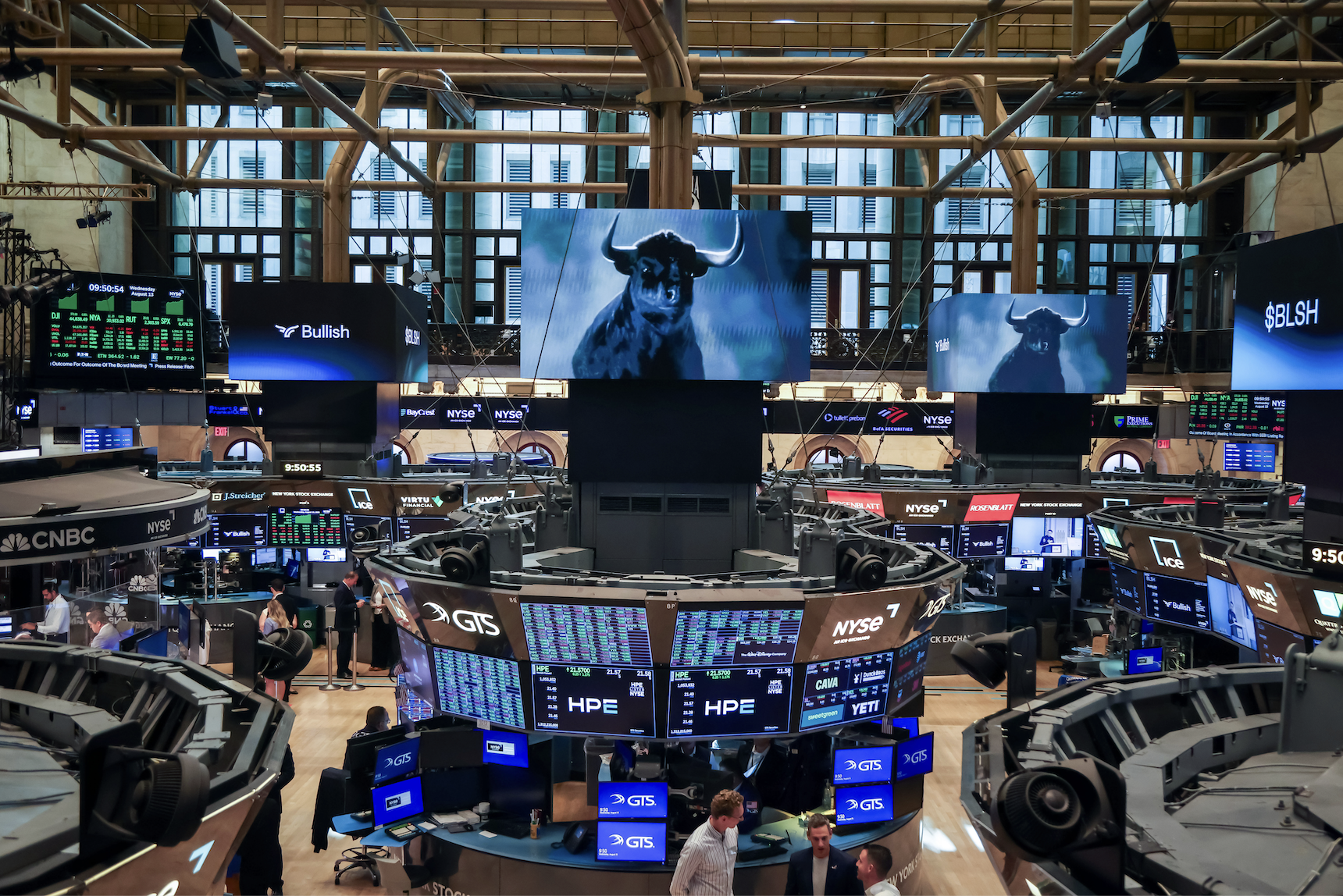
Bullish shares jumped 84% from the IPO price after the digital-asset exchange operator and owner of media outlet CoinDesk raised $1.1 billion in an initial public offering.
The word “bubble” gets tossed around quite a bit. Usually, it comes in the form of verbal arguments about whether prices have advanced to a point that’s “too high” in some sense. We can do much better than that. A bubble is a mathematical object.
China’s economy slowed across the board in July with factory activity, investment and retail sales disappointing, suggesting Beijing’s crackdown on destructive price wars and spillovers from Donald Trump’s tariffs are casting a pall over the world’s No. 2 economy.
Hedge funds added exposure to technology giants including Microsoft Corp. and Netflix Inc. in the second quarter, a stretch that saw an initial surge in volatility due to President Donald Trump’s trade policies but ultimately ended with major benchmarks posting significant gains.
A pair of new bond exchange-traded funds is making it easier than ever for investors to avoid taxes on coupon payments.
UnitedHealth Group Inc. shares jumped after funds piled into the company, which has been hampered by a federal probe into its business practices and weakening results.
The One Big Beautiful Bill Act, signed into law on July 4, 2025, introduces significant changes to the federal student loan system. The legislation aims to simplify repayment options, adjust borrowing limits and modify the structure of educational financing.
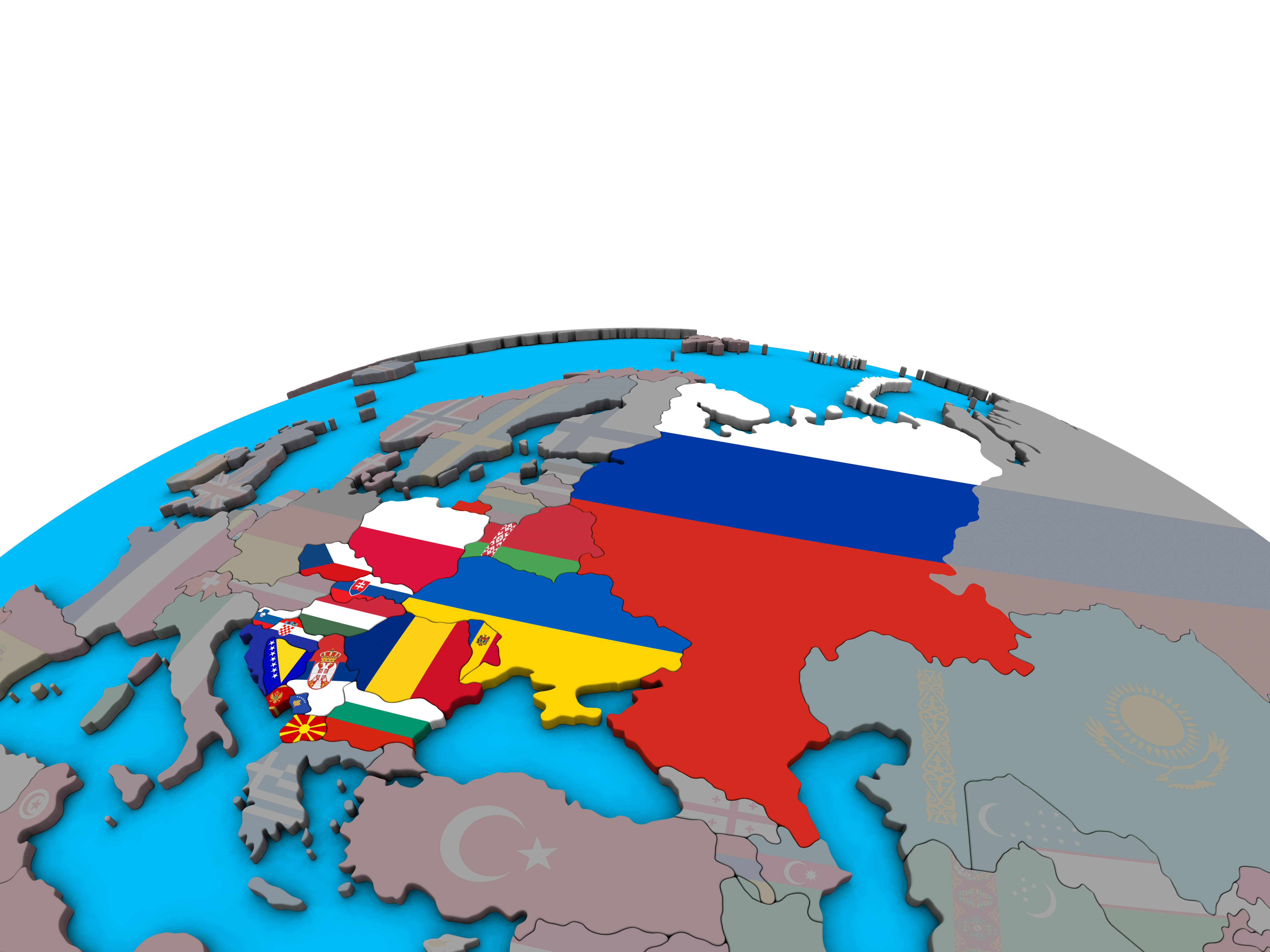
Last summer, we highlighted the investment potential in Eastern Europe.
Japan represents a compelling investment case, where local insight and rigorous research can uncover under-owned assets with the potential to deliver strong returns.
Economic resilience allowed the Fed to remain in wait-and-see mode in July, but July’s non-farm payroll report may cloud the horizon.
Wall Street banks are starting to cover firms that are not publicly traded. JPMorgan Chase & Co. kicked off the trend with a report on OpenAI Inc. Citigroup Inc. followed suit a week later with a list of roughly 100 large private companies it will focus on, predominantly in the tech sector.
President Donald Trump’s chaotic tariff policies have upended global trade and led to questions about whether the days of US exceptionalism and leadership that attracted capital from around the world are over.
The July CPI data indicated moderate price inflation and boosted optimism for a September interest rate cut, even though monetary inflation is on the upswing.
Portfolio Manager Dan Lyons and Research Analyst Luyi Guo explain recent developments in proposed pharmaceutical tariffs and “most favored nation” drug pricing and what both could mean for the biopharma industry.
The 24-hour news cycle reminds investors that tariffs still remain a factor. As such, for those looking to get commodities exposure as a portfolio diversifier will want to make sure they allocate strategically.
The U.S. economy grew at a surprisingly strong annualized rate of 3.0% in the second quarter of 2025, which far outpaced the post-2000 average of 2.3% and easily beat expectations.