For as long as I can remember, institutional investors have been hailed the “smart money” and retail investors derided as rubes.
In our last discussion, we spent some time reviewing the use of tariffs in the 19th century. Since contemporary discussions of tariffs usually begin and end with the Smoot-Hawley Tariff Act of 1930, there is a tendency to view tariffs myopically through the lens of the Great Depression.
The S&P 500 is often recommended as the default choice for individual investors. While it has delivered strong long-term results, today’s valuations and concentration raise important questions about whether it suits every investor’s goals.
One question we’ve been fielding quite a bit of late is what do you think the Treasury (UST) yield curve will do?
In recent years, pension funded status has markedly improved, with average funded ratios surpassing 100%.
Cuts are in store, but decisions will be weighed carefully.
GMO has posted a new 7-Year asset class forecast as of August 31, 2025.
Companies with dependable growth profiles might be just what equity portfolios need in turbulent times.
Cinthia Murphy, Investment Strategist at VettaFi, recaps the ETF landscape so far in 2025 and shares her outlook for the rest of the year. Daniel Noonan, Executive V.P. and Head of the Wealth Management Consulting Group at Cohen & Steers, discusses the firm’s entry into the ETF space, the growing momentum behind active management, and ETF strategies focused on real assets and alternative income.
The path ahead for the Fed remains complicated as it balances the need to support a softening labor market without stoking inflation. This video highlights the major economic news from the week of September 8th - 12th.
Last week's economic data presented a challenging picture for the U.S. economy with key inflation reports delivering conflicting signals and a timely labor market indicator added to the narrative of a softening labor market. Read through the major economic news from the week of September 8th - 12th.
With a few exceptions, the price of bitcoin has mostly stayed above the $100k marker throughout the summer. Better yet, the cryptocurrency’s price has continued to hit all-time highs as the summer has progressed.
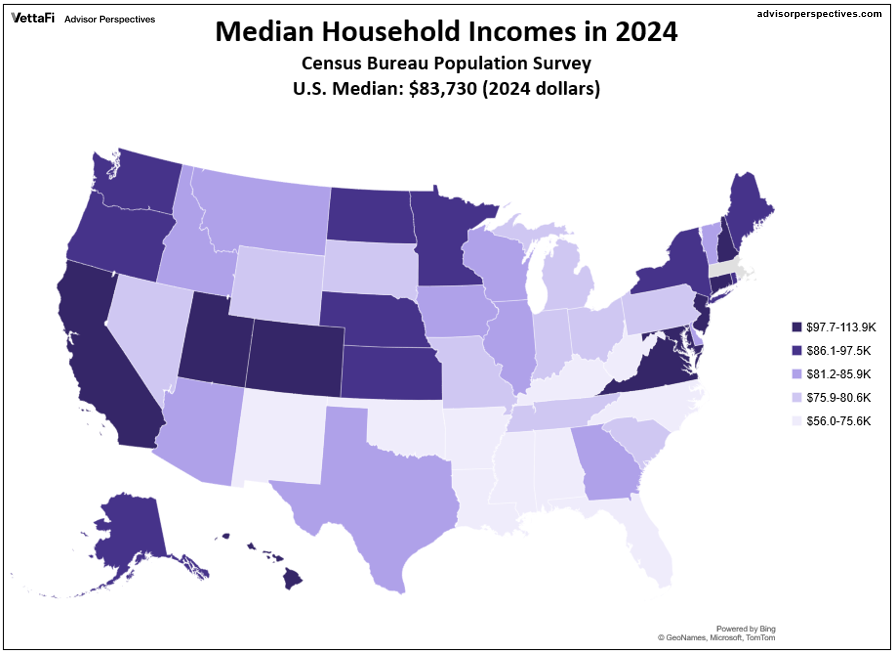
The median US income in 2024 was $83,730, up from $22,420 in 1984 — a 274% rise over the 40-year time frame. However, if we adjust for inflation chained in 2024 dollars, the 1984 median is $60.420 and the increase drops to 39%.
What a year it’s been for gold investing! As we approach the end of the third quarter, gold prices are up nearly 40% year-to-date, triggering upward forecast revisions by big firms, and attracting investor dollars on its way up.
A robust continuity plan is also a growth opportunity. It provides a clear pathway for next-gen advisors and potential third-party successors, who might support your practice now with the possibility of a full acquisition later. It turns a potential disruption into a strategic advantage.
Other than showing him how this impacts you, there really isn’t a lot you can do. If this impacts you so much you are finding it hard to trust your advisor, it might be time to consider whether this is the right place for you over the longer term.
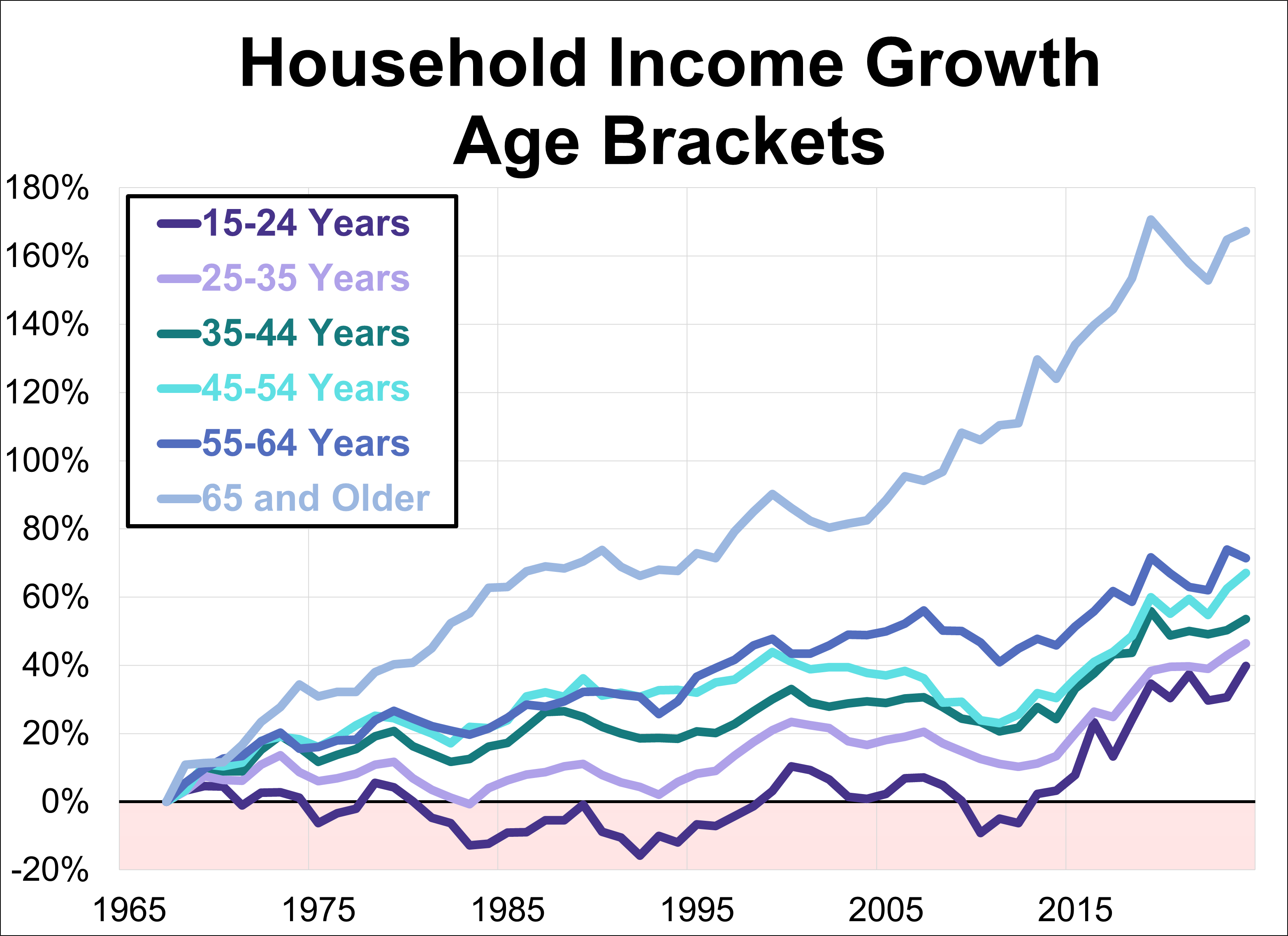
Our commentary on household income distribution offers some fascinating insights into average U.S. household incomes, but misses the implications of age for income. In this update, we examine household income with a focus on age bracket.
A stablecoin bidding war on one of crypto’s fastest-growing platforms is offering a preview of the industry’s next phase — and who might control it.
A blistering rally in Chinese technology shares accelerated on Wednesday as renewed bets on artificial intelligence sent a key gauge to the highest in nearly four years.
Gold dipped from Tuesday’s record as most asset classes saw muted moves ahead of the Federal Reserve interest-rate decision later today.
Bloomberg’s gauge of the dollar approached its lowest level since March 2022 ahead of the Federal Reserve decision, where policymakers are expected to resume cutting interest rates to prop up a weakening labor market.
Federal Reserve officials are expected to backstop a faltering US labor market by lowering interest rates Wednesday, marking a shift after worries about tariff-induced inflation kept them on hold all year.
Customization can significantly impact after-tax yield. Explore powerful tools for tailoring investment strategies to meet unique client objectives.
Mortgage bond reinvestment could be the Federal Reserve’s most effective and immediate tool to unlock the housing market – without even touching interest rates.
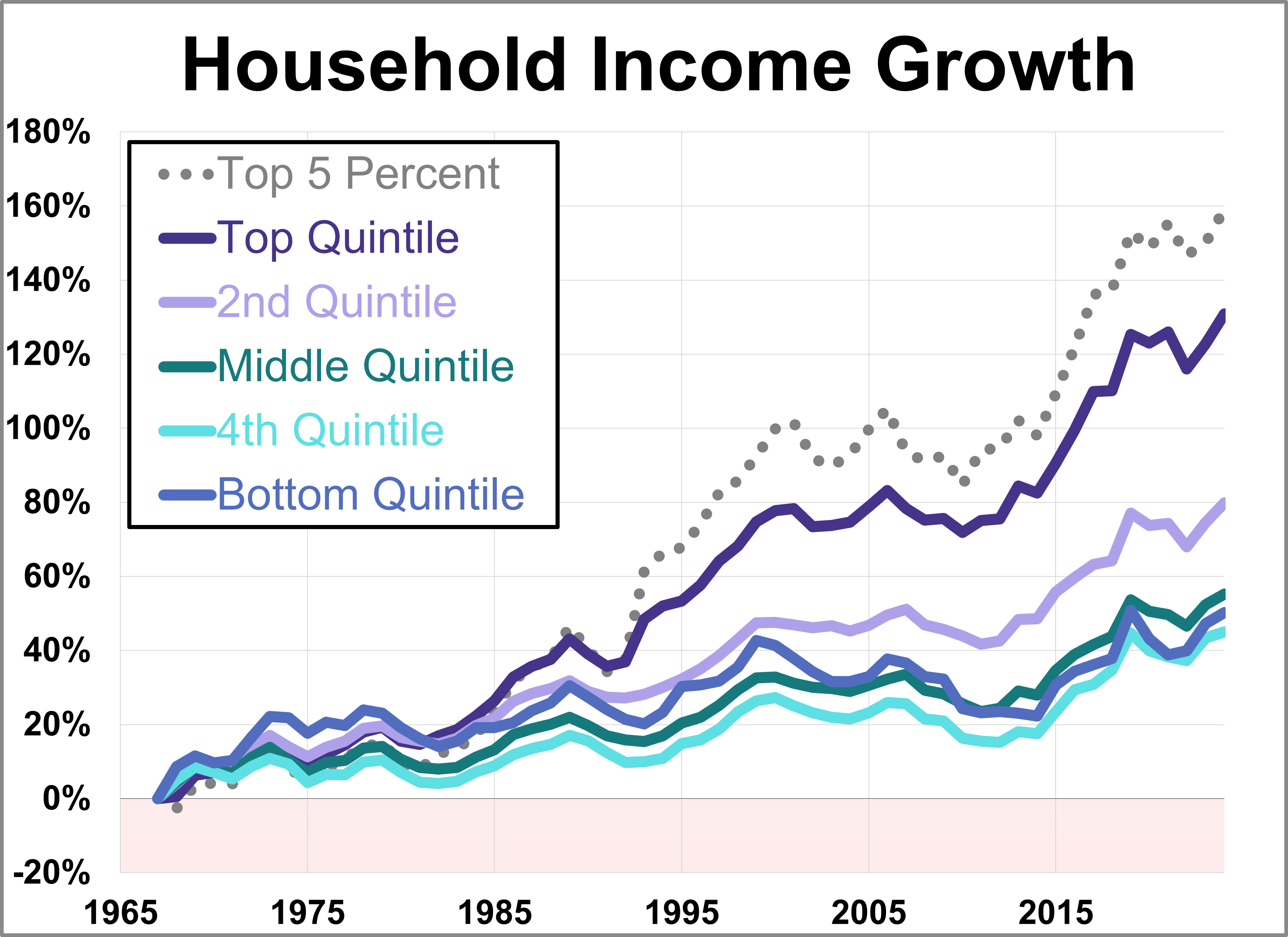
The Census Bureau recently released its annual report on household income data for 2024. The mean (average) household income for the middle quintile rose 4.5% to $84,390. Let's take a closer look at the quintile averages, which date back to 1967, along with the statistics for the top 5%.
According to our IPO data, licensed from IPOScoop, six companies IPO’d last week, kicking off with the long-awaited debut from Swedish payments company Klarna (KLAR) on Wednesday.
Global bond markets have sold off recently due to uncertainty surrounding key political changes most notably in France and Japan.
Nick Goetze discusses fixed income market conditions and offers insight for bond investors.
The late-summer calm in financial markets shows an undercurrent of optimism. Stocks have been on a tear, with the S&P 500 rebounding strongly to notch roughly 18% gains for the year, while overseas equities are up even more.
Greater mega-cap stock exposure carries significant upside risks, but concentration can also work against investors—helping make the case for diversification in portfolios.
The U.S. economy in late 2025 presents a complex but increasingly coherent picture. Labor market dynamics, trade policy uncertainty, and evolving monetary conditions are each contributing to a recalibration of the economic landscape.
In a year that has seen foreign equities ETFs stand out so strongly, emerging markets may be somewhat underrated. Broad, global equities strategies — especially those that exclude U.S. firms — have done very well as investors have looked abroad to diversify.
Treasuries have powered into first place among major sovereign bond markets this year as the prospect of a new round of Federal Reserve interest-rate cuts overturns widely held bearish views on US debt.
US equities powered to fresh highs on Monday at the start of a high-stakes week for financial markets, with the Federal Reserve largely expected to resume its interest-rate cutting.
Once again, the president is questioning what purpose is served by publicly traded companies issuing quarterly earnings reports. Not only did Donald Trump raise this issue back in 2018 — so did Barack Obama in 2015.
Wall Street traders gearing up for the Federal Reserve decision refrained from making big bets as they awaited clues on the path of rates that will shape the outlook for markets over the next few months.
JPMorgan Chase & Co. will cut the weight of the largest bond issuers in its flagship emerging-market index, diverting investor flows from the likes of China and India toward smaller nations.
Advisors often tell me they want to "do more marketing," but when I dig deeper, they're stuck in analysis paralysis, building elaborate strategies, refining value propositions, and planning event series that never happen.
Technology has made customization operationally viable across entire books of business. But the real opportunity lies in how it reshapes the advisor/client relationship. When complexity is handled behind the scenes, advisors can focus on deeper conversations, clearer guidance, and lasting alignment.
Trust isn’t just a buzzword in business anymore — it’s the foundation of everything. In today’s world, where skepticism is at an all-time high, trust has become the most valuable currency you can offer.
On this week’s edition of Market Week in Review, Pierre Dongo-Soria, principal investment strategist for EMEA, unpacked what the latest economic data from the United States could mean for interest rate cuts.
With the Federal Open Market Committee (FOMC) meeting on the horizon, we’ve taken a closer look at recent economic developments to better understand the landscape Federal Reserve (Fed) officials will be navigating during the two-day meeting, which begins September 16.
In spite of what appeared to be relatively good data, many polls throughout the 2024 election cycle showed more than half of all voters rated the economy as “poor.” That left the Biden/Harris team often wondering why they couldn’t get credit for what official statistics said was a robust economy.
Gold mining equities are having a blockbuster 2025. Prices for the precious metal have hit one all-time high after another, and the miners who pull it from the ground are rewarding investors with some of the best returns in the market today.
We will examine five major investment strategies: value, growth, momentum, dividend, and index investing. Each comes with strengths and weaknesses. More importantly, each offers lessons from history’s greatest investors, including Benjamin Graham and Warren Buffett.
Although the outgoing chair of the US Federal Reserve cannot correct for the institution's biggest recent policy mistakes, he can, and should, address other failures that are equally important for the economy.
VettaFi’s Head of Research Todd Rosenbluth discussed the Thornburg Multi Sector Bond ETF (TMB) on this week’s “ETF of the Week” podcast with Chuck Jaffe of “Money Life.”
Join the experts at State Street Investment Management, Market Guard & Auour Investments for an educational webcast that explores which fixed income strategies and tactics might make sense in the current market environment.
For investors who want some chaos protection, something in their portfolio that’s not correlated to U.S. or developed market stocks and bonds, a managed futures strategy could be the ticket.
Last week’s data sharpened the focus on the pivotal Fed meeting this week. I expect a 25-basis point cut, with real potential for dissents on both sides. Markets are actively gaming out a larger move, but the bar for 50 is still high and would likely require a notably weak retail sales print.