We steer our financial course through life, choosing how much to spend and how to invest what’s left, periodically updating our choices as circumstances evolve. This is the essence of financial planning: specifying in advance a desired spending and investment policy conditional on relevant aspects of our life, varying investment opportunities, and our preferences for the benefits derived from our wealth.
Until this year, U.S. stocks had consistently been the best-performing asset class over the past 15 years, so diversification did not work. And as a result of that runup, the U.S. stock market became very expensive. However, this year, diversification outside the U.S. into foreign stocks has added value, and gold is shining very brightly.
Conversations with clients about alternatives should focus on their specific goals, whether that's potentially enhancing returns, reducing risk, generating income, or achieving better diversification.
Clients work a lifetime for financial freedom. Once retirement comes, they often have a large nest egg to spend. However, there can also be a huge fear of spending the portfolio down.
Gold rose near a record high as traders geared up for an anticipated easing of the US Federal Reserve’s monetary policy this week and looked for clues on further rate cuts this year.
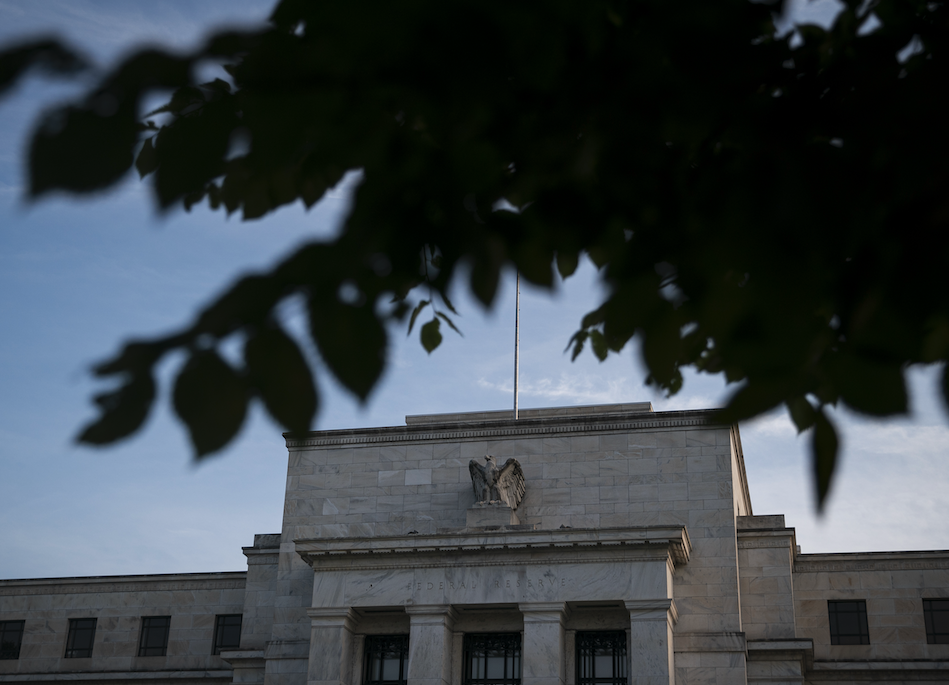
A key question for investors this week is whether Federal Reserve officials push back against market bets on a series of interest-rate cuts extending into next year.
US equities extended gains early Monday to kick of a high-stakes week for financial markets, with the Federal Reserve largely expected to resume its interest-rate cutting cycle.
T. Rowe Price Group Inc. has secured financing from Walmart Inc. heir Lukas Walton’s impact platform for a new corporate bond fund, which will support investments in themes including water security and marine protection in emerging markets.
China ruled that Nvidia Corp. violated anti-monopoly laws with a high-profile 2020 deal, ratcheting up the pressure on Washington during sensitive trade negotiations.
Despite the slowdown, the Federal Reserve remains hesitant. Chair Powell noted softening labor conditions at Jackson Hole and suggested the door is open to rate cuts. But no concrete shift in policy has occurred.
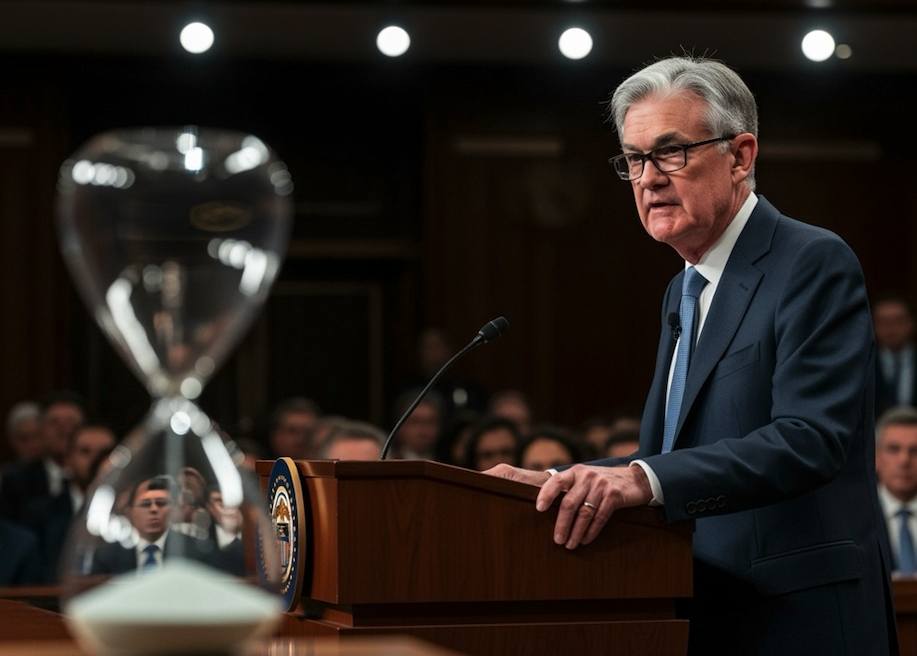
No one wants to be a party pooper. It drives away friends and makes you generally unpopular. But if you are a monetary policymaker, ending the party before it gets too wild is quite literally your job.
Today, volatility isn’t a blip on your radar; it’s the landscape. The question isn’t if, but when the next market shaking event will hit your portfolio. So, are you equipped—or exposed?
Since the first rate cut of this cycle in August of 2024, the S&P 500 has risen by roughly 16%, broadly in line with historical performance during prior expansionary easing episodes.
A Federal Reserve rate cut won't necessarily lower longer-term bond yields or mortgage rates.
Last week's economic data presented a challenging picture for the U.S. economy with key inflation reports delivering conflicting signals and a timely labor market indicator added to the narrative of a softening labor market.
In a recent LinkedIn newsletter, we highlighted how mid-caps have historically delivered a compelling mix of growth and resilience, the "sweet spot" between innovation and maturity.
Artificial intelligence (AI) continues to defy the norms of linear progress and present a type of exponential growth unlike no technology before, according to BlackRock’s Tony Kim. This fast evolution has brought us to what Mr. Kim calls “AI at the frontier,” a characterization that was confirmed on his recent tour of 25 public and private technology companies across Silicon Valley.
Investor and consumer surveys indicate that confidence is stabilizing following the initial tariff agreements, and consumers’ spending and income remain robust.
A key theme dominating global financial markets in recent weeks has been the general upward pressure on sovereign bond yields, particularly at the long end of government bond market curves.
It is certainly possible for the Federal Reserve, as the biggest player on the block, to lower money market rates over the course of the next few meetings. However, if it turns out to have been orchestrated out of political expediency rather than as stimulation for a weak economy, inflation will result. We saw a similar movie in August 1971.
Every time the mainstream declares price inflation dead and buried, new data comes out and rains on the funeral.
The Russell 2000, home to some of the riskiest stocks on the market, has been on a tear — and a spate of Wall Street strategists say the rally is just getting started.
Rising yields in global government bond markets reflect expectations that interest rates will remain higher, rather than concern over brewing fiscal crises, according to BlackRock Inc.
WisdomTree Inc. launched its first tokenized fund that gives investors exposure to private credit, marking the latest attempt by Wall Street to connect fast-growing markets with blockchain technology.
Companies are moving some of the excess cash on their books into longer-term securities, betting that rate cuts from the Federal Reserve will make these holdings more lucrative.
In the latest Money Metals Midweek Memo, host Mike Maharrey analyzed the ongoing bull markets in gold and silver, highlighting record highs, historical ratios, supply deficits, and why silver may now be poised for an even stronger run than gold.
In light of the major market shocks of 2025, advisors are tasked more than ever with helping clients manage the psychological aspects of their money, while keeping an eye on market opportunities and headwinds that can impact their investment portfolios.
Mortgage rates in the US fell by the most in a year, fueling a surge in refinancing demand from homeowners looking to save money.
US stocks climbed on Thursday, posting fresh records amid hopes that an in-line inflation report will push the Federal Reserve to cut interest rates next week.
A record number of private equity firms will turn into so-called zombie funds this year, as they struggle to reel in new investor cash, according to Ian Charles, co-founder and managing partner at Arctos Partners.
BlackRock Inc. is exploring how to give one of Wall Street’s biggest investment products a digital makeover.
Treasuries rose as traders latched onto fresh signs that the US labor market is softening, bolstering their outlook for how much the Federal Reserve might cut interest rates in the coming months.
With just a week remaining until the highly anticipated September Federal Open Market Committee (FOMC) meeting, Wednesday’s wholesale inflation print and Thursday’s consumer inflation results for August are the last major hurdles lying between the expected resumption of the FOMC easing cycle.
A look inside why more Americans are turning to lifetime income.
The One Big Beautiful Bill Act offers valuable tax benefits specifically for businesses. Our Bill Cass discusses the highlights of the new law and how business owners may benefit.
While equity markets are buoyant worldwide, emerging markets stocks and bonds are the only assets that merit an 'overweight' allocation.
It’s no understatement to say this could have been the most anticipated jobs report in quite some time.
For much of its nearly 17 years on the market, bitcoin has been viewed as a volatile asset. The largest cryptocurrency’s history is chock full of dramatic price swings in both directions and extended periods of turbulence.
Last week's employment update seems likely to prompt a shift in the Federal Reserve's monetary policy. The August jobs report revealed a significant slowdown, with Nonfarm Payrolls (NFP) increasing by only 22,000, well below the 75,000 expectation from economists surveyed by Dow Jones.
As summer comes to a close and life adjusts back to normal for most of us, we thought it was a great time to get back to basics and take a look at the current U.S. stock market.
We’ve received many client questions about seasonality in stocks, and specifically about the ‘September Effect’. This is the theory that investors should sell their stocks after Labor Day to avoid autumn volatility.
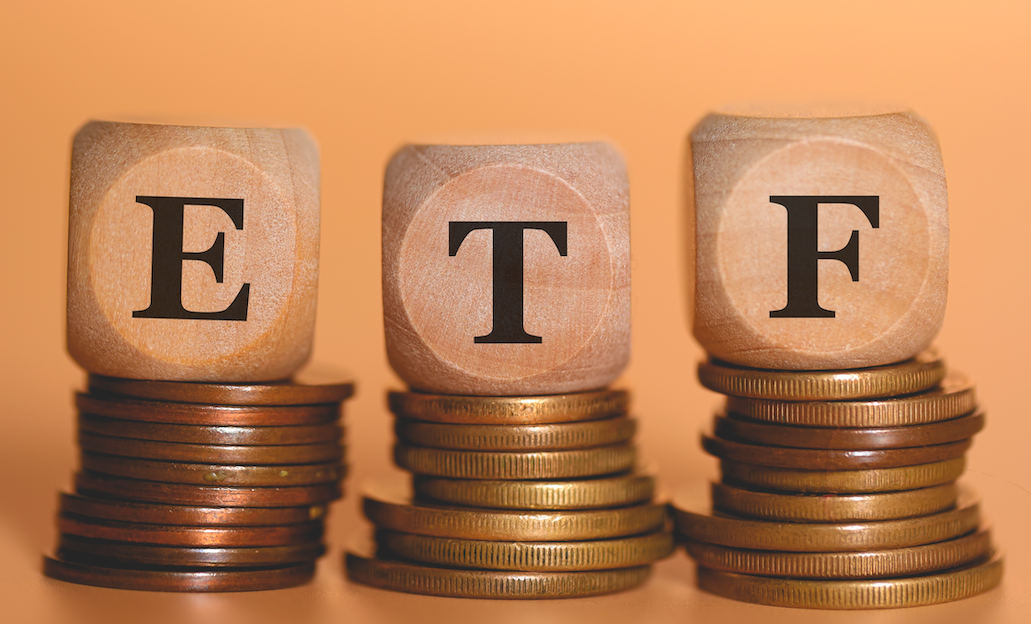
Assets under management (AUM) by ETFs globally closed at another month-end peak and is now just 6 percent below the all-time high reached during the pandemic.
Markets now see more than an 80% chance of a rate cut from the Fed this month, and it may be a good time to reallocate short-term cash positions to medium-term fixed income positions with maturities between 5 and 10 years.
Before you fully consider purchasing a new ETF, you need to understand what makes the fund different from what you own.
One of the standout developments in financial markets in August 2025 was the unprecedented surge in ETF inflows.
Learn strategies to effectively integrate private credit and debt into your clients' portfolios, boosting returns while managing risk.
Emerging markets are becoming more attractive as the prospect of an upcoming US rate cut — combined with softer local inflation and relatively low public debt — strengthens the investment case, according to Navin Hingorani, Singapore-based portfolio manager at Eastspring Investments.
Credit traders are increasingly relying on algorithms, decades after they began dominating equity markets, and they have become reliable stand-ins when activity would normally sag. The result has been smoother markets with less volatility and lower trading costs.
It’s tough being a SpaceX competitor no matter if you are building rockets, providing satellite internet or seeking to enter the nascent direct-to-mobile-phone industry.
This year the world’s four largest tech firms will spend $344 billion on AI, mostly on data centers used to train and run so-called large language models (LLMs) like ChatGPT that can process text, audio and visual content.