China’s collapsing investment is as unprecedented as it is hard to explain. A plunge estimated at more than 11% in October from a year earlier was the worst single-month performance since the initial Covid lockdowns at the start of 2020, official data showed on Friday.
There’s one thing Warren Buffett seems to credit for his success more than anything else: luck. He’s says he’s lucky to have spent most of his life in Omaha, raising a family and building a business smack in the middle of the country.
Investors are pouring money into active ETFs, but a closer look reveals a migration of assets into the wrapper instead of a resurgence in alpha-chasing bets.
The retirement landscape in America is undergoing a quiet revolution, according to Vanguard’s inaugural "How America Retires" report.
As the year winds down, many investors focus on year-end charitable giving and tax planning. Finding a charity and donating money is the easy part. Taking slightly different approaches to gifting can yield dramatically different results from a tax perspective.
Doug Drabik discusses fixed income market conditions and offers insight for bond investors.
On the Money Metals podcast, host Mike Maharrey sits down with Philip Newman, founding partner and managing director at Metals Focus in London. Newman explains that Metals Focus, launched in 2013, is a pure precious-metals research house; it does not trade.
US equities dropped at the open, poised to snap a four-session winning streak, as investors continue to grapple with a lack of US economic data despite the end of the government shutdown.
A bipartisan group of senators struck a deal on November 9th to re-open the government, with seven Democrats and one independent joining 52 of the 53 Republicans to reach the elusive 60-vote supermajority needed to move forward.
Taiwan-based insurers are gearing up for a big overhaul in their regulatory framework. The transition to the Taiwan Insurance Capital Standard (TW-ICS) is slated for January 2026, though some provisions will have a lengthy phase-in period.
Are U.S. stocks approaching bubble territory or is the bull run able to press on? Active investor Tony DeSpirito is optimistic but says pockets of bubble-like exuberance could create mispricings ― making it “an exciting time for stock selection.” He suggests three areas that may be ripe for the picking.
Hints of reforms to ease foreign-ownership limits in Saudi Arabia set off the sharpest rally for its equity market in years this autumn, reigniting investor curiosity.
The Fed can turn QE back on like they did in the latter part of 2019, most likely by buying T-bills. It is important to note that this would be purely a technical mechanism for the funding markets and not a dual mandate monetary policy consideration.
Despite these successes, many finance executives struggle to quantify the actual return on AI, as the required spending on development, data clean-up, and rigorous testing is immense and mostly paid upfront.
When we look at broader multi-asset portfolios that tap into real assets, including digital assets, as well as inflation fighters like income securities and real return strategies, we find that they have delivered strong results to the debasement-trade crowd.
This technology is moving quickly, with most businesses only in the early stages of understanding its capabilities. Whether and how fast AI can unlock new, transformative, lucrative idea generation or unleash a force in the U.S. economy similar to the “China shock” – the period in the early 2000s when outsourcing shrunk the U.S. manufacturing base and structurally changed the U.S. labor market – is yet to be seen.
According to a survey conducted by BlackRock and YouGov, ETF adoption continues to expand while also seeing a shift demographically.
The prolonged government shutdown has caused significant delays in official statistics, which has amplified the importance of private reports. This video highlights a handful of secondary reports from the week of November 3rd-7th.
Join the experts at WisdomTree for an in-depth look at the broader macroeconomic picture and a product due diligence session covering practical strategies for dealing with the challenges ahead
The nuclear energy sector is experiencing a powerful revival, driven by macroeconomic shifts and technological innovation. For financial advisors and investors, understanding these trends is key to identifying investment opportunities as the nuclear energy landscape evolves.
Last week’s economic data sent mixed signals. Consumer sentiment plummeted to a near-record low on economic anxiety, and the manufacturing sector continued its long contraction.
The Federal Reserve cut its Fed Funds rate by 25 bps, the 10-year Treasury yield went up 10 bps, and the S&P 500 ended the month of October up over 2%. Let’s unpack those results.
Following a 9-month hiatus in its rate-cutting cycle, the Federal Reserve (Fed) recently resumed monetary easing, with cuts in September and October 2025 in response to signs of a softening labor market.
Nashville’s airport authority plans to sell $1.3 billion of debt in January to meet unprecedented growth — an offering that also bodes well for the broader market to see large deals next year.
Investors have poured into gold – but they may also see compelling benefits from a broad-based commodity allocation.
Warren Buffett has raised a red flag about a segment of the housing market that deserves more attention – senior homeowners (i.e. homeowners over sixty years old). He has noted that Americans over 60 have been taking on increasing amounts of debt, a trend that could pose broader risks to the economy.
Stocks in the US seem unstoppable but investors shouldn’t be complacent because there are a number of markers suggesting the rally is more fragile than it seems.
As a debt-fueled AI investment boom takes off, especially in cloud and data centers, many are worried that a tech bubble is forming in the global economy.
The equity arena is certainly booming with cheers following the Fed’s second rate cut. But the reaction from the fixed income crowd might be more mixed.
The real issue comes when these investments are held in tax-advantaged accounts like a 401(k) or traditional IRA. Since the income is generated by a partnership, it will be considered Unrelated Business Taxable Income (UBTI) in these types of accounts.
There’s always plenty of downside catalysts, but after a healthy earnings season and nearing shutdown resolution – there are some positive longer term catalysts in that “investors can begin to focus on what is in front of them.
Anecdotes such as these are helpful reminders that long-term investors need not chase the hottest fads in the market and can at times get ahead of the crowds by simply paying attention to the world around you.
US efforts to develop artificial intelligence systems and the nuclear-energy infrastructure needed to power them are comparable to the World War II initiative to build the first atomic bomb, according to Fermi Inc., a power-plant developer planning a massive data-center campus in Texas.
It’s been one year since President Trump secured his second term, and we’re taking stock of how the economy and financial markets have performed during that time, highlighting both the wins and the challenges.
Even amid rising markets, US investors should be aware of the hazards of a fast-changing environment.
Investors are increasingly viewing bonds from large corporations like Microsoft and Siemens as safer than the sovereign debt of their home governments, a conclusion driven by a sharp contrast in fiscal management.
VettaFi takes a look at why investors are focusing on nuclear energy investments.
Join SS&C ALPS Advisors and VettaFi for an informative discussion with Energy Transfer to learn more about the company and midstream/MLP investing more broadly.
Publishing in the right places helps you showcase your expertise, demonstrate your authority, and differentiate yourself from other advisors. Here are a few of our best tips for getting published and growing your visibility in front of the right audiences.
Part of growing into a lead advisor role is learning how to coach and develop team members. It involves showing respect and gaining support through influence. Moving from peer to leader is not an easy transition for most people to make.
Audio deepfakes—convincing, AI-generated voices created from minimal sound bites—are emerging as a significant threat to the wealth management industry by allowing criminals to impersonate clients and authorize fraudulent high-value transactions.
The prime-age labor force participation rate of 84.6% in January 1999 is still a record high. But the pace of hiring distinguishes the two eras. In the 1990s, anyone with marginal tech skills could readily find work. Information sector employment grew over 27% from 1995 to 2000, while total nonfarm employment gained 12%.
While we wait for federal data to come back online, private sector gauges continue to underscore still-weak manufacturing, resilient services, and mediocre job growth.
Looking back to the 1990s need not be just a matter of nostalgia. Those too young to have lived it envy the fortunes made as technology firms grew. Seasoned investors who worked through the cycle can warn us of the pain of a correction. Along the way, the cycle taught useful lessons.
LPL Research explores how AI-driven investments and intellectual property are reshaping U.S. economic growth, capital flows, and market dynamics.
Company executives are sounding remarkably upbeat about the economy this earnings season, even as trade tensions linger and stock valuations look stretched.
For decades, these institutional allocators took roughly the same approach to managing the vast piles of cash under their control: They diversified by divvying up the money across asset classes — for example 40% in stocks, 40% bonds and 20% alternatives — then stuck with it by rebalancing now and again when things got out of whack.
Costing tens of thousands of dollars each, Nvidia Corp.’s pioneering AI chips make up a hefty chunk of the $400 billion that Big Tech plans to invest this year — a bill expected to hit $3 trillion by 2029.
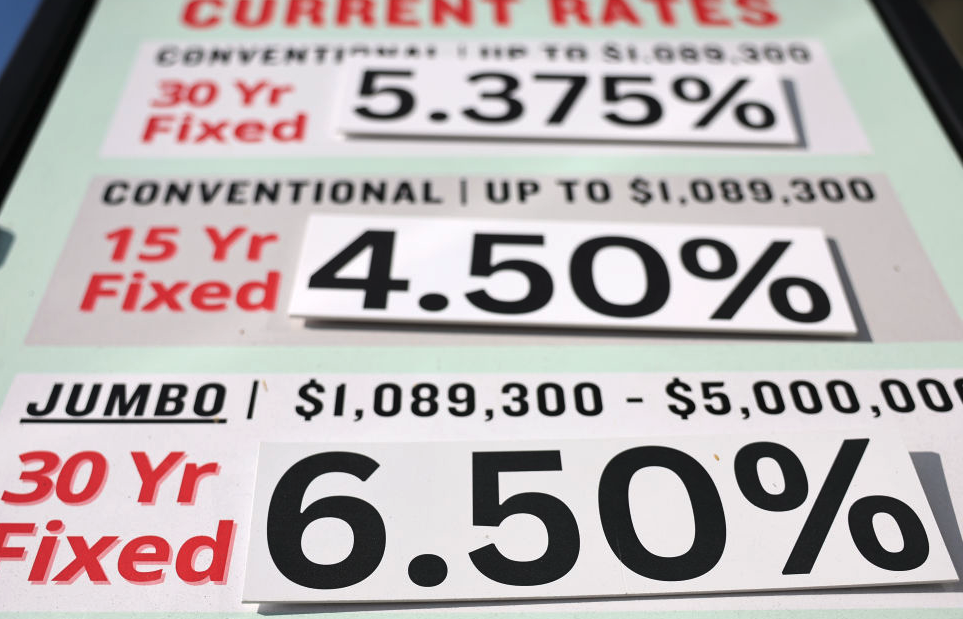
First, it would mean lower monthly payments, unless interest rates rise a lot. Yes, buyers who stay in their home for 50 years and pay off their mortgage over that time will pay much more in interest than they would have with a 30-year mortgage.
Although the stability of the consumer depends on its ability to generate labor income, i.e., wages and salaries, households’ financial conditions are very important in supporting the stability of consumption.