With the first half of 2025 in the books, it’s been a very interesting six months — emphasis on “V” because the S&P 500 saw a nice V-shaped formation following the April sell-off. As markets always reveal, interesting times call for interesting ETF trends to follow.
In recent months, markets have whipsawed amid changes in trade policy, geopolitical shocks, concerns about fiscal sustainability, challenges to central bank independence, technological advancements, and earnings surprises in both directions. Despite this, stocks and bonds in much of the world are close to where they began the year.
When the Fed increased the M2 money supply by over 40% during the COVID crisis, our instinct was that the implications would extend far beyond a temporary boost to the U.S. stock market and higher inflation. That intuition is proving accurate. We’re now seeing the long-term ripple effects play out in real time across multiple asset classes and global markets.
For good reasons, many investors have a love-hate relationship with commodity investments. Operationally, the annoying K-1 form complicates tax filing, although thankfully the industry has started to launch “no K-1” funds.
This year’s formidable challenges have clarified strategic lessons for equity investors to apply in the coming months
The marathon Senate budget vote took center stage early and stocks slipped from yesterday's all-time highs. Job openings, Powell, and manufacturing data are top of mind.
Goldman Sachs entered the ETF market nearly 10 years ago, yet two of its most popular products in 2025 are relatively new, both with less than a two-year track record.
India has seen foreigners leaving the market for most of 2025. For this and other reasons, India has become one of the bigger shorts in our Systematic Global Macro Strategy’s equity portfolio
As direct lending matures and other private credit areas expand, active investors can apply relative value strategies across sectors – and even entire markets – to pursue enhanced outcomes.
Markets notched fresh all-time highs on Friday with a positive tone and geopolitical outlook. Swift retreat in oil back to pre-strike levels, combined with friendlier NATO negotiations and de-escalated fighting in Iran restored risk appetite.
For sophisticated investors, this technical shift marks a subtle but powerful pivot in monetary mechanics. It could create demand for Treasuries, improve market liquidity, and push yields lower at a time when the economy is slowing.
In a speculative market chasing AI and high beta, this report makes the case for the steady power of compounding dividends reminding investors that, especially late in the cycle, a bird in the hand may truly be worth two in the bush.
Only a subset of subsidies will be rolled back.
A potential conflict with Iran has consistently appeared in our monthly Market Risk Monitor for over two years. Now that risk has materialized. Our equity portfolio managers assess the implications for global markets.
With the market roughly at the midpoint for 2025, investors and advisors are still assessing how changing macroeconomic conditions could affect their fixed income portfolio.
Easing trade tensions and hopes the Senate could pass a budget gave stocks an early lift after Friday's record highs. The week is packed with jobs news and Powell talks tomorrow.
Readers of a certain age will no doubt recall President Ronald Reagan launching one of the most ambitious military buildups in American history.
Market breadth can help gauge strength or weakness. Methods include tracking the number of stocks trading above or below moving averages or making new highs or lows.
Growth is expected to decelerate, but not come crashing down.
In a recent newsletter, we explored the explosive growth of ETFs and the implications for portfolio construction. In this follow-up blog post, Lauren and I wanted to take that conversation a step further—diving deeper into how advisors can navigate the ever-expanding ETF universe while staying true to their investment philosophy.
Chief Economist Eugenio J. Alemán discusses current economic conditions.
Thematic investing has experienced cycles of popularity over time. In less cautious market environments, investors often turn their attention to ambitious ideas — such as disruptive technologies or other transformative future trends — looking beyond traditional equity ETFs.
In 1852, Karl Marx said "Men make their own history, but they do not make it as they please; they do not make it under circumstances chosen by themselves, but under circumstances directly encountered and transmitted from the past."
This article will help you evaluate whether it’s still a good time for clients to gain Bitcoin exposure—even after its recent all-time high—and how to do so responsibly. You’ll learn how Bitcoin fits into a diversified portfolio, what leading financial institutions forecast for its future, and why spot Bitcoin ETFs offer a regulated, practical entry point for long-term investors.
The United States’ tariff announcement on April 2, 2025, created significant market volatility, as the tariffs were perceived as higher, broader, and more punitive than expected, and the implementation sooner.
Market uncertainty needs a tailor-made approach to fixed income for advisors to construct the ideal portfolio for their clients. There’s an easier solution that encompasses an active management approach, various income sources, and low cost. It’s the Vanguard Multi-Sector Income Bond ETF (VGMS).
For years, Americans have lamented that rising housing prices and elevated mortgage rates have made homeownership unaffordable for too many first-time homebuyers, while prompting many homeowners to stay put rather than sell.
Thematic ETFs are making a comeback, and one theme in particular dominates conversation. Artificial Intelligence remains top of mind for investors. TMX VettaFi’s Zeno Mercer and Todd Rosenbluth discussed the disruptive technology.
The Fed’s credibility rests not on never being wrong, but on being adaptive and forward-looking. Inflation has cooled, wage growth has moderated, and economic momentum is slowing. Now is the time for the Fed to focus not on headline fears, but on real-time data.
We continue to suggest an "up in quality" fixed income bias for the short run, but investors can still consider some of the riskier parts of the fixed income market in moderation.
Until recently, commercial real estate appeared poised for a long-awaited rebound. However, 2025 has revealed a new reality: Uncertainty has become structural.
It’s often said there are only two certainties in life: death and taxes. However, the tax landscape may become somewhat murkier, as the recently passed U.S. House budget bill may potentially lead to some non-U.S. investors paying more taxes than previously anticipated.
As the advisory landscape continues to evolve, one theme is increasingly clear: advisors need more flexibility to meet the diverse and growing expectations of their clients.
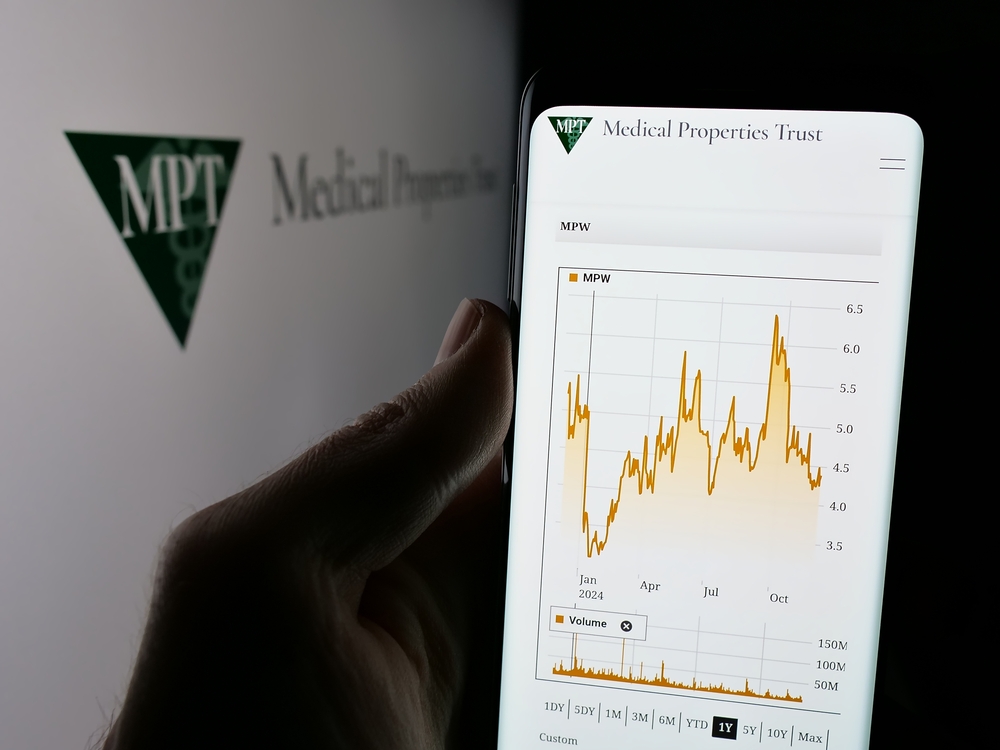
Chuck Carnevale provides an update on Medical Properties Trust (MPW), a hospital real estate investment trust (REIT) he has held for several years.
NATO's new spending pledge eases security concerns but adds to fiscal pressures.
Until that US government debt-crisis moment arrives, which we will get through, things will muddle along.
Last week's economic data presented a mixed picture, emerging against the backdrop of a record market rally and rising inflation.
Index futures inched upward premarket as the headline May PCE data landed in line with expectations, though the core data and annual figures were up slightly.
Money Metals Midweek Memo host Mike Maharrey isn’t buying the recent bearish turn in gold forecasts from Wall Street.
Today’s investment landscape, shaped by persistently above-target inflation, structurally higher debt and deficits, and reduced global dollar recycling into US financial markets, has contributed to elevated market volatility alongside historically high policy uncertainty.
The newest generation of college graduates will switch jobs more than a dozen times over the course of their careers. They will juggle side gigs, launch businesses, and step in and out of traditional roles.
Money doesn’t buy happiness. But financial security means you can devote your time and energy to things you actually want to be doing.
The Fed left rates unchanged and signaled it’s still in wait-and-see mode, even as inflation risks and policy uncertainty persist.
As tax policy discussions continue on Capitol Hill, the Senate Finance Committee recently released its version of the tax bill that would avoid the expiration of the Tax Cuts and Jobs Act (TCJA).
ETFs have surged in popularity thanks to their transparency, low costs and tax efficiency. But behind the scenes, a unique dual-market system powers their liquidity and accessibility.
Former Federal Reserve Vice Chair Richard Clarida explains where yields may be headed, as well as positioning considerations for the long-run by charting the relationship between r* and term premium.
Jeff Chang, CFA, President of Vest, a pioneer of Target Outcome Investments with some $50 billion under management, examines how geopolitical events like U.S. airstrikes can create ripple effects across global markets, and why the actual impact often depends more on context than headlines suggest.
Surprisingly, oil prices are receding after U.S. strikes on Iranian nuclear facilities over the weekend.
It wasn’t too long ago that you could confidently proclaim that most of the Street was ebullient, maybe even wildly so, with respect to the greenback’s prospects.
The Senate is getting close to the finish line on its version of the "One Big Beautiful" tax-and-spending bill.