Key Takeaways
- As of June 2025, the U.S. ETF market has surged past 4,000 listings, a 20% year-over-year increase, highlighting both the innovation and complexity financial advisors must navigate today.
- While ETFs now offer active, thematic and tax-efficient strategies, advisors must shift focus from merely selecting ETFs to optimizing implementation, aligned with portfolio goals.
- Advisors transitioning from mutual funds to ETFs can maintain their core investment philosophies while reducing costs and improving operational efficiency through WisdomTree’s portfolio consultations.
In a recent newsletter, we explored the explosive growth of ETFs and the implications for portfolio construction. In this follow-up blog post, Lauren and I wanted to take that conversation a step further—diving deeper into how advisors can navigate the ever-expanding ETF universe while staying true to their investment philosophy.
Let’s start with the landscape: as of June 2025, there are now over 4,000 ETFs listed in the U.S., a 20% increase in just the past year.1 That kind of growth is a testament to the continued innovation in the space, but it also brings complexity. For financial advisors, the challenge is no longer about finding ETFs, it’s about identifying the right ones that align with their strategy, deliver operational efficiency and ultimately enhance client outcomes.
The ETF Evolution
It wasn’t long ago that ETFs were viewed primarily as passive tools for broad beta exposure. But the ETF structure has matured considerably. Today’s ETF menu includes active strategies, precision-based sector tilts, thematic exposures and even mutual fund conversions—many of which are designed to deliver better tax efficiency, greater flexibility and improved cost structures.
Let’s talk about that last one: cost.
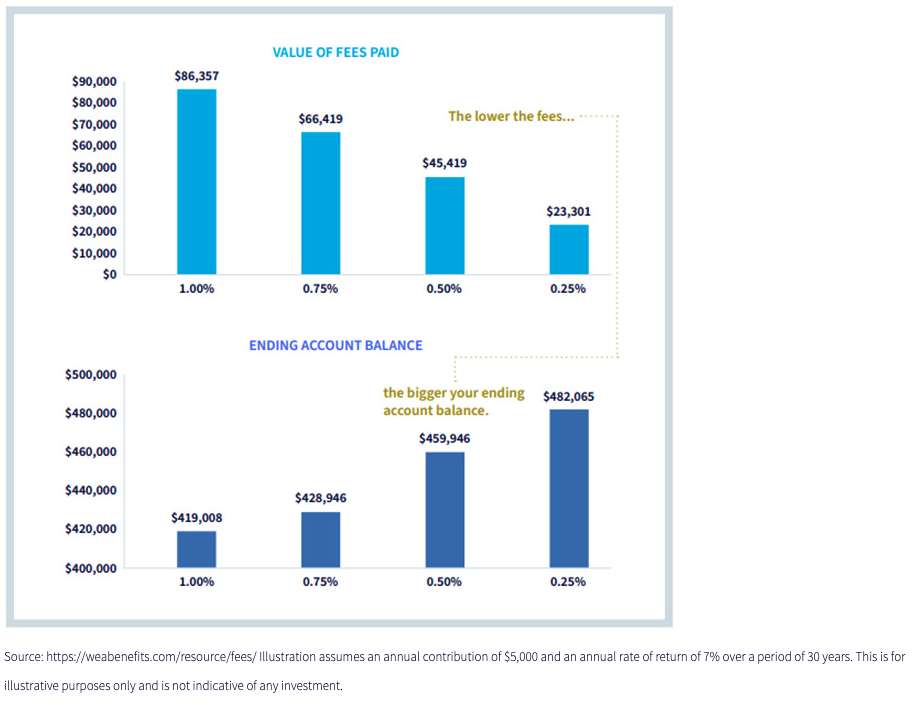
- Lower average expense ratios—0.16% for ETFs compared to 0.44% for mutual funds.2 And those differences can really add up over time. Higher fee investments, even when performance is similar, can meaningfully erode long-term portfolio value, especially when compounded year after year as you can see below.

Of course, cost is only part of the equation. ETFs also seek to offer:
- More consistent tax efficiency—due to their unique in-kind creation and redemption process.
- Greater transparency and intraday liquidity—crucial features for advisors running model portfolios or managing tax-aware rebalancing strategies across platforms.
These advantages aren’t new observations; we’ve been talking about the structural inefficiencies of mutual funds for years. But what is perhaps more interesting is that we’re seeing these benefits in practice, every day.
From Legacy to Modern: A Case in Point
We recently worked with an advisor managing a well-constructed global equity model built entirely with mutual funds. While the strategy itself hadn’t changed, the friction around execution had started to mount: capital gains distributions, higher operational costs and increasing difficulty rebalancing across custodians. The advisor sensed their portfolio implementation was no longer aligned with their original intent.
Through our consultation process, we conducted sleeve-level analysis and mapped legacy holdings to ETF-based allocations, preserving the integrity of the advisor’s investment philosophy while optimizing for cost and efficiency. In many instances, this process has led to reduced average expense ratios at the fund level, enabling more cost-effective implementation without materially altering portfolio intent.
The real win? The advisor didn’t lose their voice in the process. This wasn’t about replacing a philosophy, it was about enhancing how that philosophy was delivered.
Navigating with Confidence
It’s easy to feel overwhelmed by the sheer volume of products out there. But you don’t have to go it alone.
WisdomTree’s portfolio consultation service was built specifically for moments like this. Whether you're looking to modernize a legacy model, assess tax implications or simply pressure-test your current approach, we can help translate your investment beliefs into customized ETF portfolios—aligned to your goals, and designed for today’s realities.
What Happens Next
Your investment strategy matters. But in today’s environment, how you implement it is just as critical. Clients are more informed, more fee-conscious and more focused on long-term outcomes than ever before.
If you’re evaluating whether your current tools still serve your strategy, let’s talk. Sometimes the most powerful change isn’t in what you believe—it’s in how you bring it to life.
1 Tidal Financial Group. "ETF Industry KPIs." Tidal Financial Group, 23 June 2025, https://tidalfinancialgroup.com/etf-industry-kpis/.
2 Calculated by Bank of America, cited by the Financial Times article “US Investors Have Saved $250bn by Investing in ETFs, Says BofA.”
Important Risks Related to this Article
For financial advisors: WisdomTree Model Portfolio information is designed to be used by financial advisors solely as an educational resource, along with other potential resources advisors may consider, in providing services to their end clients. WisdomTree’s Model Portfolios and related content are for information only and are not intended to provide, and should not be relied on for, tax, legal, accounting, investment or financial planning advice by WisdomTree, nor should any WisdomTree Model Portfolio information be considered or relied upon as investment advice or as a recommendation from WisdomTree, including regarding the use or suitability of any WisdomTree Model Portfolio, any particular security or any particular strategy.
For retail investors: WisdomTree’s Model Portfolios are not intended to constitute investment advice or investment recommendations from WisdomTree. Your investment advisor may or may not implement WisdomTree’s Model Portfolios in your account. The performance of your account may differ from the performance shown for a variety of reasons, including but not limited to: your investment advisor, and not WisdomTree, is responsible for implementing trades in the accounts; differences in market conditions; client-imposed investment restrictions; the timing of client investments and withdrawals; fees payable; and/or other factors. WisdomTree is not responsible for determining the suitability or appropriateness of a strategy based on WisdomTree’s Model Portfolios. WisdomTree does not have investment discretion and does not place trade orders for your account. This material has been created by WisdomTree, and the information included herein has not been verified by your investment advisor and may differ from information provided by your investment advisor. WisdomTree does not undertake to provide impartial investment advice or give advice in a fiduciary capacity. Further, WisdomTree receives revenue in the form of advisory fees for our exchange-traded Funds and management fees for our collective investment trusts.
U.S. investors only: Click here to obtain a WisdomTree ETF prospectus which contains investment objectives, risks, charges, expenses, and other information; read and consider carefully before investing.
There are risks involved with investing, including possible loss of principal. Foreign investing involves currency, political and economic risk. Funds focusing on a single country, sector and/or funds that emphasize investments in smaller companies may experience greater price volatility. Investments in emerging markets, currency, fixed income and alternative investments include additional risks. Please see prospectus for discussion of risks.
Past performance is not indicative of future results. This material contains the opinions of the author, which are subject to change, and should not to be considered or interpreted as a recommendation to participate in any particular trading strategy, or deemed to be an offer or sale of any investment product and it should not be relied on as such. There is no guarantee that any strategies discussed will work under all market conditions. This material represents an assessment of the market environment at a specific time and is not intended to be a forecast of future events or a guarantee of future results. This material should not be relied upon as research or investment advice regarding any security in particular. The user of this information assumes the entire risk of any use made of the information provided herein. Neither WisdomTree nor its affiliates, nor Foreside Fund Services, LLC, or its affiliates provide tax or legal advice. Investors seeking tax or legal advice should consult their tax or legal advisor. Unless expressly stated otherwise the opinions, interpretations or findings expressed herein do not necessarily represent the views of WisdomTree or any of its affiliates.
The MSCI information may only be used for your internal use, may not be reproduced or re-disseminated in any form and may not be used as a basis for or component of any financial instruments or products or indexes. None of the MSCI information is intended to constitute investment advice or a recommendation to make (or refrain from making) any kind of investment decision and may not be relied on as such. Historical data and analysis should not be taken as an indication or guarantee of any future performance analysis, forecast or prediction. The MSCI information is provided on an “as is” basis and the user of this information assumes the entire risk of any use made of this information. MSCI, each of its affiliates and each entity involved in compiling, computing or creating any MSCI information (collectively, the “MSCI Parties”) expressly disclaims all warranties. With respect to this information, in no event shall any MSCI Party have any liability for any direct, indirect, special, incidental, punitive, consequential (including loss profits) or any other damages (www.msci.com)
Jonathan Steinberg, Jeremy Schwartz, Rick Harper, Christopher Gannatti, Bradley Krom, Kevin Flanagan, Brendan Loftus, Joseph Tenaglia, Jeff Weniger, Matt Wagner, Alejandro Saltiel, Ryan Krystopowicz, Brian Manby, and Scott Welch are registered representatives of Foreside Fund Services, LLC.
WisdomTree Funds are distributed by Foreside Fund Services, LLC, in the U.S. only.
You cannot invest directly in an index.
A message from Advisor Perspectives and VettaFi: To learn more about this and other topics, check out some of our webcasts.
© WisdomTree, Inc.
Read more commentaries by WisdomTree, Inc.