The opportunity set for emerging market (EM) equities has changed dramatically over the past three and a half decades – geographically, at a sector level, and in terms of market capitalization.
On July 4, President Trump signed into law the “One Big Beautiful Bill Act (OBBBA)”, a far-reaching piece of legislation that will impact the U.S. investment landscape for years to come.
Risk assets rebounded in Q2 as tariff worries eased and earnings growth continued. The quarter also highlighted the resilience of major secular trends, which could be key to returns going forward, says the Research Team.
For families with a loved one who has special needs, planning ahead can feel overwhelming.
Heading into August, with over $680 billion of net inflows YTD, the ETF industry is on track to surpass the $1 trillion mark again.
Signs of market fatigue and elevated expectations suggest that caution may be warranted.
Today’s LPL Financial Chart of the Day spotlights the seasonal setup for stocks in August.
It happened quickly. One minute, the focus was on the furious nature of stocks’ rebound off the April 8 lows. The next minute you start hearing strategists, including ourselves, making references to 2021.
Bitcoin continues to draw investor attention and interest as prices climb higher and fundamentals strengthen. Matthew Kimmell, digital asset analyst at CoinShares, joined Roxanna Islam, CFA, CAIA, head of sector and industry research at VettaFi in the Alternatives Symposium hosted on the VettaFi platform.
Emerging markets (EM) could finally be in the throes of a comeback, and there are already signs it could be in its early stages.
A wise man once said that generally accepted accounting principles (GAAP) is where you start. It may not be the most economic way of looking at a business for various reasons.
Fixed income investors often think of changes in US Treasury rates as the tide that lifts or lowers all other domestic bond yields.
Federal Reserve officials leave short-term interest rates unchanged but appear to open the door for a potential rate cut later this year.
Emerging markets (EM) local currency debt posted strong returns in the second quarter, building on momentum from earlier in the year.
Thanks to AI, cloud computing, and renewable energy reshaping the global economy, one under-the-radar sector surging to the forefront is utilities. Long considered a sleepier, more defensive, “old economy” play, utilities stocks and ETFs are quickly becoming the backbone of the digital and green revolution.
An ambitious policy yielded great gains and high debts.
The US-Japan deal may mark a pivotal moment for global equity investors, according to Dina Ting, Head of Global Index Portfolio Management. Find out why.
For the fifth meeting in a row, the Federal Open Market Committee (FOMC) decided to keep rates unchanged, leaving the Fed Funds trading range at 4.25%–4.50%.
Speculation may be running rampant—much like past bubbles—but that’s exactly why long-term investors should be optimistic. As past bubbles eventually gave way to investment opportunities, this environment could set the stage for powerful long-term returns.
Investing in commodities can be a difficult path for investors who react impulsively to market headlines and short-term price movements.
The need for strategies targeting AI opportunities across the value chain has become a necessity for investors.
The Federal Reserve held rates steady for a fifth consecutive meeting, though murmurs have begun in the Fed ranks that the time for more cuts is approaching.
With August tariff extensions looming, several major companies are now guiding for reduced tariff impacts, a shift that has helped boost market sentiment this earnings season.
Judging by soaring asset valuations in the wake of President Trump backing away from the worst-case tariff scenario, one could believe that the threat posed by upending the global trade framework has been removed. We are more circumspect.
Globally, stock markets are near their highest levels for the year, reversing the losses that came in the wake of the U.S. tariffs announced on President Donald Trump's declared "Liberation Day," April 2nd.
Doug Drabik discusses fixed income market conditions and offers insight for bond investors.
Tell me if this rings a bell. You worked hard your entire life. You maxed out your 401(k) every single year of your career and invested those assets inside your employer 401(k).
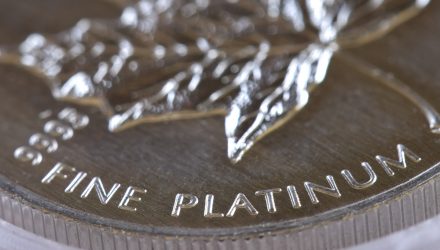
Platinum charted a 49.8 percent gain through H1, rising from around $900 an ounce in January to $1,360 at the end of June. That compares with a 25.9 percent increase in the price of gold and a 24.9 percent rise in silver.
Trade negotiations will reveal a nation's favored sectors.
On Tuesday, consumer products giant Procter & Gamble reported its latest quarterly results. Given the mixed signals on where inflation and tariffs stand for the long term, advisors and investors were eager to hear how the company is doing and what it’s doing to position for the long term.
Retirement saving in a 401(k) plan requires patience and discipline. Our Mike Dullaghan explains why it’s important to automate contributions, diversify, and stay committed to your plan.
Platinum has been relatively staid for much of the year before taking flight in June, rising 36% in Q2 and leaving other metals in the dust.
Instead, a new group dubbed the “Terrific 20” — spanning real-economy sectors like financials, energy, industrials, and consumer — has led the rerating. Their forward valuations have risen ~50% in two years, making a larger portion of the market look expensive.
Constant threats are souring U.S. relations with its trading partners. Stop-gap deals of the kind agreed recently will not mark the end of the trade war, as the pacts leave high tariffs in place.
The U.S. economy is still proving resilient despite global tensions and trade barriers. The news of a 15% EU deal is very encouraging, and there were few other restrictions in the preliminary agreement.
With the August 1 trade deadline fast approaching, America’s trading partners are racing to finalize agreements in hopes of securing more favorable terms before the higher tariffs announced by President Trump take effect.
US equities underperformed global markets in the first six months of 2025, but continue to trade at a premium to foreign markets. ClearBridge Investments outlines the case for global diversification.
Senior Investment Strategist Tracey Manzi notes that while sentiment shifts can sway markets in the short-term, the US dollar's supremacy will likely remain intact.
Our research suggests that firms with sound executive pay practices yield healthier returns.
The past week was a significant moment for the crypto landscape, both in terms of legislation and market momentum.
Much has been made about the current state of affairs of the U.S. dollar. The greenback’s slump in 2025’s first six months is the currency’s worst first-half showing in 52 years. That’s more than enough to sound alarm bells in the global currency market.
When markets decline—especially after long periods of sustained growth—the familiar advice resurfaces: “Be patient. Stay invested. Ride it out.” The rationale? The market always goes up over time. But there’s a critical flaw in this narrative.
In the latest edition of Market Week in Review, Senior Investment Strategist and Head of Canadian Strategy, BeiChen Lin, unpacks the European Central Bank’s (ECB) latest policy decision, provides an update on U.S. trade negotiations ahead of the August 1 deadline, and previews next week’s interest rate decisions from the Federal Reserve and Bank of Canada (BoC).
Given short-term and long-term price implications, the growth trajectory for copper could be electrifying. The industrial metal’s usage in electricity is giving way to its ubiquity.
President Trump announced higher tariffs were on the way almost as soon as he took office. As a result, businesses focused on buying foreign goods in advance, to front run those tariffs, putting some of their purchases from domestic producers on the backburner.
If there’s one thing I’ve learned after decades in the investment world, it’s that government policy is a precursor to change.
The ability of the US economy to avoid a recession in 2022-2023 rested, in part, on the resilience of non-residential investment, which was propped up by a strong private investment push from companies taking advantage of provisions in both the CHIPS Act as well as the IRA.
US Congress passing the GENIUS Act paves the way for stablecoins to move from niche to mainstream.
With inflation still eating away at fixed-income returns and threatening the once-reliable stock/bond inverse correlation, it may be time to take another look at adding gold fixed-income offerings to portfolios.
We believe several forces—tariffs that weigh on U.S. household income, shifts in fiscal and economic policy abroad, and evolving macroeconomic conditions—could compress growth differentials between the United States, Europe, Japan, and China.