Energy is among the smallest sectors in the S&P 500, representing only about 3.5% of the benchmark’s sector allocations, and yet, it’s energy that’s capturing investor attention this year. A big part of the story centers on oil and natural gas, now in sharp focus due to an ongoing conflict in the Middle East.
Gold is going to become increasingly important as the deglobalization and de-dollarization trend that took off last year continues to gain steam, according to a recent report.
As industry experts convened at SFVegas 2026, the world’s largest structured-finance conference, insurers showed up in large numbers, underscoring growing exposure to securitized assets and private credit in portfolios. We also attended the event and returned with a few key takeaways.
The AI narrative often centers on the limitless potential of software. However, the real-world trajectory of the technology is increasingly dictated by rigid physical limitations: copper wiring and data center temperature control.
March came in like a lion. Stock market futures plunged last Sunday night following U.S. and Israeli attacks on Iran. WTI and Brent crude oil had surged 7% by the following morning, along with big gains in gold.
A guide to helping HNW investors align tax efficiency with philanthropy, retirement strategy, and multi-generational wealth transfer planning.
Kirsten Chang, Senior Industry Analyst at VettaFi, unpacks controversial filings for prediction market ETFs and examines the increasingly blurred line between gambling and investing. Chris Marangi, Co-Chief Investment Officer of Value at Gabelli Funds, highlights the recently launched Gabelli Opportunities in Live and Sports ETF (GOLS) and explores the broader investment opportunities across live media, entertainment, and sports.
From real estate to multi-generational planning, learn the key strategies high-net-worth individuals use to maximize wealth and legacy.
Adding tax management services to your practice calls for more than an assessment of potential revenues and client interest. Tax management introduces new compliance demands and sometimes complex business management needs that might not be right for every firm.
Take an educational approach. Underscore how pleased you are about her energy and excitement and how much you want her to be an enthused member of the team. Perhaps you could guide her on how to find opportunities more aligned with your ideal client focus
Transforming a practice built on guardrails and restrictions into a strategic enabler might seem contradictory. But the conditions for this shift have been building, and they're finally converging.
Stocks attempted a rebound Wednesday morning as traders seized on a report that Iranian officials had indirectly reached out to the US about potentially ending the conflict in the Middle East. New data pointing to steadiness in the US labor market also helped fuel gains.
The last time an armed conflict upended the global energy economy, crude spiked past $100 and shares in oil and gas producers rallied for months. A similar trajectory might be unfolding as war rages in the Middle East.
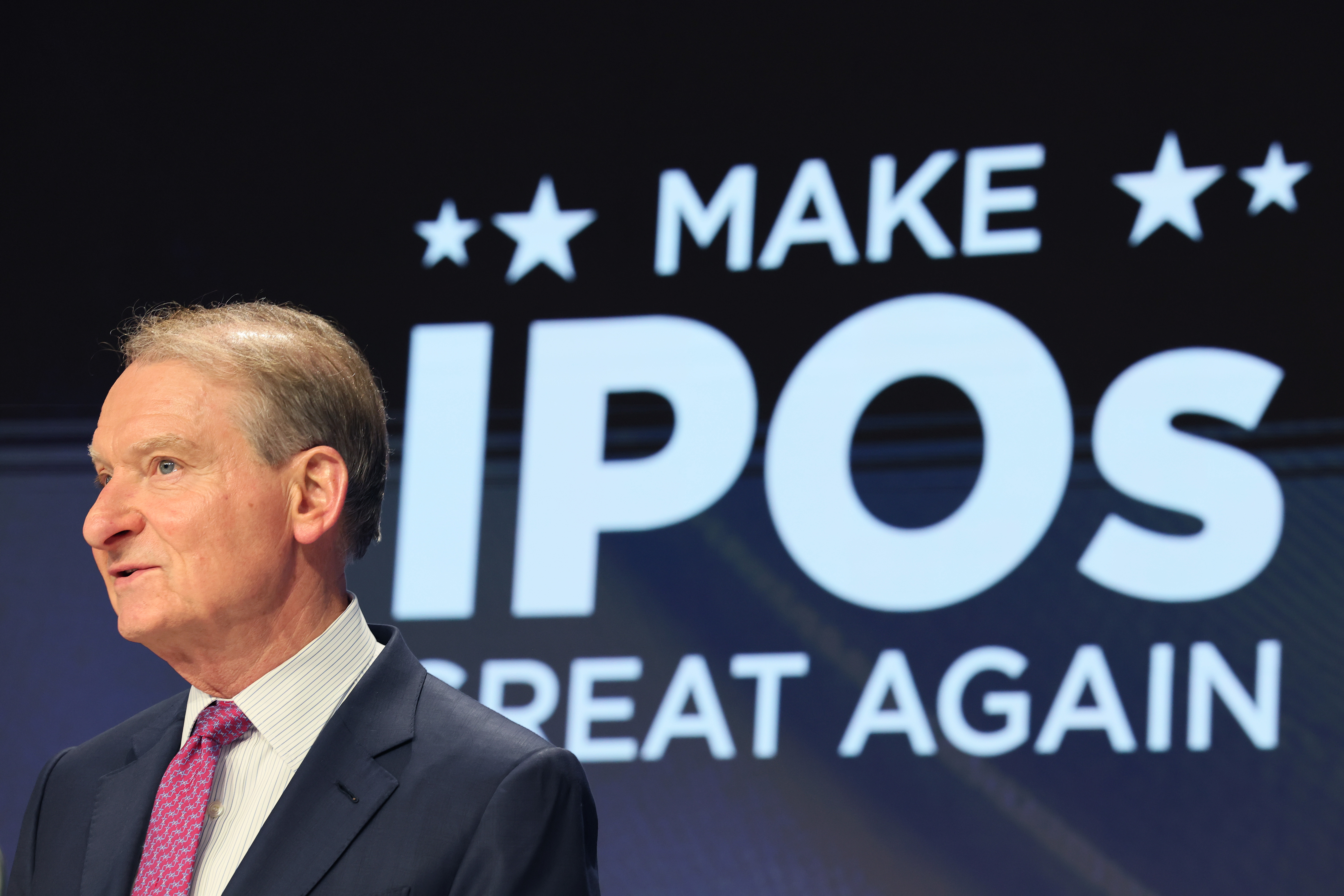
Decades of “regulatory creep” and onerous disclosure requirements have discouraged companies from going public, say leaders of the Securities and Exchange Commission. To revitalize American markets, they plan to pare back those demands, especially for smaller firms. “We need a reset,” Chairman Paul Atkins recently declared.
Most investors, from grandma to the mightiest sovereign wealth funds, own bonds to help steady their portfolio and provide a ready reserve for spending. So, it’s notable when prominent voices start questioning their safety.
If the SaaSpocalypse narrative proves to be more panic than prophecy, the critical task becomes identifying which companies will emerge stronger.
GMO’s Event-Driven Strategy posted a +11.1% return, net of fees, in 2025. This result compares favorably to the returns of our benchmark (the FTSE 3-month Treasury returned +4.4% in 2025) and our peers (the HFRX Merger Arbitrage Index returned +9.6%) over the same period.
The Magnificent 7 stocks have been leading the market for the better part of three years, but time and the evolution of the AI investment cycle are revealing degrees of “magnificence” as fortunes diverge. Active equity investor Ibrahim Kanan is eyeing the race as the baton is passed to the next leg of prospective market leaders.
Looking beyond recent dividend strategies' performance, LPL Research asks and answers the question, “How should I think about dividend stocks or building an equity income portfolio?”
For the second time in a year, the U.S. is involved in a major military conflict with Iran. Again, investors are forced to determine how significant an impact this conflict will have on global markets.
Stocks were choppier in January, but most areas of the market showed gains. The one laggard was large-cap growth, which was strong in recent years and for most of 2025, but trailed other stock indices.
Is quality broken? This has been a recurring question in our recent conversations with investors as quality has meaningfully underperformed over the past several quarters.
The U.S. ETF market has reached a tipping point. With nearly 5,000 funds now trading—officially outnumbering listed stocks — the industry is flooded with complexity.
International value stocks outpaced US equities in 2025. See the five catalysts fueling the shift—and why investors still have time to act.
The public loves to hate short sellers, the investors who profit from declining securities’ values. Their bad reputation is mostly undeserved. In reality, many provide a valuable service, taking the other side of frauds and bubbles, and generally helping drive prices toward a semblance of fair value.
President Donald Trump said the US will provide insurance guarantees and naval escorts to ensure safe passage for oil tankers and other vessels through the Strait of Hormuz, aiming to head off a potential energy crisis caused by the war with Iran.
Join Chairman and Portfolio Manager Chris Davis as he shares his perspective on the market, how active ETFs can help investors, and the importance of investor behavior.
While idiosyncratic and recessionary default risks remain present within this asset class, senior-secured private debt continues to offer the potential for more favorable risk-adjusted returns, particularly when compared to public equities and fixed income.
A tax system should raise revenue efficiently, transparently, and fairly. When it requires billions of hours simply to comply, it may be time to ask whether we have built something too complicated for its own good.
This might be the artificial intelligence era, but AI’s greatest contribution to financial services isn’t replacing advisors — it’s making them more human. Advisors have an unprecedented opportunity to focus on what their clients truly value: empathy, understanding, and genuine presence.
Energy is dominating headlines on escalating geopolitical tensions in the Middle East. Following military strikes over the weekend, disruptions in the Strait of Hormuz — a chokepoint responsible for roughly 20% of global oil flow— have sent markets into a risk-off frenzy.
Oil surged for a second day as the US and Israel stepped up their war against Iran, with the sprawling conflict’s impact on energy assets in the Persian Gulf continuing to grow.
Gold sank after a four-day rally, as traders weighed the escalating war in the Middle East against the prospect of a stronger dollar and elevated inflation.
US Treasuries slumped for a second day as surging oil prices prompted traders to slash bets on more than one Federal Reserve interest-rate cut this year.
With uncertainty rising through geopolitical conflict, AI risk, and inflation, ETFs that offer greater portfolio control may be the way to go.
By now you’ve likely seen the news that the Department of War (DOW) issued a Friday-evening ultimatum to Anthropic, maker of the Claude AI chatbot, demanding unrestricted military access to its technology.
The market spent the week digesting a modestly hotter PPI print, a pullback in NVIDIA after earnings, and a move in the 10-year Treasury yield below 4 percent.
As markets rotate to favor small caps and international equities, rising risks are likely to make investment discipline even more important for seizing opportunities, write Chris Galipeau and Lukasz Kalwak of Franklin Templeton Institute.
Greg Abel has passed his first test since taking over from Warren Buffett as Berkshire Hathaway Inc.’s new chief executive officer. In his introductory shareholder letter, he emphasizes that Berkshire’s culture runs far deeper than a single man. Yet, almost in the same breath, he tells us not to worry — after all, Buffett is still lurking around the office.
AI-related disruption has moved to the forefront of market conversations in recent weeks, driving shifts beneath the surface. While the S&P 500 remains near all-time highs, leadership has rotated across sectors as concerns about AI’s impact on future demand and long-term valuations have spread.
History may rhyme, but it doesn’t repeat. War is uncertain, and while the US and Israel are dominating, investors would be foolish to assume they know every twist and turn to come. Even here at home, where threats exist.
AI fatigue has taken hold of financial markets. The companies powering the AI revolution (Nvidia, Google, Microsoft) were down. The companies that are being (or might be) disrupted by AI, like software makers, were also down.
Private credit firms are facing a major test, with mom-and-pop investors pulling their cash in fear of corporate defaults spiking and artificial intelligence destroying many of the software businesses that these funds have lent to.
Last week’s Supreme Court ruling has prompted a re-set of U.S. tariff policy. As an updated strategy is being formulated, it is worth assessing whether the effort is worth sustaining. A high level review suggests that American trade policy over the last year has detracted from economic performance, and should be re-thought.
Strong performance and dividend yields amid volatility — typically, an investor may need to sacrifice one in order to maximize the other.
U.S.-led strikes in Iran have pushed oil prices higher and reignited geopolitical risk. Our view: markets are pricing a limited conflict, with broader investment implications still manageable unless escalation proves prolonged. As always, diversification and a long‑term perspective matter most when uncertainty peaks.
Join the experts at CoinShares for an educational webcast exploring what may define the next phase of crypto’s evolution and how crypto and traditional finance are beginning to converge.
It’s no secret for financial advisors today that cracking the millennial client base is a key part of their work. Every day, U.S. millennials inherit major sums of money and are unsure of how to steward their new assets.
The bulk of “Everybody Loses” sends the reader on a lurid journey through the sportsbook ecosystem. Funt is a talented investigative reporter with a velvet prose hand, but “Everybody Loses” features some key omissions. These oversights, however, are minor, and perhaps even necessary in such a tightly focused, powerful work.
For each market downturn, we explored how investor sentiment reacted around the event. To gauge investor sentiment, we considered a variety of measures. With each of these measures, we explored how long it took for investors to come back to a previous high.