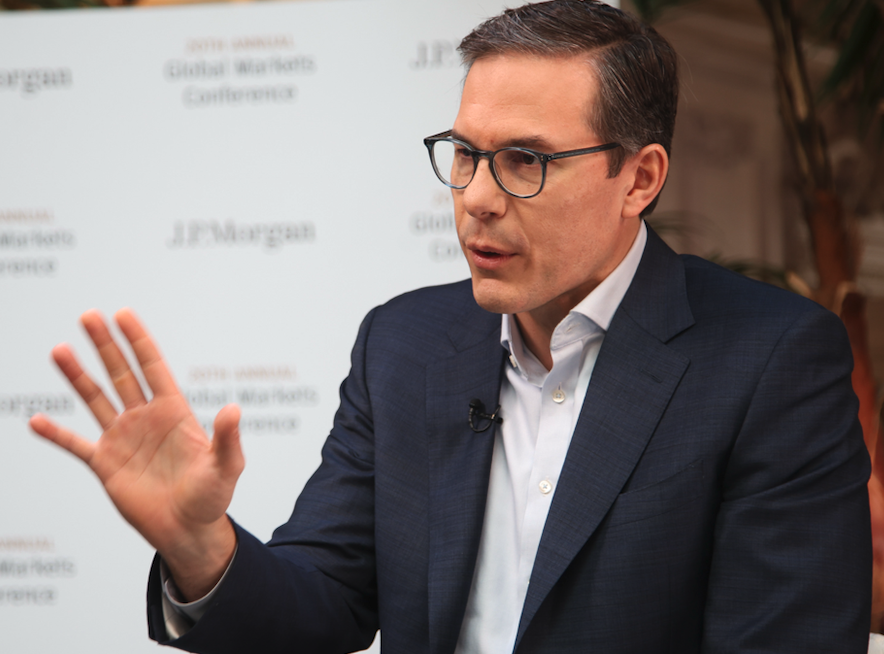
JPMorgan Chase & Co.’s chief of global markets strategy said the US could dodge a recession as the probability of that scenario has decreased following better clarity over global trade.
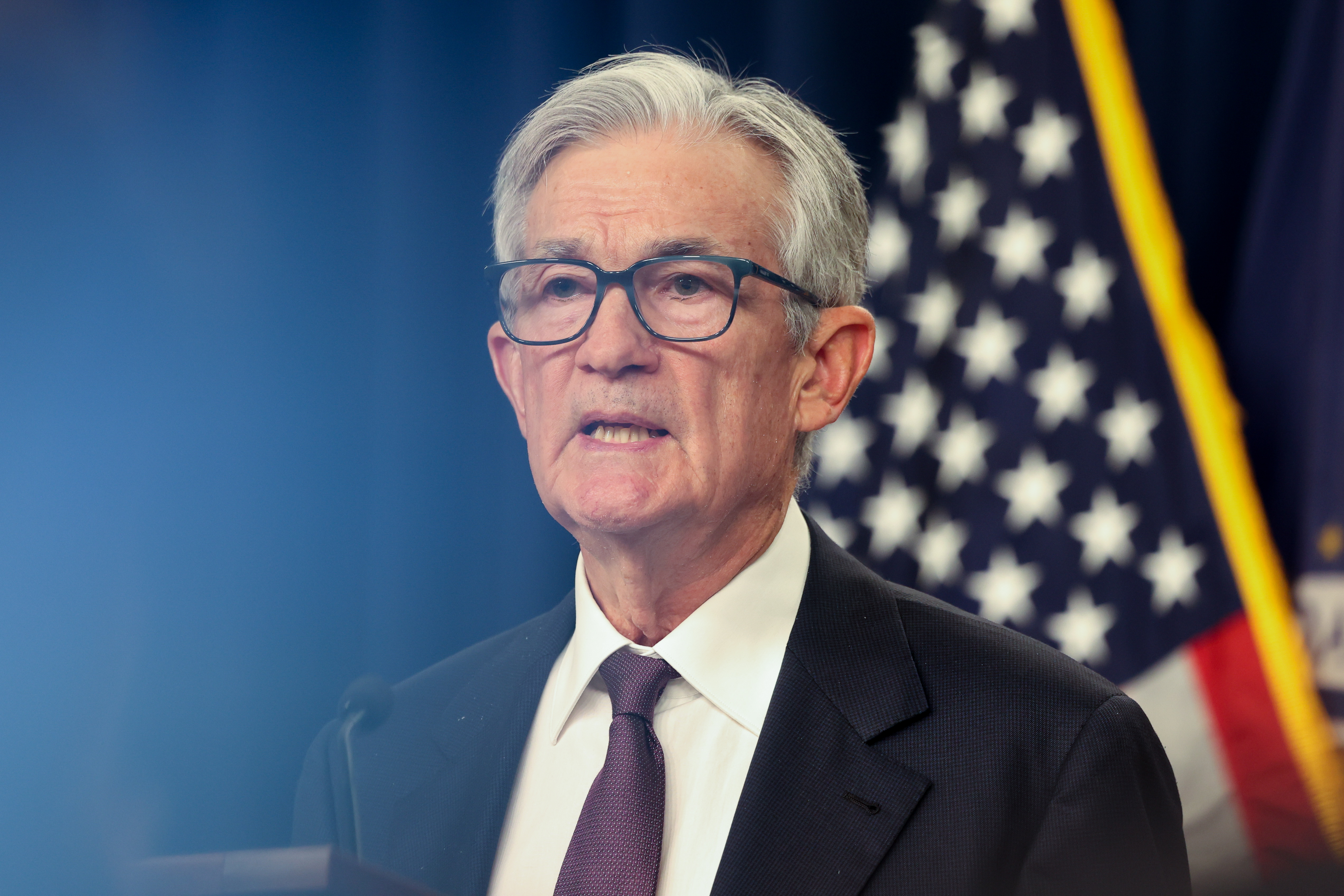
Federal Reserve Chair Jerome Powell said policymakers are weighing changes to key parts of the framework that guides their monetary policy decisions, including how they think about shortfalls in US employment and approach their inflation target.
Keeping your financial plan aligned with your goals, risk tolerance and time horizon.
Our overarching theme for U.S. fixed income has been, and will continue to be, based on the premise that interest rates will stay at more historically “normal” levels, but that, within this backdrop, investors will face heightened volatility.
In this video – Part 2 – Extreme Risk of High Valuation – Chuck Carnevale, Co-Founder of FAST Graphs, aka Mr. Valuation discusses the volatility of the stock market, using the S&P 500 (SPY) as a proxy.
By the end of April, the S&P 500 rallied its way back, recovering nearly all the declines notched in the opening days of the month when President Trump's "Liberation Day" tariff plans tipped markets towards bear territory.
China has been a focal point of American trade policy for many years, but tensions were escalated early in the second Trump term.
Emerging market equities and bonds could benefit if the US dollar weakens—a possible scenario amid tariff turmoil.
The artificial intelligence arms race has prompted a contest for America’s power plants.
When volatility ripped through markets last month, many investors scrambled to respond. Some wanted to quickly adjust specific security exposures. Others wanted to flee to cash or build in protection against additional downside moves. And some rushed to buy the dip.
Certificates of deposit (CDs) and Treasuries both can offer steady, predictable investment income—but how to decide between them? Here are five factors to help you choose.
Are you trying to grow a stable team of advisors and retain top talent? Young advisors are looking for RIA firms that offer remote work flexibility, a clear path toward advancement and role transparency.
Join the thought leaders at WisdomTree for a robust look at the market and unpack the insights that can help you position your portfolio for success.
Explore the performance journey of the S&P 500, Nasdaq, and Dow Jones since their peaks in 2000. This video analyzes how these key U.S. stock market indexes have navigated over two decades of economic shifts and technological change, revealing their distinct paths through April 2025.
A solution that merely saves time on administrative tasks will quickly become stale as the business grows. Success lies in determining how the AI tool you are implementing will have a lasting effect on the advisor’s workday routine.
It can be tempting to react when someone at work criticizes you at work, but take some time to consider the issue before you do.
To help exemplify the importance of UX, I’m breaking down a few of the most common UX myths, along with the top recommendations to avoid the pitfalls associated with them.
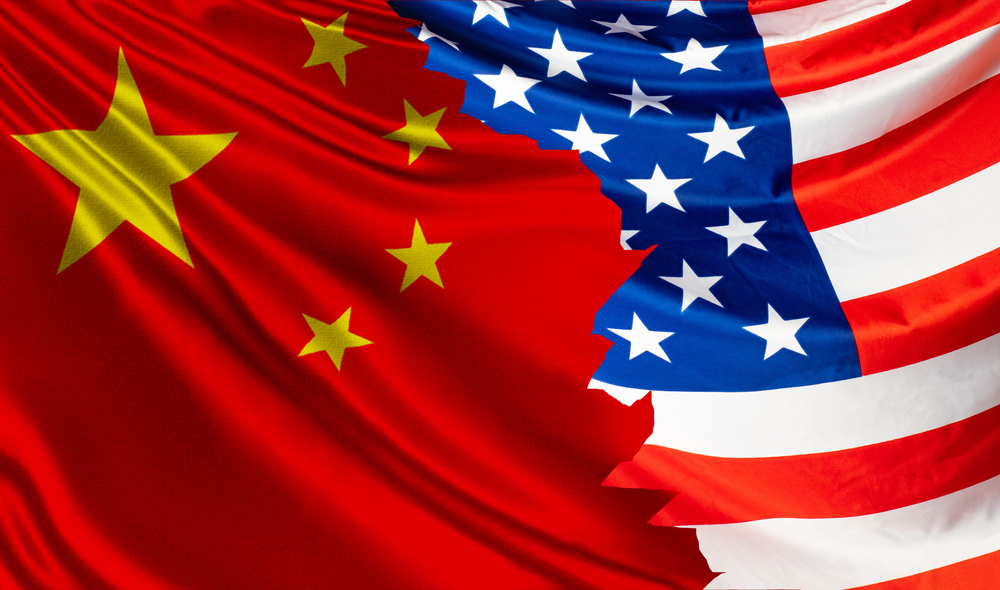
The agreement between the US and China to roll back their respective tariffs for 90 days has led to renewed optimism that the worst of America’s trade wars is over.
Equity investors pushed back into the market by a relentless rally are about to find out that the real challenge is just beginning.
Anyone betting on the end of the private credit boom has been on the back foot of late as the upstart $1.6 trillion asset class has notched up a string of wins. But the industry’s naysayers won’t be conceding defeat just yet.
Retail investors have won again. When trade tensions flared in early April and about $6.6 trillion in market value vanished from US stocks in just two business days – the fifth-worst two-day drop since the S&P 500’s creation in 1957 – they didn’t panic.
Warren Buffett has finally answered a question that has long intrigued investors: What sparked his interest in five Japanese trading houses in 2020, a bet that is now worth more than $25 billion?
Flows of gold into Asian ETFs exploded in April, driving global ETF gold holdings higher for the fifth straight month.
The chain-smoking protagonist of Landman, the American television drama series about the Texas oil industry, puts it better than anyone else: “You want oil to live above 60, but below 90,” says the fictional Tommy Norris. “Seventy-eight dollars a barrel, that’s about perfect.”
Assessing a bear market rally proves challenging when you experience it firsthand. It is only in hindsight that the complete picture reveals itself to investors. Of course, after a bear market rally, investors tend to review their investments and speculate on what they should have done differently.
The surprisingly large reduction in mutual tariffs between China and the U.S. announced early Monday morning has sent the markets flying. Trump has softened his approach dramatically and markets are expecting future deals. The base case: everyone at 10%, China at say 20% is still a jump, but at least will likely prevent a recession. Trade and tariffs remain the main focus for markets.
The more duration risk taken, the more reward or yield demanded by investors. This is why, historically, the yield curve provides incrementally more yield for longer-maturity bonds.
In the report, Portfolio Managers John Kerschner, Nick Childs, and Thomas Polus highlight three reasons why agency mortgage-backed securities (MBS) look attractive in the present environment.
The U.S. may not walk back all of the new tariffs.
In this video, Chuck Carnevale, Co-Founder of FAST Graphs, aka Mr. Valuation discusses the volatility of the stock market, the truth about the S&P 500’s valuation, using the S&P 500 (SPY) as a proxy.
Commonwealth Financial Network®, a national RIA dedicated to providing financial advisors with holistic, integrated business solutions, has initiated a new partnership with Messina College, a two-year, all-residential degree program of Boston College that welcomed its first-ever class of students to the school’s Brookline Campus last summer.
Alexandra Levis, Founder & CEO of Arro Financial Communications, provides an in-depth look at how ETF issuers should think about approaching marketing. VettaFi’s Roxanna Islam breaks down some of the year’s top-performing ETFs, from international plays to precious metals.
Despite the recent volatility, the S&P 500 remains at record-breaking levels of concentration. At the same time, the S&P 500 Equal Weight’s tracking error is high and growing, introducing significant active risk in portfolios. The new S&P 500 Historical Weight ETF (DSPY) solves both these issues by using historical concentration levels.
While the U.S. and U.K. have different economic and regulatory landscapes, there are clear opportunities for the U.S. to improve retirement readiness by adopting some best practices from across the pond.
In 2025, liquidity is not a background variable — it's a front-line risk factor, one that’s being tested repeatedly as global markets navigate a web of geopolitical uncertainty and macroeconomic signals.
There is much serious discussion about the “rule of law” today. This discussion is good and should be applied to the affective meaning of fiduciary today. Pressures from the brokerage and insurance industries over the past 20 years have effectively nullified the clear purpose of the IAA and the Supreme Court decision in 1963.
The price of Wegovy, Novo Nordisk’s blockbuster weight-loss drug, is $1,349 a month in the US; in Germany, it’s $328. The US price for Keytruda, a cancer treatment, is $191,000 a year; in Japan, it’s $44,000.
Companies are launching a number of debt deals designed to pay out a dividend to their private equity owners, at a time when buyout firms are under pressure to return money to clients.
US inflation rose by less than forecast in April amid tame prices for clothing and new cars, suggesting little urgency so far by companies to pass along the cost of higher tariffs to consumers.
Global AI, a US tech firm, plans to collaborate with a Saudi Arabian artificial intelligence venture, Humain, in an agreement expected to be worth billions of dollars, according to a person familiar with the mattter.
A wave of municipal-bond sales scheduled for this week will test a recent rebound in buyer demand after investors sold their holdings during April’s market rout.
The early-April announcement of a broad new round of tariffs against virtually all U.S. trading partners—followed by a pause for many of them—has triggered a tidal shift in the global economy. Uncertainty created by tariff negotiations, as well as burgeoning federal debt levels and other ongoing concerns, has far-reaching economic implications, leading us to reassess our 2025 outlook.
Tariff talk has been at a fever pitch for the past three months. Its dominance of the news cycle has crowded out discussion of other important economic issues, such as the sustainability of America’s national debt.
The roller coaster continues! A stronger than expected first quarter earnings season and encouraging signs on the trade front—highlighted by the US-UK trade deal—helped lift the S&P 500 from its April 8 near-bear market lows, reversing nearly all post-Liberation Day (April 2) losses.
It may seem risky to lend against recurring revenues, not earnings. With proper underwriting, it doesn’t have to be.
In the latest edition of Design Matters, titled “What’s the Frequency… Russell?” Greg Behar of Westwood’s Managed Investment Solutions (MIS) team examines how the Russell U.S. Indexes’ decision to return to a semi-annual reconstitution schedule is transforming risk management practices, market participation and the future of custom indexing.
China and the U.S. conducted their first formal trade talks of 2025 over the weekend. And on Monday, May 12, they announced the outcome of their negotiations.
The April plunge in stocks ushered in a huge washout in investor sentiment, but more so on the attitudinal side as opposed to the behavioral side.
The Q1 2025 earnings season heads into its final peak week with mostly positive results from S&P 500 companies thus far. With 90% of companies from the index now reporting, 78% have beaten Wall Street’s expectations, slightly better than what we’ve seen historically.