The level of U.S. Treasury yields and the changing shape of the Treasury yield curve provide investors with critical feedback regarding the market’s expectations for economic growth, inflation, and monetary policy
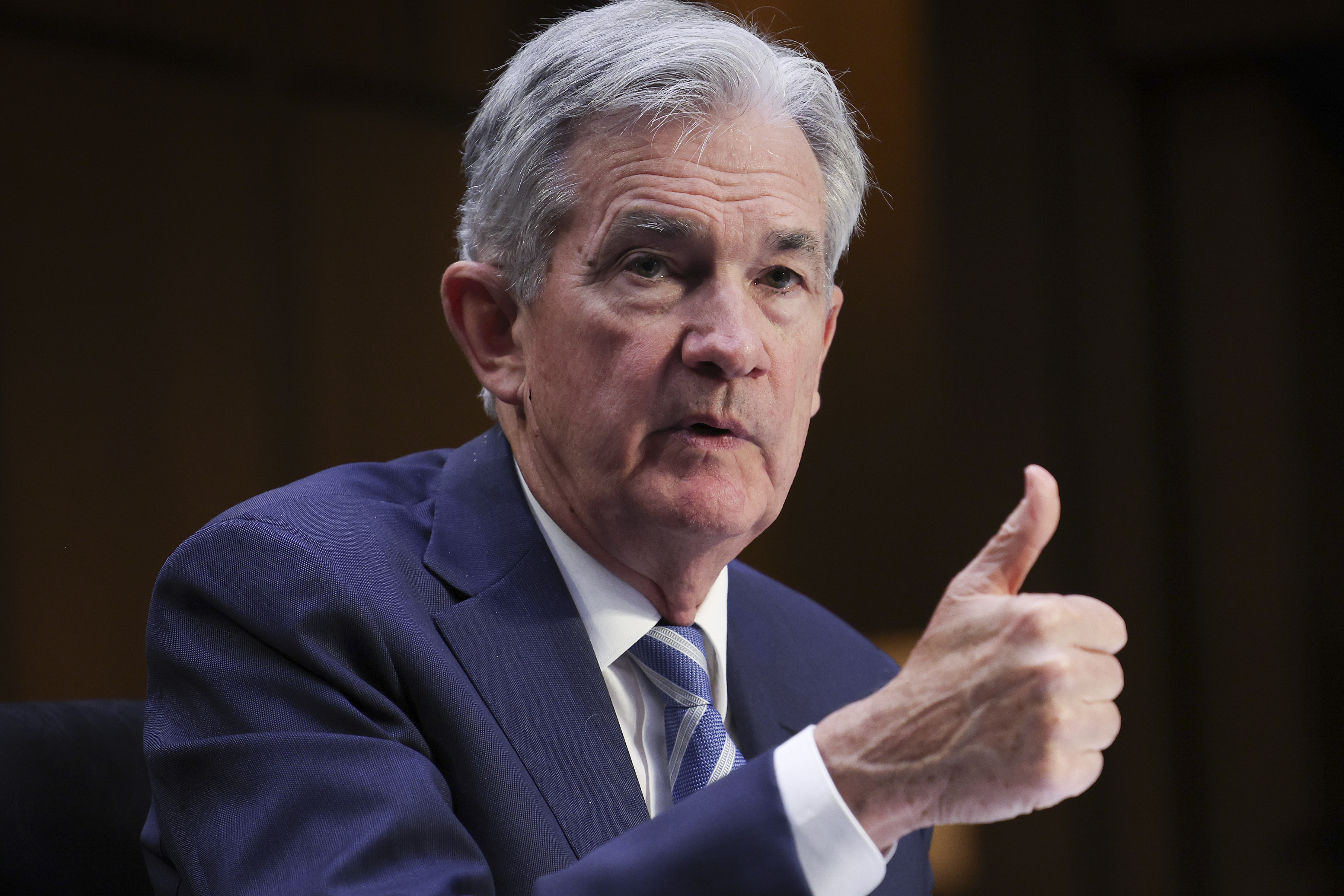
Chair Jerome Powell cemented a shift in focus from inflation to employment last week when he said that the Federal Reserve does not seek a further cooling in the labor market. It was a welcome message for those concerned about an economic slowdown. But there are reasons to expect today’s sluggish hiring environment to persist at least into early next year, frustrating job seekers and policymakers alike.
US Treasury yields edged higher after resilient economic reports prompted traders to slightly trim their expectations for the scope of Federal Reserve easing this year.
Nvidia Corp.’s earnings report needed to be perfect for a stock that’s added nearly $2 trillion in market value in the past year. In the end, a broad beat still sparked a selloff.
Nvidia Corp.’s earnings report was impressive by virtually any metric — except its own recent history.
Nvidia Corp. failed to live up to investor hopes with its latest results on Wednesday, delivering an underwhelming forecast and news of production snags with its much-awaited Blackwell chips.
In an election year, we are bound to hear a lot of commentary about the merits and drawbacks of both major candidates’ economic policies. History shows that while a president’s policies can make life easier or more difficult for various sectors of the economy, U.S. Federal Reserve (Fed) policy has much more impact on the economy overall.
HSAs are increasingly coming into use. They are a more tax-efficient means of investing, withdrawing money to cover large healthcare expenses, or simply preparing for higher medical costs in one’s later years.
An extended period of elevated interest rates may have long-term implications for both consumers and businesses—affecting how investors value company shares.
We analyze Federal Reserve Chair Jay Powell’s comments about the potential for rate cuts in September and beyond.
Will 2030 DC plans perform better at preparing U.S. workers for retirement?
The healthcare sector offers a compelling mix of defensive characteristics and growth potential driven by innovation. It also features ample dispersion that presents stock pickers with an opportunity to parse potential leaders and laggards in pursuit of above-market return.
High-yield bonds have been one of the best-performing bond investments so far this year, but there may be better entry points down the road.
Watch the video above to get specific recommendations for how to think about a website revamp as a financial advisor, and when to redirect your attention to other initiatives.
By incorporating these practical suggestions into your meetings, you can effectively leverage the power of likability and high-quality evidence to build trust and increase your assets under management.
The Big Tech boom is causing headaches for all-powerful index providers on Wall Street, who can send billions of benchmark-tracking dollars on the move with just a stroke of the pen.
Berkshire Hathaway Inc. became the first US company outside of the tech sector to surpass $1 trillion in market value.
The latest retail sales report seems to have given Wall Street something to cheer about. Headlines touting resilience in consumer spending increased hopes of a “soft landing” boosting the stock market.
Try a combination of things to get people energized. Often once people do engage, they find themselves enjoying it!
At the recent central-bank symposium at Jackson Hole, Federal Reserve Chairman Jerome Powell delivered a widely expected message on interest rates: “The time has come for policy to adjust.” He all but confirmed that the Fed would cut rates by at least a quarter-point when its policymakers next meet in September.
The almost $3 trillion rally in Nvidia Corp. shares over the roughly two years since ChatGPT’s unveiling has virtually rewired the US stock market, giving the artificial intelligence chipmaking giant an outsized influence on a bevy of equity indexes.
With a September interest-rate cut all but certain and attention turning to the pace of future reductions, Federal Reserve officials are coalescing around a gradual approach to the last mile of their inflation fight.
The most glaring uncertainties today, which contributed to early August seeing some of the largest market moves in the last several years, are the risks associated with the Federal Reserve’s dual mandate.
Portfolio managers should always have good explanations for their underweight positions. These days, it matters more than ever.
With US payroll and unemployment data surprising to the downside two Fridays ago, Treasury markets quickly repriced the probability of impending recession, helping set off a volatility spike in stocks across the world. According to Bloomberg, economists’ consensus probability of a US recession in the next twelve months is now approximately 30%.
After a downward slide at the end of July and beginning of August, markets are attempting to recover losses. Through Friday, the S&P 500 experienced seven consecutive “up” days. Three of these up days qualified as “outlier” days (more than +/-1.50%).
A Soft Landing Scenario Is Still a Realistic Base Case.
My colleague Will Keenan recommended an outstanding book, The Professor, the Banker, and the Suicide King, by Michael Craig. The book is a short and entertaining read of how Andy Beal played the best poker players in the world heads-up. He not only gambled toe-to-toe, but he also reminded them that they were doing what everyone should think poker is: gambling.
Elevated budget deficits imply growing US Treasury issuance. Receding demand from central banks could leave more price-sensitive buyers to pick up the slack. Who are the buyers of US government debt, and how is the market responding? In part two of our series, let’s examine Treasury market supply and demand.
The 19th Century American author Mark Twain once said: “Travel is fatal to prejudice, bigotry, and narrow-mindedness, and many of our people need it sorely on these accounts. Broad, wholesome, charitable views of men and things cannot be acquired by vegetating in one little corner of the earth all one’s lifetime.”
On this episode of the “ETF of the Week” podcast, VettaFi’s Head of Research Todd Rosenbluth discussed the Amplify Online Retail ETF (IBUY) with Chuck Jaffe of “Money Life.” The pair talked about several topics regarding the fund to give investors a deeper understanding of the ETF overall.
Bloomberg’s Eric Balchunas discusses his top ETF stories, industry “white space”, crypto ETFs, and much more. VettaFi’s Cinthia Murphy offers perspective on the future of ARK Invest and Cathie Wood.
Midstream’s second quarter earnings calls reinforced the positive outlook for US natural gas demand driven in part by expected power demand from data centers. This note discusses the advantages of natural gas for data centers, additional factors contributing to demand growth, and how midstream is uniquely positioned to benefit from these trends.
Mining stocks can certainly benefit from gold’s run as the precious metal looks to break past the $2,600 per ounce mark. Gold prices are already up about 23% for the year and could keep on rallying with a number of tailwinds behind it.
Improve your income potential with a tactical, unconstrained strategy that sources opportunities across geographies and asset classes. BlackRock Multi-Asset Income Fund takes a risk-first approach while seeking to deliver a consistently attractive yield.
NFL owners are set to vote on selling stakes in their franchises to private equity, potentially joining a shift by professional sports leagues to attract institutional investors.
California wants some insurance against pump prices. But in proposing that oil companies there hold a minimum stockpile of fuels, the state is also, and less obviously, seeking insurance against the complications of its own energy policies. In seeking to kill off gasoline demand but ensure suppliers stay engaged for years to come, the state is confronting one of the central challenges of the energy transition.
“What happened in 1971?” It is one of the most important and debated questions in US economic history, and new research suggests that the answer may be lurking a few decades earlier — in 1948, to be precise.
Global money has flooded into Indonesia’s financial markets this month, signaling the country’s assets have quickly become a preferred investment destination as the US Federal Reserve’s easing cycle nears.
It’s been the ultimate no-brainer for more than a year: Park your money in super-safe Treasury bills, earn yields of more than 5%, rinse and repeat. Or as billionaire bond investor Jeffrey Gundlach put it last October, “T-bill and chill.”
One of the last remaining bright spots for Chinese consumption is rapidly fading, as the nation’s economic malaise takes a toll on demand for even the most accessible of goods.
Whether someone’s problematic relationship is with food or money, recovery involves addressing the trauma and issues that underlie the behavior.
To understand the importance of involving both spouses in the discussion, we asked our very own Vicky Frye, Director of FinTech Innovation and Cybersecurity Strategies at WMGNA, for her comments on this topic.
When you master the art of trust-based selling, you’ll be able to create trust in a split-second and never feel afraid about losing a client again.
Happy National Cheap Flight Day! Yes, you heard that right—there is a national celebration day to mark the start of a lull in travel demand. Who knew this would be a day to celebrate? Regardless, it’s good news for consumers as airfares should continue their recent downward trend!
We all knew it was coming…and in Jackson Hole, Federal Reserve Chairman Jerome Powell said it will come next month. He said, “the time has come,” and the futures markets have priced in either a 25 or 50 basis point rate cut at the meeting on September 18.
Artificial intelligence has the potential to reshape our economies, labor markets, societies, and politics. But despite the rosy forecasts of an AI-driven boom, history shows that technological advances rarely lead to immediate improvements in living standards and often lead to profound disruption.
Powell’s remarks in Jackson Hole were more dovish than I anticipated. Powell did not hedge; the clear direction of policy was lowering rates. The focus of the Federal Reserve’s (Fed's) narrative was shifting away from inflation risk to employment.
Profitable bond trading opportunities arise when your expectations about Fed policy differ from those of the market. Therefore, with the Fed seemingly embarking on a series of interest rate cuts, it behooves us to appreciate how many interest rate cuts the Fed Funds futures market expects and over what period.
The potential of AI in wealth management is undeniable, but realizing that potential requires more than just adopting the latest technology. By engaging advisors in the process, providing thorough training, and setting realistic expectations, firms can bridge the gap between C-suite optimism and frontline reality.