Today’s investment landscape, shaped by persistently above-target inflation, structurally higher debt and deficits, and reduced global dollar recycling into US financial markets, has contributed to elevated market volatility alongside historically high policy uncertainty.
Two years after Nvidia Corp. made history by becoming the first chipmaker to achieve a $1 trillion market capitalization, an even more remarkable milestone is within its grasp: becoming the first company to reach $4 trillion.
First, they came for the currency market. Then, the money market. Now, crypto’s big disruptors are targeting the multi-trillion-dollar heart of global capitalism: the stock market.
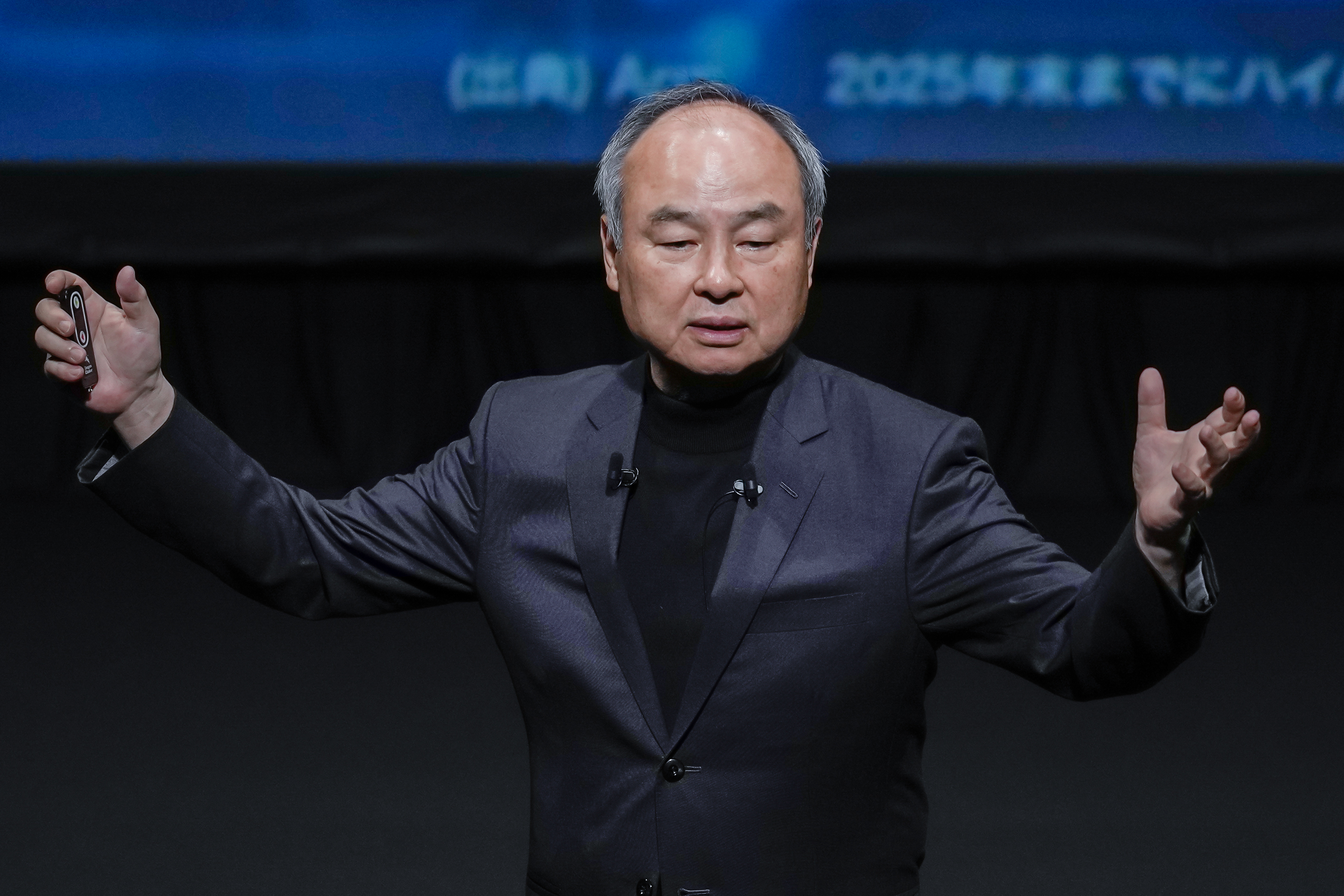
Masayoshi Son acknowledged the outlines of a succession plan at SoftBank Group Corp., addressing what may be investors’ single biggest concern regarding the long-term future of the Japanese company.
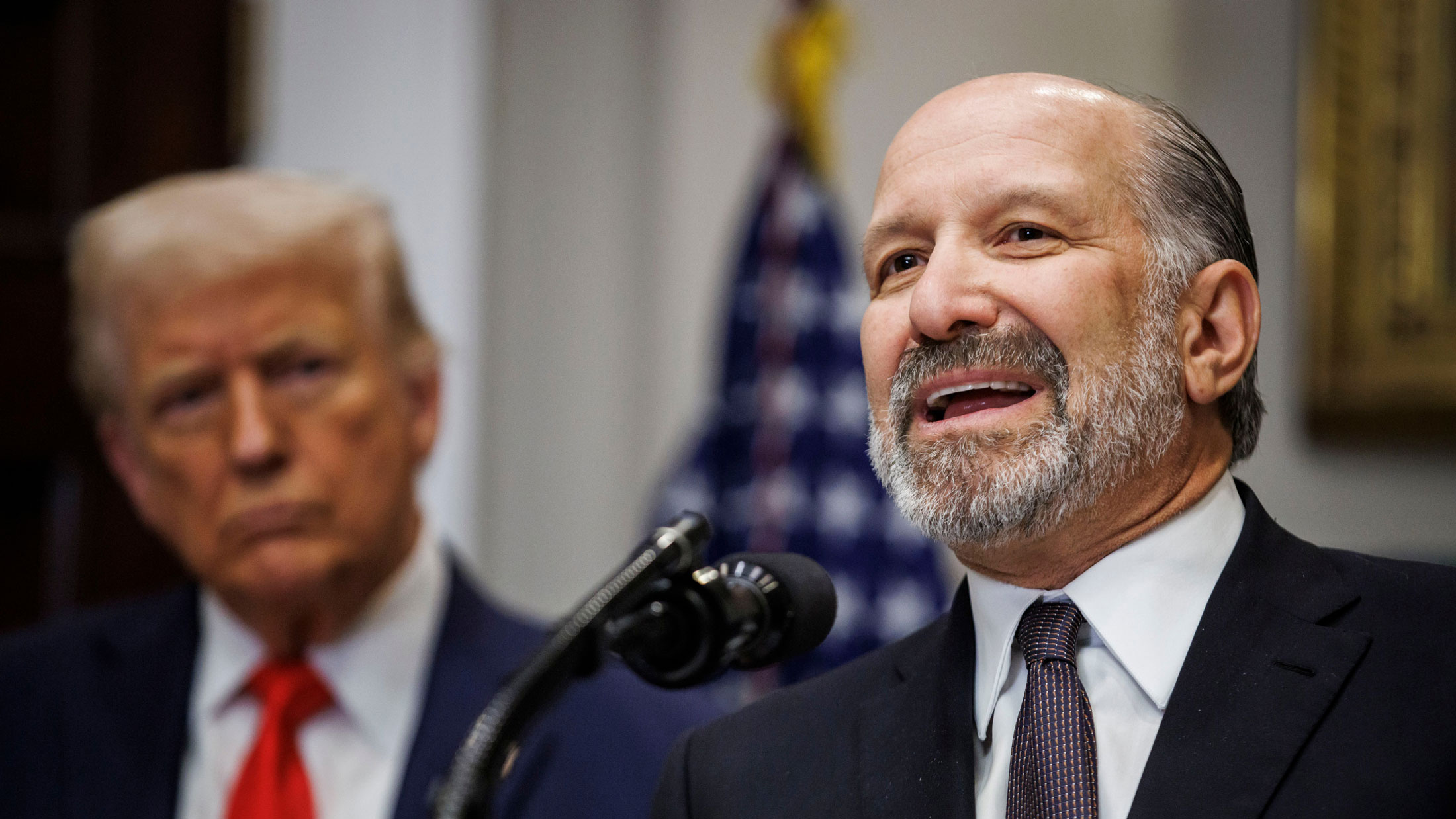
The US and China finalized a trade understanding reached last month in Geneva, US Commerce Secretary Howard Lutnick said, adding that the White House has imminent plans to reach agreements with a set of 10 major trading partners.
The newest generation of college graduates will switch jobs more than a dozen times over the course of their careers. They will juggle side gigs, launch businesses, and step in and out of traditional roles.
Money doesn’t buy happiness. But financial security means you can devote your time and energy to things you actually want to be doing.
The Fed left rates unchanged and signaled it’s still in wait-and-see mode, even as inflation risks and policy uncertainty persist.
As tax policy discussions continue on Capitol Hill, the Senate Finance Committee recently released its version of the tax bill that would avoid the expiration of the Tax Cuts and Jobs Act (TCJA).
ETFs have surged in popularity thanks to their transparency, low costs and tax efficiency. But behind the scenes, a unique dual-market system powers their liquidity and accessibility.
Former Federal Reserve Vice Chair Richard Clarida explains where yields may be headed, as well as positioning considerations for the long-run by charting the relationship between r* and term premium.
Jeff Chang, CFA, President of Vest, a pioneer of Target Outcome Investments with some $50 billion under management, examines how geopolitical events like U.S. airstrikes can create ripple effects across global markets, and why the actual impact often depends more on context than headlines suggest.
Surprisingly, oil prices are receding after U.S. strikes on Iranian nuclear facilities over the weekend.
Join us for our Midyear Market Outlook Symposium, where we’ll talk through recent market action and explore opportunities in asset classes, styles, factors, and themes going forward.
The dollar fell and US Treasuries rallied after a report that President Donald Trump is considering naming Federal Reserve Chair Jerome Powell’s successor well before the incumbent’s term is scheduled to end next May.
Roaring returns for US IPOs are driving fresh optimism that activity will pick up steam later this year and into 2026, even as worries over geopolitics and President Donald Trump’s tariffs hang over the market.
It wasn’t too long ago that you could confidently proclaim that most of the Street was ebullient, maybe even wildly so, with respect to the greenback’s prospects.
The Senate is getting close to the finish line on its version of the "One Big Beautiful" tax-and-spending bill.
Target-date fund glide paths can be important tools for retirement planning. Advisors should focus on assumptions, transparency, and outcomes to ensure they align with participants' needs.
It's not often that UK stocks are singled out as a "favorite geopolitical hedge," as Citigroup Inc. strategists boldly stated last week. So perhaps the elegant stance would be to simply take the rare praise when it's so kindly offered.
Tensions in the Middle East and their effect on oil prices have dominated the recent news headlines—and for good reason. A rise in oil prices, especially if it lasts, can push up inflation and slow down economic growth.
A long-delayed plan to build a hydropower plant on the Ruzizi River between Rwanda and the Democratic Republic of Congo received a boost amid US-backed peace talks between the two countries.
The maturity and prevalence of indexing on the equity markets have undeniably blurred the lines between active and passive management. Investors should be concerned because what appears to be a rules-based, transparent, low-cost strategy may involve hidden active choices that influence returns, risk and transaction costs.
In this video, Chuck Carnevale, co-founder of FAST Graphs, aka Mr. Valuation, discusses the principles of value investing and how understanding a company’s intrinsic value is key to making sound investment decisions.
Ken Moelis, the veteran Wall Street dealmaker, predicted a golden era of prosperity across the globe, shrugging off tariff uncertainty and wars in the Middle East.
OBBBA sets a path for more borrowing ahead.
The US Census Bureau’s May retail sales report came in weaker than expected, with the headline measure — total nominal sales — down 0.9% on the month. It’s the largest drop in nearly two years and reflects broad-based softness across categories like autos, gas stations, and restaurants.
The old Wall Street quip about economists having “predicted nine of the last five recessions” has never felt more painfully relevant.
Following a surge in new listings by special purpose acquisition companies, one can’t help but worry about how astonishingly short Wall Street’s memory is. T
It’s said nothing in life is certain save death and taxes. There is also certainly an increase in investors’ appetites for nontraditional instruments like hedge funds as their wealth grows.
The Federal Funds Rate (FFR) is the interest rate banks charge each other to borrow money overnight. It's set by the FOMC and is one of the Federal Reserve's primary tools to implement monetary policy and is a key driver of economic activity. This video examines the Federal Funds Rate and reviews the Fed's latest interest rate meeting.
TMX VettaFi has gathered industry experts and thought leaders for the Midyear Market Outlook Symposium happening June 26 at 11 a.m. ET.
Wealth management firms that embrace AI chatbots and continuously refine their data strategies can stay ahead of the curve and deliver superior value to their clients.
Why are we still making high-stakes economic policy based on lagging surveys and statistical approximations? The answer lies in a system that hasn't kept pace with modern realities.
While both valuation and technical factors suggest to us that the dollar may continue to weaken in the near-term, we would caution investors against reading too much concerning the US’ long-term economic stability into further dollar weakness.
During our June 5th ROBO Global Webcast, we covered three key themes driving the robotics and AI investment landscape.
If you are considering merging or acquiring another practice, consider having each party answer some of the following questions to see where you both stand.
Just when the International Monetary Fund sees slower growth around the globe, the economy the World Bank ranks 112 out of 196 based on gross domestic product is leading everyone – with the opposite outlook.
AQR Capital Management is doubling down on a strategy that seeks to juice returns with leverage for its first new US mutual funds in four years.
One of Europe’s largest pure-play banks, which is controlled by members of Qatar’s ruling family, is expanding a partnership with BlackRock Inc. to bolster its investing services.
Froth in the red-hot private credit marketplace is creating opportunities in the world of public high-yield debt, according to George Gatch, JPMorgan Asset Management’s chief executive officer.
The United Arab Emirates has managed to thrive during global instability, drawing capital during the Arab Spring, opening up quickly during the pandemic and attracting Russian money after Moscow’s invasion of Ukraine.
President Donald Trump’s economic policies will reduce US fiscal deficits by up to $11 trillion over the coming decade, according to the White House’s chief economist — a projection at variance with independent analysis.
Raymond James Ltd enters into agreement with FNZ to accelerate its digital transformation
How do direct indexing ideas fit into a fixed income portfolio? These two powerful strategies make one compelling combination with potential tax and risk management opportunities.
Inflation's trend has been favorable this year, but a growing conflict in Iran—combined with already-imposed tariffs—might put upward pressure in prices later this year.
Newsflow and misperceptions can obscure the drivers of profit growth—especially during a volatile year like 2025.
Doug Drabik discusses fixed income market conditions and offers insight for bond investors.
Foreign demand for U.S. Treasuries remains intact.
The recent decline in the dollar relative to other currencies is well within historical norms. Notably, previous declines were much larger without the “fear-mongering” from the “experts of doom.”