Target-date fund glide paths can be important tools for retirement planning. Advisors should focus on assumptions, transparency, and outcomes to ensure they align with participants' needs.
Tensions in the Middle East and their effect on oil prices have dominated the recent news headlines—and for good reason. A rise in oil prices, especially if it lasts, can push up inflation and slow down economic growth.
The maturity and prevalence of indexing on the equity markets have undeniably blurred the lines between active and passive management. Investors should be concerned because what appears to be a rules-based, transparent, low-cost strategy may involve hidden active choices that influence returns, risk and transaction costs.
In this video, Chuck Carnevale, co-founder of FAST Graphs, aka Mr. Valuation, discusses the principles of value investing and how understanding a company’s intrinsic value is key to making sound investment decisions.
OBBBA sets a path for more borrowing ahead.
The US Census Bureau’s May retail sales report came in weaker than expected, with the headline measure — total nominal sales — down 0.9% on the month. It’s the largest drop in nearly two years and reflects broad-based softness across categories like autos, gas stations, and restaurants.
The old Wall Street quip about economists having “predicted nine of the last five recessions” has never felt more painfully relevant.
It’s said nothing in life is certain save death and taxes. There is also certainly an increase in investors’ appetites for nontraditional instruments like hedge funds as their wealth grows.
TMX VettaFi has gathered industry experts and thought leaders for the Midyear Market Outlook Symposium happening June 26 at 11 a.m. ET.
While both valuation and technical factors suggest to us that the dollar may continue to weaken in the near-term, we would caution investors against reading too much concerning the US’ long-term economic stability into further dollar weakness.
During our June 5th ROBO Global Webcast, we covered three key themes driving the robotics and AI investment landscape.
Raymond James Ltd enters into agreement with FNZ to accelerate its digital transformation
How do direct indexing ideas fit into a fixed income portfolio? These two powerful strategies make one compelling combination with potential tax and risk management opportunities.
Inflation's trend has been favorable this year, but a growing conflict in Iran—combined with already-imposed tariffs—might put upward pressure in prices later this year.
Newsflow and misperceptions can obscure the drivers of profit growth—especially during a volatile year like 2025.
Doug Drabik discusses fixed income market conditions and offers insight for bond investors.
Foreign demand for U.S. Treasuries remains intact.
The recent decline in the dollar relative to other currencies is well within historical norms. Notably, previous declines were much larger without the “fear-mongering” from the “experts of doom.”
The U.S. strike on Iran over the weekend has added a modest premium to oil, and in the Sunday evening market, stocks opened only slightly lower. Any resolution to the crisis could send stocks to new all-time highs.
We have seen a lack of conviction from the Federal Reserve (Fed) in previous opportunities. Last year, during the first quarter, Fed members were spooked, as inflation numbers moved higher, changing their view on the path forward regarding interest rates.
The current round of budget discussions in Washington will have a significant impact on America’s fiscal trajectory decades into the future. A key underpinning of this year’s debate has roots that go decades into the past.
When navigating the unknown, an experienced guide can ensure you don’t veer off the path to your chosen destination, can prevent you from stumbling over hazards, and ensure you have the tools you need to finish the journey safely and soundly.
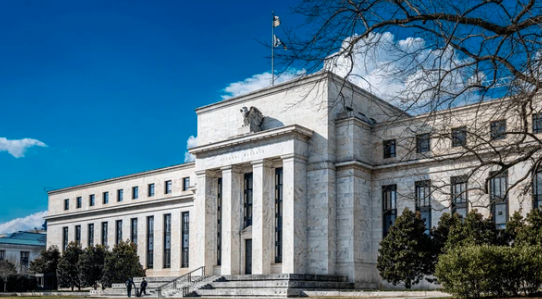
For the fourth meeting in a row, the Federal Open Market Committee (FOMC) decided to keep rates unchanged, leaving the Fed Funds trading range at 4.25%–4.50%.
The U.S. Dollar Index, when measured against a basket of other major currencies, has declined by approximately 10% this year through mid-June and is currently trading at its lowest level in three years.
Like all appetites, the consumer typically reaches some point of appeasement. That could be the case for central bank gold purchases, which have started to show signs of receding. But market experts do not see it faltering anytime soon.
Looking back on it, the first quarter of the year was a complete anomaly. Real GDP declined at a 0.2% annual rate, and the left side of the political spectrum said this proved current policies were a disaster.
Portfolio Managers John Kerschner and John Lloyd and Client Portfolio Manager Steve Preikschat investigate the case for multisector bond funds as a core fixed income allocation.
When investors approach the financial markets, there’s a tendency to imagine that conditions can be judged as favorable or unfavorable based on one single measure or another. The fact is that market conditions at any moment in time are a composite of interdependent forces.
This week the news is about the Israel-Iran conflict. It’s terrifyingly real for those in the crossfire, while we who are safe naturally wonder what it means for us. As investors, we think about the economic and market effects. But are we seeing signal or noise?
Given the uncertainty of future events, global investors seek a “safe haven” for investment dollars. As such, U.S. Treasury Bonds and the U.S. dollar appreciate given their perceived “financial safety.” Last week, global investors were already starting to make that shift with the dollar rising.
Last week's economic data painted a picture of broad cooling across several sectors, with consumers pulling back significantly on spending.
Mid-2025 is approaching, and exchange traded fund demand continues its robust growth. Last year was a landmark year for the ETF industry, with industry net inflows for the first time surpassing $1 trillion and one ETF exceeding $100 billion in net inflows.
The Fed held the federal funds rate steady but noted that the risks of inflation and potentially higher unemployment remained high.
Market concentration rewarded passive investors who held market weights in the surging mega-caps. Since late 2014, passive index returns ranked in the 10th percentile of all portfolios in eVestment’s US Large Cap Growth Equity universe. In other words, only 10% of active managers outperformed.
GMO has posted a new 7-Year asset class forecast as of May 31, 2025.
With the House passing of The Big Beautiful Bill, the challenges facing chief financial officers and treasurers across health-care systems are likely to grow. The proposed cuts to reimbursements will have varying impacts across organizations depending on their payer mix.
Powell & Company at the Federal Reserve sees an elevated stagflation threat. In response, they decided to do nothing.
While stocks experienced a roller-coaster ride powered by policy uncertainty, fixed income generally held up well despite the broader market turbulence. Will it be the same story in the second half? Let’s take a closer look.
The U.S. Federal Reserve left interest rates unchanged in June, as widely expected, but revisions to its economic projections indicate a more uncertain outlook.
Fixed-income investors concerned about tariffs and US exceptionalism may find opportunities in hedged global bonds.
The Federal Reserve held rates steady today, while also projecting slow economic growth, higher unemployment, and higher inflation. And while the Fed signaled that two further rate cuts are still their base-case for the remainder of 2025, the timing of those cuts remains up in the air.
After running a surplus in April thanks to tax day, the federal government was back to business as usual in May, spending massive amounts of money and charting another big budget deficit.
At Parametric, our years of experience have taught us that markets can swing up and down quickly and without warning. Since no one can time these swings, we believe it's imperative to seek both loss harvesting and benchmark tracking simultaneously.
On Monday, Tortoise Capital expanded its fund library with the launch of the Tortoise Energy Fund (TNGY). Formerly a mutual fund, the Tortoise Energy Fund is now an ETF available on the New York Stock Exchange.
AI is advancing at an astonishing pace and undermining the core businesses of tech giants like Google, Microsoft, and Apple. But it is not only transforming the applications we use; it is also reshaping the very process of software development, threatening to render much of today’s tech sector obsolete.
This is the first in a three-part series outlining why I believe bonds are set to outperform. Here, I focus on the Federal Reserve’s dual mandate, the June 2025 meeting, and why the Fed’s approach is positive for bond investors. Parts 2 and 3 will address valuation, politics, recession risk, and the secular horizon.
How big data, AI and the human element can combine to better pursue consistent alpha.
CEO Ali Dibadj provides an update on the three macro drivers we believe will shape markets in the second half of 2025 and how Janus Henderson is helping clients position for a brighter investment future.
New strategies, shifting flows, and innovative technologies are driving a more dynamic and diversified marketplace in fixed income ETFs.
The overall U.S. equity market has fully recovered from its April lows, landing in an essentially flat position as of 5/31/2025. However, it’s been a wild ride for many investors.