The U.S. economy’s recent growth has a distinctive engine: large‑scale capital expenditures (capex) tied to artificial intelligence (AI). Firms such as Microsoft, Alphabet (Google), Meta Platforms, and Amazon have announced massive investments in data centers, servers, networking equipment, and AI infrastructure.
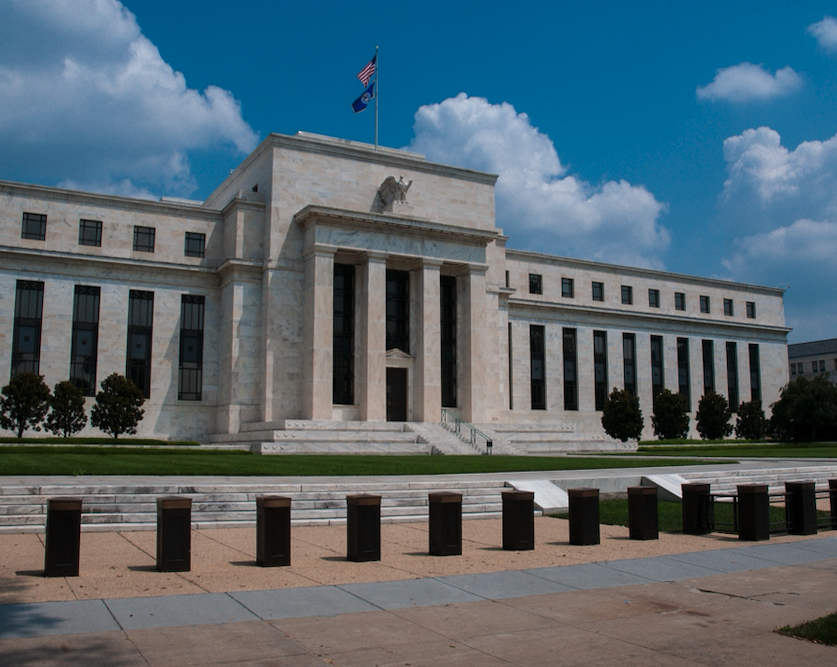
This article explores the growing changes and challenges facing the Federal Reserve. It argues that due to political pressure and fiscal irresponsibility from Congress, the Fed is losing its policy effectiveness and its long-held tradition of consensus voting is breaking down, leading to an era of unpredictable decisions.
AI looks like a classic investment bubble to us, with very high valuations and signs of rampant speculation. But we recognize that while many investors harbor fears that AI might be a bubble, they are far from sure of that fact and tend to assume the market is appropriately priced as a fairly strong prior.
With Thanksgiving around the corner, there’s so much to be thankful for in 2025, especially for investors. After a challenging start to the year, the economy and markets regained their footing quickly, with nearly all asset classes on track for solid gains heading into year-end. Looking ahead, there are reasons for optimism to continue into 2026 as well.
Answers to questions investors are currently asking about Treasury bonds, tax policy, credit quality and other issues currently affecting fixed income investments.
The SEC has granted Dimensional exemptive relief to offer dual share class funds, a move that allows certain mutual funds to offer an ETF share class under the same structure. This monumental decision, following the expiration of Vanguard's patent, is expected to open the floodgates for other asset managers seeking to offer their existing mutual fund clients the tax efficiency and structural benefits of ETFs.
We enter 2026 after a year of robust global stock gains on AI optimism, falling interest rates and a resilient world economy. Beneath this stability, however, lies a more fragile environment.
It’s been a tough year for high-quality stocks in Europe. Yet despite vexing market conditions, the underlying business features that define quality stocks often remain intact. For investors, there are compelling reasons to maintain conviction in companies with robust profitability and resilient business models—even when short-term returns disappoint.
Last week's economic landscape was defined by conflicting signals from key indicators, suggesting a growing divergence between investor behavior and underlying consumer health.
Looking at your portfolio and feeling a distinct lack of income? Now may be the time to get more income into portfolios, with this version of covered call ETFs offering a solid option.
Vanguard continues its push into the active ETF market with the introduction of three news funds focused on equities. These are the Vanguard Wellington U.S. Value Active ETF (VUSV), Vanguard Wellington U.S. Growth Active ETF (VUSG), and Vanguard Wellington Dividend Growth Active ETF (VDIG). This bolsters the current active equity roster to now eight funds for the issuer.
This month’s Muni Monthly covers performance, supply and demand technicals, fundamentals and valuations for the month ending October 2025.
As measured by the largest ETF dedicated to the sector, real estate stocks are offering middling performances this year. That is disappointing considering the Fed has pared interest rates two times. However, that tepid sentiment arguably belies opportunity with ETFs such as the ALPS Active REIT ETF (REIT).
In times of uncertainty — whether in sport or in markets — the ability to separate fact from feeling — or ideology — is critical. This principle applies across leadership, investing and even today’s AI-driven economy.
Alternative investments have already gained plenty of traction in 2025, and things may very well be the same for 2026. However, it’s crucial to evaluate which kind of alternative investments could provide a more potent use case than others.
While passive portfolios have excelled recently due to mega-cap dominance, the article warns that market disruption and concentration make them vulnerable to a sudden reversal in sentiment. It asserts that skilled active management is essential now to identify future winners and benefit from a potential broadening of the equity market.
The ETF industry continues to grow, with new funds arriving all the time. Each year, hundreds of ETFs arrive on the scene, from covered call ETFs to active bond ETFs and everything in between.
Macro Signposts highlights takeaways from the data analysis conducted by our team of economists and other experts.
Are you looking to combine small-cap upside with income? With markets seeing increased volatility and large-caps looking expensive, marrying the two could boost portfolios.
We examine valuations in historical context, how today’s market compare to the tech bubble of the 1990s and what’s driving stock gains now.
Okay, this is for more than just millennials. It’s for anyone who feels stuck and can’t get started with their investing strategy. If you poke around on the internet, it sounds like my generation might be in the most trouble.
October ETF launches saw a plethora of funds join the ETF ecosystem, representing important trends and intriguing ideas.
Every market needs speculation, but when it spreads into nearly every asset class, investors face a different kind of challenge. Sometimes the smartest move is the least exciting one.
In today’s equity markets, investors face a paradox: share price swings are more dramatic than ever yet often have little to do with a company’s underlying health or earnings. So how can investors achieve true diversification and risk reduction in a world driven by fickle market forces?
With the federal government shutdown now over, until the end of January at a minimum, the money and bond markets have turned their attention back to the Fed. Specifically, the conjecture is centered on whether another rate cut will be forthcoming at the December 10 FOMC meeting.
As 2025 draws to a close, investors and advisors will be considering their tax-loss harvesting opportunities. By selling some investments at a loss, those investors can reduce their overall tax bills next year.
GMO has posted a new 7-Year asset class forecast as of October 31, 2025.
In this Money Metals podcast episode, host Mike Maharrey talks with money manager Michael Pento of Pento Portfolio Strategies about what he sees as a dangerously distorted financial system.
As 2025 nears its final 100 calendar days, market focus is already beginning to turn forward and attempt to reconcile what market drivers could remain in place, and what could change in the first year of the new half-decade. While not an exhaustive list, here’s some of our early keys to 2026.
The gains were erased after Federal Reserve officials hinted they were hesitant to cut rates, leading to broad market losses. This challenging environment reinforces the long-term need for investors to seek global diversification outside of the overvalued U.S. dollar and domestic assets.
Stocks started the week with strong gains following the government reopening agreement, but the momentum was quickly erased by concerns over Federal Reserve policy. Hesitancy from Fed Chairman Powell to cut rates pushed down the odds of a December cut, causing the Dow to drop significantly from its record level.
The wealth management industry is on a collision course with a talent crisis due to a looming retirement wave and rising demand for financial professionals. The key to survival hinges on making talent development a strategic priority and adapting to the next generation of clients.
Covered call strategies have become a very popular fund type in recent years. By leaning on the options market, covered call funds offer high levels of income but can limit upside.
Artificial intelligence has brought about a paradigm shift in the diagnostics industry, enhancing the accuracy, speed, and efficiency of disease detection. AI can now process and analyze vast, complex datasets, from medical images and lab reports to genetic data, far beyond human capacity.
With the federal government open after its longest shutdown on record, we will soon get a clear indication of how payrolls fared in September and October.
In the end, it does not matter if you are “bullish” or “bearish.” However, what is grossly important in achieving long-term investment success is not necessarily being “right” during the first half of the cycle, but by not being “wrong” during the second half.
Monetary cycles define eras of opportunity. For years, we lived under quantitative tightening. Liquidity was withdrawn, balance sheets were reduced, and capital became expensive.
Closing the books on fiscal year 2025, the U.S. ran a deficit of $1.77 trillion, a slight improvement from $1.83 trillion in 2024. But a peacetime deficit exceeding 6% of gross domestic product (GDP) is still cause for worry.
In this episode of the Money Metals Midweek Memo, host Mike Maharrey leans on Greg Weldon’s “debt black hole” metaphor to explain how towering obligations now warp policy, markets, and household finances.
Clearly, policies which boost individual freedom, not government engineering, work best. And as usual, the arguments of one political party are often designed to hide the fact that their policies are the very thing they claim to detest in the other.
Investors will be looking for a read on hyperscaler AI spending, the impact of rising competition, and expansion to new growth areas in the chipmaker's upcoming Q3 earnings report.
If you’d told me twenty years ago that we’d soon see rockets launching into orbit every day-and-a-half, I’d have smiled politely and changed the subject. Yet here we are: in the first half of 2025, a new launch hit the sky every 28 hours—six hours ahead of last year’s record pace.
n the report, Global Head of Credit Research Mike Talaga, Portfolio Manager Nicholas Ware, and Credit Analyst James Donahue discuss how new issuance by tech companies to fund capital spending on artificial intelligence (AI) projects may be reshaping the technical picture for credit.
With peak earnings season now in the rearview mirror, the market's focus shifts from broad-based results to specific, unresolved questions. Last week's tech sell-off and mixed IPO fortunes have put a spotlight on valuations, making Nvidia's upcoming report a critical test for the entire AI sector.
For the third quarter of 2025, most energy infrastructure companies maintained their payouts, with MLPs largely providing sequential growth. Still, the vast majority of midstream companies have increased their dividends within the last year.
As someone who’s been involved in capital markets his entire adult life, I can safely say that gold investors haven’t seen a period like this in decades. The third quarter of 2025 was nothing short of historic, and in many ways, I believe we’re witnessing the beginning of a new era for the yellow metal.
Markets wobbled as Washington’s shutdown drama ended, but I don’t view last week’s pullback as the start of a bear market. The Dow just printed fresh highs, breadth rotated toward quality and defensive stocks, and the weakness centered on AI-linked capex stories repricing risks associated with the capex buildouts.
The government shutdown came to an end last night after 43 days, making it the longest shutdown in history. We will leave it to the political commentators to pass judgment on what it means for the decision-makers in Washington.
The Artificial Intelligence boom has created one of the most powerful growth cycles in market history. Yet the biggest AI names—NVIDIA, Microsoft, Broadcom, and others—now trade at extremely high valuations, offering low earnings yields and limited margin of safety.
While stock and bond markets wait for U.S. federal data to become available again, private-sector reports suggest lukewarm overall economic growth.