Amid hopes that the conflict in Iran will soon de-escalate, stocks rallied in recent days. This provided some much needed relief for the growth-heavy Nasdaq-100 Index (NDX). However, advisors and experienced investors know that things can change in a heartbeat.
As Q1 2026 comes to a close, we follow up on an article we published last week on buybacks by analyzing corporations' other favorite way to return value to shareholders. The percentage of companies increasing dividends in Q1 was the highest level since Q1 2019 (45%).
Markets often react sharply to geopolitical developments, but just as often, they overreact. Investors today are grappling with heightened global tensions, rising oil prices and uncertainty around central bank policy. The key question is whether these risks meaningfully alter the economic outlook or simply create short-term volatility.
March 2026 ETFs: Investors pivot to safety with $29B in short-term bonds and a record $5B in Energy as Tech faced a Q1 recalibration.
Income ETFs using options have been one of the biggest categories in recent years. As global volatility has risen, advisor clients and investors of all kinds have clamored for some added income.
A look at ETF flows for the month of March suggests caution is back in vogue. Fixed income ETFs showed serious muscle in the asset gathering race last month, capturing nearly 45% of net creations.
It has now been over three years since GMO launched our Small Cap Quality Strategy in September 2022. During that period, the world has shifted, and we have navigated unexpected market conditions.
Rising demand for critical microelectronics, bolstered by AI capex and defense spending, is driving semiconductor prices higher and posing upside risks to global goods inflation.
Every March people around the country start talking about their brackets. Most are referring to their basketball tournament bracket, hoping to predict the winners and maybe earn some office bragging rights.
Total return is the entire amount of income passed to an investor holding a particular security. It annualizes any price change plus any dividends or interest earned over time.
Oil prices are the key transmission channel, and how far they rise and how long they remain elevated could shape the outlook for growth, inflation and policy, with implications for bond markets.
Systematic equity investing is a way to invest in the stock market using clear rules and data, rather than guesswork or hunches. Instead of trying to pick stocks based on trends or headlines, this approach uses research, data, and technology to systematically identify opportunities across global markets.
Systematic indexing removes the psychological stress of timing crypto markets by allowing advisors to capture broad asset-class returns through disciplined rebalancing.
DoubleLine continues to fortify its presence in the ETF market, adding a new active fixed income solution designed for today’s complex interest rate environment. The DoubleLine Ultrashort Income ETF (DLUX) launched on NYSE Arca on April 1, marking the latest expansion of the firm’s rapidly growing ETF lineup.
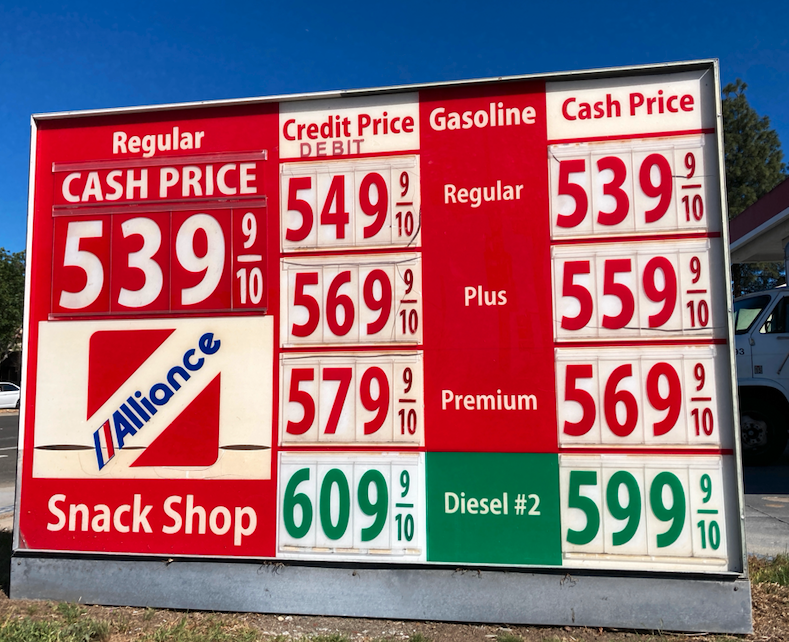
All eyes were turned toward the Middle East throughout the month of March, with the US and Israel’s ongoing conflict with Iran causing energy prices to surge. The closure of the Strait of Hormuz, alongside damage to energy infrastructure across the gulf region, caused crude to rise above $100 a barrel for the first time since 2022.
The market environment of 2025 provided a compelling example of the benefits of multi-asset investing. Importantly, it is possible that the conditions that supported diversified, multi-asset portfolios last year may persist in 2026 and well beyond.
At ETF Exchange 2026, TMX VettaFi caught up with Dave Mazza, CEO of Roundhill Investments, to discuss the firm’s evolving strategy for ETF innovation in a market that’s continuously seeking specialized exposure.
Department of Homeland Security shutdown continues, and Congress considers addressing growing concern over prediction markets.
The fiat currency collapse narrative is one of the most emotionally satisfying arguments in all of financial punditry. It feels intellectually rigorous, draws on genuine history, and speaks to deep and legitimate anxieties about government overreach, monetary recklessness, and the long-term consequences of unlimited debt creation.
Jeff Buchbinder and Adam Turnquist explain why solid earnings, AI investment, and economic resilience underpin stocks, even as oil prices and volatility pressure markets.
In a recent episode of the Money Metals podcast, host Mike Maharrey sat down with renowned precious metals analyst Jeff Clark to unpack the sharp pullback in gold prices and the dominant narratives driving market sentiment.
The United Nations (UN) warns of a roughly US$4 trillion annual shortfall in financing for its sustainable development goals—a gap too large for the public sector to fill alone.
The weight of evidence suggests that the current equity market decline should be viewed as a short-term pullback within an ongoing, longer-term bull market. However, we are watching indicators closely for changes in global economic/market health. Below are five charts we will be paying special attention to in Q2.
When investors look at a stock’s valuation, the price-to-earnings ratio is almost always the first number they reach for. It’s intuitive, widely reported, and deeply embedded in the language of financial markets. But the P/E ratio alone can be genuinely misleading.
During the pandemic, my wife lived in constant fear that we would run short of paper products, disinfectants and other essentials. I was frequently sent out on reconnaissance missions to replenish supplies.
Stocks started the week on an upbeat note as the administration delayed a deadline to strike Iranian energy plants by five days, also announcing that the U.S. and Iran were in negotiations to end the conflict.
The US economy grew a pedestrian 2.0% last year and the Atlanta Fed’s GDP Now is currently projecting real GDP growth at a 2.0% annual rate in the first quarter. If anything, we think there is more downside risk than up to the first quarter projection.
Given the rise in the 10-year Treasury yield and oil prices, the case for near-term Fed cuts has weakened materially. That is the key message from this market.
Even if the US economy continues outperforming its peers, it will not necessarily remain insulated from the Iran war’s adverse spillovers. Already, higher energy and borrowing costs are exacerbating the affordability pressures many Americans face, creating downside risks for jobs, consumption, and growth.
I just returned from the Investment U conference in Las Vegas, where I presented on gold and the great digital transformation. Sentiment among investors was upbeat, despite great uncertainty in the world right now.
Gold has fallen roughly 21 percent from its all-time high of nearly $5,595 reached in late January to approximately $4,430 as of this writing, and the prevailing narrative in markets is that this correction reflects a genuine shift in the metal’s outlook
Emerging-market (EM) equities have been hit hard since the Iran war began, as investors worry about fallout from the conflict. Yet, history suggests that periods of heightened market stress—when volatility is elevated and uncertainty is still being priced—have created favorable entry points for EM investors in the past.
Leveraging 529 plans and community support can significantly boost college savings. These plans offer potential tax benefits and flexibility. Our Bill Cass explains that involvement from family and friends can provide additional resources and motivation.
Get ready each week with high-conviction insights that go beyond media headlines.
Amid geopolitical uncertainty, dispersion across credit markets – rather than a broad risk-off move – has become the dominant investment signal.
Discover why Strait of Hormuz disruptions extend beyond oil, how supply shocks are transmitting into agriculture markets, and what third-order commodity effects may mean for portfolios.
Investors have no shortage of metrics to evaluate equities, but not all measures capture the same economic reality. In an environment defined by elevated capital spending and market concentration, earnings-based measures may not fully reflect how efficiently companies convert investment into cash.
I have just spent the last two days with members of our Inner Circle. We visited four technology companies and listened to six other CEOs make presentations here in El Segundo, California. What I want to write about today is a summary of what I’ve seen, which made every single one of our participants extraordinarily optimistic about our future.
Thanks to strong gains in markets over recent years, with many indices at or near record highs, the 60/40 default portfolio has quietly morphed into a bundle of expensive U.S. growth equities and credit exposures offering narrow spreads over Treasuries. In our view, such a portfolio is likely to disappoint investors by delivering low single-digit real returns.
What’s unusual today is the degree of divergence between individual stocks and the cap-weighted index. When a handful of stocks carry enough weight to paper over widespread internal damage, investors holding diversified portfolios feel the pain long before the headlines acknowledge it.
Government statistics are invaluable in deciphering the state of the U.S. economy. But they don’t always tell the whole story.
Recent weeks have been a whirlwind of headlines centered on the Middle East conflict and rising oil and gas prices, particularly as the conflict enters its fourth full week.
The conflict in the Middle East has raised concerns about oil prices, global growth and market volatility. Chief Investment Officer Sean Taylor assesses the potential economic impacts of the crisis and its implications for growth and diversification in emerging markets and Asia.
While the tax conversation may seem to end on April 15, we think tax season could be the time to start a better approach to tax planning—a natural moment to reflect on how investments are managed, looking for ways to help reduce tax drag and increase the potential for after-tax performance going forward.
Rationally, no one should feel happy about an income tax refund. The refund is a correction of a tax overpayment; the recipient effectively gave the government an interest-free loan over the course of the prior year.
Investors have taken notice of the eye-popping federal commitments to new nuclear capacity in the U.S. in recent months. Headlines have focused on massive reactor-deployment partnerships and loan authority in the hundreds of billions.
Today, Vanguard decided to join the target-maturity party, launching a suite of corporate bond ETFs designed to assist investors with bond laddering. Vanguard’s entry is significant due to its massive distribution scale in tandem with its low-cost reputation.
Heavily influenced by escalating geopolitical conflicts, last week's economic snapshot reveals a sharp erosion of confidence among consumers and investors alike.
Sharp moves in energy prices rarely arrive at a convenient moment for policymakers. When shocks occur, governments are left juggling two competing imperatives: cushioning households from rising costs while preserving fiscal credibility. T
Weight loss pills and treatments have exploded in popularity since GLP-1 drugs hit the market. From Ozempic to Wegovy, those pills have changed the lives of countless people around the world. They’ve also paid dividends to the companies that produce them.