GMO has posted a new 7-Year asset class forecast as of May 31, 2026.
Recent economic data continues to point to a resilient U.S. economy. The unemployment rate held steady at 4.3% in May, while payrolls increased by 172,000 jobs. Hiring remained strongest in leisure and hospitality, though there were also encouraging signs from more cyclical areas of the economy.
During this time of year, we like to take stock of what happened in the first half of the year and compare it with the expectations we had at the beginning of the year when we published our full-year outlooks.
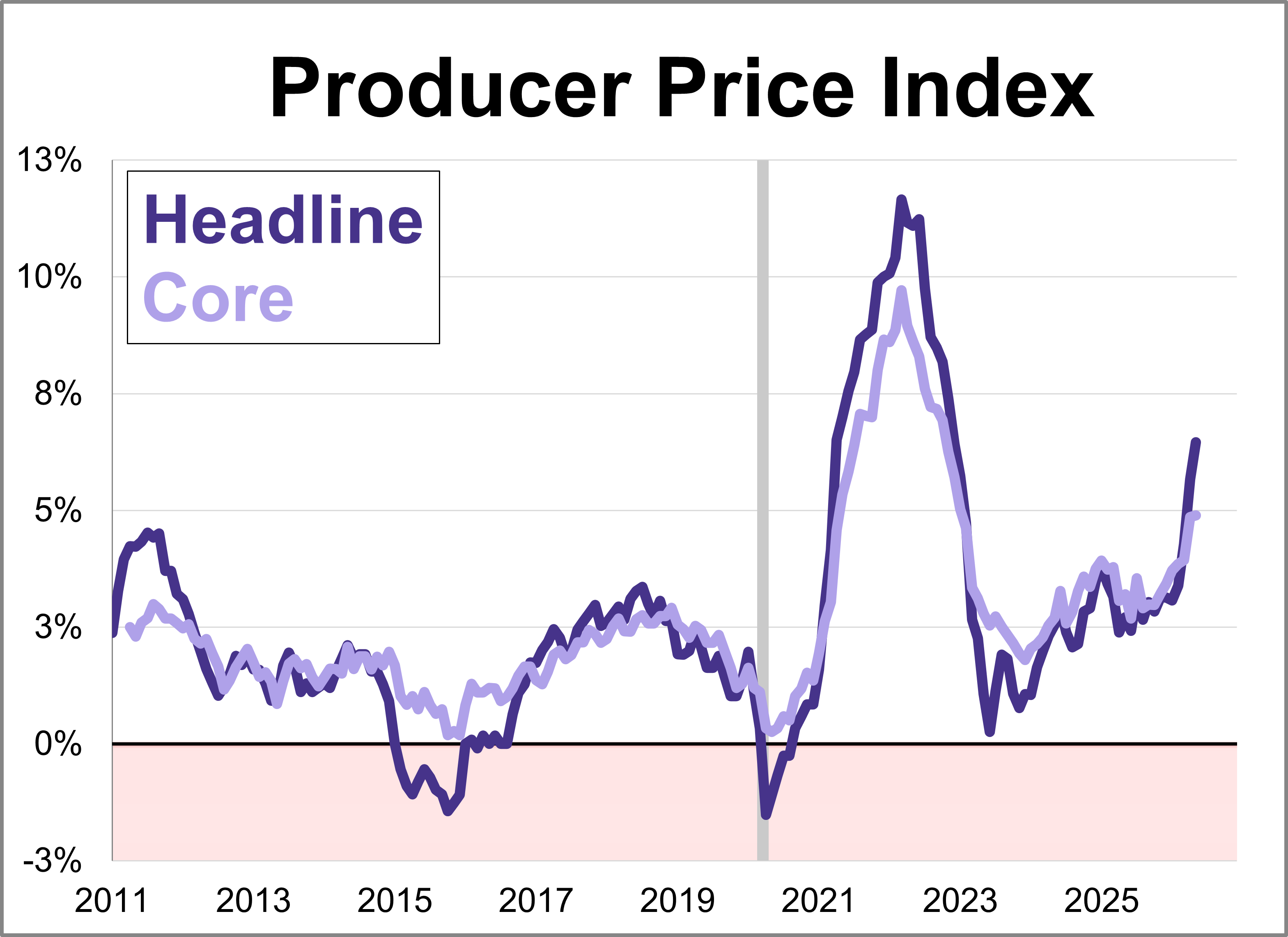
The U.S. economy faced intensifying headwinds in May as both consumer and wholesale inflation metrics surged to multi-year highs.
Discover how Capital Group’s active CGGR ETF navigates this mega-cap divergence to uncover secular growth beyond tech.
Despite everything we have seen in the economic data, which can be confusing, the US consumer has refused to crack. My friend Dr. Ed Yardeni, whom I have known since '98, has the most compelling explanation I have heard for why.
High-speed railway Brightline West has signed new contracts to lay tracks and systems for its high-speed railway, according to an email seen by Bloomberg, signaling progress for a project whose municipal bonds have traded at steep discounts since last year.
The current economic downturn is best described as hybrid and structurally driven. It leans heavily on demand constraints, though it is triggered and complicated by ongoing supply shocks.
New York City’s pension system said it’s seeking bids for roughly $92 billion of stock index-tracking funds now overseen by BlackRock Inc. and State Street Investment Management.
What do you do if you have a standard that’s not being met? Move the goalposts! Of course, you could work harder to meet the goal. But that’s hard. So, why not just change the standard and make it easier to meet?
Companies are also looking for ways to cut workers’ costs by offering plans that charge workers less but restrict them to a narrower group of providers.
Join the experts at MassMutual Strategic Distributors for an educational webcast exploring income riders and how to evaluation variable annuities beyond surface level features so you can match the right rider to each client’s investor profile and retirement goals.
Goldman Sachs and Innovator panelists say buffer ETFs can help advisors move cash-shy clients into stocks with built-in downside limits.
In this video, Chuck Carnevale responds to a viewer's question about building a retirement income portfolio for a 63-year-old investor. Rather than recommending specific stocks, Chuck focuses on the process he uses to identify high-quality income investments using the principles of value investing and the FAST Graphs platform.
VettaFi today announced it has signed a definitive agreement to acquire RAFI Indices, the renowned pioneer in fundamental indexing, from Research Affiliates.
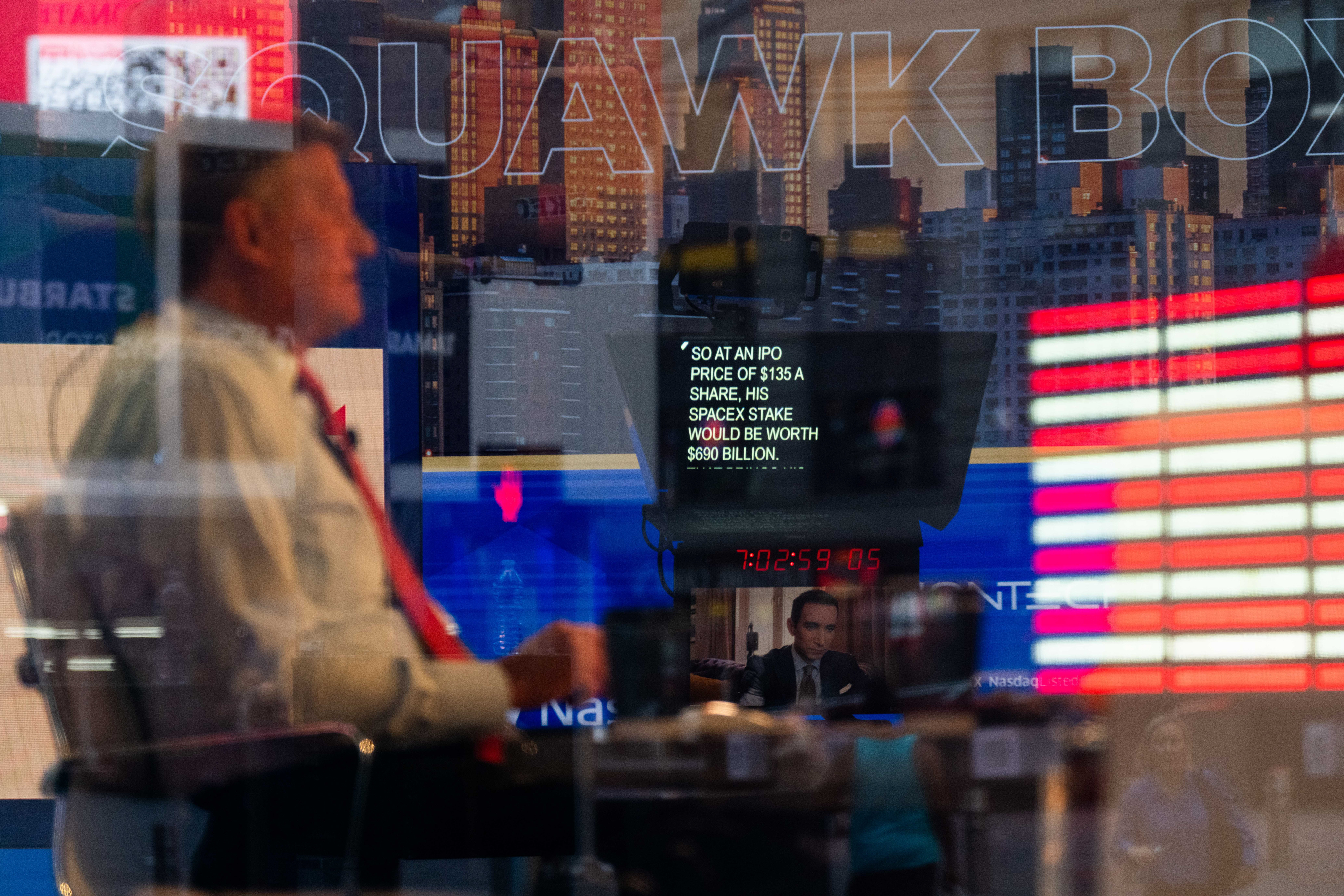
SpaceX made history with a $75 billion IPO that instantly turned it into one of the biggest public companies in the world. Now it has to win over the market.
US stocks opened with a small gain on Friday, supported by optimism about pending trading in SpaceX, which made history with the biggest-ever IPO, and the potential for an interim peace deal in the Iran conflict.
There’s a memorial to Paul the octopus at the Sea Life Centre in Oberhausen after the cephalopod seer earned worldwide fame by correctly predicting the outcome of all Germany’s seven games at the 2010 World Cup
That’s SpaceX out of the way. Next, investors will have to absorb the artificial-intelligence titans behind the Claude and ChatGPT chatbots, Anthropic PBC and OpenAI.
The ETF industry has reached a historic turning point. Vanguard has officially surpassed BlackRock’s iShares to become the largest ETF provider. The milestone underscores a broader structural shift among investors prioritizing low-cost investments in portfolio allocations.
At a time when the cost of living is rising and market volatility appears to be rising, too, investors may be looking for current income to bolster their portfolios. Current income can especially help investors at or near retirement to adapt to retired life.
JPMorgan Chase & Co.’s public finance department hired a Goldman Sachs Group Inc. banker to specialize in prepay energy deals, marking a major hire for the team as the firm ramps up its work in the sector.
The word seems to be spreading that small- and micro-cap stocks have so far been enjoying a stellar 2026. What seems less well known is that the current cycle of market leadership for the two asset classes stretches back to 2025 and has been in place for 14 months.
Dispersion continues to be the definitive story of 2026. As we progress through June and approach the conclusion of the first half of the year, the equity landscape remains distinctly bifurcated. Pockets of deep structural growth stand in contrast to areas grappling with macro headwinds.
In this month’s Allocation Views, strong corporate fundamentals and resilient growth fuel our continued optimism toward equities into June, despite persistent inflation and more restrictive monetary policy.
In addition to a greater range of chips supporting AI development, several factors could cause the current cycle to last longer than expected.
While owning a significant amount of a successful stock can be incredibly lucrative – especially in a company on the rise – the more you own of a single equity, the more closely your personal financial fate is tied to its performance.
For many investors, wealth management still feels segmented. Investments are handled in one meeting, taxes in another, estate planning somewhere else, and major life decisions often happen independently of all three.
Since early 2025, value stocks have enjoyed a strong run, defying market volatility driven by trade tensions, geopolitical stress and macroeconomic uncertainty. That resilience may seem counterintuitive given value’s historically cyclical profile. Yet, we believe the underlying characteristics of value stocks are proving particularly well suited to today’s evolving market landscape.
For many registered investment advisors (RIAs), success has traditionally been measured in assets under management (AUM). As the industry evolves and consolidation accelerates, a broader question is emerging: are you building a practice or an enterprise?
Silver's chart also weakened substantially, although the metal remains near important longer-term support levels and has not yet confirmed the same degree of structural breakdown seen in gold.
Inflation and geopolitical uncertainty are pushing advisors and investors to rethink how they build diversified portfolios.
Join the experts from VettaFi for a 30-minute discussion on the broader implications of successful microreactor tests.
With the challenges presented in the broader market environment and the rate regime, are you making the most out of your fixed income exposures? Active management can help fixed income investors navigate today’s unusual environment, giving funds the flexibility to react to events in real-time. Join Fidelity for a product due diligence session exploring three active strategies: FBND, FLTB, and FAAA.
This past week, the market hit an all-time high. At the same time, Alphabet (GOOG) told investors it would raise $80 billion by selling stock to fund its AI buildout, and the shares fell about 4% on the news.
May's Producer Price Index (PPI) data delivered another blow to inflation watchers, as wholesale price growth came in hotter than expected.
Things change fast in artificial intelligence. One minute corporate desk jockeys are competing to use AI coding and reasoning tools as much as possible, the next their bosses are complaining about budgets being pulverized and start rationing usage.
The jury is still out on whether SpaceX is primarily a rocket company, as its name suggests, or actually more of a telecom provider or artificial intelligence play. Its expected valuation doesn’t help resolve the confusion.
May saw 148 new ETF launches in May alone – although launch figures were partially driven by a 37-fund rollout from Corgi Insurance Services.
The initial public offering for SpaceX is poised to generate billions of dollars in profits for the fortunate few investors who got in early on Elon Musk’s rocket, satellite and artificial intelligence company.
As shareholders rush to pull money from private credit funds over troubling questions about software exposure, opaque loan values and non-payments, some bond investors are doing the opposite: buying their debt.
For more than four decades, PIMCO’s Secular Forum has provided a disciplined framework for stepping back from short-term market noise to assess the structural forces that will shape the global economy and markets over the next five years. Yet rarely has this exercise been more consequential than it has recently.
After more than three years of underperformance, our prognosis for global health care stocks remains positive. The sector now offers a broader set of high-quality companies at valuations that appear increasingly disconnected from fair value.
Many advisors deliver capital markets commentary as if the goal were simply to explain what’s happening. They assemble charts, cite data, summarize headlines and hope the client will draw the “right” conclusion.
Equity issuance is all the rage. The SpaceX (SPCX) IPO on Friday, Alphabet’s (GOOGL) up-sized secondary announced last week, and a slew of other major go-public names over the remainder of 2026 (Anthropic, OpenAI) buck the years-long trend of intense buybacks and shareholder-friendly activities by the world’s most valuable companies.
All major U.S. stock indices fell last week, ending a remarkable run of nine straight weekly gains for the S&P 500. But the headline numbers hide an unusually lopsided story.
Attractive yields and strong credit fundamentals are setting the municipal bond market up for a solid second half of the year, said Paul Malloy, the head of municipals at The Vanguard Group Inc.
The Senate passed $70 billion immigration enforcement funding bill, Capitol Hill struggles to find consensus on how to regulate AI, and the Trump Accounts app is live.
Begin with the print itself, because the headline flatters the internals only slightly. The bulk of May's gains came from leisure and hospitality, which added 70,000 jobs, nearly half of them in food services and drinking places; local government contributed 55,000, health care 35,000, and manufacturing a modest 7,000, while financial activities actually shed positions.
Every dollar in a growth equity index reflects two decisions: which companies to own and how much of each to hold. Indexes form intricate systematic rules to make the first decision. The second decision—position sizing—is usually determined by market-cap weighting.