It is hard to say if there is much economic benefit or cost to increased bank profits. On the one hand, it may allow banks to issue more credit to lower-income borrowers with worse credit.
Raymond James Chief Economist Eugenio J. Alemán discusses current economic conditions.
All three major stock indices finished in the red last week as AI disruption fears continued to grow. The S&P 500, an index of large US companies, returned -1.3 percent for the week, making the index flat year to date.
Royce Investment Partners: Co-CIO Francis Gannon looks at how low interest rates, tax policy, reshoring, technology adoption, and deregulation can fuel US small-cap earnings growth.
This week’s economic releases have once again underscored the policy dynamics we outlined in our January outlook. President Trump faces a high-stakes midterm election in November, and the incentives are clear: deliver visible growth, moderating inflation, and lower borrowing costs to strengthen the administration’s hand with voters.
With growth in both economies underpinned by trade, neither side has much appetite for a large‑scale economic confrontation. That reality should push both capitals toward calibrated responses rather than actions that sharply raise the costs of retaliation.
If orbital space is the 21st century’s high seas, China looks to be preparing an armada. Government plans submitted late last year to the United Nations’ International Telecommunications Union, or ITU, promise a fleet of 203,000 satellites to be deployed by the mid-2030s.
If you’re grading the economy based on real GDP, it looks pretty good; if grading based on jobs, not so much.
Thematic ETFs have maintained their impressive momentum in early 2026, building on a resurgent 2025. After gathering $23 billion last year, the category added another $4 billion in January alone.
Emerging market ETFs are back in focus. Two of the ten largest U.S.-listed ETF inflow winners year-to-date are broad EM funds. As expected, low-cost passive strategies continue to dominate flows, although they don’t always lead on returns.
Join JoAnne Bianco, CFA® of BondBloxx as she explores how targeting credit rating strategies may enhance portfolio income. From BBB rated investment grade to CCC rated high yield, now investors can optimize fixed income allocations in today's market environment with the diversification, transparency, and cost efficiency of ETFs.
Strategic succession planning executed well in advance can dramatically enhance your practice's worth while protecting both client relationships and your financial future. Let’s explore key moves for maximizing your valuation and ensuring a lasting legacy.
AI is evolving too quickly for static governance. Most firms today are still in a reactive posture. The goal is to move toward proactive management and ultimately predictive governance. The firms that learn to govern shadow AI will be the ones who turn today’s risk into tomorrow’s advantage.
As long as I have been writing this column and working in this business, I’ve learned there is still a first time for everything — and this is the first time I have ever heard this dilemma from an advisor.
It’s no surprise, then, that the majority of your marketing efforts are probably geared toward digital viewers. Here’s why print marketing is still worth your time and attention in a digital world, along with six print pieces to focus on first.
The article from the Wall Street Journal titled “Why My Generation Is Turning to Financial Nihilism” by Kyla Scanlon argues that Gen Z is embracing high-risk financial behavior out of despair and detachment, but the data shows something very different.
Years after Cathie Wood became the face of pandemic-era investing euphoria, her flagship fund is marking a difficult milestone.
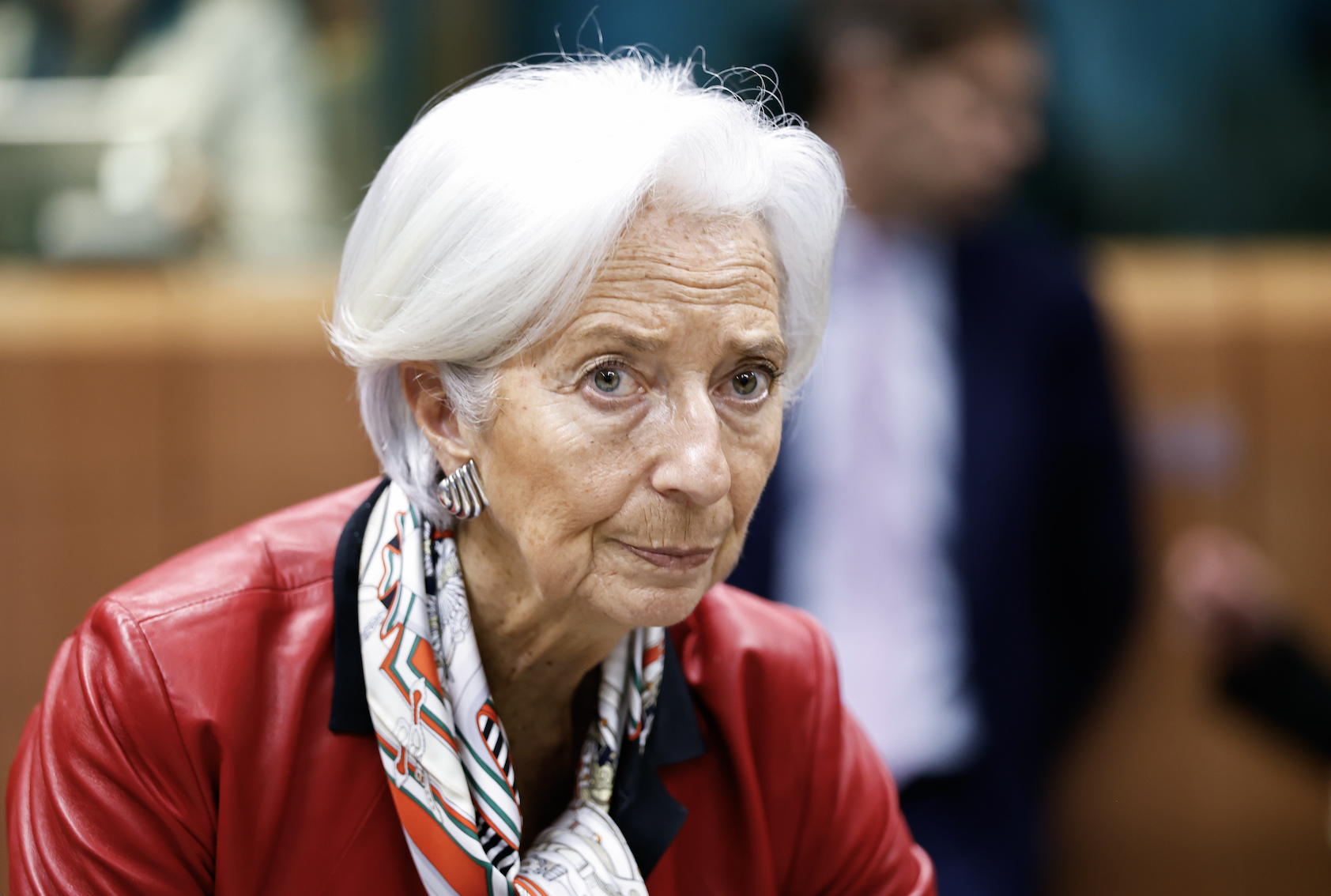
An early departure by Christine Lagarde could narrow the field of candidates vying to succeed her as European Central Bank president.
Artificial intelligence fears have ripped through stock and bond markets, but investors in loans and private credit are still playing catch-up.
If inquisitive investors wanted to measure the demand for AI with some actual numbers, one place they might look on the balance sheet is the line reading “remaining performance obligations,” known more simply as the backlog.
Markets move through phases of resilience, shifting leadership and renewed opportunity. We’ve seen this play out in recent months as performance has broadened beyond mega‑cap tech into areas that had long been overlooked.
Four months ago, digital assets underwent what I believe was the most consequential liquidation event in their history. On October 10, 2025, over $19 billion in leveraged positions were wiped out within hours. Bitcoin plummeted from roughly $122,000 to $105,000. More than 1.6 million trader accounts were liquidated.
For families navigating public benefits, long-term care planning, and lifetime financial sustainability, this change represents both an opportunity and a planning strategy worth considering. While ABLE accounts can be powerful tools, they are most effective when coordinated thoughtfully with benefits, trusts, and broader financial strategies.
Artificial intelligence is a genuinely useful technology, but its impact will be uneven, gradual and impossible to predict. That’s the boring truth, however unlikely it is to go viral.
Browsing real-estate listings is a popular hobby. Home data portals provide hours of free entertainment. Some listings feature bizarre or ostentatious decoration; some are time capsules, preserving a bygone era. Most entries share one shocking feature: the price.
When uncertainty rises, volatility usually follows as the market has a tendency of pricing in worst-case scenarios quickly. AI’s evolution has accelerated rapidly, shifting from novelty use cases to broad, productivity‑enhancing applications across industries.
Last week delivered exactly what the market needed on the economic data front: confirmation that inflation continues to cool while the labor market remains firmly intact. The CPI came in softer than expected, finally reflecting the long-awaited deceleration in rental costs.
We’ve seen upper-income consumers power consumption growth over the past year even as middle-income and working-class households become more restrained. The message from the office market is starting to sound similar.
Stripping out more volatile food and energy prices, core CPI prices rose 0.3 percent month on month. The annual core CPI dropped from 2.6 percent in December to 2.5 percent, the lowest reading since April 2021.
Gold has always been one of the go-to assets when stomach-churning volatility forces queasy investors into safe havens. However, recent volatility has been challenging that safe haven narrative, and one of the drivers has been speculative trading activity in China ETFs.
The performance of digital assets in recent months, especially bitcoin, has been testing investor conviction in both the category’s near-term growth potential as well as bitcoin’s standing as a gold-like store of value and a key character in the debasement trade story.
Join the experts at SS&C ALPS Advisors as they explore an actively managed approach to REIT investing.
Advisors can foster a stronger relationship with their clients through providing advice over charitable giving.
Before making a Roth conversion, always work with your advisor and consider the importance of timing and taxes to get the most out of the conversion. Just like Dr. Dre, you may need to make some charitable deductions to decrease your tax bill.
Nobody doubts the potential of machine learning. For portfolio managers, the question is not whether it works in theory; they know it does. The question is whether the expense fits their business size and goals.
Early last year, the drama around tariffs dominated news headlines, market predictions, and interactions between the U.S. and our allies. Yet for most Americans, daily life went on with little obvious impact on prices for goods. At least not right away.
Today we’re going to look at the recent employment data, and begin our exploration of what it will be like to be in the midst of a paradigm shift, on top of all of the other changes in society and finance. Without trying to be cliché, it is part and parcel of The Fourth Turning.
Since the beginning of the year, we have discussed the “reflation trade” and its impact on specific market sectors. This past weekend’s newsletter also showed some of these more extreme returns in various market sectors since the beginning of the yea
Fourth-quarter earnings results have been generally solid so far, albeit a bit weaker relative to prior quarters when it comes to beat rates and price reactions. On the international front, weakening global ties may lead to economic disruption and lasting investment implications. Meanwhile, bond market volatility has remained low despite economic and policy uncertainty.
Investors are avoiding beaten-down software stocks, warning that the brutal selloff triggered by fears of displacement by artificial intelligence is likely only just beginning.
Emerging-market assets were little changed on Tuesday as traders weighed the recent optimism toward the asset class against a firmer US dollar and thinner trading volumes due to holidays in major markets.
Treasuries rose on Tuesday as investors bet on the Federal Reserve cutting interest rates at least twice this year and jitters over global technology shares boosted demand for safer assets.
Adani Group plans to invest $100 billion by 2035 to develop green-powered, AI-ready data centers as billionaire Gautam Adani seeks to capitalize on India’s bid to emerge as a hub for artificial intelligence and cloud computing.
Thrive Capital, the venture capital firm founded by Josh Kushner, has raised more than $10 billion — its largest fund ever, giving the firm an expanded war chest to invest in areas ranging from artificial intelligence applications and infrastructure to space, robotics and life sciences.
Volatility was once again the theme in US markets last week as a profound alpha rotation reshapes Wall Street. Investors continued to flee mega-cap tech, software stocks, and anything considered an AI loser, in favor of more cyclical sectors such as energy, materials and industrials.
As of February 10, 2026, Victory Capital managed $20 billion in ETF assets, with an impressive $9 billion of new money flowing in during the past 12 months.
A weaker dollar, renewed commodity strength, and rising sensitivity around AI valuations are reshaping market leadership. Paul Vella breaks down what’s fueling gold and emerging markets, why SaaS cracks matter, and how disciplined diversification is helping investors navigate policy and earnings uncertainty.
The Dow Jones Industrial Average, better known as “the Dow,” closed above 50,000 points for the first time. It’s a historic milestone that comes less than two years after surpassing 40,000 in May 2024, but what does the milestone mean, and does it signal time for investors to reduce exposure?
Gold demand in the tech and industrial sectors was generally flat at 222.8 tonnes in 2025. This was down about 1.5 percent from 226.2 tonnes the previous year.
Diversification seeks to help manage risk, smooth portfolio outcomes, and improve the likelihood that clients stay invested and on track toward their long-term goals.