The global energy transition is accelerating, and 2026 is shaping up to be an active year for renewable energy development. As we see it, private credit’s central role in financing the power build-out and its ability to structure flexible solutions for borrowers is likely to generate attractive return opportunities for investors.
In this episode of "ETF of the Week," host Chuck Jaffe and Todd Rosenbluth, Head of Research at VettaFi, dive deep into the Invesco S&P 500 Equal Weight ETF (RSP). While the traditional S&P 500 is market-cap weighted—meaning the biggest companies have the most influence—the RSP gives all 500 companies an equal 0.20% stake. We discuss why this "mid-cap value" tilt is currently outperforming the broader market, how it provides better exposure to sectors like industrials and utilities, and how you can pair it with your existing core holdings to reduce risk.
Given the divergence between the calm market surface and the volatility of its underlying stocks' returns, let's get a better grip on the market’s undercurrent and decipher what it may be trying to tell us.
One underused alternative sits quietly in the options market: the short box spread. When used correctly, it allows advisors to treat borrowing as a fixed, collateralized financing decision, rather than an improvised margin advance.
Income rather than price is the primary driver of FRN returns. As policy rates and SOFR move, FRN coupons adjust accordingly, allowing income to rise in higher-rate environments and decline when rates fall.
The central theme of 2025 was the disconnect between market sentiment and economic reality. The year began with widespread apprehension regarding aggressive tariffs and forecasts of a recession.
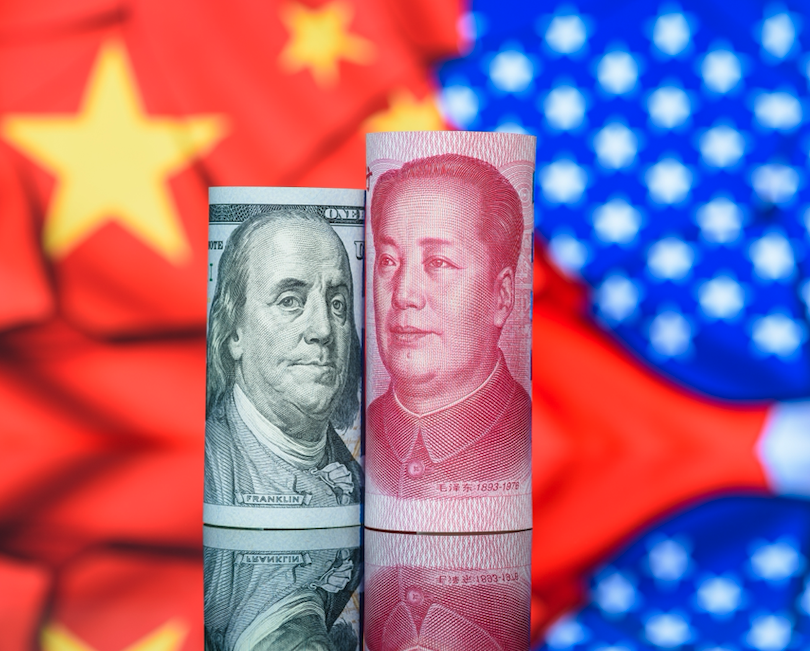
“China is dumping US Treasuries to get out of the dollar.” This claim has been circulating the mainstream feeds lately, with the narrative that the “end of the dollar is near,” or “the US will lose its funding base,” and “bond yields will surge.” But are those claims valid? Such is what we will explore in more detail.
The U.S. economy sent conflicting signals last week as a sharp deceleration in growth collided with unexpectedly stubborn inflation.
Many software stocks have been under pressure in recent months, as investors have started to perceive them as vulnerable to emerging artificial intelligence technology. As highlighted in the “6-Month Price History of the S&P Software and Service Index” chart, software stocks have declined roughly 27% from their September 2025 high.
Roundhill Financial, GraniteShares, and Bitwise have filed with the Securities and Exchange Commission for prediction market ETFs. These funds would let investors bet directly on election outcomes. That would be a departure from traditional political theme funds that hold baskets of stocks expected to benefit from certain party victories.
Income ETFs have become a key part of the ETF landscape in recent years. With their ability to use tools like call options and FLEX options, as well as dividend-focused stocks, income ETFs can help investors meet their goals.
It’s a short week for traders and portfolio managers, but a long one for those dissecting macro data points. FOMC Minutes hits before a slew of mid-tier economic updates on Thursday. Friday morning could be the big reveal, with growth and inflation numbers followed by bellwether business and consumer surveys.
The rising dispersion in returns and relatively low correlation among S&P 500 stocks has become increasingly apparent on the CBOE S&P 500 Dispersion Index and the CBOE Three-Month Implied Correlation Index.
Not long ago, CLO ETFs were niche vehicles only talked about at credit conferences and in sophisticated bond manager circles. But fast forward to 2026, and they’ve entered the mainstream – drawing meaningful interest from both institutions and retail investors.
California, like a careless heir who squanders a fortune, keeps menacing its top taxpayers. Unless lawmakers start showing some restraint, the state’s many economic strengths are likely to further erode.
Craig Ebeling, Head of ETF Strategists at Fidelity Investments, delivers an ETF “State of the Union,” outlining the key trends and themes shaping the industry today. Roxanna Islam, Head of Sector & Industry Research at VettaFi, examines the record surge in international equity ETF inflows, analyzes the drivers behind the category’s performance, and highlights standout funds beyond the ETF leaderboard’s biggest names.
A new class of digital money is reshaping how Americans move and store dollars — and Wall Street is racing to get a piece of it.
US equities rose Wednesday as a batch of reports confirming the strength of the American economy and a number of developments at the Big Tech giants reignited Wall Street’s excitement for the group.
To love a bubble but hate a crash is to misunderstand the market. A bubble is a crash on its way to becoming. A crash is a bull market on its way to becoming. All we can do is to accept, and as difficult as it may be – embrace – whatever form we have in the present moment, so we can do our best with each of them.
All three major stock indices finished in the red last week as AI disruption fears continued to grow. The S&P 500, an index of large US companies, returned -1.3 percent for the week, making the index flat year to date.
Thematic ETFs have maintained their impressive momentum in early 2026, building on a resurgent 2025. After gathering $23 billion last year, the category added another $4 billion in January alone.
Emerging market ETFs are back in focus. Two of the ten largest U.S.-listed ETF inflow winners year-to-date are broad EM funds. As expected, low-cost passive strategies continue to dominate flows, although they don’t always lead on returns.
Join JoAnne Bianco, CFA® of BondBloxx as she explores how targeting credit rating strategies may enhance portfolio income. From BBB rated investment grade to CCC rated high yield, now investors can optimize fixed income allocations in today's market environment with the diversification, transparency, and cost efficiency of ETFs.
AI is evolving too quickly for static governance. Most firms today are still in a reactive posture. The goal is to move toward proactive management and ultimately predictive governance. The firms that learn to govern shadow AI will be the ones who turn today’s risk into tomorrow’s advantage.
The article from the Wall Street Journal titled “Why My Generation Is Turning to Financial Nihilism” by Kyla Scanlon argues that Gen Z is embracing high-risk financial behavior out of despair and detachment, but the data shows something very different.
Years after Cathie Wood became the face of pandemic-era investing euphoria, her flagship fund is marking a difficult milestone.
Four months ago, digital assets underwent what I believe was the most consequential liquidation event in their history. On October 10, 2025, over $19 billion in leveraged positions were wiped out within hours. Bitcoin plummeted from roughly $122,000 to $105,000. More than 1.6 million trader accounts were liquidated.
Artificial intelligence is a genuinely useful technology, but its impact will be uneven, gradual and impossible to predict. That’s the boring truth, however unlikely it is to go viral.
Gold has always been one of the go-to assets when stomach-churning volatility forces queasy investors into safe havens. However, recent volatility has been challenging that safe haven narrative, and one of the drivers has been speculative trading activity in China ETFs.
The performance of digital assets in recent months, especially bitcoin, has been testing investor conviction in both the category’s near-term growth potential as well as bitcoin’s standing as a gold-like store of value and a key character in the debasement trade story.
Since the beginning of the year, we have discussed the “reflation trade” and its impact on specific market sectors. This past weekend’s newsletter also showed some of these more extreme returns in various market sectors since the beginning of the yea
Investors are avoiding beaten-down software stocks, warning that the brutal selloff triggered by fears of displacement by artificial intelligence is likely only just beginning.
Treasuries rose on Tuesday as investors bet on the Federal Reserve cutting interest rates at least twice this year and jitters over global technology shares boosted demand for safer assets.
Thrive Capital, the venture capital firm founded by Josh Kushner, has raised more than $10 billion — its largest fund ever, giving the firm an expanded war chest to invest in areas ranging from artificial intelligence applications and infrastructure to space, robotics and life sciences.
As of February 10, 2026, Victory Capital managed $20 billion in ETF assets, with an impressive $9 billion of new money flowing in during the past 12 months.
Diversification seeks to help manage risk, smooth portfolio outcomes, and improve the likelihood that clients stay invested and on track toward their long-term goals.
The U.S. economy began 2026 with a display of unexpected resilience in the labor market and cooling inflation.
Small caps are back in the spotlight! In this episode of ETF of the Week, Chuck Jaffe sits down with Todd Rosenbluth, Head of Research at VettaFi, to revisit a "new-fangled" fund that has quickly gained traction: the NEOS Russell 2000 High Income ETF (IWMI).
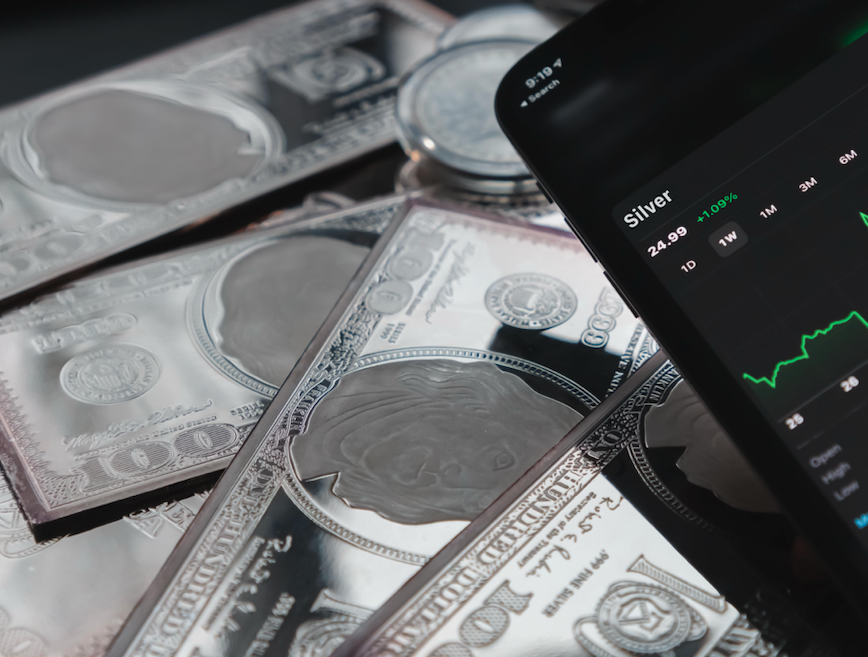
The silver market is projected to run its sixth straight structural supply deficit in 2026 as investment demand remains high.
Gavekal CEO Louis Gave is one of my favorite people to speak with on anything related to portfolio construction and the non-US perspective, and I knew our latest conversation about emerging markets (EM) would be anything but conventional.
There is perhaps no market force more fearsome than a true short squeeze. In our increasingly digitized financial world, a perilous gap often emerges between “paper” positions and physical reality.
Despite having little expertise when it comes to the subject of happiness, I’m fascinated by the subject of money and happiness. In this article, I discuss my own failed experience, review research on money and happiness, and offer my hypothesis on investing and happiness.
To make alternative investments appear attractive, promoters often claim that their products are only weakly correlated — or even uncorrelated — with traditional investments, while still offering competitive returns.
At their most recent meeting, the Federal Reserve and Chair Powell told us that the risks of weakening labor and higher inflation had declined. It painted a nice picture of a soft landing, but wasn’t a recipe for immediate rate cuts.
As Bitcoin struggles to climb out of its current funk, several indicators suggest any breach of the $60,000 level would unleash a fresh bout of extreme turbulence.
U.S. equity markets delivered mixed performance this week, underscoring elevated dispersion in returns and ongoing shifts in market leadership. The S&P 500 (-0.1%) was roughly flat, while the NASDAQ (-1.8%) underperformed and the Dow Jones Industrial Average (2.5%) and Russell 2000 (2.2%) both posted solid gains.
Artificial intelligence has made a lot of noise in the stock market lately, with bots from Alphabet Inc. and startups Anthropic and Altruist disrupting businesses from software to financial services.
Artificial intelligence doesn’t only threaten to put herds of software businesses out to pasture. Anthropic PBC’s schooling of its Claude models in financial modelling has also sent a cold shiver down the spines of bankers and analysts.
Kevin Warsh’s nomination for Fed Chairman initially reassured bond markets by offering a known, crisis-tested Fed veteran with a reputation as an inflation hawk, reducing uncertainty at a critical juncture for monetary policy.
In recent months, the cost of living has consistently polled as the top issue for American voters, with housing affordability standing out as one of the biggest pressure points.