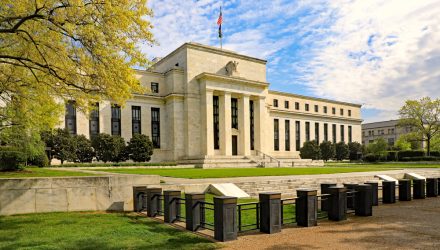
Chair Powell successfully staved off hard landing concerns by reiterating the FOMC is confident in economic growth and inflation progress.
Chief executive officers are no longer trying to be all things to all people.
Costco Wholesale Corp. posted higher-than-expected profit as moderating prices fueled consumer spending and store traffic climbed.
Rupert Murdoch has so far made it easy for Rightmove Plc to resist his takeover bid.
If on-field success is a measuring stick, Appaloosa Management co-founder David Tepper’s 2018 purchase of the Carolina Panthers has been a disaster.
Assets held by exchange-traded funds in the US hit $10 trillion for the first time as the investor-friendly products continue their relentless takeover of Wall Street.
On Tuesday, congressional leaders spent two hours taking to task Novo Nordisk Chief Executive Officer Lars Fruergaard Jørgensen over the high price of the company’s diabetes and obesity drugs, Ozempic and Wegovy. Now the question is whether those prices will change.
Since the beginning of the year, the OPEC+ countries that are subject to output caps have pumped together more than 600,000 barrels a day above their self-imposed limits.
So far, so good. The Federal Reserve’s efforts to engineer a soft landing for the economy are going well.
If investors had known in advance the size of the Federal Reserve’s latest interest-rate cut, would they have made big money on stocks and bonds trading on this market-moving intel?
A new exchange-traded fund attempting to carve out a slice of the $6.3 trillion sitting in traditional money-market funds is launching Wednesday.
At a finance conference in London this summer, four senior investment bankers set about persuading the room that the $1.7-trillion private credit market isn’t a threat to Wall Street. Barely three months later, two of them have jumped ship to seek their fortunes in the upstart asset class.
Vice President Kamala Harris’ recent proposal to ban price gouging in the grocery industry has raised tricky questions about the recent history of grocery prices, inflation and market power. Markups in grocery stores appear to be persistently higher than before the pandemic. But don’t rush to the conclusion that market power is the only explanation here.
That is much clearer and far more accurate. On Wednesday, Reuters first reported that the company is set to announce a restructuring under which its nonprofit board will lose control over the company’s core business.
Taxes can have a major impact on the long-term growth of a portfolio. Find out how continuous, thoughtful tax management can help investors maximize their wealth.
The economy is not the stock market. And that’s good news.
Explore fixed-income tools that generate income and infrastructure.
A new wave of opportunity seems set to flow into private credit markets, which could enhance risk-adjusted returns and diversify portfolios. What's driving this potential?
The TCJA is set to expire at the end of 2025, bringing unprecedented uncertainty. From potential tax rate hikes to changes in deductions, our Bill Cass highlights what you need to know to plan ahead.
Tax cuts are popular but not affordable for most nations.
Regardless of whether Donald Trump or Kamala Harris wins the US presidential election in November, Chinese decision-makers expect bitter disputes over trade, technology, and Taiwan. Feeling under siege, China is girding itself for long-term enmity with the world’s largest economy.
High-dividend-yielding equity investments are likely to get closer looks in the fourth quarter after strong recent performance.
Following the first half of 2024, the NDX succumbed to significant selling pressure as investors fretted about AI-related tech spending.
There are many myths about investing during election years but do they actually have an impact? Are election years inherently more volatile?
Market volatility has advisors exploring defensive strategies. But a thriving portfolio requires protection and growth. In this complex landscape, buffer ETFs can keep clients invested while protecting gains.
In theory, growing a pool of wealth over decades – whether for a family, an endowment, or a pensioner – is a straightforward endeavor.
Buyout heavyweights are increasingly resorting to the old-fashioned way of making money — actually running the companies they’ve bought.
Financial services companies are office hunting on one of New York City’s fanciest addresses, Park Avenue, and the biggest beneficiary may be a once-beleaguered real estate investment trust that happens to find itself in the right place at the right time.
Sam Altman has his hands in countless projects while also building “mankind’s last invention”: artificial general intelligence, or AI systems that surpass our own cognitive abilities. These galactic aspirations were reinforced on Monday when Altman published a dramatic blog post reminding us that superintelligence will bring prosperity for everyone. It’s just a “few thousand days” away, he added.
Financial services, like many institutions, are losing Americans’ trust. That’s a problem. Economies depend on a healthy financial system, as became painfully evident during the 2008 financial crisis, and that system operates largely on trust — confidence that people can access the money in their bank accounts, that their investment accounts are secure, and that their trades will be filled at quoted market prices, to name just a few everyday financial interactions.
Chief Investment Officer Sean Taylor provides his insights on how the Fed’s 50 basis point-rate cut may affect emerging economies, particularly in Asia and Latin America, how it impacts portfolio allocations and the sectors he believes are poised for growth amid this shift.
America’s financial industry has long had trust issues. Never mind the Great Financial Crisis of 2007-08; mistrust of the markets dates back to at least 1929, if not the Dutch East India collapse of 1769. But this history has an upside: Financial institutions have a lot of experience creating systems to build, maintain and restore trust — and have learned lessons that can be applied across the economy.
When stock markets rise, the bullish narrative tends to dominate, overlooking the potential impact of market declines. This oversight stems from two main problems: a basic misunderstanding of math and time’s critical role in investing.
The next president will face a difficult fiscal context.
Barry Bannister, Managing Director and Chief Equity Strategist at Stifel, put out an excellent research piece on future returns based on what industry folks call the “equity risk premium.”
Policy, more likely to be dictated by economic circumstances, may not resemble generous populist proposals, which could limit their impact on stock markets.
In the span of a few days in late July, the market got live to two contrasting theories at once: that U.S. inflation is collapsing while Japanese inflation will remain stubbornly high.
Fixed income strategy and opportunities have remained relatively unchanged over the past few months. However, the much-talked-about monetary policy change has commenced.
On September 18, 2024, the Federal Reserve cut interest rates by 0.5%, bringing the federal funds rate down to a range of 4.75% to 5%. This move, aimed at managing inflationary pressures while addressing the gradual rise in unemployment, underscores the Fed’s balancing act between fostering economic growth and taming inflation.
Historically, investors have struggled to add meaningful alpha through security selection. A dynamic new credit scoring approach could change that.
In the latest episode of ETF 360. VettaFi's Kristen Chang spoke to Winslow Capital's Barry Peters about their new active growth funds
Fixed income investors may want to take a middle-ground approach with bonds and opt for debt with intermediate maturity dates.
Credit is an often-overlooked asset class. But the current outlook shows lots of opportunities in credit for advisors. Given today’s volatility, active management could also help investors find the right opportunities at the right time.
Join the experts at Simplify Asset Management and Asterozoa Capital Management to unpack how investors can benefit from an actively approached credit strategy.
A surprising trend has emerged when it comes to discussing inheritance. While very and ultra-high-net-worth clients often engage in these conversations, they tend to occur far less frequently with other segments.
Care about being a financial “doctor” and don't assume all is well because you have addressed the surface issue. Here are some ways to avoid delivering a poor bedside manner when clients need help.
With the advent of artificial intelligence (AI) in financial services, the pressure to move away from the AUM model is mounting. Has the time come for you to rethink your approach to compensation?
OpenAI has pitched the Biden administration on the need for massive data centers that could each use as much power as entire cities, framing the unprecedented expansion as necessary to develop more advanced artificial intelligence models and compete with China.
The global market for AI-related products is ballooning and will hit as much as $990 billion in 2027, as the technology’s quick adoption disrupts companies and economies, Bain & Co. said.
They say if there’s ever a Silicon Valley Mount Rushmore, the first face to be chiseled into the stone would be that of Gordon Moore. The Intel Corp. co-founder’s famous prediction about the rate at which semiconductors would improve has provided the bedrock to American technology leadership.
At risk of understatement, let’s call it a big deal. Microsoft Corp.’s agreement with Constellation Energy Corp. to reopen the Three Mile Island nuclear plant in Pennsylvania could prove highly consequential — for the green-energy transition and much else besides.