I spent the last two weeks of May catching up with partners and clients in Malaysia, Singapore, China, and Hong Kong. Following are some reflections on those conversations.
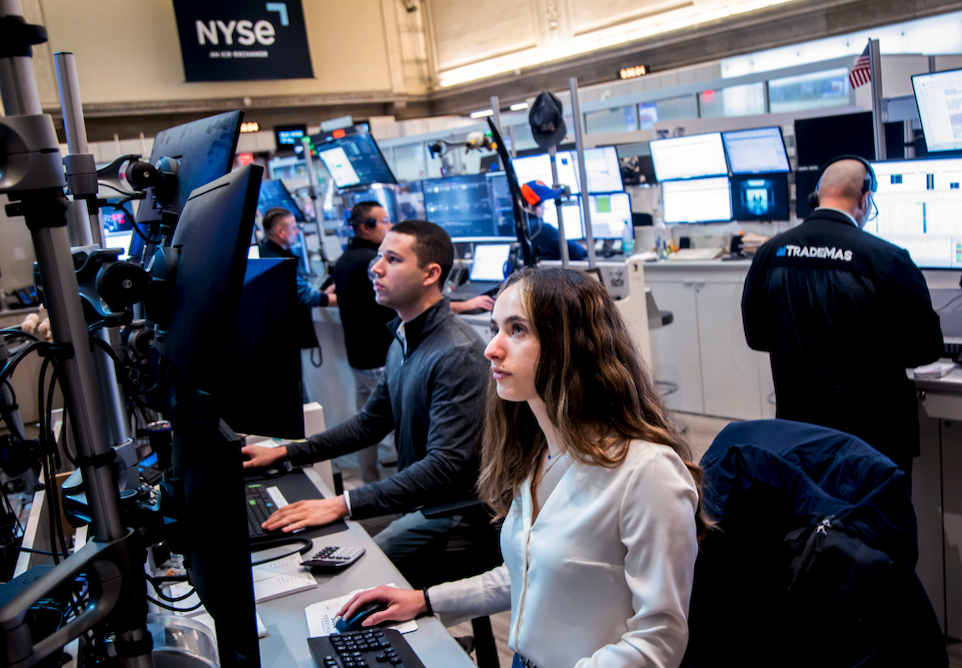
Here’s the blunt truth: Many great investment strategies fail because of poor implementation. Robust capabilities in trading, transition management, overlays and currencies are critical to executing a strategy.
Investors looking to move big blocks of corporate bonds have long relied on exchange-traded funds listed on stock exchanges to jump in and out of positions. But now, they’re increasingly trading directly in the debt market.
The push to put private assets in the hands of individual investors is breathing new life into a relatively quiet corner of the asset management industry: interval funds.
Investors may revisit international exposure in their portfolios amidst reduced market reactions to tariff announcements, uncertain U.S. policy and lagging U.S. stock performance.
For the first time in five months, gold-backed ETFs globally reported modest outflows in May as investors took profits.
Markets may be fretting over Federal Reserve policy and economic soft landings, but a handful of momentum ETFs have quietly been stealing the show. Across the array of factor funds, momentum has performed best this year.
After falling 0.7% in April, the S&P 500 gained 6.3% last month, marking the index’s best May return since 1990 and its best monthly return since November 2023 (see the chart).
Back during the Financial Panic of 2008, clickbait media kept screaming “Hyperinflation.” We consistently pushed back against this theme, and argued inflation would not accelerate.
Last week’s employment report was an important stabilizer for the markets. After concerning revisions and weak ADP numbers raised recession alarms, Friday’s payrolls print calmed fears on labor market deterioration.
As we head into the second half of the year, US markets seem to be turning around, with economic data that is still coming in mixed. The major US indices were up the first three days of last week, dipping on Thursday after weaker back-to-back readings of the US labor market.
In this webinar, we’ll explore how the Oakland A’s used a “Moneyball” strategy—favoring data over instinct—to beat the odds. And we’ll show how the same principle can be used to build stronger, more resilient portfolios.
Carolyn McPhillips, President of MFDF, sheds light on the evolving role of ETF directors and their growing importance as investment products become more complex – particularly in emerging areas like crypto and private assets. VettaFi’s Zeno Mercer explores artificial intelligence ETFs, highlighting new launches and offering tips to help investors navigate this rapidly expanding category.
VettaFi’s Head of Research Todd Rosenbluth discussed the Fidelity Enhanced International ETF (FENI) on this week’s “ETF of the Week” podcast with Chuck Jaffe of “Money Life.”
Investors nearing or in retirement who are currently defaulted into TDFs need to stop defaulting and move to safety now.
As small business clients look toward ambitious growth, advisors have the chance to offer something foundational: a term life insurance strategy that turns ambitions into a legacy.
Stablecoins and the concept of digital money represent a significant shift from the current system. While there are many risks with digital money, there is also promise.
US Treasuries were trimming overnight gains, with modest weakness in longer dated debt as investors awaited a Thursday auction of 30-year securities that will offer a fresh test of demand for the beleaguered securities.
US stocks flipped between small gains and losses on Monday as investors awaited the outcome of crucial trade talks between Washington and Beijing in London.
Vanguard Group Inc. is launching a low-cost fund focused on emerging-market stocks while explicitly avoiding China, muscling into a trade long dominated by BlackRock Inc.
Yale University’s $41 billion endowment, led for decades by the late investing giant David Swensen, has been the envy – and the blueprint — for many US universities eager to secure their financial future.
Retail traders using sophisticated quantitative strategies are starting to have a surprising and noticeable impact on financial prices.
Three months after the Chinese artificial intelligence developer DeepSeek upended the tech world with a model that rivaled America’s best, a 28-year-old AI executive named Alexandr Wang came to Capitol Hill to tell policymakers what they needed to do to maintain US dominance.
Increasing investor preference for actively managed strategies continues in this year’s tumultuous environment. With active ETFs taking increasing market share, advisors and investors have ever-expanding choices when looking to augment existing passive exposures.
Today we’ll continue our SIC highlight series featuring a relatively new face who is now indispensable, plus some new ones who were crowd favorites.
It would seem evident that most investors would understand that consumer spending drives economic growth, ultimately creating corporate earnings growth. Yet, despite this somewhat tautological statement, Wall Street appears to ignore this simple reality when forecasting forward earnings.
The Federal Reserve (Fed) lost its chance to lower interest rates further during the first half of the year, when inflation came down to close to its 2.0% target with very limited risk that its decision would have triggered higher inflation.
Systematic fixed-income investing is attracting increased attention but needs specialist skills and resources. Would your manager have what it takes?
Research trips are an integral component of our active, fundamental investment process. Our investment teams meet with different companies, attend conferences, and travel to new markets around the world, gaining insights for our clients and a deeper understanding of potential investments.
Rebounding demand from ETF investors and resilient buying from central banks and Asia retail have propelled gold prices to fresh records north of US$3,000/oz. Find out why we believe there is more room to run.
Last week, the labor market took center stage, presenting a nuanced picture of continued resilience alongside subtle signs of softening.
The bill contains several tax-code changes that could affect municipal bonds, although we don't think it reduces the appeal of munis for high-income earners.
In sauna-like wooden meeting huts scattered around private capital’s annual marquee event in Berlin, executives are looking for the next hot spot.
Iron and steel mills employ about 85,700 people in the US. That’s less than half as many as in 1990 but slightly more than in 2016 and 2017.
The Buffett Indicator, made popular by Warren Buffett, assesses the overall value of the stock market relative to the economy. This video provides the May 2025 update on Buffett Valuation Indicator.
Join the experts at Praxis Investment Management as they explore the ins and outs of how advisors can improve their relationship with faith-based clients and help those clients invest their money in a way that reflects their beliefs.
The ETF market saw a noticeable slowdown of new products launched in May; however, innovation continued to be a driving force.
Treasuries fell as faster-than-expected US job and wage growth prompted traders to trim back bets that the Federal Reserve will cut interest rates this year.
The biggest story swirling around Tesla Inc. right now concerns Chief Executive Elon Musk’s sudden, if unsurprising, break with a leader who is as calm and unassuming as he is, President Donald Trump. The important story concerns what is happening far from these shores: China.
The federal government, financial markets and most Americans are all in a state of denial about interest rates.
The White House is seriously considering the proposal, at the behest of some of the country’s largest financial firms.
Bouts of volatility may continue in the second half of 2025 as bond market investors navigate evolving tariff policy, U.S. government debt, and economic uncertainty.
Kristofer Kraus, portfolio manager and co-lead of PIMCO’s asset-based finance business, charts the nuances behind the overall resilience of U.S. consumers – and explains how these insights shape lending and investment strategies.
Abstract SMID-cap investing offers stronger performance and lower volatility than small-caps alone. By using the Russell 2500 index, investors can retain top performers longer, reduce turnover, and enhance portfolio resilience and flexibility.
Privacore Capital, an affiliate of Janus Henderson and an open-architecture solutions provider for alternative investment products tailored to the private wealth market, and Partners Capital Investment Group, a global Investment Office, today announced the launch of the Privacore PCAAM Alternative Growth Fund (“AltsGrow”).
Gold’s recent surge to $3,500 was quickly followed by a sharp correction. Each tariff update or diplomatic rumor sends markets into a frenzy—rallying stocks, selling gold, or reversing course the next day.
We remain underweight most developed market stocks as US tariff policy is still unclear but are more enthusiastic about emerging market assets.
For four decades, the USA has relied on debt-financed consumption and a service-heavy economy to mask an unsustainable model.
Given the large pool of options available to fixed income investors in the bond market, the ideal option given the current economic uncertainty is still Treasuries. With that, Vanguard has three options worthy of consideration for any portfolio.