The conflict in the Middle East remained a key driver of market sentiment this week, with rapidly shifting headlines contributing to heightened volatility.
For investors who understand this distinction, the current pullback may represent an opportunity rather than a warning. Short-term sentiment may dominate headlines, but long-term fundamentals continue to point in a very different direction.
As tax law changes from the OBBBA take effect, taxpayers may want to evaluate their financial plans. Our Bill Cass shares some essential strategies—including Roth conversions that may help taxpayers optimize savings.
The actively managed fund charges a 0.65% expense ratio and uses an options overlay designed to generate income while managing volatility. Energy makes up 45.87% of the fund’s sector allocation, followed by information technology at 25.83%, industrials at 16.43% and utilities at 11.87%, according to the factsheet.
As the ETF industry witnessed expansive growth during the past decade, providers have been engaging in a fee war as competition heats up. Industry giants like Vanguard and BlackRock have slashed expense ratios to near-zero, but that era of fee compression could be reaching an inflection point.
Next week’s releases should help clarify whether recent volatility remains contained or begins to translate into weaker fundamentals.
Energy cycles have a way of rewarding investors who show up early, while punishing those who assume the next upturn will look exactly like the last one. Supply disruptions caused by the war in Iran that began just under a month ago have upended markets globally, with oil markets taking center stage.
In today’s era of automation, some situations demand a more active approach. Municipal bond investing is one.
Geopolitical volatility is not only increasing investor demand for infrastructure assets; it is urgently reshaping where and how capital is deployed. As energy security, supply chain resilience, and digital sovereignty rise up policy agendas, infrastructure investments that expand capacity and relieve bottlenecks are becoming critical.
Rapid advances in artificial intelligence, persistent geopolitical tensions – particularly the conflict in Iran – and ongoing trade uncertainty have kept headlines loud and emotions elevated, ultimately demanding investors remain adaptive and disciplined. In this kind of environment, the biggest mistakes come from reacting to noise rather than fundamentals.
Bitcoin is now less volatile than some Magnificent 7 stocks, but it's still capable of steep, prolonged declines.
Many people forget that gold was in a bull market in early 2008 but suffered a significant selloff at the onset of the financial crisis when the yellow metal fell 32 percent, giving up about 40 percent of its previous bull market gain. Gold then took off and soared by over 153 percent over the next few years.
A SEP IRA offers small businesses and sole proprietors a flexible, tax advantaged way to fund 2025 retirement savings. With high contribution limits, simplified administration and deadlines extending through tax filing, it can provide a practical solution for boosting long term financial security.
At the height of the meme stock craze, investors made and lost fortunes as their speculative trades made headlines. This trend was so dramatic and so widespread that reporting on it moved beyond financial publications into the mainstream press and even into a few movie scripts.
The SEC is reportedly finalizing a proposal to allow U.S. companies to transition from quarterly to semi-annual reporting (SAR), potentially ending a 90-year-old mandate.
At the risk of leaving aside the flow-through of the crude oil price into expenses such as electricity, trucking, and so on, let’s just look at the pocketbook hit from filling up the family car specifically.
The Amplify Video Game Leaders ETF (GAMR) hit the reset button this March. With 22 constituent adjustments, the rebalance goes beyond just routine maintenance. It’s a tactical recalibration designed to capture a shifting global landscape and lean back into core gaming fundamentals.
An aging population is leading to a profound demographic shift known as the “Silver Tsunami.” With more Baby Boomers reaching retirement age, the demand for senior living facilities and medicinal innovation is increasing.
The convergence of ETFs, mutual funds, and tokenization is gaining momentum as asset managers seek to modernize product structures, expand distribution, and future-proof their businesses without abandoning established regulatory frameworks.
ETF fees are falling, along with mutual fund fees, according to a new report looking back over multiple decades.
Bearish sentiment has taken over the markets. As one analyst put it, “Wall Street has thrown in the towel on gold.”
In a world of intensified uncertainty and dispersion, investing becomes less about forecasting and more about favoring more liquid, high quality assets that can be resilient across a variety of scenarios.
The Iran conflict has changed the paths for inflation and central bank actions.
With each passing day, investor focus is widening from the near-term impact of spiking oil prices to how—and where—higher energy costs will filter through the broader market.
The multi-asset playing field presents income investors with broad opportunities across asset classes. But investors that rely only on traditional stock dividends and bond interest may be missing out on other attractive income sources.
If you’re not sure what direct indexing means, you’re not alone. Even after the recent growth, direct indexing remains relatively unknown. As our risk review team never fails to remind us, you can’t invest directly in an index. So what exactly is direct indexing?
Your financial requirements are multifaceted, necessitating strategies tailored to your specific needs. Tailored lending can be a valuable addition to a high-net-worth individual’s financial plan, helping you optimize cash flow, maximize tax efficiency and realize important estate planning goals.
As portfolios limited to public equities capture a smaller slice of corporate growth, private investments are increasingly finding a place in long-term wealth-building strategies, including 401(k)s.
The conversation about automation is still stuck in 2016. “Robots are coming for your job.” But look at what’s actually happening in the countries that leaned into robotics.
The U.S. middle market has hit $25 trillion. Discover why Cerulli says the advisor shortage and shifting demographics make early engagement a necessity.
Artificial intelligence will reshape how asset management firms operate, but the biggest obstacle isn’t technology, it’s getting people to change how they work, according to VanEck CEO Jan van Eck.
Learn how RIAs are using Section 351 ETF conversions to modernize SMA strategies, defer capital gains, and boost firm valuation.
Software stocks are down big YTD, but AI-targeted companies have signaled confidence through increased buyback announcements. Record YTD buyback authorizations suggest potential equity market support—but execution remains the wildcard.
Every few months, a headline appears declaring that the U.S. dollar’s reign as the world’s reserve currency is over. China is dumping Treasuries. Central banks are hoarding gold.
The Fed’s decision made sense: don’t change the target for short-term interest rates if we don’t know what the world will look like tomorrow. But investors need to remember a couple of important things. Rate cuts, if they ever come, are less important than the money supply.
Geopolitical headlines rarely arrive quietly. The recent escalation in the Middle East is a reminder of how quickly tensions can feel destabilizing.
Although the US now produces more oil than it consumes, it still exports lighter crude and imports heavier crude that US refineries need. As a result, global supply disruptions continue to play an outsized role in determining what US consumers pay at the pump. In short, during geopolitical crises, international oil markets matter more for gasoline prices than domestic production alone.
The financial advisory space has never been more competitive, or more ripe for transformation. Fee compression, AI encroachment, tightening compliance, and clients with increasingly sophisticated expectations are pushing experienced Advisors to ask a fundamental question: Is it time to make a move?
How Do You Value Zero GrowthIn this video, Chuck Carnevale (“Mr. Valuation”) explains the fundamentals of stock valuation and addresses a common misconception: that all companies should be valued at the same price-to-earnings (P/E) ratio.
Stocks fell for the fourth consecutive week as rising interest rates and surging oil prices—driven by the ongoing conflict in the Middle East—continued to weigh on investor sentiment.
Uncertainty persists in 2026, affecting the broader fixed income market. Collateralized loan obligations (or CLO) have emerged as a viable option with the advent of exchange-traded funds (ETFs), which have democratized access to retail investors.
Corporate credit markets have become unsettled about the potential for advanced agentic AI tools from firms such as Anthropic and OpenAI to automate functions across legal, analytical, marketing, and sales workflows, effectively targeting the software as a service (SaaS)/enterprise software space.
T. Rowe Price is leveraging three decades of private equity experience to give active ETF investors access to companies at the core of artificial intelligence, including OpenAI, Anthropic, and Databricks, according to Christopher Murphy, head of ETF specialists at the firm.
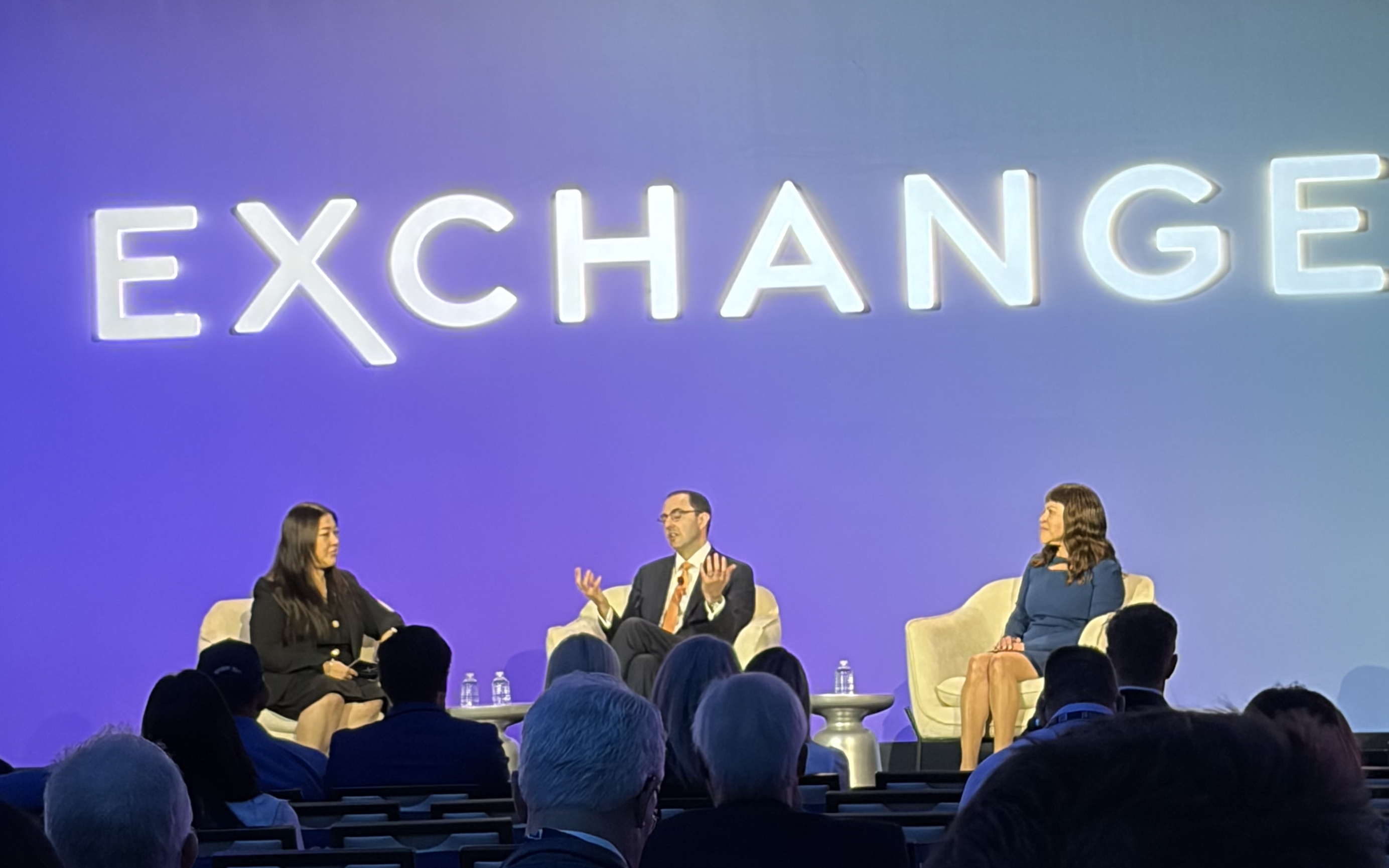
Industry experts at Exchange 2026 explored why only a quarter of advisors have formal succession planning in place and what it takes to execute well.
The Federal Reserve (Fed) kept interest rates unchanged after its Federal Open Market Committee (FOMC) meeting earlier this month. Although investors and economists largely expected this outcome, stocks and bonds sold off immediately after Fed chair Jerome Powell’s post-meeting news conference.
Most of us have been taught that diversification provides benefits. We’re told there are assets that can be held alongside equities to smooth out the twists and turns of the market.
While agricultural best practices have moved on to other resources, the Guano Wars teach us that nations are willing to go to great lengths to sustain their crops.
Faster productivity growth lifts earnings, improves the long-run fiscal arithmetic, and allows the economy to run stronger without recreating the inflation regime of 2022. Historically, markets are slow to recognize when the supply side of the economy has improved. This time should be no different. The productivity story is more durable than this week’s Iran developments, which is dominate trading over the near term.
With apologies if this is the tenth investment piece you’ve read this week about the impact of the Iran War on asset markets, but we wanted to share our thoughts on what’s going on with our investors. First a recap. The S&P 500 is down 5.4% since the February 28, 2026 start of the Iran War.
As 2026 unfolds, market leadership is shifting in ways that go beyond the usual sector rotation. While AI-driven growth fueled recent gains, rising capital expenditures, energy demands, and valuation pressure are forcing a reassessment across both public and private markets. At the same time, economic data—particularly beneath headline job growth—suggests a more uneven expansion than many expected.