This week brought a mixed bag of economic data, yet markets continue to demonstrate impressive resilience.
financial markets are becoming uneasy as President Trump follows through on his campaign promises to impose or threaten new tariffs to improve trade imbalances or achieve some of his policy priorities
An escalation seems more likely than diffusion in the U.S.-China trade battle.
On the latest edition of Market Week in Review, Senior Investment Strategist and Head of Canadian Strategy, BeiChen Lin, discussed what investors should consider in light of recent equity-market strength.
The healthcare industry's bellwether event, the JP Morgan Healthcare Conference (JPM25), kicked off the year as it traditionally does,
Stocks bounced back after tariffs on imports from Mexico and Canada were delayed, but tariff issues are not yet solved and still hold the potential to drive market volatility.
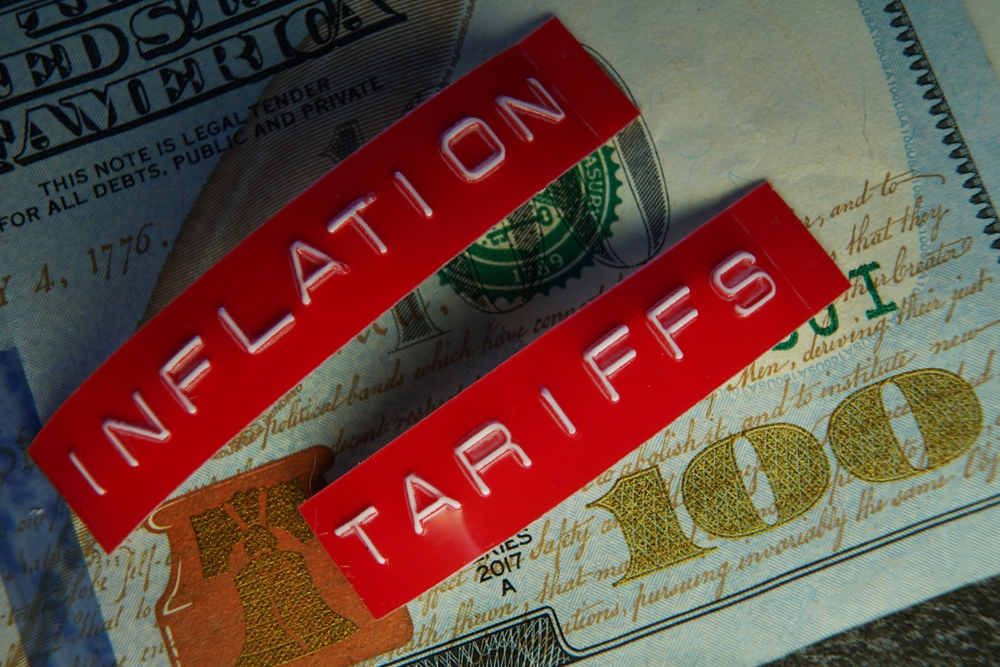
Tariff concerns are not only affecting inflation expectations but also Americans’ consumption patterns.
Our research shows how artificial intelligence can potentially enhance performance of equity investing.
The market defies more negative news because retail investors continue to step in and “buy the dip.” In our recent Bull Bear reports, we discussed the push by retail investors, but looking at retail sentiment is quite remarkable.
Trump Confusion Syndrome, or TCS, is distinct from Trump Derangement Syndrome in which afflicted people feel outrage about everything the president says or does. TCS isn’t about agreeing or disagreeing. It’s mostly about understanding. And then when something still seems wrong, feeling free to say it out loud.
For a few months now, I’ve been referring to today’s heightened geopolitical climate as the “new red Cold War,” where artificial intelligence (AI)—not necessarily fighter jets and nuclear weapons—serves as the primary battleground between the U.S. and its adversaries, most notably Russia and China.
In today’s video, The Ultimate Guide to Stock Investing Success, Chuck Carnevale, Co-Founder of FAST Graphs, a.k.a. Mr. Valuation, is going to talk about how you can really identify stocks that you can add to your portfolio that will be winners in the long run.
If the current slate of proposed U.S. tariffs is implemented, our model estimates a 60-to-80 bps increase in cost structures across most sectors of the global economy.
How will potential trends in inflation, the US dollar and supply deficits across many raw material markets affect the environment for investing in commodities?
At the start of each new year, there are regular predictions that international equity markets will outperform U.S. large-cap ones.
It is not just tariffs that might affect inflation and growth but also trade uncertainty and the effects of the ambitious Trump policy agenda.
It’s mid-February and earnings season is in full swing. All I really want to know is if Mr. Market is going to be my Valentine… or not. Earnings data hits, political comments are made, and investors react. The CNN Fear & Greed Index is at dead neutral.
The January Employment Situation Report reaffirmed the resilience of the U.S. labor market, with nonfarm payrolls rising by 143,000 and the unemployment rate ticking down to 4.0%.
Building a bond portfolio these days isn’t easy. Interest rates have been volatile. Credit spreads are tight. And sweeping change in US fiscal, trade, and regulatory policy is underway. We think securitized assets deserve a closer look.
At the same time, the Fed has mostly ignored the impact of easy financial conditions—the combination of stock, bond, and credit conditions—offsetting increases in interest rates by bolstering wealth and confidence.
2025 is beginning in much the same manner as 2024, with investors focused on whether the Chinese government is going to implement new stimulus measures.
Cash flow and income sometimes get commingled, potentially creating confusion. Cash flow and yield typically represent two different components that can be used to accomplish different objectives.
We are observing a significant shift in global supply chains away from China, presenting a substantial investment opportunity. What are the reasons behind this shift?
Recent developments may just offer advisors and investors fresh pathways with which to attain higher yield in 2025.
A closer look at the broader landscape reveals why the United States remains positioned to pursue a strategy of tariffs.
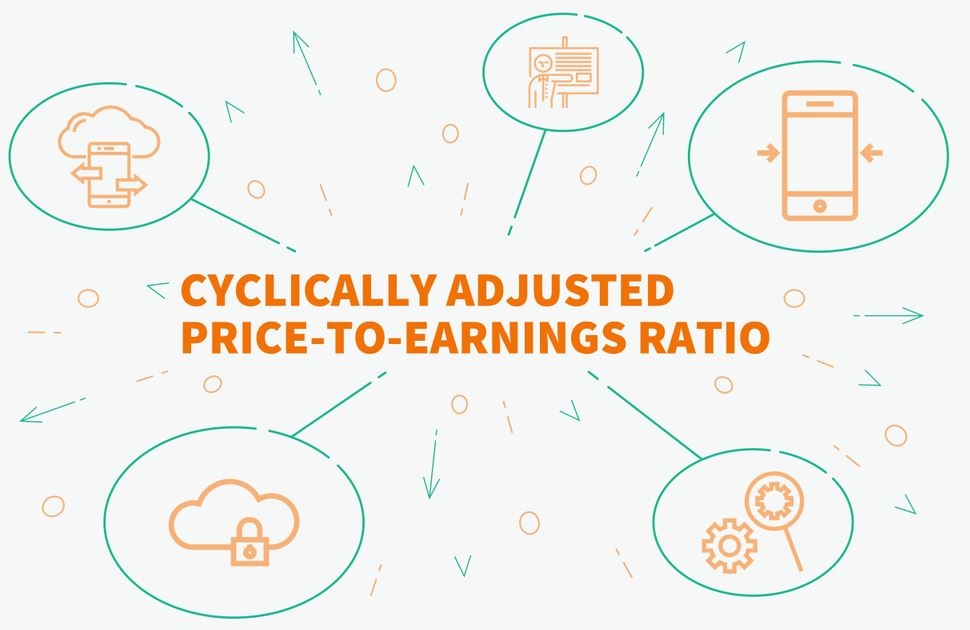
The article introduces CC CAPE, a modified version of Shiller CAPE, which corrects index biases for improved forecasting. While both measure market valuations for long-term return forecasting, the CAPE Spread helps gauge sentiment for medium-term predictions.
Perhaps US efforts to cut off China’s access to advanced semiconductors will be more successful than analogous restrictions on tech exports to France in the 1960s. But we now have at least one data point – DeepSeek – that suggests otherwise.
Michael Contopoulos breaks down why CLOs offer attractive relative value, why short-duration positioning may help manage interest rate uncertainty, and the importance of an active approach for this year in particular.
The Federal Reserve’s record of forecasting has frequently led it to respond too late to changes in economic and financial conditions. In the most recent FOMC meeting, the Federal Reserve changed its statement to support a pause in the current interest rate-cutting cycle.
For 2025 tax planning, our Bill Cass shares income tax planning strategies that can help manage current tax bills and prepare for future changes. Here are the highlights.
Managers are cognizant of potential risks to portfolios, identifying dominant Chinese component manufacturers, North American automotive supply chains, and smaller cap industrial cyclicals as market segments worth monitoring.
Could the U.S. dollar lose its place as the world's reserve currency? Despite a long-term trend toward currency diversification, we don't see the dollar losing dominance anytime soon.
The employment report was uniformly strong except for one component: the average hours worked per week fell to the lowest level since the pandemic, which may be weather related.
We explore why extreme market concentration is unsustainable, how competition and innovation drive broader market performance, and why diversification is key as volatility rises. Don’t let market extremes catch you off guard.
As the sequel unfolds, particular industry sectors in affected countries are likely to be more impacted. Global Head of Credit Research Mike Talaga, Head of EMEA Credit Research James Maxwell, and Client Portfolio Manager Celia Soares discuss the implications for credit investors.
The equity markets were lower after facing a trifecta of headwinds from China, the Fed, and the White House. Stocks are running a bit serpentine right now, with tech under extreme pressure in response to headlines highlighting the low-cost language model developed by Chinese artificial intelligence startup DeepSeek.
Tariff policies have been announced and then subsequently rescinded or delayed–but not yet resolved. They may still hold the potential for market volatility.
While the expectation is Congress will raise the debt ceiling, the process is likely to be volatile.
Is an M&A boom brewing?
Faced with escalating labor expenses—from wages to benefits—businesses are rethinking traditional workforce expansion. Instead, they are investing in AI technologies that promise scalability, efficiency and unparalleled productivity.
Municipal bonds were a hot topic at last week’s VettaFi Fixed Income Symposium — more than I expected them to be.
The past few weeks have been challenging for the Magnificent Seven stocks and the broader AI equity complex.
Investors are increasingly moving into active ETFs from mutual funds, as the ETF structure may offer numerous benefits over mutual funds.
Over the weekend, President Trump announced tariffs of 25% on both Canada and Mexico, as well as a 10% tariff on China.
The federal government gets a great deal of grief when it issues economic reports and it’s not hard to see why.
We provide an update on the 4Q24 earnings season and explain why our positive outlook on tech- related companies remains unchanged.
Tariff threats offer a glimpse of what is in store.
Exploring the delicate balance between protectionism and global cooperation
On the latest edition of Market Week in Review, Senior Director & Chief Investment Strategist for North America Paul Eitelman discussed the main themes from U.S. 4Q 2024 earnings season, and provided a U.S. trade policy update & recent announcements from global central banks.
Integrating private assets may enhance target-date glide paths, but know your exposures.