The circular investing phenomenon that is currently occurring among the Magnificent Seven companies is very similar to the Japanese Keiretsu concept. Under this business model, companies with interlocking business relationships and shareholders dominate a country’s economy.
Investors selling the dollar to buy emerging-market currencies are off to a lucrative start to 2026, with strategists at top banks expecting such strategies to build further on last year’s 18% rally.
This endless sequence of numbers that form ratios, known as the Fibonacci sequence, provides a technical analysis tool for managing financial securities. Before you assume we've lost our minds —relying on biology or, even worse, mysticism to predict stock prices — let us explain.
An increasingly unstable global geopolitical order has turbocharged stocks of military contractors in recent months. Now, with some of the biggest names in the industry set to report earnings this week, investors are eager for evidence that the rally is rooted in reality.
Mining stocks in Asia and Europe climbed with metals prices as investors rotated into hard assets, driven by a weakening dollar and growing unease over currencies, geopolitics and global fiscal risks.
The best growth opportunities are overwhelmingly found among highly scalable technology and communications companies. Many of them get started with the help of venture-capital funding and are already behemoths when they go public.
By asking New York traders to confirm the price of the Japanese yen against the dollar on Friday, US authorities handed investors yet another reason to sell the greenback.
The Trump administration said it’s canceling almost $30 billion of financing from the Energy Department’s green bank after reviewing transactions approved under former President Joe Biden.
Chinese officials have told the country’s largest tech firms including Alibaba Group Holding Ltd. they can prepare orders for Nvidia Corp.’s H200 AI chips, suggesting Beijing is close to formally approving imports of components essential to powering artificial intelligence.
The biggest US banks cut their combined headcount last year by the most in almost a decade as executives sought to keep a lid on costs through what’s typically the biggest expense line item.
Memory and storage stocks are the market’s hottest trade, but investors aren’t sweating the companies’ suddenly elevated valuations as the buildout of artificial intelligence transforms their cyclical nature.
Tokenized shares are conventional assets — stocks, bonds or private loans — whose ownership records are maintained using blockchain software, often with the goal of faster, more automated settlement behind the scenes.
US stocks extended gains on President Donald Trump’s retreat from tariff threats while traders’ appetite for artificial intelligence bets returned.
A quiet but telling shift is unfolding in the crypto derivatives market, as one of the most reliable money-making trades shows signs of breaking down.
Trend-following funds are starting 2026 with fresh momentum, outperforming stocks and bonds after a year of false starts.
Investors are pouring cash into emerging-market funds at a record pace as momentum builds for a rotation out of US assets.
There is a natural human tendency to assume that your generation has it harder than everyone else. Even by those standards, however, baby boomers (and some older millennials) are on the receiving end of an extraordinary amount of resentment.
The $5 trillion hedge fund industry posted its best returns since the Global Financial Crisis last year, a welcoming reprieve for an asset class that has been overshadowed by the rise of private alternatives. Before declaring the worst is over however, boutique funds have one more myth to bust.
For newly widowed clients, the question of whether to move or not is rarely just about real estate and finances. It’s about finding a sense of belonging, safety, and identity, and understanding how much emotional change one person can handle at a time.
With the AI market evolving so quickly, leadership is everything when it comes to differentiating the contenders from pretenders. Structured training, clear lists of approved tools, defined data sources and easy-to-understand compliance rules go a long way in building confidence.
A unified platform brings direct client benefits: strategies scale smoothly, adjustments happen safely, and proactive alerts keep portfolios aligned. With fewer handoffs and cleaner data flows, advisors can focus on what matters most, deepening client relationships.
These are times in life where any sort of note, acknowledgement or thoughtful gift is likely to be appreciated. You want to be supportive, but you also want to be careful you are taking your client’s feelings into consideration in all ways possible.
Netflix Inc. shares tumbled in early trading Wednesday after giving a disappointing forecast for earnings in the months ahead as it spends more on programming and works to close its $82.7 billion deal with Warner Bros. Discovery Inc.
US mortgage applications for home purchases climbed last week to the highest since January 2023, suggesting a further easing in financing costs is contributing to a thaw in the housing market.
US equities reversed early losses during Donald Trump’s speech at the World Economic Forum in Davos when the US president said he didn’t want to use excessive force to acquire Greenland
PJM is the name given to the largest regional US electricity grid, stretching from Chicago to the Chesapeake. It is also synonymous with the AI-power surge, being home to Virginia’s ‘datacenter alley’ and seeing recent big increases in bills tied to concerns that the electricity needs of artificial intelligence will swamp supply.
Bitcoin and other digital tokens, once touted as the uncontrolled and decentralized future of money, have proved to be lucrative tools for fraudsters, terrorists and rogue regimes.
In order to develop prudent spending plans for clients that are consistent with their spending goals, advisors should employ reasonable client-specific LPP assumptions. The three-step process and tools highlighted in this article can help advisors get started.
For advisors breaking away to start their own practice, there’s no avoiding the risks that come with entrepreneurship — but in the current economic climate that includes high inflation, market volatility and heightened uncertainty — advisors need to be doubly prepared when going out on their own.
Gaining recognition in the media and on third-party websites can feel daunting. However, you can learn from financial advisors who have established a strong off-site strategy that increases the likelihood of appearing in AI-generated answers.
Interest rates do not exist to punish borrowers. They exist to price risk. When lenders are told they can’t charge more than 10 percent, even when the market risk calls for a higher rate, they don’t suddenly become more generous.
Wells Fargo & Co. is moving the headquarters for its wealth-management business to West Palm Beach, becoming the first big bank to run that operation from the heart of the wealth boom in South Florida.
Netflix Inc. reached an amended, all-cash agreement to buy Warner Bros. Discovery Inc.’s studio and streaming business as it battles Paramount Skydance Corp. to acquire one of Hollywood’s most iconic entertainment companies.
As earnings season picks up steam, expectations remain high. Analysts forecast fourth-quarter S&P 500 earnings growth of about 8%, according to Bloomberg Intelligence, with investors focused on themes including artificial intelligence spending, oil-market volatility and tariff risks.
OpenAI is ruling out the more obvious downsides for users of its free and $8-a-month ChatGPT Go tiers who will start seeing ads. Advertisers won’t influence the chatbot’s answers but rather post banners with images at the bottom of the screen.
I have a confession, shameful as it may be for someone who has spent decades studying retirement policy and advising individuals and institutions on how to save for and think about retirement: When I bought my apartment a few years ago, I raided my retirement account for the down payment.
Silver has been on a tear, rising fourfold in the last few years. To help investors assess whether silver is in a bubble, we take a new approach by examining a recent phenomenon: the recurring pattern of micro-bubbles.
The 10-year Treasury note’s yield is headed for a fifth straight week of minimal change, rivaling its longest stretch of inertia in the past two decades.
President Donald Trump and the governors of several US Northeastern states agreed to push for an emergency wholesale electricity auction that would compel technology companies to effectively fund new power plants.
JPMorgan Asset Management has a new superlative: The firm now hails as the world’s largest issuer of actively managed exchange-traded funds.
Global credit markets are running at their hottest in two decades, prompting some of the world’s biggest money managers including Aberdeen Investments and Pimco to warn against complacency.
Big banks’ share traders are raking it in right now. Sure, stock market indexes have been flying high, but it’s been far from certain in recent years that traditional Wall Street firms would reap the benefits with electronic market makers storming the zone.
Nominal thinking in investing, a form of the "money illusion" bias, is the failure to account for inflation's erosion of purchasing power. The primary problems with this approach are overestimating real returns, misjudging true wealth, and making poor long-term investment decisions based on misleading nominal figures.
It’s a brave new world for educational savers — and none too soon. In 2025, lawmakers outdid themselves by expanding ways families can help their children or grandchildren obtain a degree or certificate.
Morgan Stanley’s debt bankers increased revenue 93% in the fourth quarter, by far the biggest jump on Wall Street and capping a record year for that business.
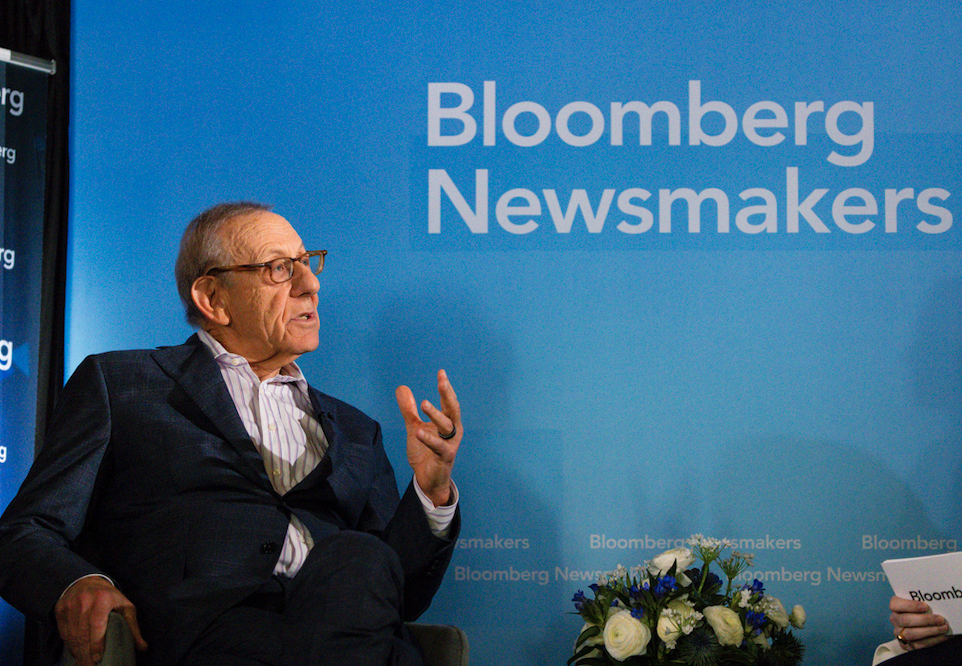
Billionaire Stephen Ross aims to position Florida’s Palm Beach County as the next Silicon Valley, calling the region a more business-friendly environment for tech investors and executives than California.
The billionaire Ellison family said this week that it will try to overhaul the board of Warner Bros Discovery Inc. unless the Hollywood studio engages with their $108 billion takeover bid. But winning support in a corporate fight won’t be easy as long as their offer contains holes.
Silver pulled back from a record high as investors took profits after a blistering rally and as the US refrained from imposing import tariffs on critical minerals.
Goldman Sachs Group Inc. blew through expectations for equities-trading revenue, posting an all-time Wall Street record of $4.31 billion in the final three months of last year.
Advisors who feel too much of the week slips away on administrative tasks should start by tackling these foundational areas. Saving time isn’t about doing less for clients; it’s about investing your energy where it has the greatest impact.