Trend-following funds are starting 2026 with fresh momentum, outperforming stocks and bonds after a year of false starts.
The rebound is modest in duration but notable in scale — enough to draw renewed attention to a corner of quant trading many investors had begun to dismiss. It’s also intensifying an uneasy industry debate: how to build momentum-driven portfolios that can survive fast-moving modern markets without diluting the edge that once made them work.
Recent market moves offered a fresh reminder of how quickly price trends can break. Major assets sold off Tuesday amid a US-Europe clash over Greenland and stress in Japanese bonds — only to rebound as President Donald Trump signaled a framework for a deal over the island. The whiplash, echoing volatile reversals on tariffs in the Trump era, is the latest test for momentum strategies that have struggled since the 2022 inflation shock.
Still, a Societe Generale index tracking major trend-following funds has climbed almost 4% in the opening weeks of the year, the second-strongest start on record in data going back to 2000. The performance follows a rally in metals, a weakening yen and resilient global equities, just the kind of sustained price moves these strategies need to deliver returns.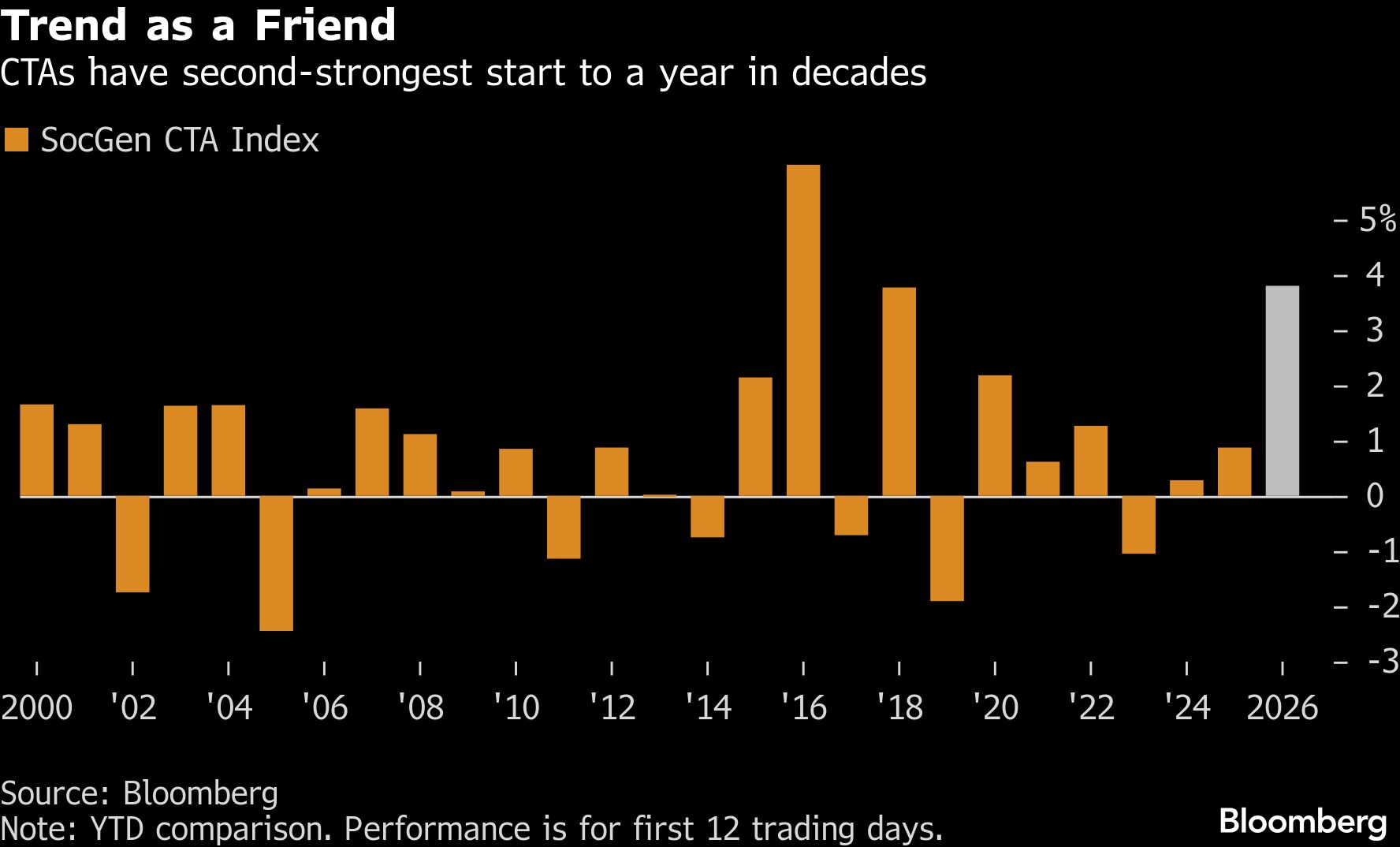
“The optimistic view is that there could be a number of very strong trends this year that will contribute a lot to performance and you won’t have the sharp whipsaws that we saw last year,” said Andrew Beer, managing member of Dynamic Beta Investments, which runs the largest managed futures ETF.
Yet the gains arrive amid growing unease over how the strategies themselves should evolve. For three straight years, the SocGen index trailed a basic stock-bond portfolio by double digits, a streak not seen before in the gauge’s history. Amid the prolonged stretch of lackluster returns, debate is heating up about whether models need to be retooled to adapt to the fast-shifting world.
Portfolio managers are revisiting how quickly their models react to price moves — and how many markets they should trade — as they try to strike a balance between agility and durability. Meanwhile, the rapid expansion of managed futures into exchange-traded funds is raising new questions about crowding, while hedge funds promote customized versions aimed at protecting flexibility and secrecy.
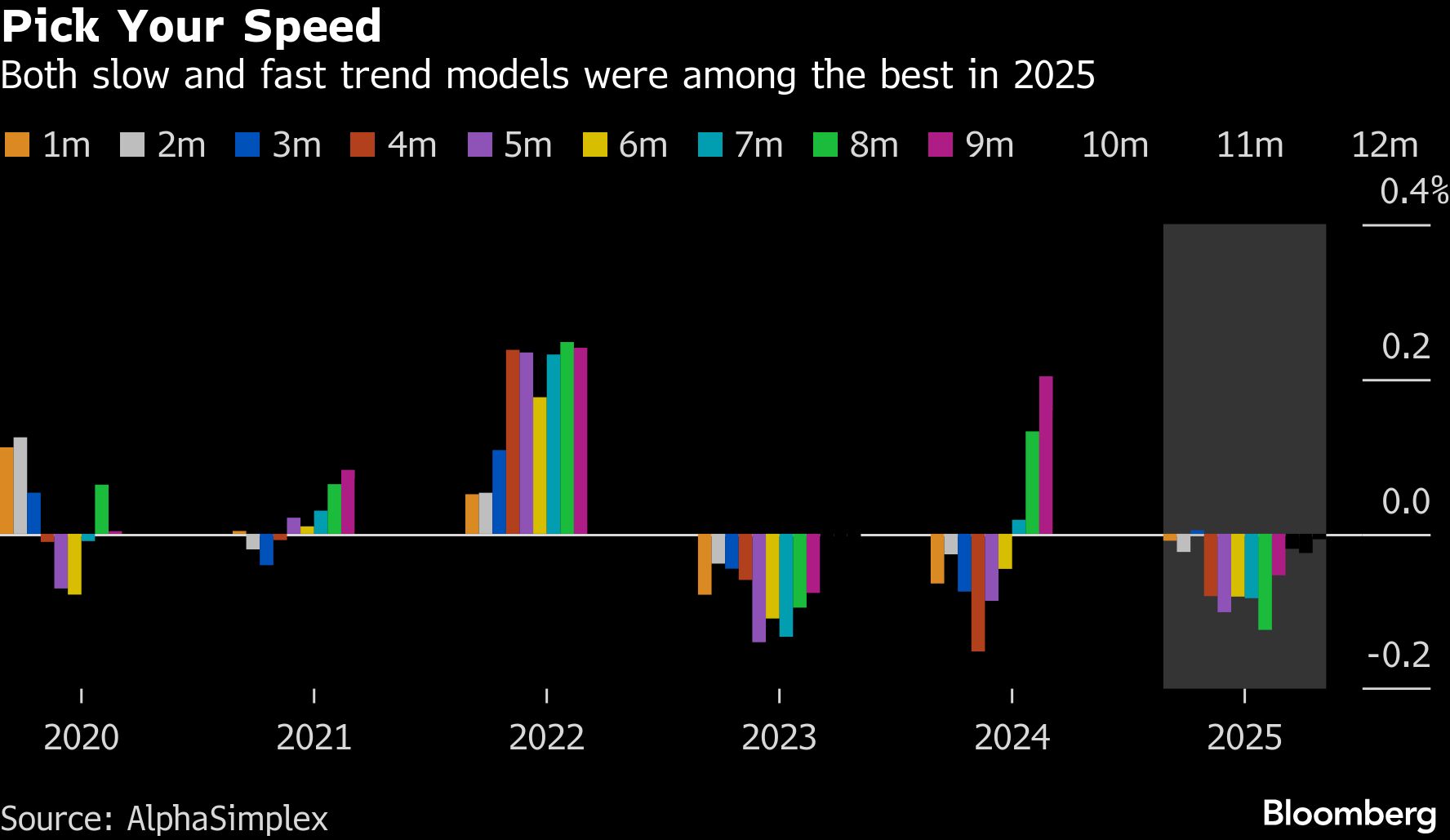
Kathryn Kaminski, chief strategist and portfolio manager at AlphaSimplex Group, and her colleague Yingshan Zhao recently conducted an experiment to examine how choices around trend timelines, market breadth and volatility shape performance over time.
Last year, models focused on a narrow set of large, liquid assets — and those that reacted swiftly to volatility shifts — performed better than others. But notably, so did one that relied on a 12-month signal, the slowest in the study. In other words, acting quickly on shocks like April’s tariff tantrum paid off, but so did tuning out short-term noise entirely.