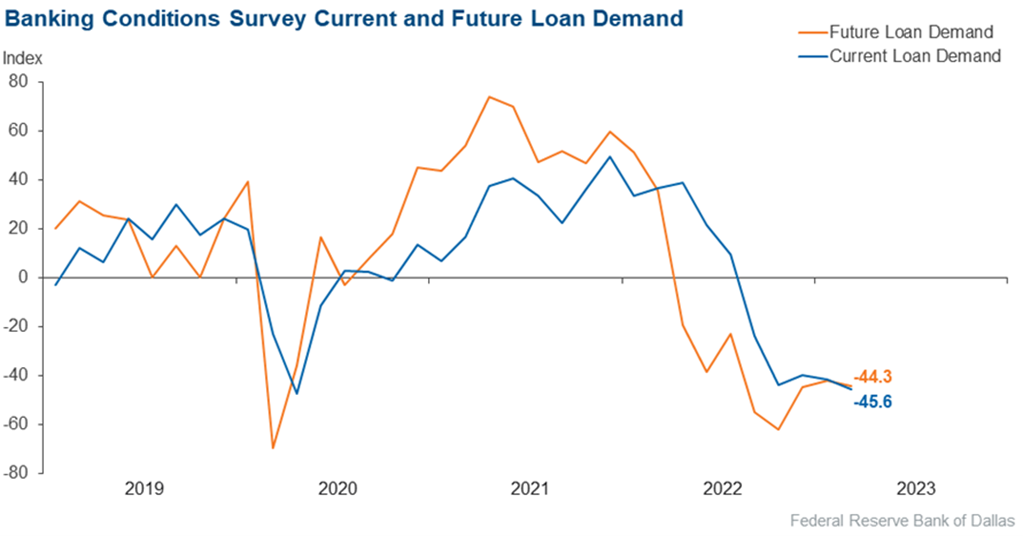
Financial volatility continues to moderate amid settling in the banking sector. Economic data in much of the world has remained positive. But a slowdown is in store. Businesses and households will have a harder time borrowing as credit conditions tighten further. Financial risks have risen.
While Asian financial companies have by no means been safe from the recent banking turmoil scything through other developed economies, regional banks have had a far less punishing month in terms of sales and earnings estimates than their peers in other markets.
Can central banks simultaneously provide liquidity to banks suffering sharp deposit withdrawals while also slowing money and credit creation by raising interest rates? In essence, can central banks quantitatively tighten and quantitatively ease at the same time?
Corporate bond investors may be wondering if banking sector turmoil will affect financial institution bond issuers. Here's what to know now.
When I worked on Wall Street, it was the golden age of hedge funds. They were on the bleeding edge of finance in the mid-2000s, swashbuckling market pirates who did all kinds of exotic stuff to earn alpha for their investors.
Despite continued geopolitical events and a potential banking crisis, markets remained focused on the economy and central banks’ attempts to control inflation.
Consisting of 60% stocks/40% bonds, this classic investment portfolio has historically been a trusted way to generate returns and diversify investor portfolios. However, we believe the 60/40 allocation may now be working against investors.
This week as regional banks start reporting earnings we will get a better look at the lasting effects of the bank crisis kicked off by the failure of Silicon Valley Bank last month. Looking at recent earnings forecast revisions, regional banks appear particularly exposed to short- and longer-term headwinds.
Tax season isn't the only time advisors should think about how taxes may impact their client portfolios. There are various strategies advisors can use year-round to ensure they are investing in a tax-efficient manner. Helping your clients maximize their after-tax wealth is an important element of the value you provide.
The value style is in the early stages of what Mutual Series believes could be a multi-year outperformance relative to growth.
Getting lost in the moment is easy to do. When planning and executing your fixed income portfolio, looking long term is more likely to get you to your goal. Fixed income portfolio allocations are often meant to first protect principal and second, to optimize income and cash flow per your specific circumstances.
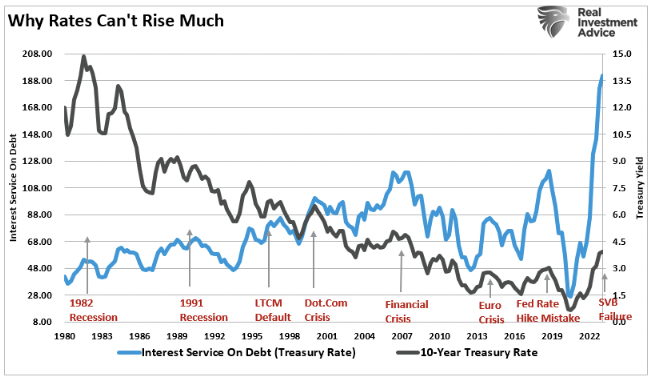
Our entire financial system revolves around credit. This includes the ability to access credit for new loans, and more importantly, the refinancing of existing loans.
Start me up! This iconic Rolling Stones song keeps racing through our minds as we glance across the investing landscape. Why? Because it feels like the drivers of this turbulent market – Federal Reserve (Fed) tightening, inflation, recession worries, geopolitical fears – will never stop.
Housing stress may spread to other sectors.
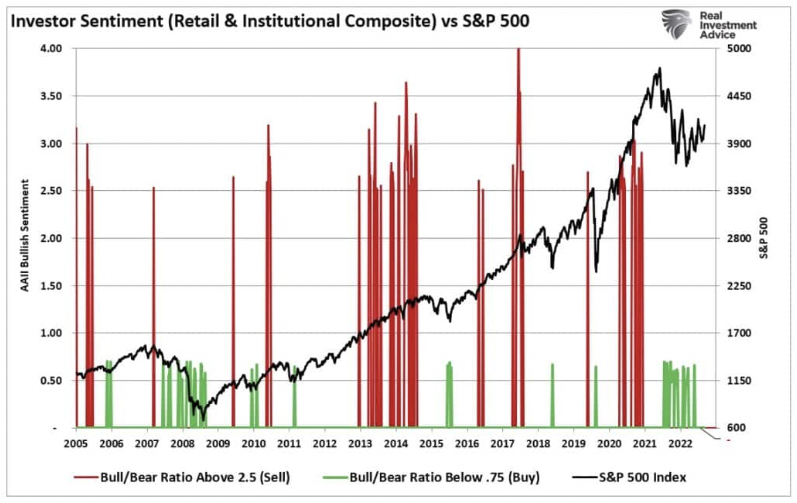
Despite media headlines, podcasts, and broadcasts suggesting “doom and gloom” lurks around the corner, investor bullishness has increased markedly since the October lows. This isn’t the first time we have discussed investor sentiment, which is often wrong at the extremes.
Thanks to the recent banking crisis, the Fed’s “dual mandate” has taken on a new meaning. The increased economic uncertainty during the first quarter drove investors towards safer assets, boosting investment grade bonds.
There are many reasons to buy and hold physical gold. The lack of counterparty risk, the diversification, and the hedge against inflation are among the top reasons to own the monetary metals.
We are at the start of the period when companies release their results for the first quarter of 2023, known as earnings season. With everything going on—inflation, rate hikes, a labor shortage, the weakness of the dollar, a pending recession, the list goes on and on...
GMO has published a new 7-Year Asset Class Forecast.
At the end of 2021, the Dow Jones Industrial Average closed at 36,338, and the career scoring total of LeBron James stood about 60 points lower…
Our emerging market debt valuation metrics across all but the U.S. interest rate dimension remain unambiguously attractive. In this new, compact version of our Quarterly Valuation Update, we provide our Q1 assessment and introduce summary valuation graphics to assist in quantifying expected returns.
Technology enhancements have increased the speed of panic.
In his latest memo, Howard Marks discusses the significance of the Silicon Valley Bank collapse. He argues that it likely doesn’t portend a wave of banking failures but may amplify preexisting wariness among investors and lenders, leading to further credit tightening and additional pain across a range of industries and sectors.
To kick off the beginning of 2023, there continues to be a bias we see in equity investor portfolios. These portfolios have many of the traits investors see at the endpoints of the economy like software, consumer products and computer chips.
The US economy is being tugged in two different directions right now. On the positive side we have the lingering effects of the massive stimulus of 2020-21, the renormalization of the service sector after COVID Lockdowns, and, as always, the entrepreneurial and innovative spirit of the American people.
For years, investors seeking tax-efficient income grappled with a key question: Are municipal bonds that are subject to the alternative minimum tax (AMT) worth their higher yields? After all, an attractive bond yield didn’t hold as much luster once the AMT shaved off up to 28%.
Markets have been very positive this week on better-than-expected inflation numbers. The Consumer Price Index (CPI) printed a better than expected 0.1% in March with the year-over-year rate declining to 5.0% compared to a 6.0% year-over-year rate reported in February of this year.
Recession odds have climbed considerably since Jerome Powell’s testimony before Congress and the latest FOMC meeting. However, the recent failures of Silicon Valley Bank (SVB) and Credit Suisse (CS), as higher rates impact regional bank liquidity, also added to the risks.
The dollar's strengths still outweigh its weaknesses.
Spotting trend changes is the key to economic forecasting. They don’t happen often. Most of the time, this year will be similar to last year. The pace varies but the overall trend continues… until it doesn’t.
It’s believed that to meet this goal, two out of every three passenger vehicles manufactured in the U.S. would need to be electric models.
What does a potential change in Federal Reserve policy mean for markets and the economy?
This much is clear from Tesla Inc.’s fifth price cut this year: Elon Musk is dead set on seizing much more of America’s SUV market.
Yesterday’s CPI report showed that inflation continues to slow to 5% on an annualized basis. That is a lot better than it was last year. We should be happy about this.
Just as it is getting ever-more important to anticipate changes in Fed policy, those changes are becoming more uncertain. One way to help resolve this dilemma is by explicitly incorporating political and public policy goals into the monetary policy calculus.
The Northern Trust Economics team shares its outlook for U.S. growth, employment, interest rates and inflation.
2023 has already been an eventful year, featuring a banking crisis and more Fed rate hikes. In our view, this is not a “set it and forget it” type of market – investors need to stay vigilant.
After the market selloff in 2022—a period that was particularly hard on growth stocks—we think our companies are attractively priced for the next five years, which is our baseline investment horizon.
Despite recent headwinds, structural drivers underpinning China’s growth remain intact. Sectors that will benefit from the structural trends include healthcare, industrial automation, and domestic brands targeting increased spending by Chinese consumers.
The Fed’s concern about U.S. banks dominated last month’s FOMC meeting. According to today’s release of the March 21-22 meeting minutes, the Fed was apparently so concerned over banking problems and the potential for an ensuing credit crunch that officials tempered calls for rate hikes...
Given market uncertainty and the risk of a US recession, is now the time for defensive stocks? Making a case for low-volatility, high-dividend equities with Franklin Templeton Investment Solutions’ Vaneet Chadha and Michael LaBella.
The lack of diversification benefits of government bonds in 2022 was painful for multi-asset investors. The sell-off in US Treasuries in particular was sharp, and we saw correlations versus stocks move well into positive territory.
March inflation data may put the Federal Reserve close to its terminal policy rate this cycle, if it hasn’t already reached it.
The stakes are high, and it appears likely that our deeply divided government is headed for another debt-ceiling showdown. Divided governments have typically been good for the markets; however, they often spell trouble when it comes to negotiating fiscal matters.
Although central banks may be near the end of the rate hike cycle, short-duration stocks may still be an attractive investment theme should interest rates remain at higher levels.
The Federal Reserve Board reduced banking reserve requirements to zero in March 2020. So banks in the United States are technically not required to back customers' deposits with anything.
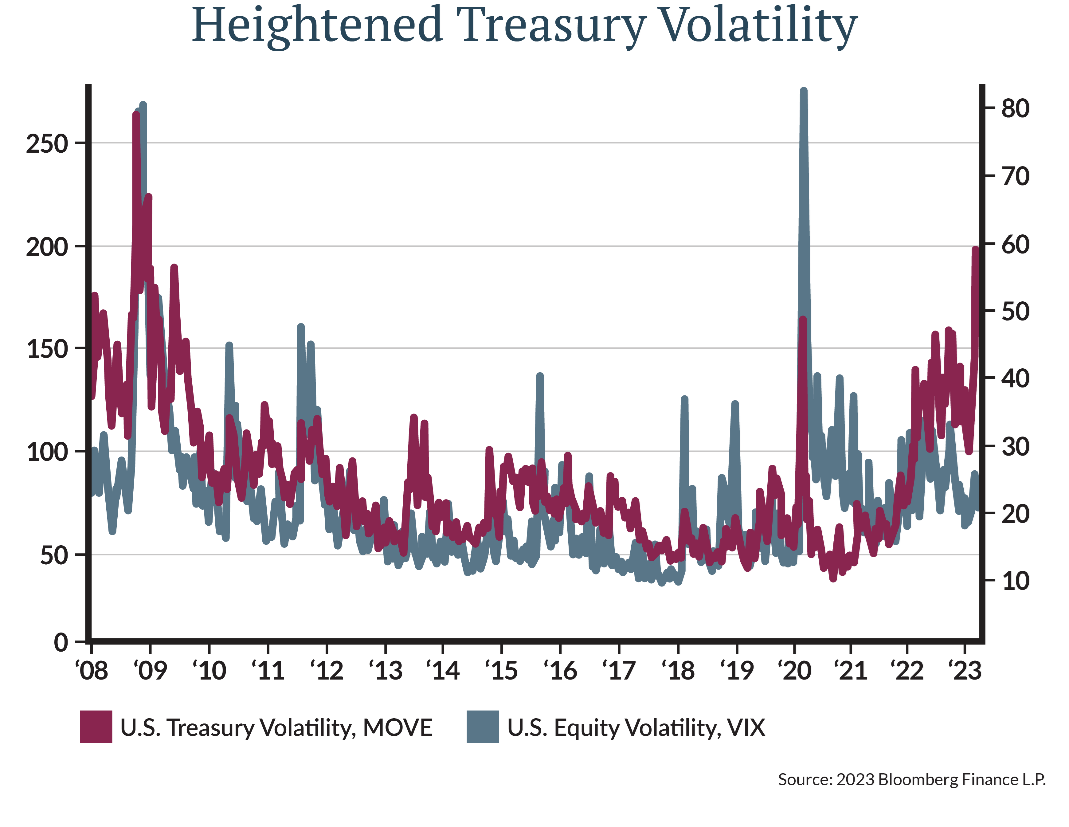
During his spring break, Johnson Financial Group Portfolio Manager Brian Schaefer had the time to read “A Gentleman in Moscow,” which got him thinking about the how the current market moves could impact the American experiment. In this investment commentary, Schaefer discusses the MOVE and VIX indexes and what they might say about the markets.
Tax-managed investing has gained in popularity in recent years. But what exactly is a tax-managed mutual fund? We do a deep dive into the concept.
Born of the Global Financial Crisis, additional tier-1 securities were designed to absorb bank losses in times of turbulence and maintain financial safety at no cost to taxpayers. Despite good intentions, we’ve found AT1s to be flawed instruments that are contingently junior to common equity in practice.
What must happen to make these stocks attractive to investors like us?