Alphabet Inc., the umbrella organization encompassing Google, is a global conglomerate that has revolutionized the world by organizing information and making it universally accessible and beneficial.
Bank of England raises interest rates again as expected. Rate hike likely to hurt first-time homebuyers in London. UK gilt curve appears to be pricing in a "higher rates for longer" scenario.
In any environment, multi-asset investors should prudently balance risks across equity, corporate credit and government bonds. But near-term tactical shifts can help take advantage of ever-evolving market conditions in the pursuit of long-term returns.
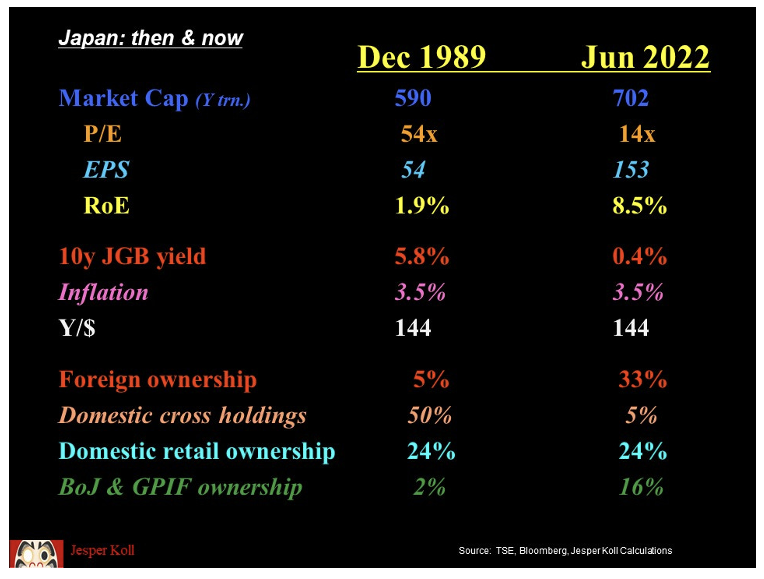
While US economic data continues to deteriorate along with much of the globe, pockets of growth have developed. We continue to be generally cautious but have expanded the portfolio to include Japan where we see opportunity today.
We are in the last half of what is the most disruptive and violent of the generational periods.
Fitch Ratings unexpectedly downgraded the U.S. credit rating from AAA to AA+, only the second downgrade in U.S. history, citing debt limit standoffs and rising entitlement costs.
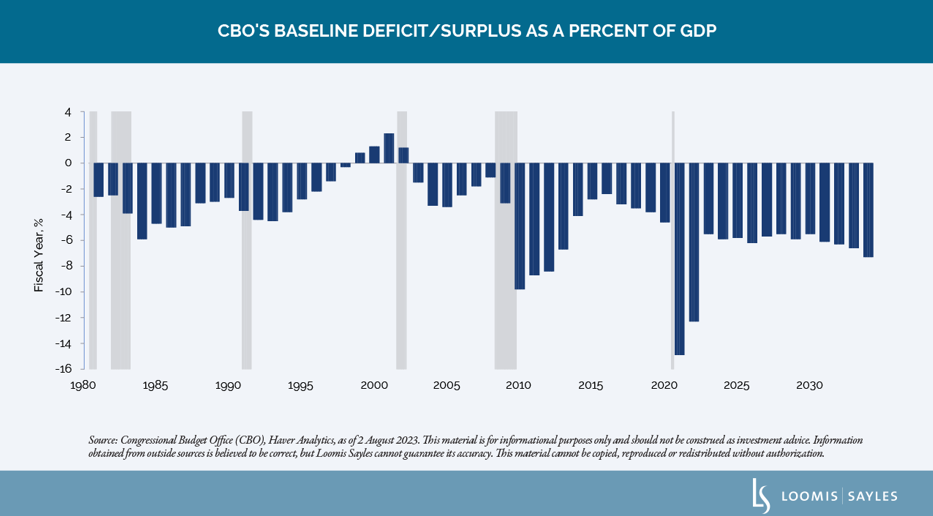
While Washington continues a seemingly unbridled spending spree under the assumption “more spending” is better, debts and deficits matter. To better understand the impact of debt and deficits on economic growth, we must know where we came from.
The sovereign credit rating cut is unlikely to significantly change views toward U.S. Treasuries, but questions about debt sustainability may grow louder over time.
Referrals from established clients are a good way to organically grow an advisory business.
The more painful the situation, the more motivated we are to act. Here, we share an example of how an advisor can build a relationship with a client to become a trusted advisor and how that trust helps inspire referrals.
Todd Rosenbluth appeared on Bob Pisani’s “ETF Edge” to discuss AI ahead of the coming AI Symposium.
Equity Insights offers research and perspectives from Putnam’s equity team on market trends and opportunities.
Drew O’Neil discusses fixed income market conditions and offers insight for bond investors.
Australia and Canada are experiencing a surge in population growth, while growth rates have slowed substantially in the UK due to post-Brexit frictions.
Raymond James CIO Larry Adam examines the reasons for the decision and what the impact may be on the financial markets.
In this video, Chuck Carnevale, Co-Founder of FAST Graphs, a.k.a Mr. Valuation, discusses the differences between investing in growth stocks vs. dividend growth stocks.
New public policies reflect growing urgency to address climate risk, which equity investors should emphasize, too.
Due to the energy-intensive nature of the bitcoin mining process, many consider miners and the digital currency itself detractors to environmental, social, and governance (ESG) and sustainability objectives.
This year in the six months through June 2023, ETF expenses fell just 0.001%, one-fifth of what we would have expected based on the drops over the previous five years, when asset-weighted ETF expense ratios fell by over 0.01% per year, on average, as depicted in the chart below.
While younger investors have taken a growing interest in artificial intelligence, advisors are cautioning individuals against using AI. They’ll use a do-it-yourself approach in hopes of gaining an investing edge.
Equity and fixed income markets experienced heightened volatility amid the Q2 debt-ceiling saga, while currency and derivatives markets were mostly unaffected.
Signs of falling inflation have helped risk assets recently, but the relief is likely temporary. Volatility may continue in fixed income markets, as high-interest rates continue to weigh on balance sheets and the market digests the probability of a potential recession.
The Bank of Japan announced changes that could allow its yield curve control program to expire gradually if economic conditions are favorable.
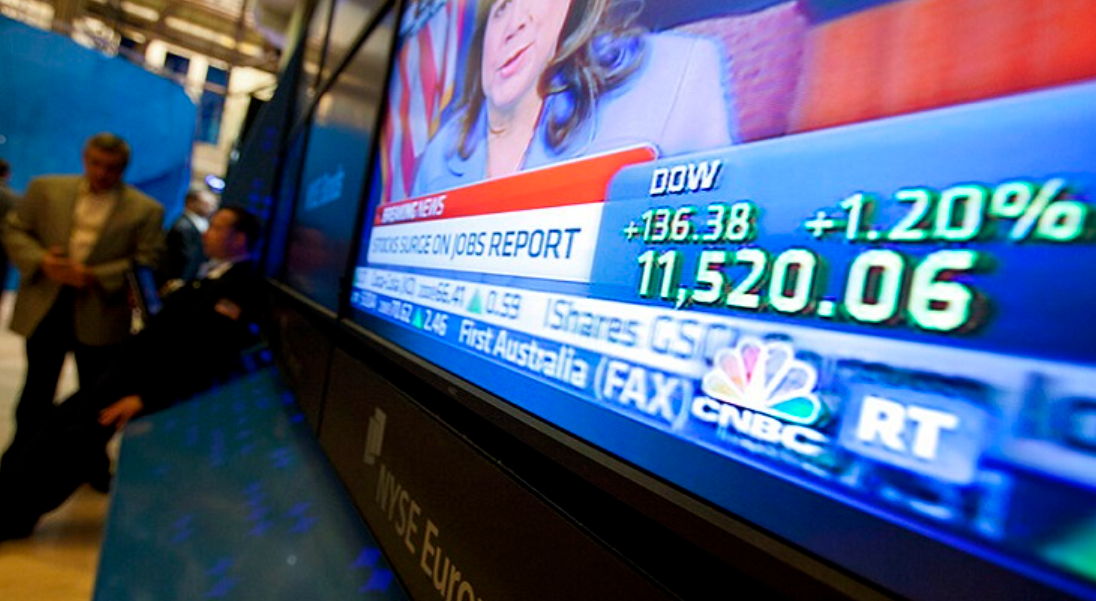
I am a Wall Street guy, and, being a Wall Street guy, sometimes I forget that 99.9% of the planet has no clue what the stock market is doing on any given day. Or cares. It has zero bearing on their lives whatsoever.
The surprise move takes the rating to AA+ from AAA.
Fitch Ratings has downgraded the long-term rating of US Treasurys from AAA to AA+. Chief Economist Brian Horrigan shares his take on Fitch’s reasoning and highlights key differences between this event and the S&P downgrade of 2011.
As that information presents itself, we may see a fair bit of market choppiness. This is why, even though the market’s monthly moves are fascinating and informative, they are far from instructive for a long-term investor.
Franklin Templeton’s new digital assets primer provides in-depth information on these new concepts and terminologies. In this article, Sandy Kaul, Head of Digital Asset & Industry Advisory Services, summarizes each section in the primer.
Investors can use gold as part of a short-term strategy to hedge against volatility, inflation and weakness in the dollar. Over the long term, it can serve as a portfolio diversifier, providing uncorrelated returns.
BondBloxx Investment Management continues to grow at a rapid pace in a short time. The fixed income specialist has exceeded $2 billion in assets under management. The firm achieved this milestone shortly after reaching $1 billion in AUM in April.
The past year has been punctuated by attention-grabbing headlines: The ongoing war in Ukraine, the U.K. pensions crisis, the collapse of Silicon Valley Bank, debt ceiling negotiations, the rise of ChatGPT … and the list goes on.
Markets posted a strong first quarter, though it was a rollercoaster ride. The path forward will likely stay turbulent, with bank turmoil likely tightening credit conditions and the Fed still wrestling with inflation.
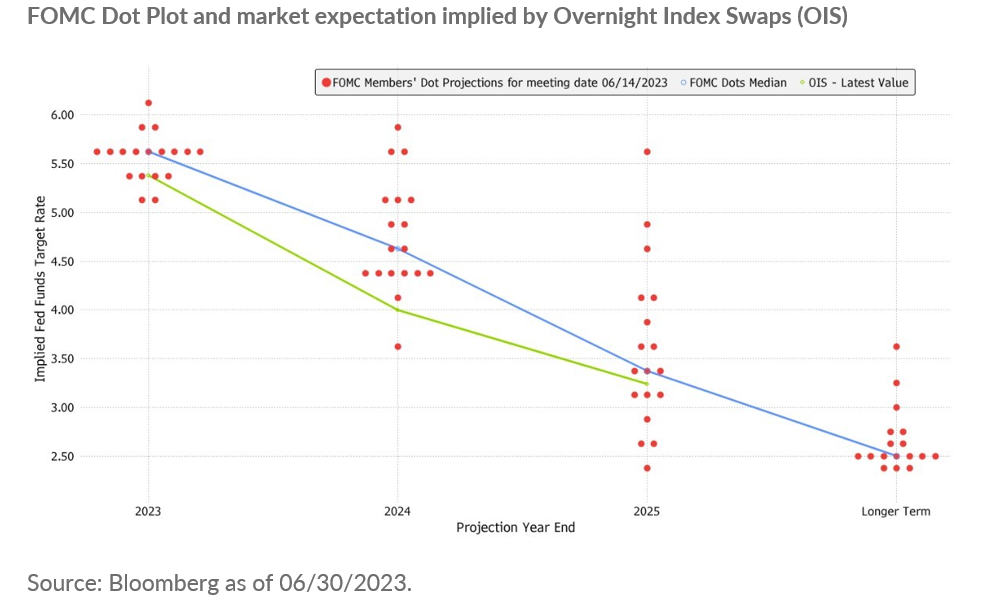
The question many economists, as well as market participants, asked themselves after the June Federal Open Market Committee (FOMC) meeting was why the Federal Reserve (Fed) paused its federal funds rate hike campaign if they were going to increase it again in July anyway.
During the past decade, a turnaround in the Golden State has resulted in higher credit quality for many issuers.
A member of Putnam's Fixed Income team since 2007, Onsel Gulbiten analyzes macroeconomic issues, including inflation, interest rates, and policy developments.
In this video, Chuck Carnevale, Co-Founder of FAST Graphs a.k.a Mr. Valuation will be sharing four growth stocks that he found using our FAST Graphs Premium Preset Screens in our Screening Tool.
The economy and markets that have emerged from the pandemic fundamentally changed. For equity investors, we believe this means a different opportunity set than the one that prevailed over the past decade and a half ― and one that favors alpha (excess return) over beta (market return).
Take the 2008 financial panic. Was it market failure and bad business models or was it using the government to subsidize housing plus mark-to-market accounting? We believe the latter…without the subsidies and bad accounting rules, the recession might not have happened at all.
We think advisors and end clients should dig deeper than a fund’s expense ratio to understand the exposure provided. For example, while IEMG has exposure to South Korean stocks, SPEM is like VWO and does not own them.
Last week was Super Bowl week for economists, with fresh guidance from the Fed, ECB, BoJ, as well as data releases on GDP and inflation. The economic data fireworks show was set against a busy week of earnings data, which acted as garnishes to the main course of economic data.
Energy/oil may have possibly broken out of a range in the low $70s (Brent Crude), which suggests we may have seen a bottom in energy sentiments/stock prices.
Although past performance is never a guarantee of future results, it remains the case that stock-market valuations tend to outstrip bonds most of the time. Still, arriving at the best investment strategy is about more than simply doing the math; it also requires an appreciation of history and tail risks.
Is it vogue to be pessimistic about China’s economy? Andy Rothman explores.
Record-breaking heat waves dominate the news headlines, with 2023 shaping up to be one of, if not the hottest year on record. Extreme temperatures are shattering records across the U.S., Europe and in parts of Asia – not just on land, but also in the sea.
In a quarter filled with talk of potential Treasury default and the second largest bank failure in U.S. history, markets chose to look forward. This was a quarter of AI captivating markets.
The sale of a business, property, or large stock position can generate a financial windfall that may trigger a large tax liability.
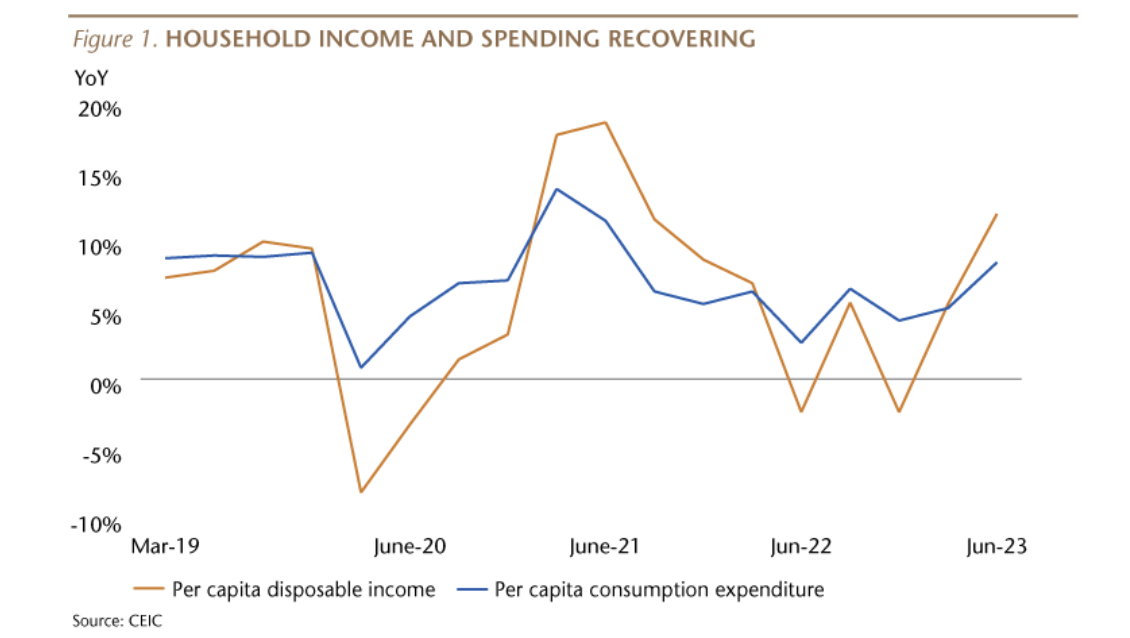
Over the past 18 months, high inflation drove rapid monetary policy tightening, which weighed heavily on consumer spending power and corporate margins. As inflationary pressures now abate, we see eventual improvement in both real incomes and profits, which should enhance prospects for multi-asset investors.
Central bank policies are set to diverge from the steady hikes characterizing the first half of 2023, contributing to increased market volatility for the remainder of the year.
The current environment looks favorable for equity market neutral, global macro and insurance-linked securities, according to K2 Advisors. The team offers its mid-year outlook for these and other hedge fund strategies.
Talk of Goldilocks has taken hold in the markets, and with it the risk-taking allure of not-too-hot and not-too-cold investing conditions.