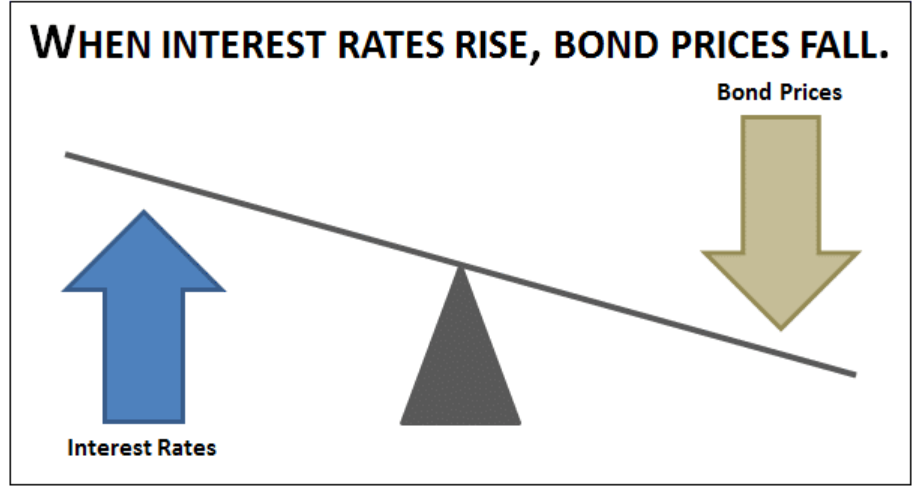
Markets seem to be coming around to our Franklin Templeton Fixed Income CIO Sonal Desai’s view that the Fed will have to keep interest rates higher for longer, but now runaway fiscal deficits pose further upside risk to yields in the long term, she warns.
If you’re interested in investing in mutual funds or exchange-traded funds (ETFs) – or you already have some in your portfolio – you may be wondering what exactly the difference is between an active and a passive fund.
International stocks and the related exchange traded funds have accumulated bum reputations after lengthy spells of underperforming domestic equivalents.
The first six months of 2023 were full of surprises for investors, not the least of which was a Nasdaq surge of 32% — its best first half since 1983. The S&P 500 Index gained nearly 16% for the first half, powered by mega-cap stocks.
Workers are finding a fresh enthusiasm for organizing.
This weekly update tracks some of the largest cryptocurrencies by market share: bitcoin and ether. We’ve also included XRP, as it was one of the largest cryptocurrencies when this article began.
Generative artificial intelligence (AI) investing is taking the world by storm this year. With that, there are substantial, long-term investment implications.
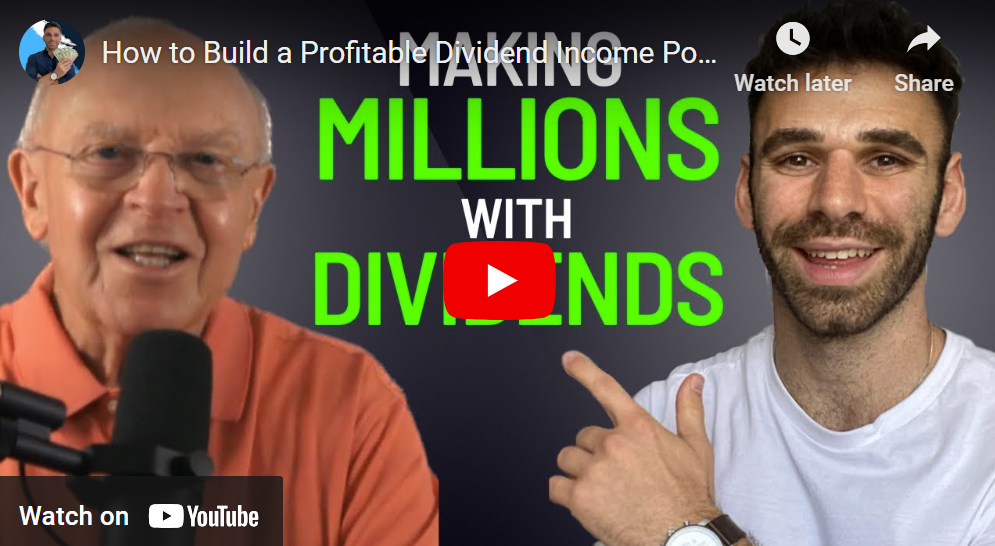
Chuck Carnevale joins me today to share how to build a profitable dividend income portfolio as well as his secret to driving dividend income with the best dividend stocks 2023 which keep his passive income 2023 flowing into his dividend portfolio.
Interest rates are the penalty you pay for purchasing something today instead of postponing consumption until tomorrow. They are also the reward you receive for saving and engaging in delayed gratification.
As the demand for faster, smaller, and more efficient electronic devices grows, so does the need for advanced semiconductor manufacturing techniques. Traditional methods have their limitations, and ASML’s mission revolves around transcending these boundaries.
Supply chains are realigning, to China's dismay.
Increasingly more advisors and investors are discovering the benefits of options strategies in their portfolios. There is great value in understanding and utilizing options strategies with the range of benefits they can provide portfolios, including protective puts.
In terms of manufacturing, value added, which is basically the value of the output minus the costs of the input, the U.S. produces almost twice as much as Japan, more than three times as much as Germany, and five times as much as India.
Year-to-date, the largest exchange traded fund dedicated to real estate investment trusts (REITs) is saddled with a small loss, while the S&P 500 is higher by about 15%.
In the current landscape, where bonds and stocks are experiencing positive correlation, it becomes even more important (if not critical) to incorporate additional diversification strategies to help mitigate portfolio risk and preserve portfolio balance.
Russia’s 2022 invasion of Ukraine and the ensuing war have prompted new and difficult questions for sovereign debt investors.
Since the beginning of 2022, the media has regularly warned a recession is coming.
Precious metals markets are extending their losing streak as the U.S. dollar pushes higher.
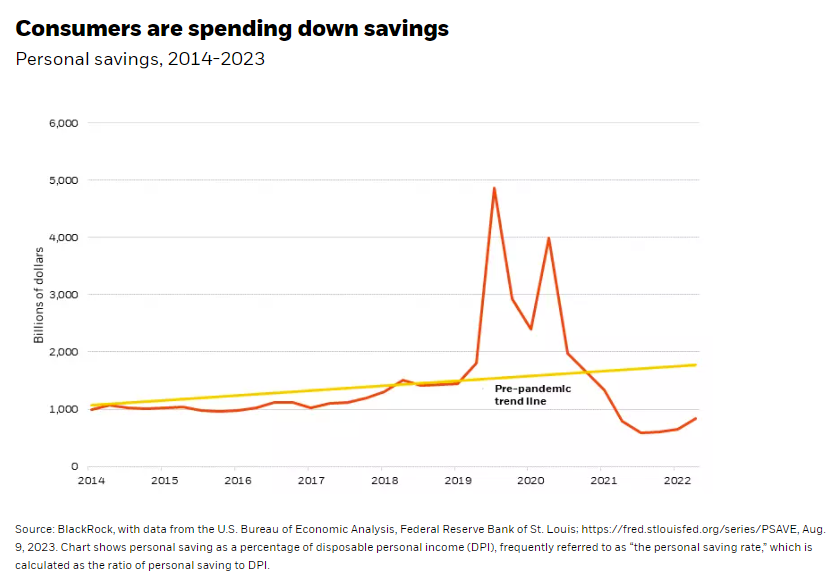
What’s going on with the markets and the economy? Long-term Treasury yields are up substantially since last Fall while the stock market, after a big rally, has stumbled so far this month. Meanwhile, the real economy appears to continue to chug along – even accelerating!
When it comes to large- and mega-cap stocks benefiting from the artificial intelligence (AI) craze, Alphabet (NASDAQ: GOOG), Microsoft (NASDAQ: MSFT), and Nvidia (NASDAQ: NVDA) are among the obvious choices.
Better productivity is easing employers' burden of higher wages.
With the path of least resistance for stocks seemingly lower for now, key to watch will be a stabilization in interest rate volatility and clarity on the path of monetary policy.
Nick Goetze discusses fixed income market conditions and offers insight for bond investors.
With the Fed’s tightening on monetary policy and the constant threat of a recession looming, policymakers and advisors are closely monitoring economic indicators because the data can ultimately impact business decisions and financial markets.
ETFs have become a popular investment vehicle among many investors and continue to grow in adoption, and so what we’re seeing is that more and more investors are incorporating ETFs into their own portfolios in some way or another.
The role of the human psychological cycle in driving stock and bond prices is well understood and pre-dates behavioural economics. There are elements that suggest we may be going through another period of ‘irrational exuberance’ as several long-term investors seem stuck in the mindset that ‘There Is No Alternative’ (TINA) to US equities.
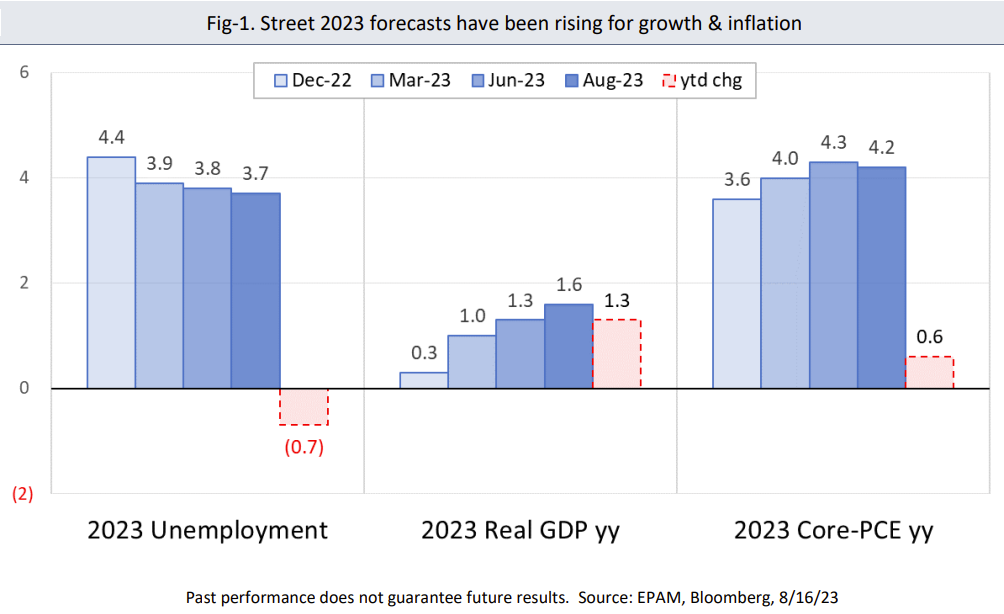
Interest rates are at 20-yr highs, yet unemployment is at 50-yr lows, core-PCE is near 30-yr highs, and Wall Street (and Fed) economic forecasts continue improving. What explains the disconnect between these unexpected outcomes and those expected by mainstream economic textbooks?
We have heard lots of commentary on the student loan repayment issues facing almost 44.5 million Americans. Some of these commentaries are correct but there are others that miss the mark.
U.S. companies broadly notched better-than-expected results in the second quarter, even as overall earnings growth for the S&P 500 saw a decline. Equity investor Carrie King sees more interesting developments beyond the numbers and posits one area that may be getting tired as another readies for a reawakening.
Whereas the U.S. is investing in new airport infrastructure and modernizing facilities to meet ambitious climate goals, European airports are choosing to combat emissions by restricting the number of flights.
Thanks to NVIDIA stock, the ETF is now up over 50% YTD — and it could keep climbing, as investor interest in AI continues to heat up.
The Northern Trust Economics team shares its outlook for U.S. growth, employment, interest rates and inflation.
Over the past 12-24 months of rate hikes, short-term and ultra-short-term bond ETFs have served income-seeking investors well. But as interest rates continue to rise, exposures farther out on the curve have begun to offer attractive yields, too.
Recent data and policy developments have fallen firmly in the soft-landing camp, and market performance has reflected this shift. Notwithstanding recent stronger-than-expected economic activity, we continue to believe a downturn is in the pipeline.
ETFs are investments that can hold: bonds, stocks, gold bullion and cryptocurrencies. Canadian ETFs track a wide range of different asset classes via indexes. Most ETFs are tied to index products, including both equity or fixed income funds.
In this video, Chuck Carnevale, Co-Founder of FAST Graphs, a.k.a. Mr. Valuation, will be analyzing cell tower real estate investment trusts (REITs) and helping you determine if they are a good investment.
Investors should take a closer look at companies that help create a more energy-efficient ecosystem for AI.
While economic growth drives corporate earnings, remember that the S&P 500 is not a replica of the U.S. economy.
Government bonds or stocks? If you were picking an asset class to outperform over the next 18-24 months, which would you choose?
Approval of a spot bitcoin exchange traded fund in the U.S. is one of the most widely anticipated and delayed events in the roughly three-decade history of the ETF industry.
My last three letters reviewed Neil Howe’s new book about the Fourth Turning. Today we’ll look at another set of patterns observed by my friend George Friedman in the geopolitical realm. George’s view of how patterns shape countries is different but not inconsistent with Neil’s generational cycles.
We are now a few years past the onset of the COVID pandemic, and we've had a chance to think about some of its changes in the wealth management business. Even if we wish certain things hadn't changed, we must acknowledge that they have – and adapt accordingly.
Progress toward a sustainable world would be hamstrung without the backing of global banks and their sponsorship of green and sustainable bonds.
While some economists may argue that secular stagnation is to blame for China’s economic slowdown, concerns about sustained slower growth are overblown. If the country falls into a recession, it would constitute the next turn of the debt supercycle that began in the US in 2008 and moved to Europe in 2010.
We expect inflation and rates to remain higher than the last decade. We favor tech within growth and cyclicals within value.
You put on a trade. You are short bonds, or something like that. It may be tempting to see the people on the other trade as the “bad guys,” while you are the “good guys.”
Todd Rosenbluth appeared on TD Ameritrade to discuss artificial intelligence in advance of VettaFi’s upcoming August 30th AI Symposium.
This year has been the year of innovation, with artificial intelligence (AI) all the rage. Yet, many advisors are focusing on other investment styles to round out client portfolios.
The advisor of the future needs to embrace a new value proposition, according to John Kutz, Head of Workplace Retirement Distribution at Franklin Templeton. This means moving beyond the “three F’s” and taking a more holistic approach to changing client needs.