The markets face a challenging path as tariff policies intensify economic uncertainty, yet opportunities persist for discerning investors.
The Federal Reserve started raising short-term interest rates three years ago and the M2 measure of the money supply – what Milton Friedman said to focus on – soon started declining, hitting bottom in late 2023.
The announcement of global tariffs by President Trump has rocked markets and much is uncertain, but there are key facts for investors to keep in mind.
As investors are uncomfortably aware of, global equity markets have been in freefall since U.S. President Donald Trump’s announcement of “reciprocal tariffs” on April 2.
Last week, we noted that “nothing good happens below the 200-DMA,” and the tariff-induced market crash this past week confirmed that statement. However, we also noted that over the last 30 years, previous failures at the 200-DMA have also often been buying opportunities.
The international trading system is not perfect, but as we have said so many times, freer trade is better than no trade and tariffs are, typically, the worst solution to trade issues between countries.
VettaFi head of sector and industry research Roxana Islam talked to T. Rowe Price PM Dom Rizzo on active tech ETF investing.
Moving forward, investors may want to keep investment-grade options close with a few from Vanguard to consider.
Good news: Tariffs will not make the world end. American businesses will do what they do best, which is adapt. While the probability of a recession has increased, we always get through it and the best businesses thrive. Unless directly affected by tariffs, don’t change your personal plans that much.
Last week's economic landscape was dramatically reshaped by President Trump's announcement of sweeping tariff policies on what he declared "Liberation Day." His announcement triggered a historic sell-off in the stock market.
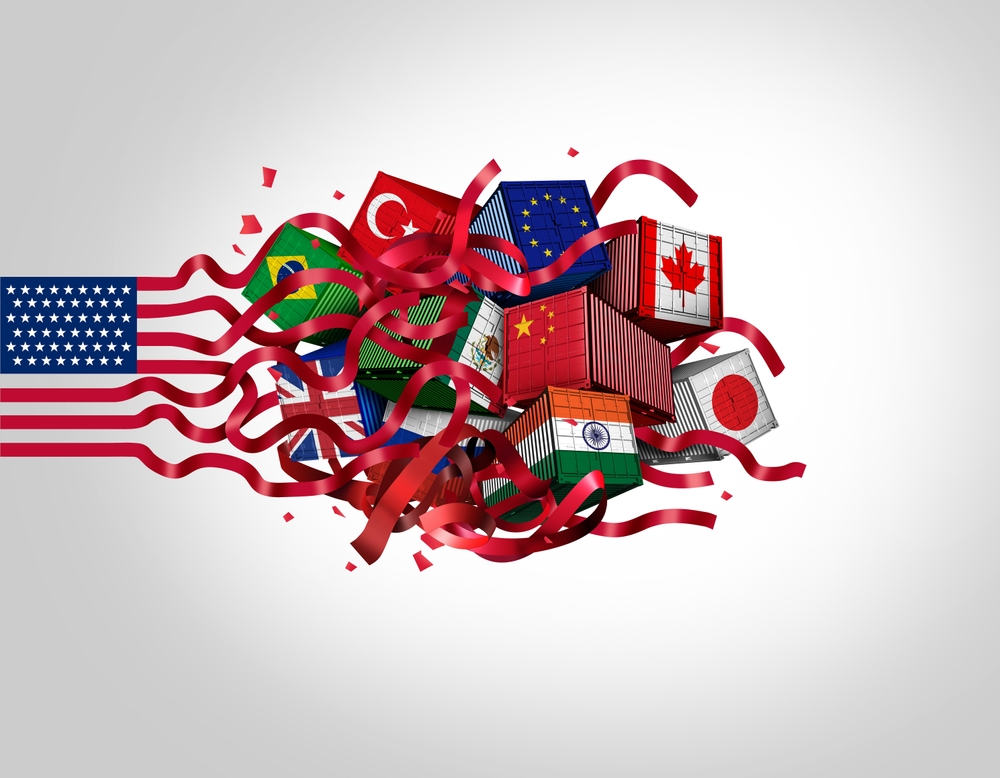
Global markets are in freefall in response to President Donald Trump’s universal 10% tariff on all goods being imported into the U.S., with as many as 60 countries facing “reciprocal” tariffs on top of that.
The trajectory of small businesses often goes something this: a first-generation entrepreneur starts and grows a company. It could be a software company, but also a plumbing, electrical, or HVAC business.
The 10% across-the-board (ad valorem) tariff and specific reciprocal tariffs on most U.S. trading partners went well beyond what most were expecting.
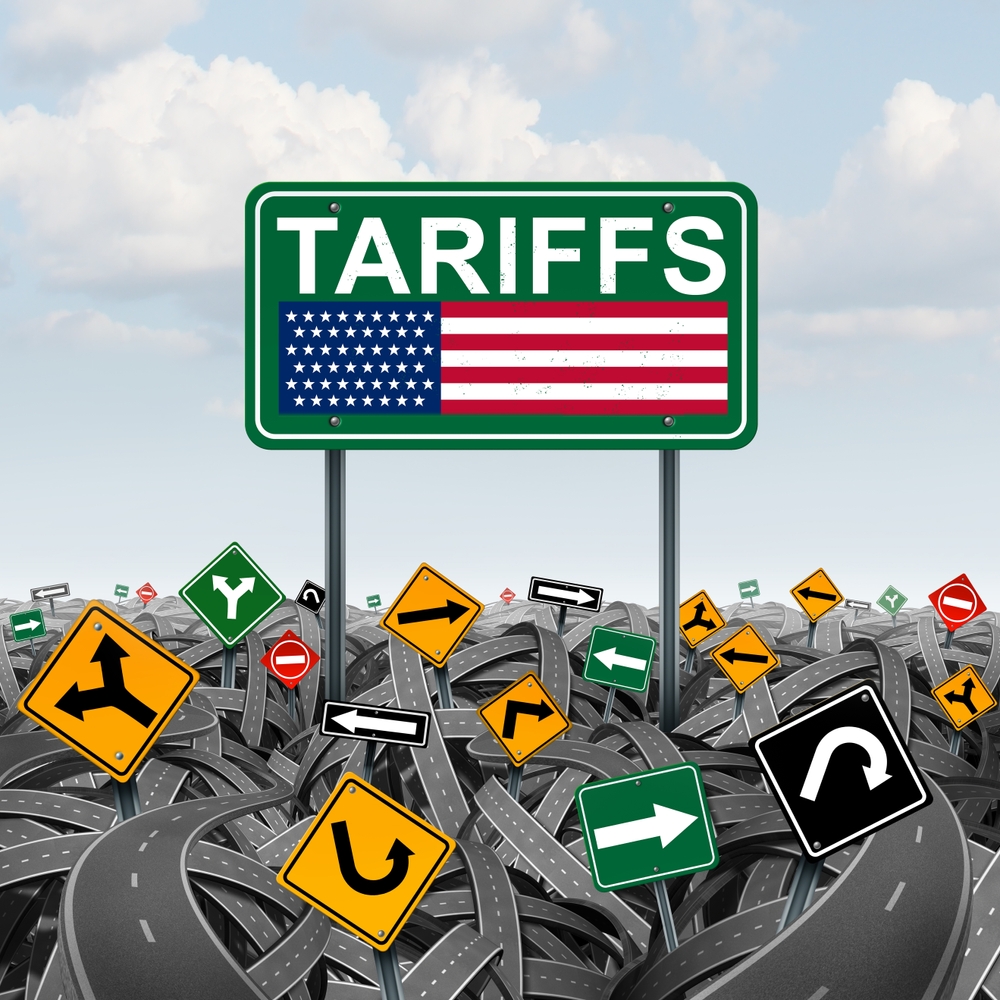
The incremental tariffs were bolder than market expectations and ushered in new uncertainty.
If tariffs are imposed on gold and silver will their prices rise, fall, or stay the same? We explain facts and myths when it comes to gold prices and tariffs.
China’s prolonged reliance on fiscal stimulus has distorted economic incentives, fueling a housing glut, a collapse in prices, and spiraling public debt. With further stimulus off the table, the only sustainable path is for the central government to relinquish more economic power to local governments and the private sector.
The tariff chaos continues … but the economy remains intact. For now.
On the latest edition of Market Week in Review, Director and Senior Investment Strategist Alex Cousley discussed the details of the Trump administration’s tariff plan and the market’s reaction.
The early days of the Trump administration have brought sweeping tariff announcements. While the situation is fluid, the direction is clear: trade restrictions are likely to increase, with China as a primary target.
U.S. stocks underperformed in the first quarter of 2025, hit by a double whammy from intensifying policy uncertainty and a U-turn in select mega cap stocks.
We examine the April 2 tariff announcement from President Trump, outlining key proposals and the potential implications for trade and market sentiment.
In the report, Fixed Income Portfolio Managers John Lloyd and Greg Wilensky discuss how fixed income markets are responding to Trump’s sweeping tariffs and the implications for investors.
As volatility rises, staying invested is a strategic priority for capturing long-term return potential in a broadening market.
U.S. indexes suffered their worst day since the pandemic, hurt by Trump's massive tariffs that sparked recession fears. Almost every sector fell, with retailers and tech hard hit.
We’d like to discuss our three worst-performing securities in the US portfolio to help our investors understand why we are sitting on our hands and allowing our discipline to proceed.
The Nasdaq-100 Index (NDX) slipped nearly 2.5% last week. That sparked fresh fears that current geopolitical and macroeconomic climates remain headwinds to growth stocks. Those headwinds may imply investors aren’t flocking to AI stocks
The stock market faces severe downside risk ahead, and the U.S. is constrained in the unsystematic monetary and fiscal expansion that both amplified that bubble and fueled record but wholly impermanent corporate profit margins. Meanwhile, the U.S. economy now faces an imminent recession, and if we fail to be vigilant, we, once united Americans, risk losing what is far greater and more valuable than money.
In the report, Fixed income portfolio managers Brent Olson and Tim Winstone reflect on the initial credit market response to President Trump’s tariffs.
The combination of slowing economic growth and stubborn inflation, combined with uncertainty about U.S. tariff policy, is keeping investors cautious.
The popularity of Buffered ETFs, also referred to as Defined outcome ETFs, has exploded over the last five years. Historically there has been a wide deviation in caps over the years.
Social Security faces funding issues by 2035, but major changes to the program are unlikely in the near term.
To summarize the market action of March of 2025: U.S. stocks (SPX) did poorly, international stocks (especially Europe, VGK) did well in dollar terms, and gold (IAU) did spectacularly well. The main culprit appears to market concerns about the Trump administration’s tariff policies.
The absolute best time to start investing would be the day you turned 18 and could legally open a brokerage account.
Portfolio managers that didn’t fully embrace the AI trade withstood their share of criticism over the past year or two, as many AI-linked stocks reached great heights.
Adam Hetts, Global Head of Multi-Asset & Portfolio Manager, and Oliver Blackbourn, Portfolio Manager, give their thoughts on how US President Trump’s ‘Liberation Day’ tariffs have reshaped global trade dynamics, emphasising the benefits of diversification at a time of heightened uncertainty about the prospects for growth.
Active ETFs just topped the $1 trillion threshold, making up nearly 10% of the total ETF pie. Enhanced yield is the name of the game.
With nearly half of the bond market now outside of the Agg, a number of opportunities exist for those seeking exposure beyond the benchmark.
Market volatility is likely to rise as investors digest the president's plans.
Uncertainty is the watchword for the global economy. Dramatic policy shifts—tariffs in particular—by the Trump administration 2.0 have so far surprised financial markets and softened consumer sentiment. But we see a global economy well positioned to absorb potential shocks in the months ahead.
Compensation dynamics are commanding investor attention once more. For the first time in decades, Japan's pay increases—finalized at +5.46% in this year's shunto negotiations—have notably exceeded compensation growth rates in the United States.
The tariffs that the U.S. is imposing on its trading partners will bring about several costs that are important for investors to understand. Some of those costs are inherent to what a tariff is, while others stem from the fact that U.S. industrial policy has, and looks to continue to have, a huge amount of uncertainty associated with it.
Turbulence is expected to continue until markets gain more clarity.
Two of the most common estate planning tools to use are a Will and a Revocable Trust. Both essentially perform the same purpose, ensuring your wishes are fulfilled, but they do so in different ways. Understanding their differences can save your family from unnecessary probate, costs, and stress.
The first quarter of 2025 took investors on a rollercoaster, driven by on-again, off-again tariff policy announcements.
Investors face new challenges as their wealth grows. So it’s a good thing that direct indexing is designed to fit their allocations just the way they are.
In this video, Chuck Carnevale, Co-Founder of FAST Graphs, aka Mr. Valuation is going to cover two aerospace and defense stocks – Huntington Ingalls Industries (HII) and Lockheed Martin (LMT).
An early-term recession, though difficult, can create strategic opportunities to push a bold and transformative agenda forward.
In recent weeks, market volatility has surged, driven by uncertainty surrounding the growth picture and Washington's economic policy
2025 has been marked by U.S. tariff news, geopolitical tensions and market volatility. Recent comments by Treasury Secretary Scott Bessent and President Donald Trump seem to confirm that the “Trump put” of his first presidential term is no longer in place.
Since mid-January, a new political regime in Washington has shaken the geopolitical landscape and global markets. In this volatile environment, bonds have performed well, resuming their traditional role as ballast against falling stock prices and attracting strong demand from investors.