Most global investors are not attuned to what can be seen on the horizon, not far from shore. After the Great Financial Crisis, Europe was slow to address the underlying capital issues. Rather than guillotining the problems, they allowed a slow bleed to take place.
In my 45 years in the investment business, we’ve observed numerous peaks of excitement. In 1987, a bull market that started at a 1982 bottom below 800 on the Dow Jones Industrial Average (DJIA) peaked at 2,722. It then crashed 43% in 78 days.
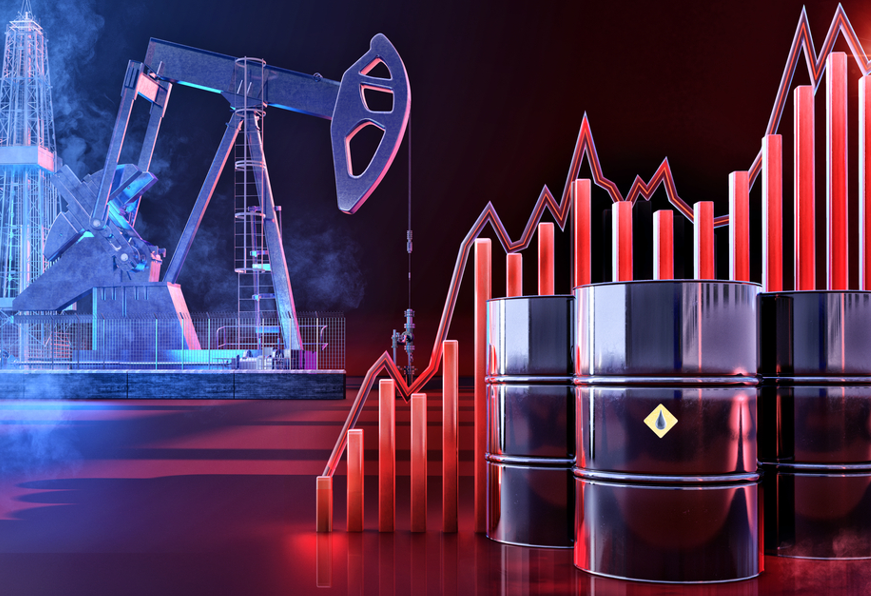
We are expecting inflation in energy prices and a decline in interest rates when the poop hits the AI mania fan. For these reasons, we are overweight in oil stocks and home builders. These industries prospered in the 1970s, once the stock market mania broke in late 1972!
There is a big difference between betting on something and investing in meritorious companies with long holding periods. Although we are no longer shareholders of Berkshire Hathaway, Warren Buffett shared some wisdom with everyone recently.
Shell (SHELL NA) announced last week that they are acquiring ARC Resources (ARX CN). Arc Resources is a gas business in the Montney Region of Canada and is a name that the investors of Smead Capital Management are fairly familiar with.
During and after World War II, Allied forces established airbases across remote Pacific Islands, bringing with them food, medicine, tools, and machinery that the indigenous people had never encountered before.
Spring training started in Arizona recently and it reminded us of the 2025 World Series. The series ended a Major League season which was delightful and instructive.
Relying on the kindness of strangers has never been a good business or investment strategy, but it doesn’t mean that people don’t wish that it worked. The main issue with this hope is that it’s foolish to believe that other people’s grace and money will always be there.
There are two sides to the current stock market. One side, ignorance avoidance, requires us to know where the money is. The other side, stock selection, is to know where the money is going.
Mark Twain said, “History never repeats itself, but it rhymes!” Time magazine just came out with its “Person of the Year.”
For over eighteen years, we have maintained the same investment discipline and the same eight criteria for stock selection. We have deliberately sought opportunity in the sectors and structures the market has decided are too complicated, too cyclical, or simply no longer fashionable.
My first experience with a major economic/stock market bubble was the dot-com bubble of 1998-2000. Many investors forget that the Nasdaq and S&P 500 Index bubble that ended March 10, 2000, was the first bubble in a series of three bubbles.
One of the things we have in common with Warren Buffett is that we started our risk-taking career handicapping at racetracks. Buffett handicapped the horse races in Omaha, and I handicapped greyhound races near Portland at Multnomah Kennel Club in Gresham, Oregon.
There has been a lot of controversy around the Trump administration’s policy toward the Federal Reserve recently. What is less obvious to most investors is what they’re aiming to accomplish. Trump continues to talk about getting rates lower, and this has been echoed in other parts of the administration as well.
As summer comes to a close and life adjusts back to normal for most of us, we thought it was a great time to get back to basics and take a look at the current U.S. stock market.
Is the U.S. economy “all twisted up in the game” with the S&P 500 Index dominated by technology/AI stocks? How much is investor confidence affecting consumer confidence? How much has the increase in financial advice and advisors been fed by the success of this stock market?
Investors have talked a lot about the Buffett indicator since the Oracle of Omaha began commenting on it. Buffett compared the market cap of the US stock market to GDP.
A wise man once said that generally accepted accounting principles (GAAP) is where you start. It may not be the most economic way of looking at a business for various reasons.
When you have a significant underperformance period, investors have a good reason for wondering if you’ve lost your investing mojo.
We have a truly inspiring corporate leader among the companies in our portfolio. We don’t believe the global equity markets have realized it yet.
Our long-time investors are probably wondering why we haven’t made any gains over the last 18 months.
In light of the announcement that Warren Buffett is stepping down, we thought it very useful to share some of the keynote talk I did at the University of Nebraska-Omaha Business School last Friday night (thanks to its wonderful director, Robert Miles).
In the Middle Ages, a common form of punishment was some form of mutilation, which included cutting off the nose of a prisoner or purposefully marring one’s own appearance before the arrival of conquering armies
We’d like to discuss our three worst-performing securities in the US portfolio to help our investors understand why we are sitting on our hands and allowing our discipline to proceed.
When you grow up with a father who worked in the brokerage business, you hear a lot of stories.
Investors who have come to us in the last three to four years are probably wondering if we’ve been here before. By here, we mean a stretch of significant underperformance relative to our benchmarks. The answer is, yes. Let’s review those prior circumstances to see if we can learn something about where we might be headed.
We believe that we must build a common stock portfolio which will float when the multiyear bear market creates a waterfall of selling among magnificent growth stocks and passive S&P 500 Index owners.
Karen Carpenter was one the greatest singers of my lifetime. One of her biggest hits was called, “Top of the World.” The key line of the song says, “I’m on top of the world looking down on creation and the only explanation I can find, is the love that I’ve found ever since you’ve been around, you most put me at the top of the world!”
As we welcome a new year and its many possibilities, it’s important to reflect on where the markets and investor psychology sit on the pendulum of greed and despair.
All portfolio managers practice a stock-picking discipline in which they make choices. Growth stock investors attempt to predict which companies will grow the most in the future and compare the growth they expect to what they have to pay to participate.
The Federal Trade Commission (FTC) recently blocked the merger of Albertson’s and Kroger, which are the two largest stand-alone grocery chains.
For us as investors, we can say that this is déjà vu all over again as we practice our stock picking discipline.
How does the euphoria for stocks in the days after the 1980 election contrast with today’s Trump election euphoria?
Dow Jones (publisher of The Wall Street Journal) announced that Nvidia (NVDA) will replace Intel (INTC) in the Dow Jones Industrial Average. Intel was brought in to replace Union Carbide four months and nine days before the peak in Intel’s stock price. Union Carbide became Dow Chemical via merger.
Two major labor unions, the Dock Workers Union and the Boeing Machinists Union, have attempted to reach an agreement with their employers on a contract. The dock workers agreement proposes an average 8.5% per year wage increase over six years, and the Boeing Machinists Union’s proposal is for an average 7.5% wage increase over four years.
Barry Bannister, Managing Director and Chief Equity Strategist at Stifel, put out an excellent research piece on future returns based on what industry folks call the “equity risk premium.”
We learned a long time ago that we wanted to know what smart professional investors were doing. It’s always better to know who is smart rather than being smart yourself. Therefore, we’ve constantly kept track of insider buying, what great investors like Warren Buffett and Carlos Slim were doing, and what the most successful hedge funds were up to. A recent chart stopped us in our tracks.
We’ve always admired the great artistry of David Byrne from the Band Talking Heads. My favorite song of theirs is “Once in a Lifetime.” We think this song can tell our readers a great deal about how to look at our portfolio as we navigate an expensive and maniacal S&P 500 Index environment.
My colleague Will Keenan recommended an outstanding book, The Professor, the Banker, and the Suicide King, by Michael Craig. The book is a short and entertaining read of how Andy Beal played the best poker players in the world heads-up. He not only gambled toe-to-toe, but he also reminded them that they were doing what everyone should think poker is: gambling.
One of the very popular technology companies in recent years has been CrowdStrike, Inc. It provides cybersecurity to numerous major technology companies including the top Artificial Intelligence (AI) players.
In a recent The Wall Street Journal article, Jason Zweig correctly pointed out that 85% of active stock-picking funds and ETFs had underperformed their benchmark.
Over the last four years, we have maintained that the U.S. middle-class consumer is on firmer ground than many believe. The first wave of inflation that seems to be receding is just that—the first wave of a set—and oil and gas companies are fundamentally well-positioned for the next decade.
We are contrarians and oddly crave the moments when history, psychology and mathematics get defied in the U.S. stock market. We believe this is one of those points in time.
We have gained a number of new investors and get regular vetting interest from investors who need to understand the roots of our stock-picking discipline.
The news of Bill Walton’s death from brain cancer hit me hard. In the Portland Memorial Coliseum, there were 12,665 seats, and I had one of those top-row nose-bleed seats for the sixth game of the NBA finals in 1977.
Back in 1993, a brilliant satirist by the name of Ivan Reitman produced a movie called Dave. It was the story of a life-threatening stroke besetting the President of the United States of America.
At the Berkshire Hathaway Annual Meeting we marked what we believe is the end of an era both for Berkshire and for the S&P 500 Index.
The most interesting thing about 1968-1969 was the agreement about the stock market future between the greatest growth investor at that time, T. Rowe Price, and the greatest value investor of all time, Warren Buffett.
Many investors are bullish, or not fearful, of the future of stock returns. At Smead Capital Management, we continue to explain to our investors how poor the outcomes will be. Some ask when this view will change.
As a child, baseball became the core of my life. Collecting baseball cards, watching games on TV, and playing in Little League and neighborhood games absorbed my time outside of grade school. Out of this came a desire to know baseball history and become a statistics junkie.