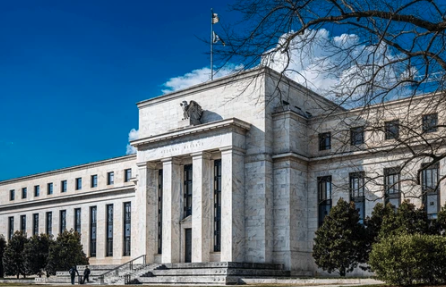
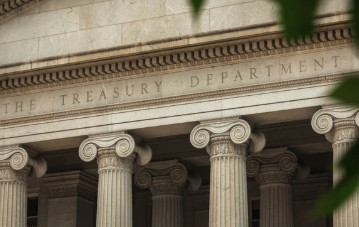
The Marriner Eccles Building, home to the Federal Reserve Board, is an imposing structure that fronts the National Mall in Washington D.C. It was constructed in the wake of the Banking Act of 1935, which created clear separation between the Treasury Department and the central bank.
Trade-dependent Asia-Pacific (APAC) economies are at great risk from the U.S. reciprocal tariff plan. After a three-month deferral, a new series of letters from the White House suggests that the levies will go into force on August 1.
Trade tensions spread to the copper and pharmaceutical markets.
Ignoring U.S. healthcare problems won't make them go away.
U.S. trade policy movements are starting to resemble a soap opera. Following a series of threats, escalations and suspensions, President Trump has extended the tariff deadline to August 1.
Everything that our team publishes has been through peer review. We candidly call out every opportunity we see to improve each other’s writing, from quibbling over word choices to challenging an essay’s entire premise.
The right level of regulation requires careful calibration.
Uncertainty has not impaired overall economic performance.
Tariffs have been the dominant theme in economic policy this year. While President Trump has long held protectionist views, his administration’s approach to international commerce has been more belligerent than was seen in his first term.
An economy cannot subsist on services alone.
Only a subset of subsidies will be rolled back.
Growth is expected to decelerate, but not come crashing down.
NATO's new spending pledge eases security concerns but adds to fiscal pressures.
The Fed left rates unchanged and signaled it’s still in wait-and-see mode, even as inflation risks and policy uncertainty persist.
OBBBA sets a path for more borrowing ahead.
Foreign demand for U.S. Treasuries remains intact.
The current round of budget discussions in Washington will have a significant impact on America’s fiscal trajectory decades into the future. A key underpinning of this year’s debate has roots that go decades into the past.
The U.S. economy is growing accustomed to elevated uncertainty.
The draft of the One Big Beautiful Bill Act (OBBBA) runs more than 1,000 pages. Analysis of the legislation has focused primarily on its impact on the U.S. federal deficit: the Congressional Budget Office estimates that passage would add almost $3 trillion to the national debt over the coming decade.
To anyone going through a breakup, just remember this lyric from Bernadette Peters: “If I’m patient the break will mend and one fine morning the hurt will end.”
I spent the last two weeks of May catching up with partners and clients in Malaysia, Singapore, China, and Hong Kong. Following are some reflections on those conversations.
U.S.-Europe negotiations involve more than just tariffs.
The strengths of the U.S. economy are likely to endure.
An "end-to-end" approach in process management means handling a task or product from its initial planning stages to the finishing point or delivery, without relying on intermediaries for specific steps. No nation does this better than China.
Some of the most useful financial advice has a homespun tone, like to make hay while the sun is shining or save up for a rainy day. I recently encountered another helpful idea in that vein: Think of your house like a family member who is always sick.
Few leading men of the 1960s and 1970s were more dashing than Clint Eastwood. He played a series of gritty heroes, trying to do right in a world gone wrong.
A KEY PLANK of the new administration’s economic policy has been to embrace tariffs, a sharp reversal of decades of free market trade.
Markets rallied after a surprise tariff rollback, but with valuations stretched and policy signals still mixed, investors appear to be leaning toward flexibility, fundamentals, and selective exposure.
Trade pacts with America will not mean a return to the old normal.
In the aftermath of the 2018 trade skirmishes with China and the pandemic, nearshoring and friendshoring quickly became buzzwords. But like many other catch phrases, these two may soon fade from usage and memory.
Debt collectors have been unpopular since ancient times, but they play a necessary role in the lending lifecycle. Their jobs are not easy: I recall one collector noting that there are few ways to communicate with defaulted borrowers.
The signal of announcing trade pacts is an important start.
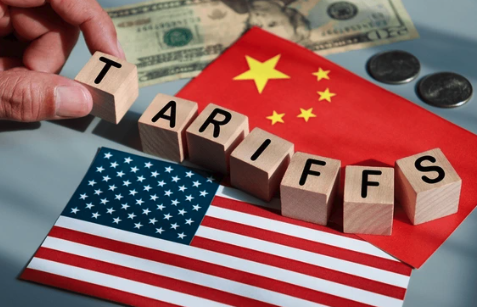
China has been a focal point of American trade policy for many years, but tensions were escalated early in the second Trump term.
The U.S. may not walk back all of the new tariffs.
Tariff talk has been at a fever pitch for the past three months. Its dominance of the news cycle has crowded out discussion of other important economic issues, such as the sustainability of America’s national debt.
At Wednesday’s press conference, Chair Jay Powell signaled a wait-and-see approach, as the Fed keeps a close eye on inflation pressures and the job market.
Most economists and portfolio managers are cautious when discussing gold. Its handling and transaction costs are high, and it pays no interest or dividends.
In recent times, central bank independence has been taken as gospel. Political pressure for easy money contributed to extremes of inflation in the 1970s.
For decades, U.S. Treasuries have been universally regarded as a benchmark and a safe haven asset during periods of turmoil.
Many American consumers recently endured their first inflationary cycle, and recent trade headlines have elevated fears of a another bout with higher costs. While not impacted by tariffs, energy markets may play a critical role in driving the price level during the balance of this year.
After the U.S. imposed substantial tariffs on China, Beijing responded with tariffs of its own and with restrictions on exports of seven rare earth minerals. The latter action will be a particular hindrance to American manufacturers.
American leaders are now engaged in an effort to reverse the loss of manufacturing. The hope is to restore a path to prosperity for struggling regions and their residents. Tariffs are being employed liberally as a means to this end.
Unexpected wider and larger-scope tariff announcements have sent tremors through bond and equity markets, resulting in a brisk sell-off that signals investors’ caution.
Asia-Pacific will likely be the hardest hit region from a steep increase in U.S. tariffs.
President Trump has been a vocal admirer of China’s Great Wall, built by the country’s emperors to protect their territory from outside aggression. In his first term, he compared his plan to build a border wall with that historic structure.
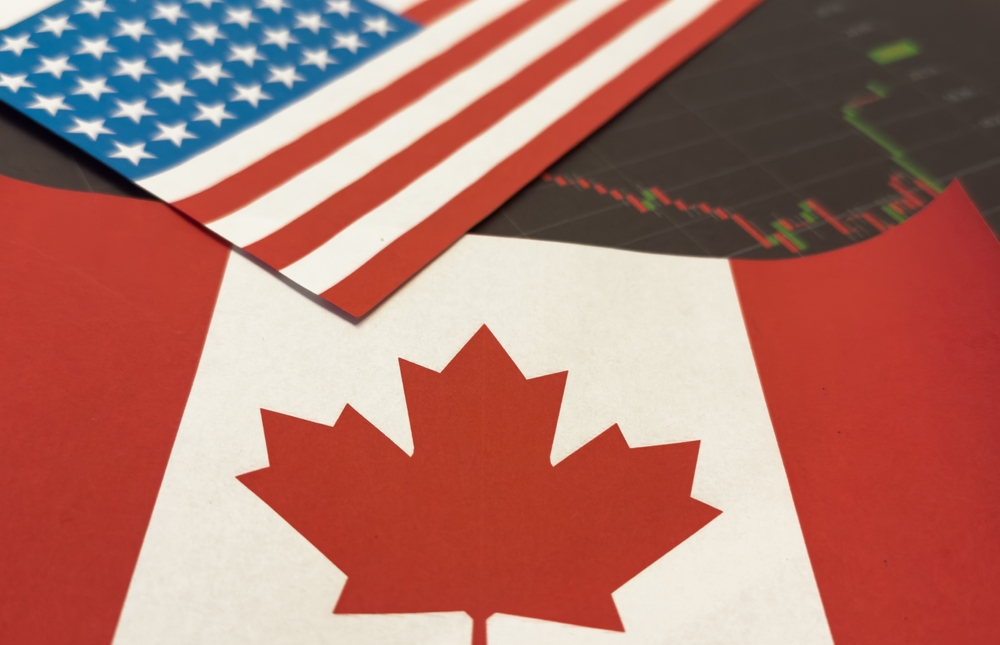
To say that it has been a tumultuous year in Canada would be an understatement. The country’s business model, which relies heavily on commerce with the United States, has been put under severe stress by the American administration.
A divide has recently developed between soft and hard economic data. At a time when conditions are changing rapidly, understanding the difference between the two is terribly important.
The deferral of “reciprocal” tariffs on most U.S. trading partners suggests that the peak of tariff uncertainty may have passed.
Measures announced so far this year have pushed the effective U.S. tariff rate above 20%. The astonishing jump has raised import taxes to a level not seen in about a century.
The reciprocal reprieve does not alter the tectonic shift in the trade outlook.