Tech giant Microsoft is on a mission to use technology to solve some of the world’s most pressing problems.
Steadfast global resilience to recession highlighted the quarter, although the outlook hasn’t necessarily improved. But with labor markets tight and wages keeping pace with inflation, consumers are navigating the economy’s rough patches. Still, we expect growth to slow in time.
Better than expected first quarter earnings, decelerating inflation and growing optimism about a soft, non-recessionary landing have driven the market's positive 2023 start.
It is human nature to be captivated by unbelievable stories, great victories, and thrilling endings. One could argue that we have a penchant for the dramatic.
Financial advice often focuses on boosting personal savings rates and maximizing return on investment during a worker’s accumulation years. Equally important, however, is the decumulation process, when people spend those savings in the form of income.
Today we’re going to look at two stocks – Visa vs. Mastercard – that seem to be oblivious to that. Frankly, they’re two better-performing companies from a standpoint of operating results but also from the standpoint of price as pointed out in the original video.
Though recent data suggests China's re-opening growth has slowed, it's likely temporary. As China's recovery continues, it may have implications for U.S. inflation and rates.
Quarterly Macro Themes, a quarterly publication from our Macroeconomic and Investment Research Group, spotlights critical and timely areas of research and updates our baseline views on the economy.
Most of the things we expected to happen during the first half of the year in fact did: Inflation eased, U.S. economic growth slowed, the Federal Reserve appears to be near the end of its rate-hike cycle, and the U.S. government debt ceiling standoff was resolved before a potential default.
With the passage of SECURE 2.0, new in-plan emergency savings solutions are on the horizon. What have the past five years of research taught us about the connection between short-term and long-term financial security? And how can 401(k) plans benefit from lessons learned?
For the first time since beginning the current tightening cycle in March 2022, the Fed opted against raising the federal funds rate at the June 14, 2023, FOMC meeting. The decision officially ends a run of 10 consecutive interest rate hikes by the central bank.
Macroeconomic uncertainty has sparked questions over the durability of the traditional 60/40 portfolio—highlighting why investors may want to add alternative investments to the mix.
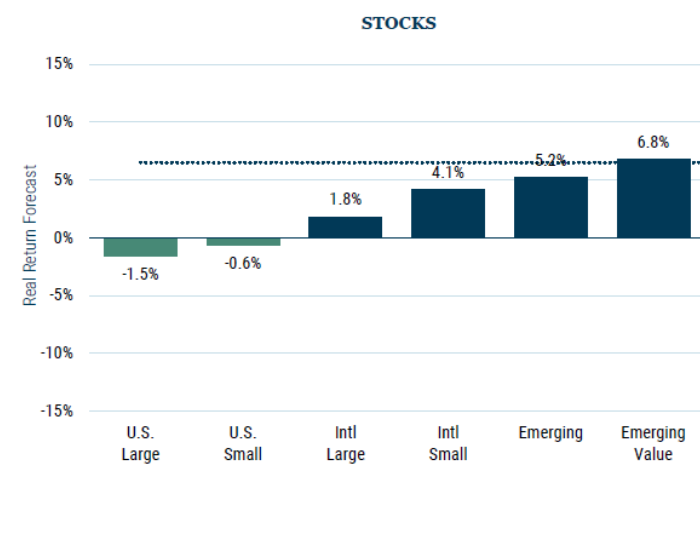
GMO has published a new seven-year asset class forecast.
When it comes to their equity portfolios, US investors have historically exhibited a high degree of home-country bias. But in today’s fast-changing global market landscape, they may find that there are good reasons to rethink regional allocations to stocks.
Value equities have faced years of tough sledding, outside a run of outperformance following “vaccine day” and the lift-off from zero rates. Broadly, this has left value stocks extraordinarily cheap relative to growth. However, looking closer, the cheapest 20% of stocks – what we call “deep value” – trades unusually cheap today despite offering surprisingly attractive fundamentals.
Structural changes in the world’s energy systems represent significant investment potential across an array of sectors. Analysts on our equity research team offer insights into the impact and opportunities.
Managing substantial wealth often requires specialized capabilities and expertise.
New findings from EBRI’s recently released 2023 Retirement Confidence Survey reveal what’s top of mind for American workers and retirees. Below, we look at two key findings – alongside ways the industry is responding.
The standoff between the White House and Congress over raising the US debt ceiling has been the talk of the town for months. Now that the government has reached an agreement, savvy investors will be on the hunt for opportunities—and we think there will be some attractive ones.
Choppiness in the equity market continues as investors look to see a debt limit deal approved.
The collapse of Silicon Valley Bank and Signature Bank heightens the Federal Reserve's policy dilemma over fighting inflation while maintaining financial stability. We analyze what the crisis means for the banking system and the economy.
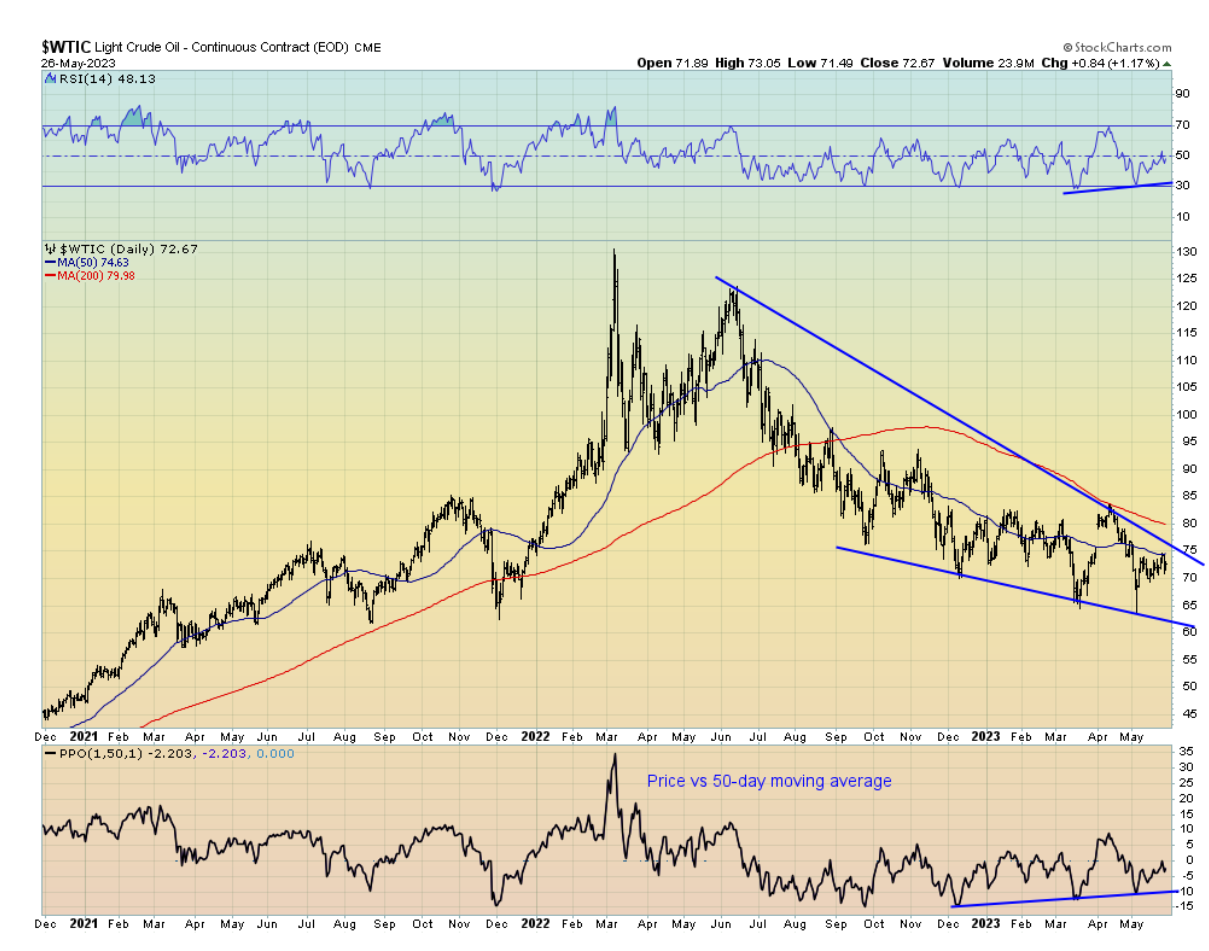
Following OPEC’s surprise production cut in April that saw crude oil squeeze from $65 to $80 per barrel in a manner of days, hedge funds and the like have once again resumed selling on slowing growth and recession fears.
I originally posted a video covering the hospital REIT Medical Properties Trust on February 17, 2023, when the price was $12.96. On February 28, 2023, I did a follow-up update video after the price had fallen to $8.72.
While we don't expect the U.S. government to default, the uncertainty may heighten market volatility in coming days. Here are answers to some of the questions we're hearing most often.
The semiconductor cycle is dead, long live the super cycle!
Diversification is a cornerstone of thoughtful, long-term focused investing. Incorporating assets and asset classes that don’t always move in tandem – that is, their returns aren’t strongly correlated – can help temper stock and bond market risk.
After embarking on a rapid tightening cycle in March 2022, the Federal Open Market Committee (FOMC) appears poised to pause its interest rate hikes in the middle of this year.
Parking your fixed-income assets in cash may seem like a safe choice in today’s volatile investing environment, but it’s actually a risky proposition. Here are three reasons why sitting on the sidelines can be a dangerous game.
Here are GMO’s updated forecasts for performance of various asset classes over the next seven years.
Markets are still facing uncertainties regarding the impact of the Federal Reserve’s aggressive rate hikes and quantitative tightening, a potential economic slowdown, and the likelihood of other unforeseen consequences of financial disintermediation.
Economic moats, also called business moats, are competitive advantages that help a company maintain long-term profits and market share over competitors.
As the credit market grows more stringent, investors should consider high-quality, longer-term bonds. Here are some fixed-income strategies.
This is part of a continuing series of analyze-out-loud videos prepared at the suggestion of subscribers to the FAST Graphs’ YouTube Channel on how to research stocks – and how to know when to buy or sell a stock.
Lawmakers in Washington set government spending and revenue plans every fiscal year, usually producing a shortfall that many of us know as the federal budget deficit.
Today’s competitive landscape is creating an interesting opportunity for discussions between money managers and their small business owner clients looking to incorporate more technology-centric investments into their portfolios.
This is part of a continuing series of analyze out loud videos prepared at the suggestion of subscribers to the FAST Graphs’ YouTube Channel on how to research stocks.
On the heels of its 10th consecutive rate hike since March 2022, the Federal Reserve hedged its bets on pausing rate adjustments.
Anne Walsh, CIO of Guggenheim Partners Investment Management, joins Bloomberg TV from the Milken Global Conference to discuss the implications of ongoing issues in fixed income and how capital rationing favors private credit.
Along with identifying your goals and time horizon, assessing risk is a key part of building a holistic financial plan. And while affluent investors generally have higher risk tolerances, determining their individual risk profiles isn’t straightforward.
As the name implies, loss aversion is our instinct to not just prefer a gain over a loss but to prioritize avoiding losses over almost anything. It might sound wise to try avoiding losses but taking it too far could keep you from realizing your financial goals.
Markets posted a strong first quarter, though it was a rollercoaster ride. The path forward will likely stay turbulent, with bank turmoil likely tightening credit conditions and the Fed still wrestling with inflation.
Over the past year, the municipal bond market has seen increased volatility stemming from rising interest rates across the yield curve.
Despite continued geopolitical events and a potential banking crisis, markets remained focused on the economy and central banks’ attempts to control inflation.
GMO has published a new 7-Year Asset Class Forecast.
Our emerging market debt valuation metrics across all but the U.S. interest rate dimension remain unambiguously attractive. In this new, compact version of our Quarterly Valuation Update, we provide our Q1 assessment and introduce summary valuation graphics to assist in quantifying expected returns.
For years, investors seeking tax-efficient income grappled with a key question: Are municipal bonds that are subject to the alternative minimum tax (AMT) worth their higher yields? After all, an attractive bond yield didn’t hold as much luster once the AMT shaved off up to 28%.
The lack of diversification benefits of government bonds in 2022 was painful for multi-asset investors. The sell-off in US Treasuries in particular was sharp, and we saw correlations versus stocks move well into positive territory.
U.S. stocks climbed for a second straight day Tuesday, with the tech-focused Nasdaq Composite ending near a five-week high, as jitters over bank instability eased.
GMO 7-year Asset Class Forecast: February 2023
U.S. equities are lower as pressure has returned to the banking sector, which remains top of mind.