The circus is much more than a pure visual spectacle. Each act, from juggling to the tightrope walk, offers a lesson in finding steadiness amid complexity. In many ways, the global economy today resembles a high-wire circus act.
Central banks are walking a tightrope, carefully fine-tuning their next moves as they face lingering inflation and subdued growth. Governments are juggling competing forces of debt sustainability, public spending and industrial policy. Geopolitical tensions are becoming a spinning-plate challenge, demanding agility from businesses to adapt to the evolving landscape. Consumers are the nervous spectators, watching from the sidelines and waiting for performers to finish their routines successfully.
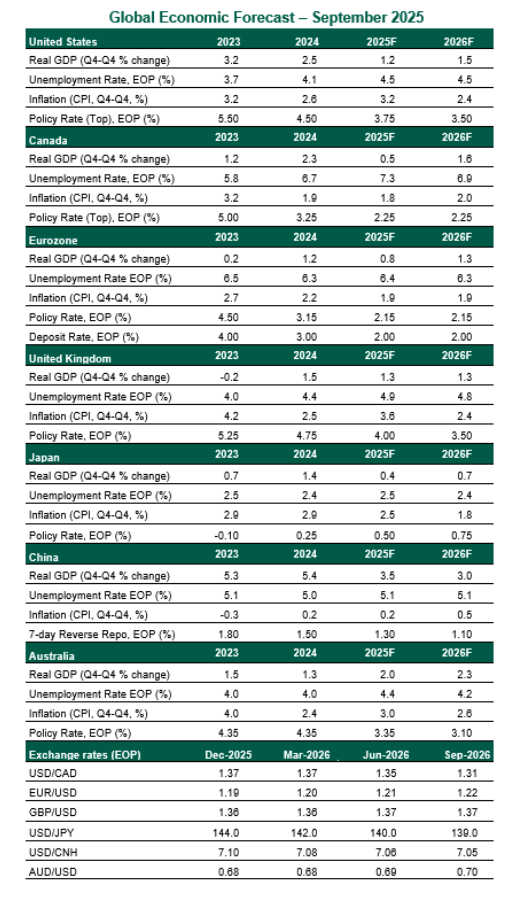
Growth has held up well in most regions, but a slowdown is forthcoming as the boost from trade frontloading fades. We believe the show can go on, but softer demand and elevated costs have raised the specter of some economies stumbling into stagflation.
Following are our thoughts on how top markets are faring.
United States
- Volatile trade policy had been casting a shadow over the U.S. outlook, but the path forward for trade relations is becoming clearer. Tariff rates are approaching a steady state. These trade barriers and the summer fiscal bill create incentives for businesses to boost investment. However, higher tariffs, persistent inflation, and a cooling labor market are expected to weigh on growth in the remainder of the year.
- Inflation remains stuck, with most cost indicators hovering closer to a 3% annual rate than the Fed’s 2% target. But sticky underlying price pressures have been overshadowed by growing concerns about the state of the labor market. Job gains disappointed in two consecutive months, and the annual benchmark revision revealed far weaker growth than previously estimated. The soft labor market offered sufficient justification for the Fed to resume its easing cycle after a nine-month pause. We expect cuts at the next two meetings, and one more next year; any additional action would require a weaker labor market than we anticipate..