As a movie buff, I’ve seen every kind of plot twist, from animated classics to emotional dramas. One of the most common themes across genres is the intricate dance between exes: sometimes bitter, sometimes nostalgic, occasionally finding a way to friendship.
Five years since their economic breakup, the U.K. and the European Union (EU) have been living out a familiar script. The breakup was messy, the sequel uncertain, but the former partners are trying to remain friends.
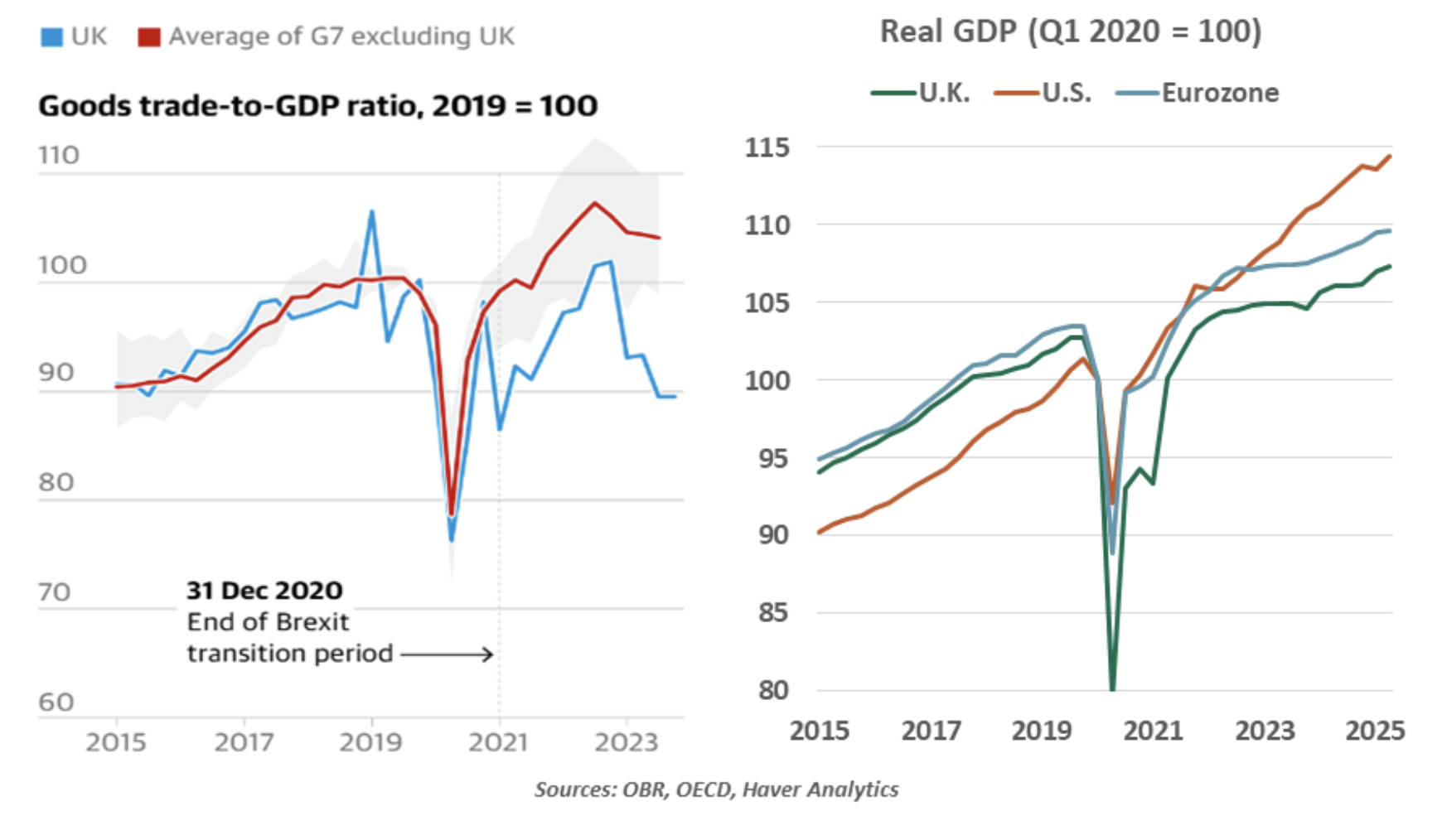
 The outcome of Brexit has been not as dire as some had feared. The EU remains the U.K.’s main commercial partner by far. However, trade volumes have slumped, despite a negotiated free trade deal that helped the U.K. avoid EU duties. British goods exports to the E.U. have dropped sharply since 2021 and now sit 16% below 2019 levels in real terms. Non-tariff regulations introduced by the structural shift in trade relations have proven to be a significant drag on Britain’s growth. Heightened uncertainty around future trade arrangements and regulatory divergence has weighed on business sentiment, leading to subdued investment for much of past five years.
In its recent assessment, the Office for Budget Responsibility concluded that the U.K.’s gross domestic product (GDP) will be 4% lower in the long run, and trade about 15% lower, compared to staying in the EU.
Given the lingering drag on growth, the current U.K. government has been seeking closer economic ties with the EU. In May, the two sides struck a ‘reset’ agreement that strengthens cooperation in areas such as fishing, trade, defense and energy. The deal removes the need for border checks on British food and agricultural exports and paves the way for U.K. firms to participate in the EU's new defense fund. Though important, the long-term benefits are expected to be modest. According to the U.K. government’s own estimates, the recent agreement with the EU is expected to add £9 billion to the economy by 2040, equivalent to about 0.3% of GDP.
U.K.-EU relations may have entered a new, more stable equilibrium. While the scars of the breakup won’t fade entirely, both sides are making a concerted effort to remain good friends.
Information is not intended to be and should not be construed as an offer, solicitation or recommendation with respect to any transaction and should not be treated as legal advice, investment advice or tax advice. Under no circumstances should you rely upon this information as a substitute for obtaining specific legal or tax advice from your own professional legal or tax advisors. Information is subject to change based on market or other conditions and is not intended to influence your investment decisions.
© 2025 Northern Trust Corporation. Head Office: 50 South La Salle Street, Chicago, Illinois 60603 U.S.A. Incorporated with limited liability in the U.S. Products and services provided by subsidiaries of Northern Trust Corporation may vary in different markets and are offered in accordance with local regulation. For legal and regulatory information about individual market offices, visit northerntrust.com/terms-and-conditions.
A message from Advisor Perspectives and VettaFi: To learn more about this and other topics, check out some of our webcasts.
© Northern Trust
Read more commentaries by Northern Trust
 The outcome of Brexit has been not as dire as some had feared. The EU remains the U.K.’s main commercial partner by far. However, trade volumes have slumped, despite a negotiated free trade deal that helped the U.K. avoid EU duties. British goods exports to the E.U. have dropped sharply since 2021 and now sit 16% below 2019 levels in real terms. Non-tariff regulations introduced by the structural shift in trade relations have proven to be a significant drag on Britain’s growth. Heightened uncertainty around future trade arrangements and regulatory divergence has weighed on business sentiment, leading to subdued investment for much of past five years.