Cathie Wood’s worst-ever year wasn’t even over before the clouds started to gather for 2023.
Savvy investors seized tightening credit markets this year to reshape the distressed investing playing field just as more companies look destined for default in 2023.
The era of easy returns came to a screeching halt in 2022.
US companies had a lot to overcome in the latter half of 2022 with rising interest rates, more budget-conscious consumers and a sagging stock market.
They don’t make technology predictions like they used to.
What will the workplace look like a year from now? The snow globe of work has been undeniably shaken to its core since the arrival of Covid-19.
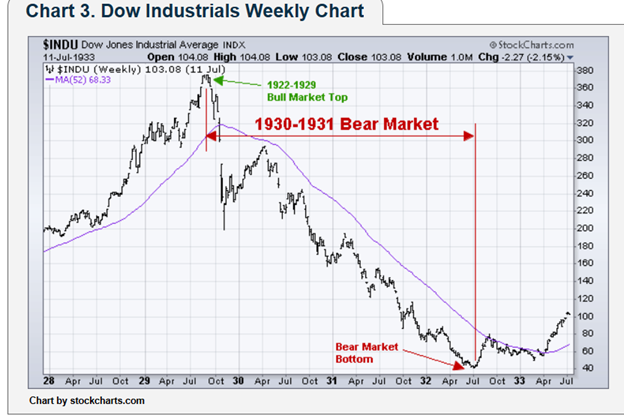
Bear markets end with widespread capitulation while a chorus of the stock trader’s prayer (God, if you get me out of this mess, I swear I will never buy another stock) spreads through out the land.
Enjoy the latest Newsletter from Harold Evensky.
My guest today is from Ionic Capital Management LLC, a $3.8 billion New York-based alternative asset manager. Ionic uses long volatility, relative value arbitrage, inflation protection, and value equity investment strategies on behalf of private and regulated investment funds. Since its inception in 2006, Ionic has been managing proprietary strategies and customized solutions. The Ionic Inflation Protection ETF (CPII) launched at the end of June 2022 and is an actively managed ETF that seeks to profit from its direct exposure to inflation and inflation expectations as well as increasing interest rates.
The asset management arm of BNP Paribas SA said using a different interpretation of “sustainable investment” than some of its peers has allowed it to keep the European Union’s top ESG tag attached to about $20 billion worth of funds.
Rather quietly, a new age of atomic energy may be approaching. Splitting atoms may not be as exciting as fusing them, or as modish as wind and solar projects.
C6 Bank, the Brazilian digital lender backed by JPMorgan Chase & Co., is planning to double its loan portfolio to midsize firms as it diversifies beyond retail clients.
The tailspin in Tesla Inc. shares accelerated Tuesday as a report of a plan to temporarily halt production at its China factory rekindled fears about demand risks and put the stock on pace for its longest losing streak since 2018.
The end of 2022 can’t come soon enough for many in the banking industry. Sputtering capital markets, job cuts, raging inflation, the crypto meltdown and rising interest rates marked a year of upheaval.
Lawmakers and regulators are grappling with a question: What, if anything, should they do to civilize a market so rife with abuse?
Technology stocks are headed for their worst December since the bursting of the dotcom bubble two decades ago as optimism about potential relief from Federal Reserve interest-rate hikes fades on signs of labor-market strength.
In a year when soaring inflation and sinking growth rocked corporate boardrooms and Wall Street trading floors, some nooks of the stock market gave investors shelter to hide out.
Bank of America Corp. clients bought $2.8 billion of US stocks last week, marking a sixth straight week of equity inflows at the bank, as they made heavy purchases of exchange-traded funds and sold tech shares, BofA strategists led by Jill Carey Hall wrote in a note Tuesday.
Millennials want to be valued team members. They value productive working relationships with their supervisors. Here my leadership lessons for millennial team members.
Implementing technology that comprehensively supports every business objective is about a consultative, hands-on relationship with the vendor.
Banco Bradesco SA, Brazil’s second-biggest bank by market value, plans to buy more minority stakes in tech companies to speed up its expansion in the US.
U.S. equities are modestly higher but near the unchanged mark in pre-market action.
Review the latest portfolio strategy commentary from Mike Gibbs, managing director of Equity Portfolio and Technical Strategy.
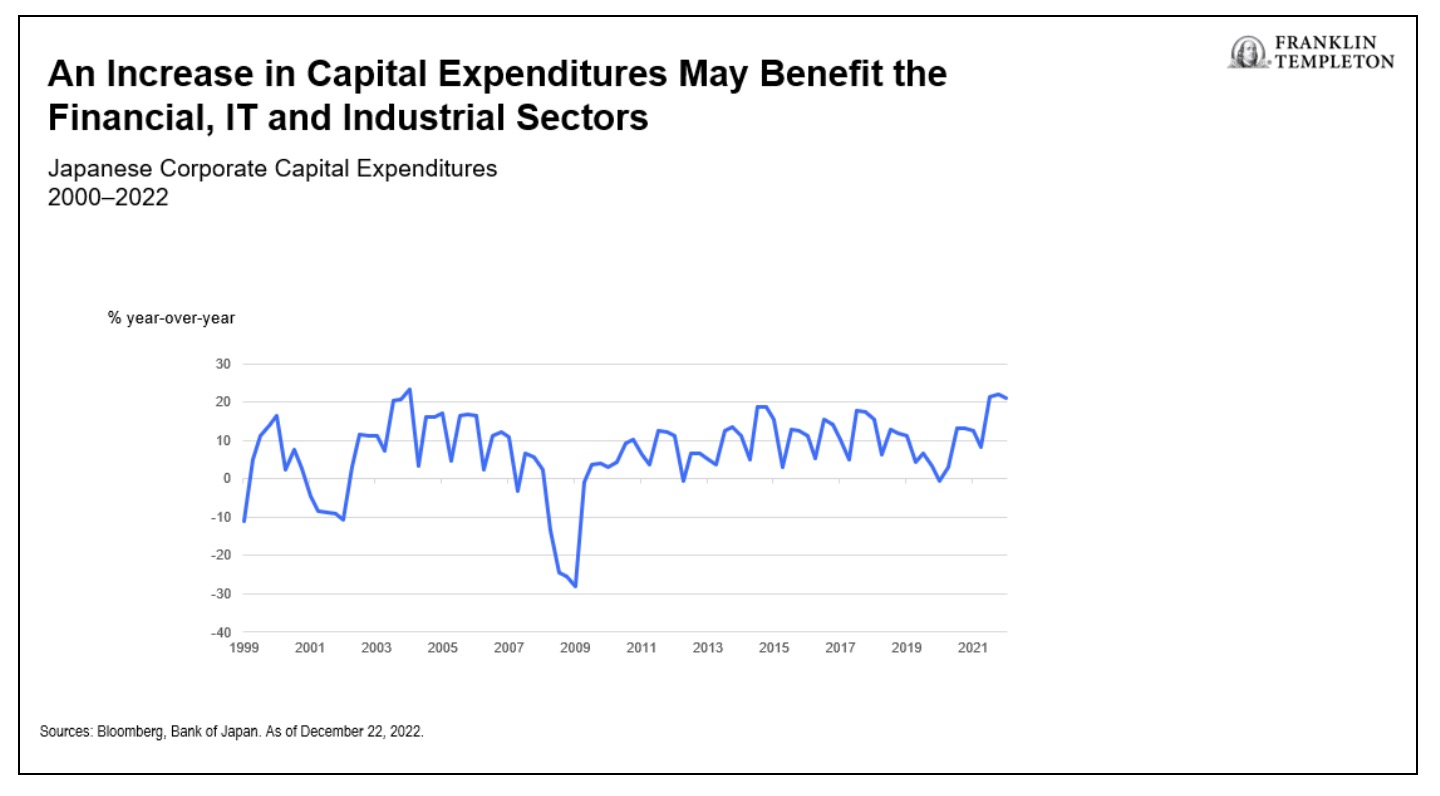
Templeton Global Equity Group weighs in on inflation’s emergence in Japan, recent monetary policy shifts, and the implications for investors.
A year ago, Tesla Inc. seemed unbeatable, with its shares near a record high amid soaring optimism for the global electric-vehicle market. Now investors are struggling to see a bottom.
U.S. stocks are falling sharply, giving up yesterday's rally.
It is easier to give stock than cash as a gift, and there are benefits for you.
Grayscale Investments’ proposal to buy out certain holders of its flagship Bitcoin trust is the money manager’s latest bid to stanch losses in a fund that’s been a linchpin in the dramatic rise and fall of the cryptocurrency universe.
The Federal Reserve’s policy makers are going to become incrementally more dovish in 2023, as a new roster of senior officials brings a greater focus on maximum employment to its policy-setting committee.
One of the most common complaints I hear from investors is that their advisors or brokers like to tell them when to buy a stock, but never tell them when to sell.
As the world economy prepares for a true transition to decarbonization, interest in renewable energy has re-emerged as an important topic for investors. This interview features Rene Reyna, who is head of thematic and specialty product strategy for the ETFs and Indexed Strategies teams at Invesco.
The year isn't yet done with rattling investors' cages. The Bank of Japan’s surprise widening of its yield curve-control policy on 10-year government bonds will have an impact far beyond its shores.
Certain events change the course of history, or at least the trajectory of the global economy. To name a few: the Black Death, the invention of the steam engine and World War II, and now the scourge of Covid-19.
It appears to us at Smead Capital Management that investors are behaving in a way that will damage their capital and cause them to suffer stock market failure.
Grayscale Investments is considering appealing to the same US regulator that it’s currently suing for permission to buy back shares of its heavily discounted Bitcoin trust should the firm’s lawsuit fail.
The following article provides an important perspective on Gen Z’s entrance into the workforce.
Oil rose in a session marked by waning liquidity ahead of the holiday season, strengthened by a softer dollar and a potential boost in energy demand after China abandoned its Covid Zero policy.
Surging mortgage rates have brought the housing market down from its giddy highs earlier this year.
With all the supply chain chaos, inflation, and uncertainty in the economy, this year is a perfect time to celebrate Christmas in the manner of Ebenezer Scrooge.
Allan Roth’s recent article, The 4% Rule Just Became a Whole Lot Easier, promises too much, makes inaccurate comparisons and blurs the notion of risk.
This wasn’t the year hoped for in the crypto and blockchain space, especially for stakeholders and investors.
As investors increasingly seek out more personalized options, many advisors are seeing direct indexing grow in popularity. Direct indexing is a type of separately managed account or SMA, where investors can express their personal values and tax preferences. The personalization and flexibility afforded by an SMA allows advisors the flexibility to manage each client’s tax situation and reflect their values. Dimensional Fund Advisors recently conducted research into the tax management benefits of an SMA. It found that a multifaceted tax management approach that goes beyond tax loss harvesting and considers tax implications at every step of the investing process can lead to more significant, longer-term gains. Here from Dimensional to discuss further is Kaitlin Hendrix, senior researcher and vice president.
Here’s a breakdown of the pros and cons of trading in your traditional bank for a virtual banking experience.
Amazon.com Inc.’s founder has long been obsessed with the company’s beginning — and its end.
A handful of giant firms are gaining dominance over the hottest corners of the hedge fund industry. This year showed why.
It was a weird year on Wall Street.
Investors are spurning mutual funds at a record clip, driving a $1.5 trillion gap in the flow of money from the old-school investment vehicles and into ever-popular ETFs.
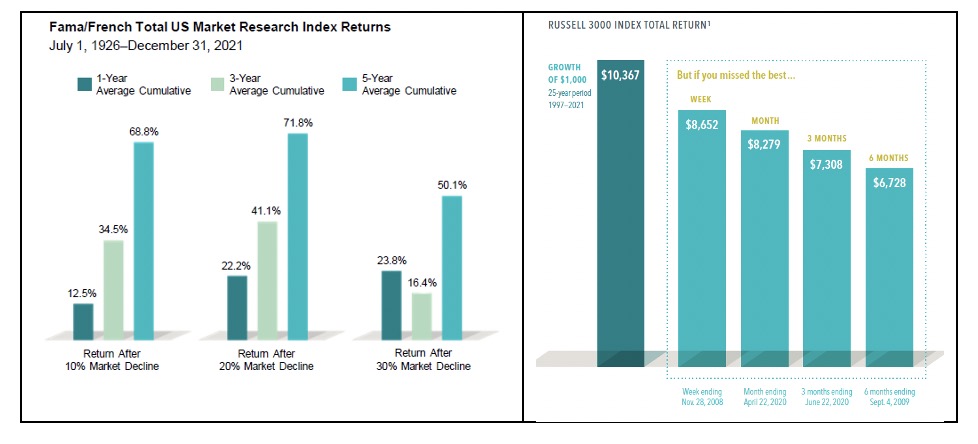
“I have never seen so much bearishness in the market,” Jeremy Siegel said, “which is a great sign for stock investors.”
The economic tea leaves suggest that 2023 could be another challenging year for both stocks and bonds. However, the outlook is more balanced given that equity valuations are much lower and bond yields much higher.
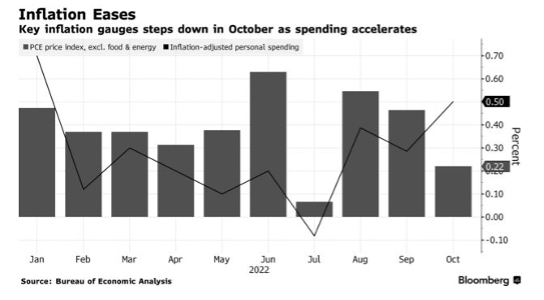
Inflation trends are moving in a favorable direction, but the change is likely too slow for the Fed to take its foot off the brake anytime soon.