I write a few newsletters, and I frequently get feedback from my subscribers. Sometimes, they’re just saying hello, and sometimes, they’re ripping on me, but sometimes, they’re telling me about things they see in the economy that are of interest.
Diversifying a portfolio means spreading the investments across a variety of asset classes, industries and geographies.
When money becomes less valuable and costs rise, the money you have saved affords you exponentially less. In the short term, you may not notice the difference.
After a slow start to asset gathering, U.S.-listed equity ETFs were in vogue during the summer. At the end of August, the asset category had $165 billion of net inflows, more than $125 billion for fixed income.
Barclays Plc is trying to work out how to make the best of its payments business in its quest to increase the appeal of its shares. One option is selling a stake in the unit that handles card transactions for shopkeepers and other businesses, Bloomberg News reports.
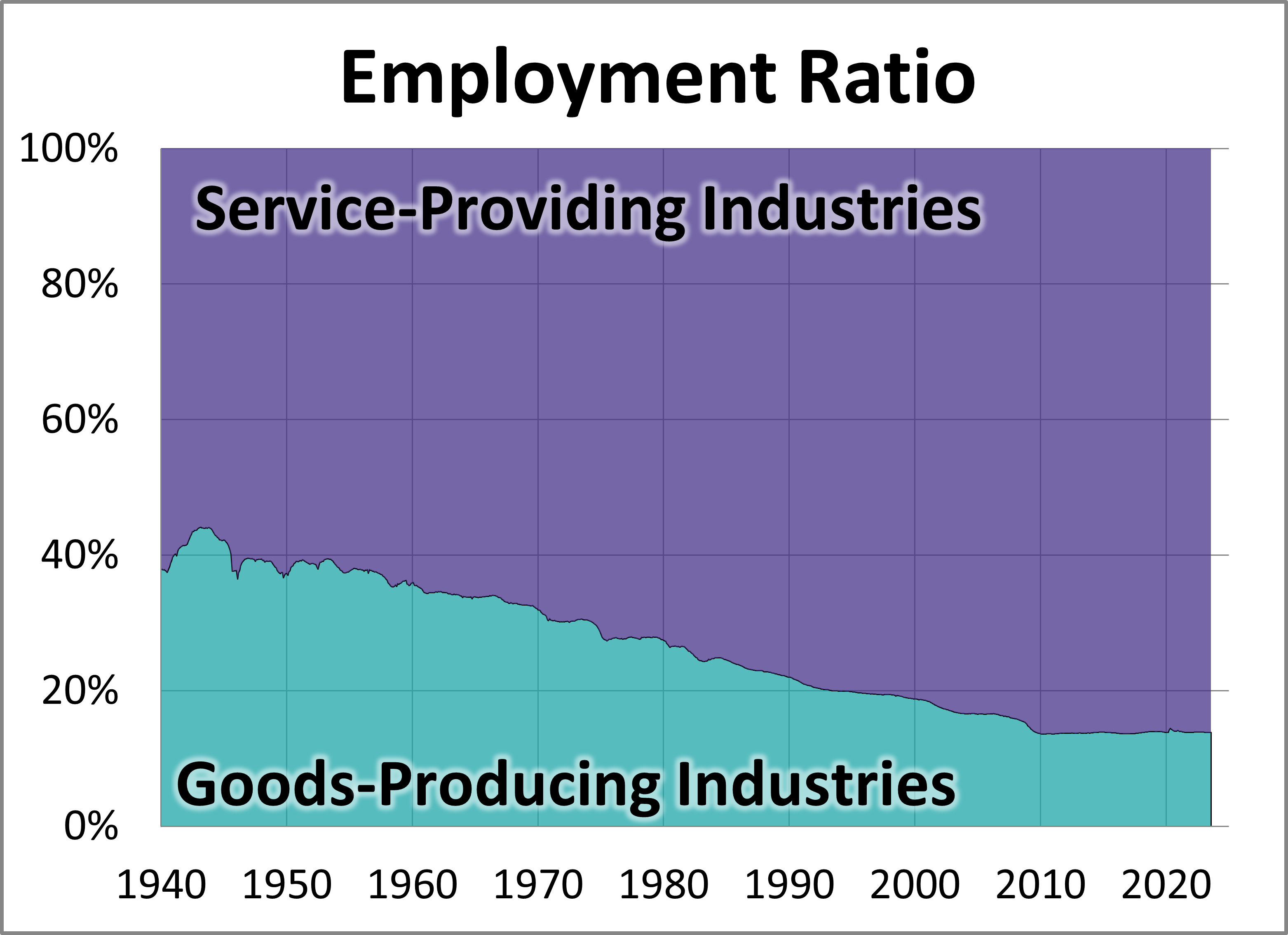
The latest monthly employment report showed 187,000 nonfarm jobs were added in August. An industry breakdown of that number shows a gain of 151,000 service-providing jobs and a gain of 36,000 goods-producing jobs.
As soft-landing calls engulf Wall Street, traders are betting that a market calm will endure across investing strategies — despite the latest selloff in US stocks and bonds.
Crypto exchange-traded-products issuer 21Shares and Cathie Wood’s ARK Investment Management are seeking to offer the first US ETF that invests directly in Ether.
In the second part of our series on global supply chains, portfolio managers Inbok Song and Peeyush Mittal examine the regions and countries that may benefit from industries and companies shifting operations.
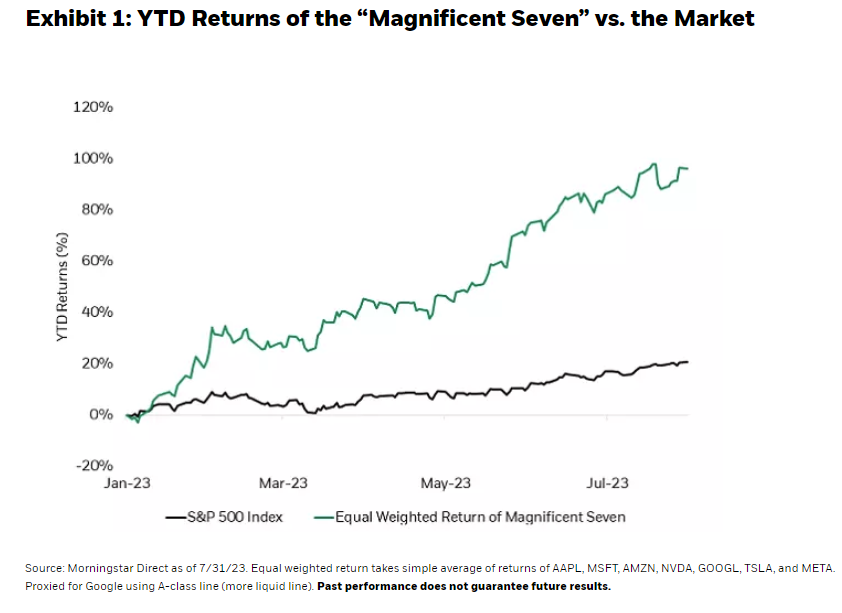
Seven mega-cap US-based companies – Apple, Microsoft, Amazon, Google, Nvidia, Tesla, and Meta (Facebook) – have stayed top of mind for many investors this year.
Last week, the VettaFi AI Symposium was one of the more popular places to be in the days before Labor Day.
This week was packed with several key economic releases that helped provide insight into the overall state of the U.S. economy. Policymakers and advisors closely monitor economic indicators to understand recession risk and the direction of interest rates because the data can ultimately impact business decisions and financial markets.
Bond investors have been looking for an approach that delivers attractive, repeatable, uncorrelated active returns. Is their wait over?
VettaFi’s vice chairman Tom Lydon discussed the WisdomTree Japan Hedged Equity ETF (DXJ) on this week’s “ETF of the Week” podcast with Chuck Jaffe of “Money Life.”
Reported inflation has been improving for months, but Federal Reserve policymakers are still understandably worried that it’s a head fake — perhaps none more than Governor Christopher Waller, who has repeatedly referenced the risk of being hoodwinked by the data.
Should the US Securities and Exchange Commission approve an exchange-traded fund focused on the spot market for Bitcoin? The question has yet again gained relevance, thanks to the District of Columbia Court of Appeals, which last week reversed the SEC’s decision to reject a Bitcoin ETF proposed by Grayscale Investments.
An electronic trading revolution is finally coming to corporate bonds, years after reaching other financial markets.
The Federal Reserve has now offloaded about $1 trillion of its bond holdings since it began working down its bloated balance sheet last year, with no sign of the kinds of strains in financial markets that spooked policymakers the last time they oversaw such a program.
The cumulative increase in college tuition has been much higher than inflation over the past 40 years.
There are differing opinions all around, but some reputable sources like Goldman Sachs are saying it’s increasingly unlikely. Yet the Fed is going to be raising rates further, from what it looks like because inflation is higher than they want.
Xylem is a leading innovator of water solutions. This Knowledge Leader harnesses smart technology to provide water, wastewater, and energy solutions to a diverse range of sectors, from agriculture and aquaculture to commercial buildings and energy.
Though it encountered some hiccups last month amid fears the Federal Reserve isn’t done raising interest rates, tech remains one of this year’s best-performing sectors. Some analysts believe there’s more upside to come for the S&P 500’s largest sector weight.
There’s one question I try to answer with any beaten-down stock: Is this a good company with temporary, solvable issues?
Craig Salm, Chief Legal Officer at Grayscale, goes in-depth on the firm’s recent court victory and explains what might happen next in their quest to convert the Grayscale Bitcoin Trust (GBTC) into an ETF. Tom Lydon, Vice Chairman of VettaFi, discusses year-to-date ETF flows and current investor sentiment.
Artificial intelligence (AI) has been top-of-mind for investors for much of 2023, fueling a strong rally in the S&P 500. While it may take time for AI to have a similar impact on small cap stocks, we share the market’s enthusiasm and believe AI has the potential to become one of the most disruptive secular growth trends ever.
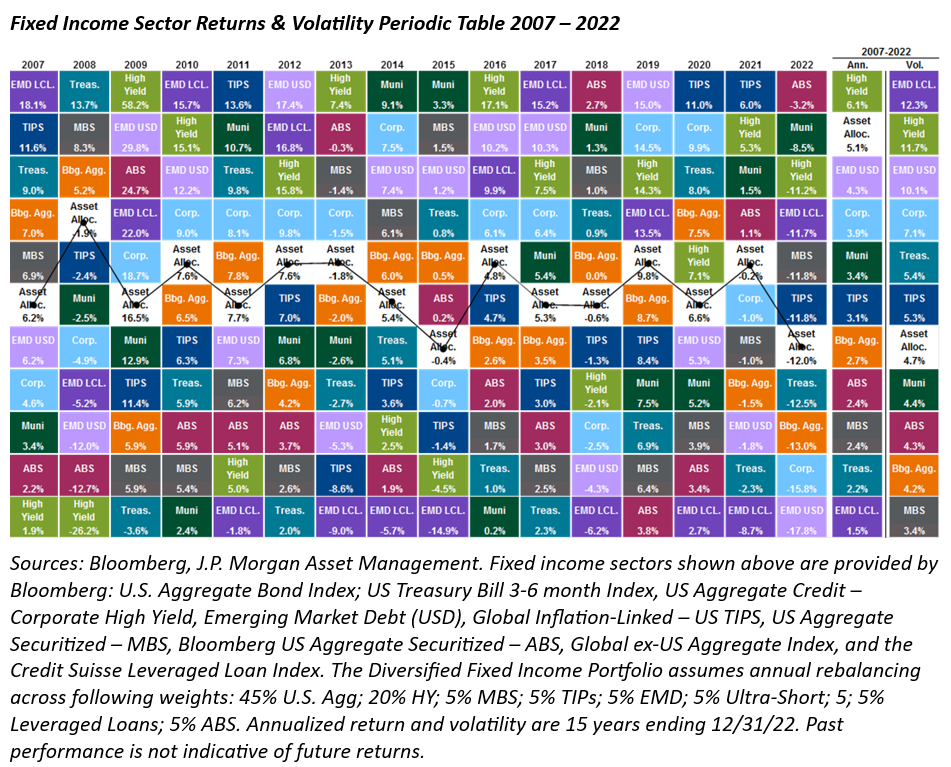
Multi-sector fixed income strategies can deliver significant benefits to investors – including yield enhancement, volatility reduction and diversification of asset-class exposures – because of managers having the freedom to make tactical shifts between fixed-income sub-sectors.
We seem to be in what I can only call an “AI lull.” The initial excitement about ChatGPT, which started in January, has receded. Google searches for ChatGPT peaked in April and are now down significantly, as is customer engagement with ChatGPT.
Stocks are up 18.7% year-to-date, which is good news for portfolios and 401(k)s, but did you know that most of the heavy lifting has been done by a very small number of S&P 500 stocks?
When future economic historians write of our times, the thrust will be that it was a time of transition.
Investment grade bonds from select emerging market sovereigns are solid defensive bets if the US slips into recession and China’s economy worsens, according to Vanguard Asset Services.
US equity investors are in for disappointment as economic growth is set to be weaker than expected this year, according to Morgan Stanley’s staunch bear, Michael Wilson.
For years now, stock traders have been getting so rich betting big companies will get even bigger that they’ve forgotten what a bubble looks like. They’re going to find out thanks to Nvidia Corp.
Advisors can capitalize on the expected transfer of wealth between generations, the expected wave of retirements among older advisors, and referrals from other professionals.
The favorite in Argentina’s presidential election has vowed to eliminate the central bank and dollarize the economy. Which path will the country follow?
A steady stream of news helped drain enthusiasm from the equities markets through most of August, snapping a five-month growth streak at a time of the year known for cool market performance despite the swelter of its dog days.
Chief Diversity Officer Regina Curry and Franklin Templeton Head of Digital Assets Roger Bayston believe creating workplaces with intentional collaborative, inclusive, and debiasing practices can power great development environments.
In an environment of pronounced volatility and less-than-certain equity and bond performance in the last few years, investors are leaning toward more complex strategies such as alternatives.
We believe idiosyncratic credit events may occur over the next 12 months, but systemic bank risk is remote.
Active ETFs have had a really strong year so far in 2023, picking up advisor and investor interest. Even institutional investors have increasingly turned towards specialist, responsive management.
The S&P 500 closed August with a monthly loss of 1.71%, after a gain of 3.22% in July.
In this video, Chuck Carnevale, Co-Founder of FAST Graphs, a.k.a. Mr. Valuation will analyze the upcoming spin-off of Kellogg into two separate companies and discuss whether it is a good investment opportunity.
Adjusted earnings forecasts tend to overshadow reported earnings and add uncertainty to corporate outlooks.
The resilience of US growth, earnings and markets has been the big surprise of 2023. Stephen Dover, Head of Franklin Templeton Institute, opines on the factors at play—and whether they will last.
While the S&P 500 delivered solid performance this summer, we remain cautious in the near term given the Index remains modestly above our year-end target of 4,400.
A slew of recent polls, studies, and surveys confirmed the importance and relevance of ESG investing to younger investors.
Given their overall credit risk versus safer government debt, corporate bonds may not get enough exposure in a retirement portfolio. However, they can serve a purpose as long as investors are aware of their nuances.
In this video, Chuck Carnevale, Co-Founder of FAST Graphs, a.k.a. Mr. Valuation will discuss the compelling investment opportunity in Conagra Brands (CAG).
Top venture firms are betting that rapid advances in artificial intelligence and the public fascination with ChatGPT will help tech startups to transform healthcare after years of Silicon Valley struggling to move the needle in the industry.
Investors looking for extra yield are driving corporate bonds to some of their tightest valuations of the year, pushing money managers including Pacific Investment Management Co. toward mortgage debt that looks much cheaper.
We believe the best way to add value is through relative positioning in sector allocations, individual security selection and along the yield curve, holding duration neutral overall. That approach, however, does not prevent us from having views on interest rates and we think bonds offer good value at current rate levels.