The more strongly people buy into the rhetoric of their political parties, the more difficult it is to be pragmatic about their investments.
Learn to avoid the most common and damaging errors by considering these five key questions before you hit “enter.”
Good managers are drowning the superior performance potential of their best ideas in a sea of bad ones.
There’s a new law of the land taking root in Silicon Valley: the more technology makes us laypeople replaceable, the more the technocrats building it are considered indispensable.
There has been a lot of theorizing about why so many Americans feel worse off economically. True, real wages are now finally increasing, the labor market is great, the stock market is up, and consumers are spending.
The ranks of Wall Street strategists playing down concerns around a bubble in US technology megacap stocks are growing.
This week, the US bond market faces its own Super Tuesday of sorts: the release of fresh inflation data investors will use to predict when the Federal Reserve will start cutting interest rates.
Forget the artificial-intelligence frenzy — the most-exciting trade on Wall Street right now might just be betting on boring.
Household wealth in the US increased to a record last year as investors reaped the benefits of a surging stock market and higher home values.
Australia’s QIC Ltd. expects the Federal Reserve to keep interest rates elevated through the year — or even raise them further — as the US economy powers ahead, a contrarian call that’s increasingly gaining traction.
JPMorgan Chase & Co. will continue hiring in China for its asset management business as it targets growth in the world’s second-largest economy.
The US jobless rate climbed to a two-year high in February even as hiring remained healthy, pointing to a cooler yet resilient labor market.
It’s a year since the failures of Silicon Valley Bank and Signature Bank – and the renewed cries of “never again.” Almost instantly began inquiries to work out who to blame, as well as hurried efforts to tighten banking rules, raise capital demands and enact laws to make executives pay.
The pandemic years transformed wealth in the US, sowing the seeds of a new form of inequality.
Risks are building for bond traders who’ve spent the last couple of weeks adding to bets on Federal Reserve interest-rate cuts this year.
Nvidia Corp’s scorching rally has added more than $1 trillion in value this year alone, sending it well above the level where it last split its shares. Some see the AI giant well placed to do so again.
The largest weekly outflow on record for technology stock funds hasn’t dimmed the broader euphoria that is driving US equities to “ferocious” gains, according to Bank of America Corp. strategists.
The last time Cathie Wood and ARK Investment Management found themselves on the opposite side of a call made by Grizzly Research, they lost tens of millions of dollars. It’s not stopping them from facing down the activist short seller once again.
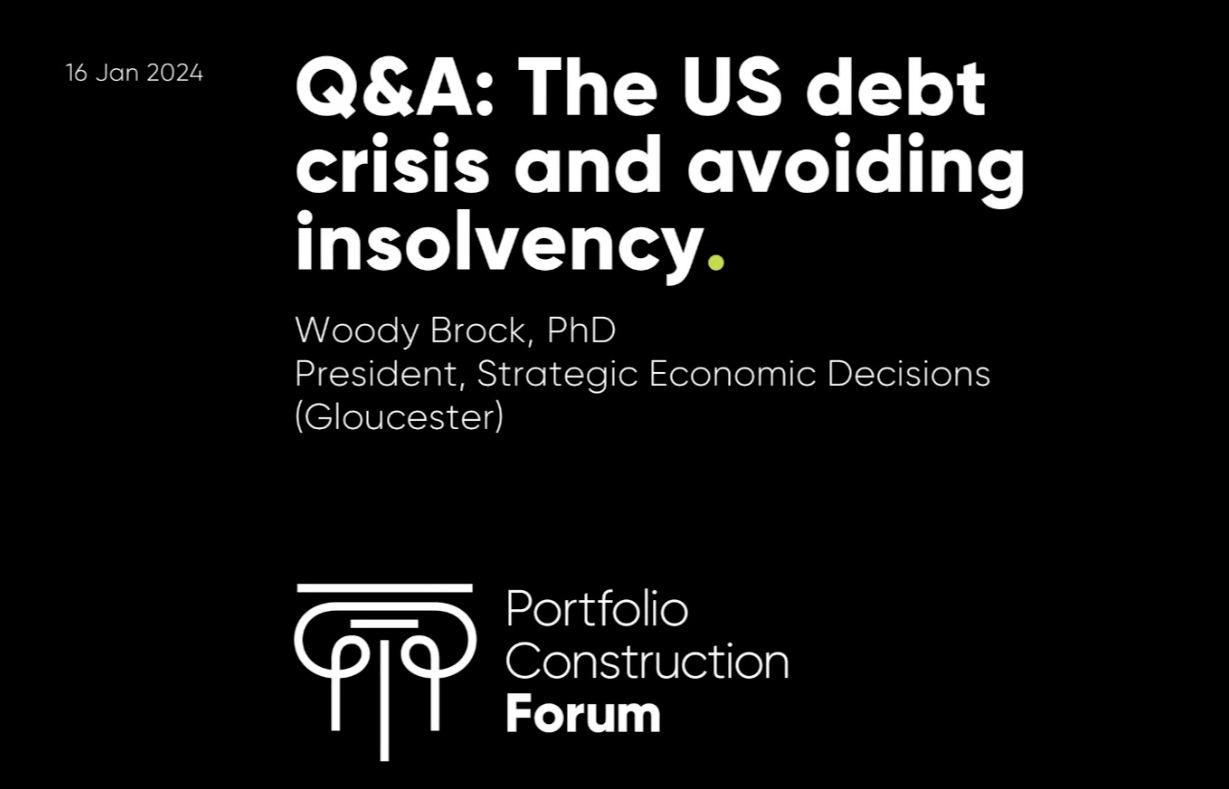
This is an interview by Robert Huebscher of Woody Brock. They discuss what it means for a nation to "go broke," the tactics a country can use to avoid insolvency, the relevance of the gold standard, and a key finding about sovereign deleveraging and its impact on its standard of living.
Fisker Inc.’s warning that it may run out of cash within 12 months absent fresh equity or debt raises a new and worrying question for car owners: What happens if the maker of your electric vehicle goes bust?
The Great Resignation is in the rear-view mirror, and the labor market is showing hints of swinging back in the complete opposite direction.
All the fearmongering in Washington over the $1.5 trillion federal budget deficit hides a truth few politicians would admit — that hefty headline number you hear so much about is an unreliable measure of US fiscal health.
Concerns that Nvidia Corp.’s stratospheric gains might be unsustainable have spread to ESG investment managers who beat the market last year by betting big on the stock.
Federal Reserve Chair Jerome Powell reiterated to lawmakers that the US central bank is in no rush to cut interest rates until policymakers are convinced they have won their battle over inflation.
Concerns about Alphabet Inc.’s artificial intelligence missteps have weighed heavily on the Google-parent’s stock, but a Boston Partners fund manager believes this has created a golden opportunity for investors.
Bitcoin price swings are becoming more intense following the digital asset’s run to a record high, and a key question now is how investors in US exchange-traded funds for the cryptocurrency will react.
I cannot get away from the feeling of guilt that I am sacrificing time with my children to run this business.
A groundbreaking study has shifted the spotlight from data and numbers to a softer skill: emotional intelligence (EQ).
What happens if we ever get to a zero gender pay gap? If we do hit that milestone, can we declare victory?
After Covid-19 arrived in 2020, a lot of wealthy people fled locked-down California. Elon Musk, the world’s second-richest human, moved to Texas, griping that the Golden State had become “a little complacent, a little entitled.”
Investing in sports franchises can be a good portfolio diversifier and generate attractive returns.
Ever since the Federal Reserve began its policy-tightening campaign, Jerome Powell has been happy to ignore one form of inflation: Rising asset prices.
Traders are eyeing Apple Inc. after its stock slid below a critical psychological threshold on Tuesday as shares entered a technical correction for the first time since August this month.
The Fed is talking about cutting rates and reducing QT. The only rationale for it in such an environment is a concern with liquidity problems.
Treasuries held modest gains ahead of remarks from Federal Reserve Chair Jerome Powell and key labor-market data, which are set to test bond investors’ conviction about interest-rate cuts in the US.
Breaking away from wirehouses has never been easy. But the leap of faith to independence demands a lot more work for advisors than it did even a few years ago.
A reduction in situational awareness occurs in a profession when everyone does the same thing and gets similar results.
The SEC's dysfunctional process doesn’t benefit or protect clients.
A curious thing has happened in the US market discourse: In the absence of major concerns about jobs and growth, commentators have started to worry that the economy is too good to keep inflation contained.
America’s public pension funds have gotten themselves into a bind. They’re responsible for paying trillions of dollars in future retirement benefits to teachers, firefighters, police, and other state and local employees, but their assets fall far short of what’s needed to fulfill those promises.
Advisors love to whine about marketing. I will solve your three biggest marketing problems in two paragraphs or less.
A new form of digital money is going viral, capturing tens of millions of users, billions of transactions and the attention of global central banks. No, not Bitcoin, which is trading at around $68,000 and closing in on a fresh all-time high.
Despite what headlines say, expensive M&A isn’t the only way to grow a firm.
The sharp rally in US stocks this year has left strategists at JPMorgan Chase & Co. and Goldman Sachs Group Inc. divided about whether a market bubble is forming.
US households are now paying roughly as much interest on other kinds of debt, from credit cards to student loans, as they are on their mortgages, according to the latest numbers from the Bureau of Economic Analysis.
Crypto exuberance is hitting overdrive thanks to the game-changing launch of Bitcoin ETFs — with seven issuers now pushing US regulators to greenlight funds tracking Ether, the world’s second-largest cryptocurrency.
How much of your income should you spend on rent or a house payment?
Why are we prone to irrational behavior as investors? Why do we too often sell when we should buy and buy when we should sell? Market history is replete with examples of this behavioral dynamic.
This lessening of government involvement, and the change in the corporate culture, together with a new or reinterpreted economic philosophy all combined to produce an unraveling of the United States that had for some time been incredibly materially productive for the benefit of all.
There’s been a lot of excitement and reporting about a new ETF: the Alpha Architect 1-3 Month Box ETF (ticker BOXX), designed to give investors the return of short-term US Treasury Bills with the tax character of long-term capital gains.