Optimists were still to be found in the world of US exchange-traded funds, where more than 400 new ETFs were launched despite a harsh bear market. Funds took in more than half a trillion dollars as more investors learned to embrace their easier-to-trade and tax-friendly structure.
There's only one thing you really need to know about investing in 2023, and it's both stunningly obvious and invariably forgotten: There's no free lunch.
One of the biggest hits in the $6.6 trillion exchange-traded fund industry last year has a worthy opponent in 2023: the bond market.
Economist Campbell Harvey has had a winning track record since he showed in his dissertation at the University of Chicago decades ago that the shape of the bond yield curve was linked to the path of US economic activity.
After the biggest loss for 60/40 portfolios since the global financial crisis, better days may lie ahead for the trillion-dollar complex of balanced investment strategies.
Investors are no longer turning a blind eye to risks facing Apple Inc., an about-face that has taken the iPhone maker’s market value below $2 trillion and threatens more pain for the stock in the months ahead.
Even after a year in which the vast majority of the wealthiest Americans lost a chunk of their fortunes — and in some cases, lost big — in at least one way, they’re still coming out ahead.
A long-watched indicator of which way the stock market is likely to move next has lost predictive power lately, confounding investors who have come to rely on the signal embedded in options trades.
The US stock market will bottom by the middle of 2023 as the Federal Reserve tamps down inflation without causing anything worse than a “mild” economic recession, according to Byron Wien’s annual list of surprises.
Chips shares took a beating last year.
Perhaps the most famous trading experiment ever conducted was when commodities investor Richard Dennis bet his partner William Eckhardt in 1983 that he could train a group of amateurs – dubbed “the Turtles” -- to be successful futures traders.
Inflation was the bogeyman of 2022.
The economy faces dual threats: the inflation we can see and a recession we dread. When will we know whether we have won or lost either fight?
Let's examine the three paths the Fed might take in 2023 and what they mean for stock prices.
Here are my five golden rules of marketing for advisors from Warren Buffett.
As we talk with and counsel our clients, they need to have the right emotional attitude about money and investing. And most of those attitudes center on concepts that are central to both investing and life in general.
In preparation for the new year, let’s look at the importance of celebrating what’s been done and learning from mistakes made.
I’ve learned a lot through my work consulting with advisors. Here are some marketing insights to help you plan for 2023.
US auto sales likely rose in December and will rebound in the new year as a recovery in vehicle production will more than offset the effects of inflation and rising interest rates.
International Monetary Fund Managing Director Kristalina Georgieva warned that the global economy faces “a tough year, tougher than the year we leave behind.”
The collapse of FTX and the charges against Sam Bankman-Fried have brought many renewed calls for crypto regulation, from both commentators and legislators.
While remote work trends have persisted, recent data released by the US Census Bureau showed that more people were going back to the office in 2022 than in 2021 — yet the great southern migration hasn't slowed.
In the first few days of 2023, at least 500 US workers will likely have already paid their Social Security taxes for the year.
US Treasuries headed for the strongest start to a year in more than two decades as investors scooped up government debt on wagers the Federal Reserve will further slow its pace of rate hikes as inflation cools.
In some ways, the 2023 economic outlook for the US is locked in. The Federal Reserve’s goal is to push the rate of inflation back down to 2% over the next few years.
I’ve not written much on New Year’s resolutions because “white knuckling” any meaningful behavioral change is rarely successful.
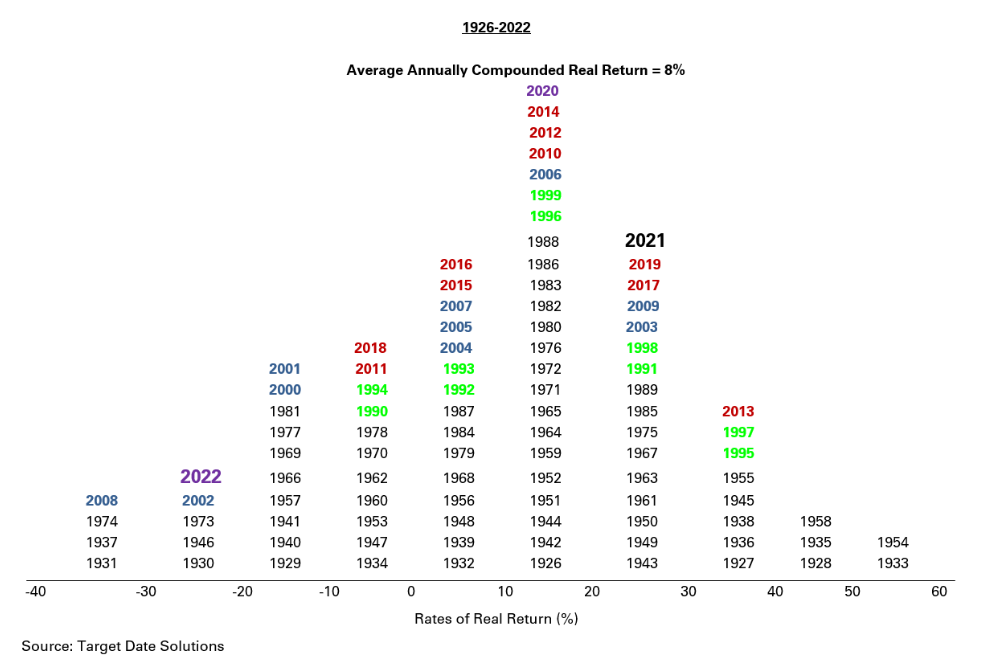
This past year was disappointing for stock and bond investors. The real 25% loss in stocks was in the bottom decile and the real 20.3% bond loss is the worst in the past 97 years. Greater losses lie ahead.
An OCIO can deliver vastly expanded investment capabilities while seamlessly alleviating the burden of investment infrastructure, operations back-office, and administrative tasks, freeing up advisors’ time for vital client-facing and relationship-building activities.
Relative to the accumulation phase, strategies that mitigate the unique risks faced by retirees in decumulation are less understood and researched. By identifying and illustrating those risks, planners can better prepare clients for retirement.
Billionaire philanthropist Chuck Feeney is credited with saying, “I want the last check I write to bounce.” While that is ideal, it’s unrealistic. Or is it?
Contrary to what financial theory predicts, new research from Europe shows that the elderly accumulate assets later in life than expected, likely because they want to leave bequests, are receiving pensions, or are reluctant to part with assets such as their homes.
I’m looking over my previous “trends” article, published at this time a year ago, and some of my ”fearless predictions” were outlandish then but now seem ordinary. That means I did something right.
The health of borrowers is the key concern for all of finance in the coming year.
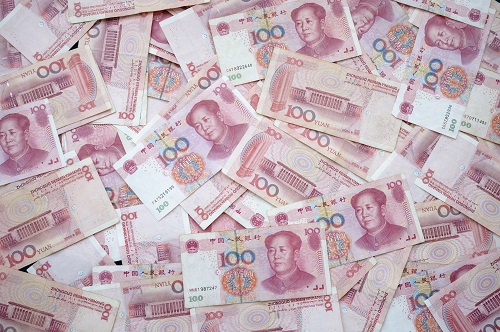
Russia’s Finance Ministry doubled the amount of Chinese yuan and gold it can hold in the national wealth fund with much of its savings frozen by international sanctions over the invasion of Ukraine.
As 2022 draws to a close, it’s natural to think about what to expect from 2023. I’m primarily interested in technology.
The Battery Belt is taking shape, and it’s creating a new economic development model where a college degree won’t be the ultimate qualification for jobs.
Goldman Sachs Group Inc. is working on a fresh round of job cuts that will be unveiled in a matter of weeks, Chief Executive Officer David Solomon said in his traditional year-end message to staff.
The boom in stock market options shows no sign of let up, as the number of traded US contracts surpassed the 10-billion mark in 2022 for the first time ever, playing a role in the biggest equity rout in over a decade.
Tesla Inc. is expected to announce record quarterly deliveries in early January but that may not be enough to satisfy investors as the electric-vehicle leader grapples with inflation, rising interest rates, crimped production in China and concerns about softening demand.
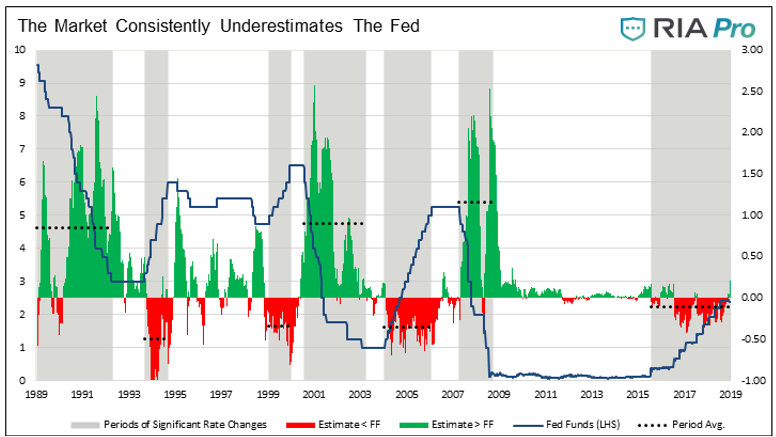
Back in March, “the Fed is behind the curve” was the prevailing narrative of too little, too late when it came to containing inflation.
Wealthy retirees seem to have scored big in Congress’ sweeping year-end spending package.
More tech tantrums. China’s Covid surge. And above all, no central banks riding to the rescue if things go wrong.
Stock market bulls have a “narrow path” to victory next year as long as inflation comes down faster than expected, according to Ed Yardeni, founder of his namesake research firm.
VanEck is liquidating two Russia exchange-traded funds nearly a year into Vladimir Putin’s invasion of Ukraine.
Cathie Wood’s worst-ever year wasn’t even over before the clouds started to gather for 2023.
Savvy investors seized tightening credit markets this year to reshape the distressed investing playing field just as more companies look destined for default in 2023.
The US Treasury Department signaled some imported cars will qualify for electric-vehicle tax credits in the Inflation Reduction Act, a move that could assuage Asian and European allies’ concerns about the sweeping climate legislation.
The era of easy returns came to a screeching halt in 2022.
US companies had a lot to overcome in the latter half of 2022 with rising interest rates, more budget-conscious consumers and a sagging stock market.
They don’t make technology predictions like they used to.