The stock market is looking past the sharp interest rate hikes priced by Europe’s bond market, risking losses for investors backing the wrong outcome.
Investors are avoiding beaten-down software stocks, warning that the brutal selloff triggered by fears of displacement by artificial intelligence is likely only just beginning.
Global fund managers expect the surge in nuclear stocks to continue, driven by energy demands that extend beyond the needs of artificial intelligence and an improving regulatory outlook worldwide.
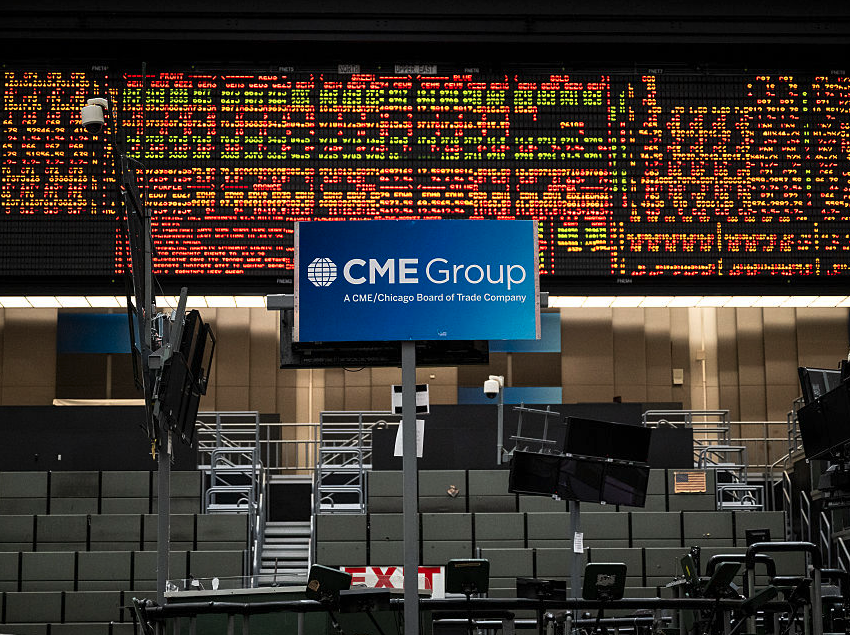
The Chicago Mercantile Exchange (CME), a crucial hub for managing global risk, experienced a nine-hour trading halt due to a data center fault on Friday, disrupting markets from S&P 500 futures to crude oil. This major outage underscores the CME's integral role in global market machinery, where its platforms handle volumes exceeding 26 million derivatives contracts daily.
European stocks were set to wrap up September with the best performance since 2019, as optimism around resilient US economic growth and lower interest rates lifted risk appetite.
Global equities hit a record high for the first time since February, as signs of a resilient US economy overshadowed uncertainty around trade negotiations.
Wall Street was set for a higher open on Tuesday, though a renewed rise in Treasury yields damped the sentiment boost offered earlier by the prospect of gradually imposed US trade tariffs.
European stocks fell in the penultimate trading session of 2024, a year of modest gains for the region that contrasted with the bullish Wall Street rally.
Morgan Stanley strategist Michael Wilson, well known for his bearish views on US equities in recent years, has an outright bullish outlook for 2025.
A stronger-than-expected pivot to stimulus in the world’s two biggest economies has brightened the market outlook. For economists, the jury is still out.
Tax policies touted in the US presidential election could have a big impact on S&P 500 earnings, according to Goldman Sachs Inc. strategists.
The recent out-performance of US small-caps is facing technical resistance and lacks fundamental drivers to carry on for a longer period of time, according to Morgan Stanley’s chief US equity strategist Mike Wilson.
The unexpected downgrade of US government debt sent shockwaves across the economic and political landscapes. In financial markets, the move was met with what amounts to a shrug.