A confluence of market factors make navigating the bond market an even more complex task than it already is for advisors. DoubleLine CEO/CIO Jeffrey Gundlach, more widely known in the capital markets as the reigning "Bond King," spoke at a Total Return Webcast on Tuesday, September 9 to provide his thoughts on the current state of the markets and economy, providing myriad charts to support his points.
Below are some key data points Gundlach made, confirming the case for using an active strategy to combat today's uncertainty.
Steeping Curve, Gold & Payrolls
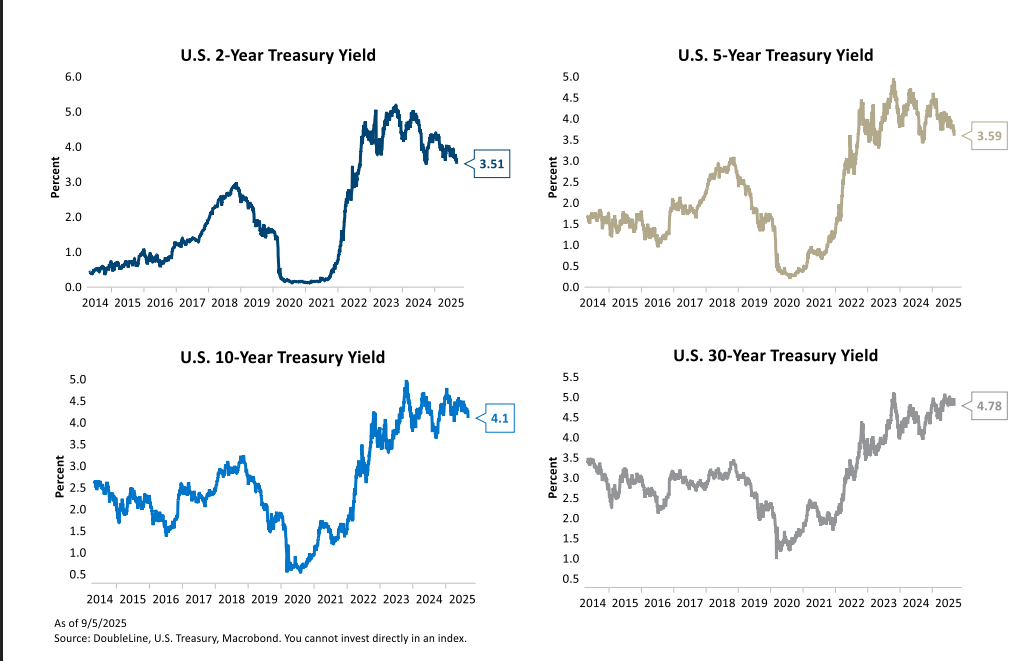
While tariff contagion still remains a wild card concern, the markets are also focused on interest rates. The re os an expectation of rate cuts to come in tandem with receding economic growth. So the yield curve has been steepening, as shown by the behavior of benchmark Treasury yields lately.

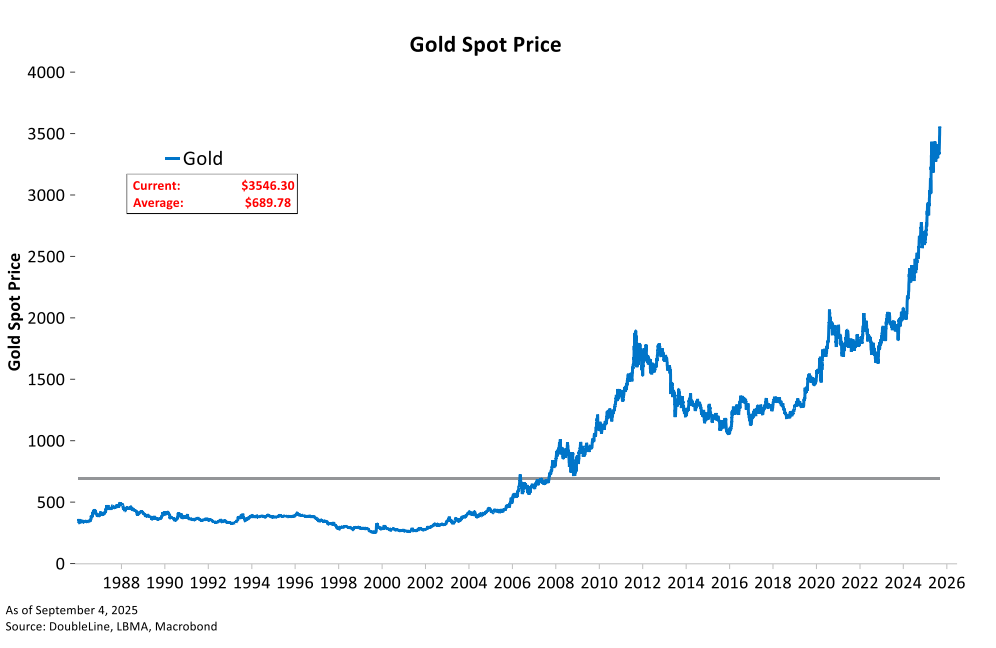
Another indicator of note that's been on Gundlach's radar is rising gold prices. The precious metal recently broke the $3,600 per ounce mark. And it appears poised to shoot past the $3,700 level. The way gold has been behaving lately, it's only a matter of time until the precious metal sees "another breakout to the upside, which has just transpired."
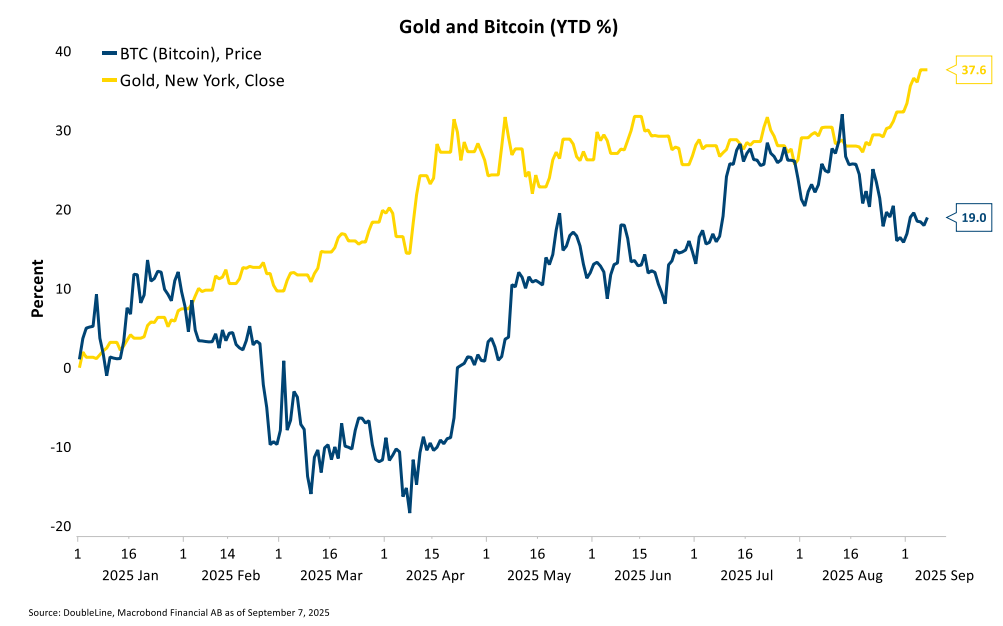
With that, Gundlach also brought up bitcoin. The cryptocurrency is often seen as gold's digital counterpart and an alternate store of value. Year to date, physical gold is outpacing bitcoin despite the latter's rally.
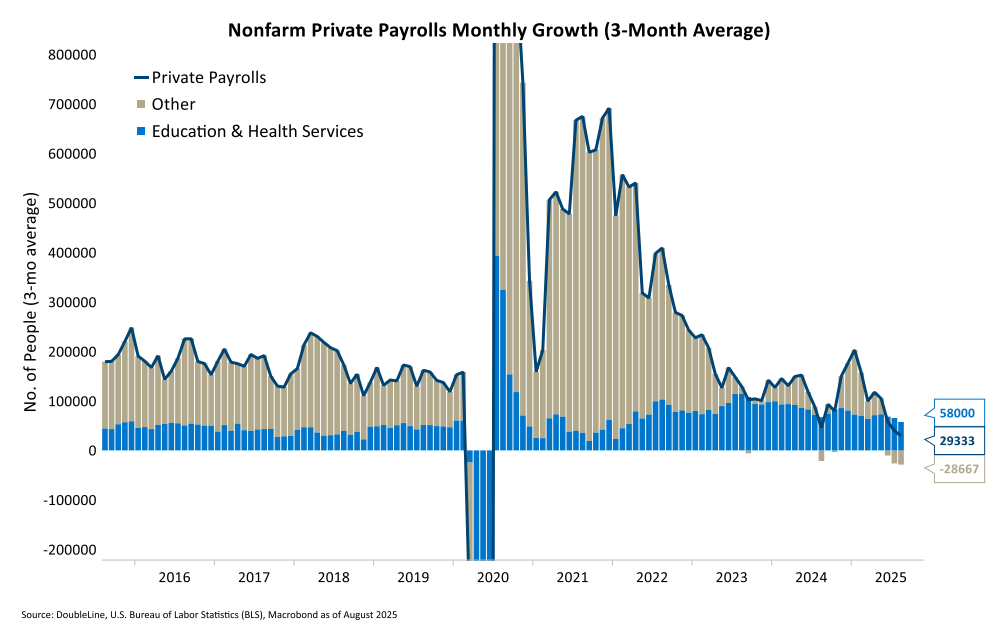
Another notable aspect of the economy is the labor market. There, Gundlach is noticing the "participation of the baby boomers is in steep decline and will be for years to come." In turn, this labor shortage could also affect long-term economic growth. In the meantime, healthcare and education are driving private payrolls growth. But as Gundlach mentioned, these positions "are significantly affected by government activity."
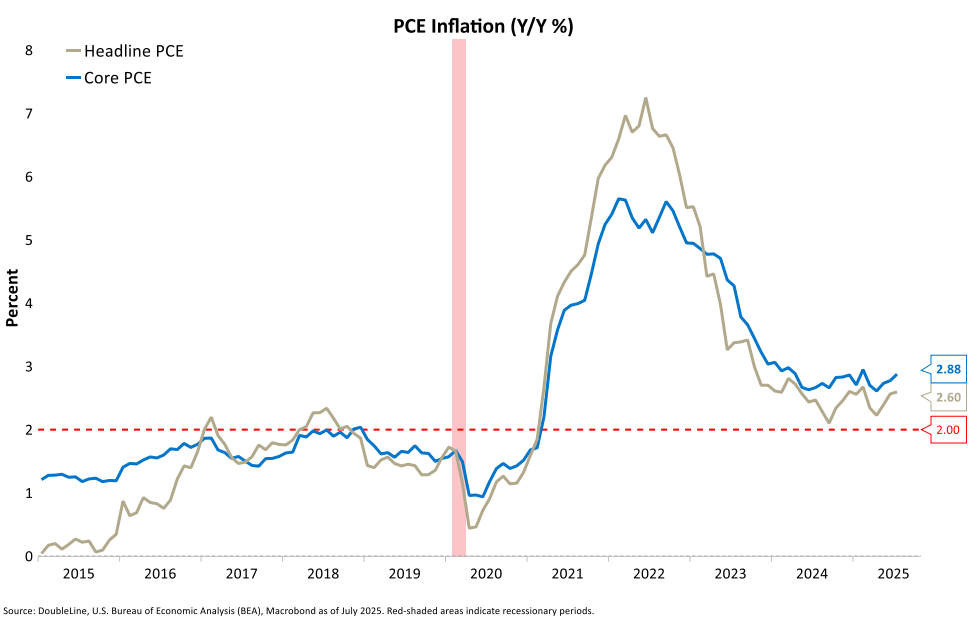
The CME Group's FedWatch is showing a 90%-plus chance of a rate cut happening this month. So it's widely expected the central bank will be easing monetary policy. As far as the Fed reaching its 2% inflation target rate, it could take more time than initially anticipated.
"We don't think the inflation rate will be dropping to that 2 percent level the Fed wants to see anytime soon," Gundlach noted.
International Exposure & U.S. Exposure
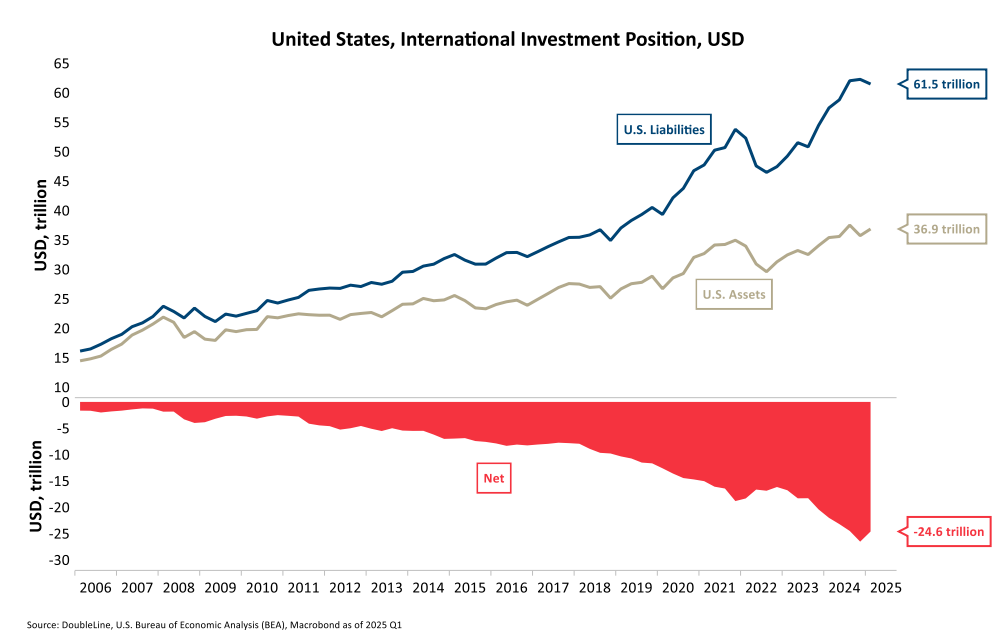
While the economy is showing signs of softening, this only fans the aforementioned flames of uncertainty. As such, investors are de-risking from U.S. assets and heading into opportunities overseas.
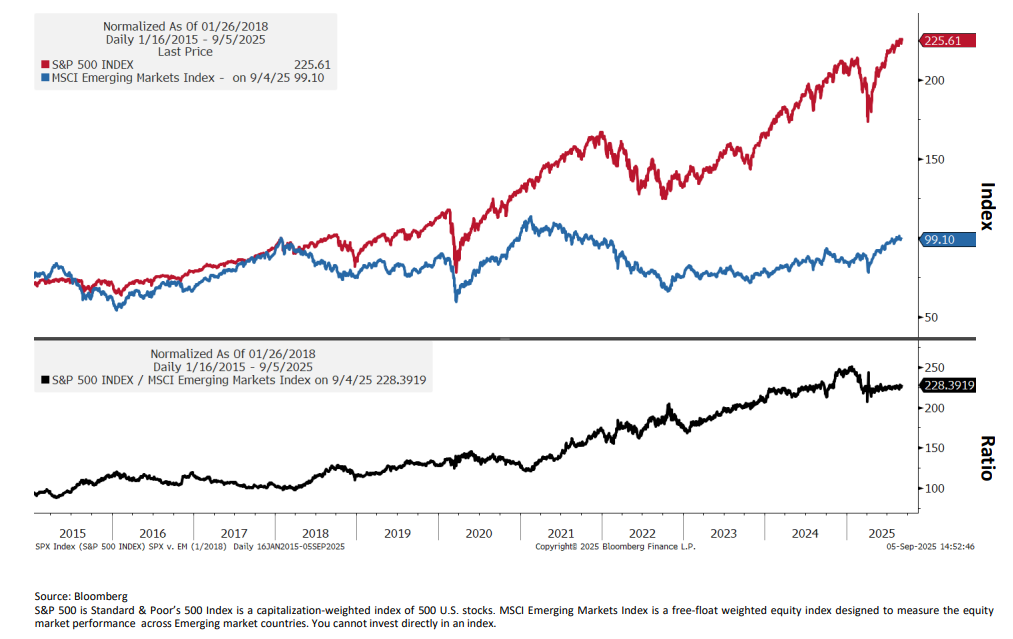
"People are suspicious of what the future might bring," Gundlach said. He noted that if investors "want to be a survivor," they must position their portfolios in a way that can flex with the ebbs and flows of the changing yield curve. As Gundlach mentioned, one of the ways is to get more international exposure. He recommended foreign currency exposure as well as emerging market (EM) bonds. Gundlach noted that EM, in particular, has "stopped underperforming" as opposed to outperforming.
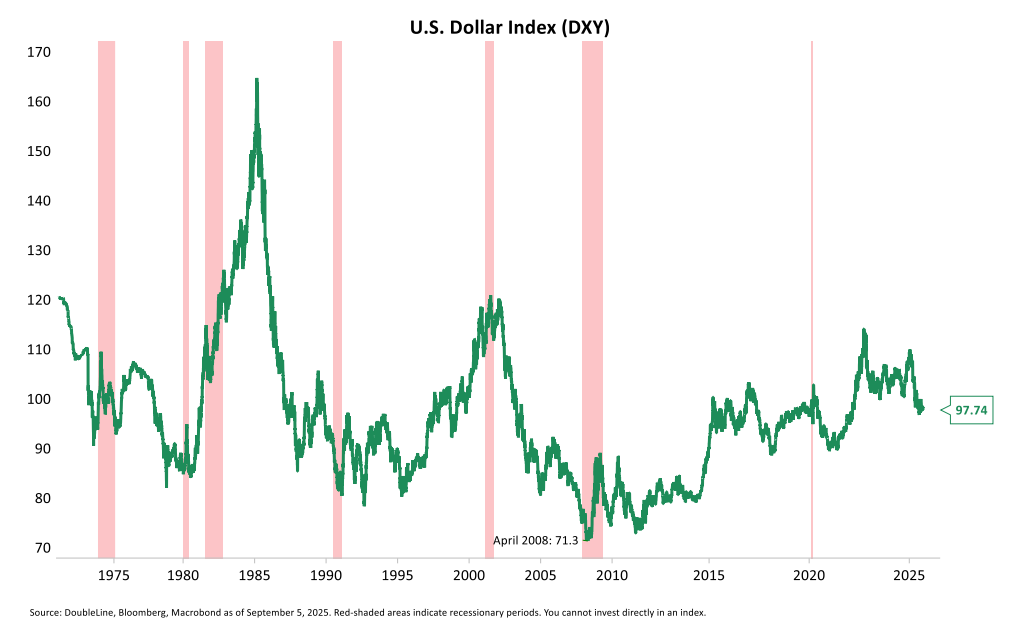
"I do think that non-US investing makes a lot of sense," he confirmed. He added that the weakening dollar has much to do with the outflow from U.S. assets and into opportunities overseas.
"When the dollar is going up, the U.S. outperforms," Gundlach added. He punctuated the idea of investing in international equities where investors can get "a double-barreled win" with "nominal index outperformance" and "currency translation outperformance."
"I would draw a trendline between that low in 2011 to the low in [2022. And] we're quite close to that trendline," he said of the dollar index chart. "I think the dollar will fall in earnest, accelerate to the downside if and when (I really think it's when) that trendline is broken."
Afterward, the webinar, there was a Q&A session. Gundlach was asked the Fed's independence and President Trump's use of the bully pulpit to influence rates.
"The likelihood of the Fed losing its dependence is higher now than anytime during the course of my career," Gundlach said. That only adds to the uncertainty in the current market environment.
Timing Auspicious for Active
Based on Gundlach's views on the current state of the economy, there are a number of challenges the market is presenting. With that, it's an opportune time to get exposure to active management strategies.
As mentioned, that's especially the case when it comes to navigating a murky bond market. Benefits of an active strategy include:
- Yield opportunities: Active managers can handpick debt issues to attain higher yields.
- Active risk management: Compared to a passive fund, active fund managers can allow for dynamic de-risking. They can do so by reducing holdings in certain bonds that exhibit high volatility or are selling off due to market or economic factors.
- Identifying value: The bond market is vast and a universe of opportunities exist. The flexibility of an active management strategy allows it to identify bonds trading at a discount relative to their inherent value. On the other hand, a passive fund tracking an index is tethered to its constituents.
DoubleLine can leverage the aforementioned benefits of an active strategy through its team. This team has a deep level of experience in fixed income. As mentioned in one of its fund's information sheets, "DoubeLine's seasoned investment professionals have decades of experience investing in global fixed income through many market cycles and various interest-rate [environments. They] have been recognized as leaders in the space."
A fund highlighted during the webcast was the DoubleLine Total Return Bond Fund (DBLTX). But there are a number of funds, including ETFs. that investors can consider in the current market environment to suit their portfolios.
Prepare your bond portfolio for changing market conditions. Register today for the Fixed Income Symposium on Sept. 18, 2025, 11AM ET / 8AM PT.
Read more commentaries by VettaFi