VettaFi recaps key takeaways from energy infrastructure MLPs and corporations third-quarter 2025 earnings calls.
Solana and Ethereum are challenging Bitcoin's dominance among institutional investors. CoinShares' latest survey reveals fund managers are increasingly choosing these alternatives for their growth potential.
First and perhaps most importantly, model portfolios aren’t chasing clients away. In fact, a slew of studies and surveys confirm clients are more than fine with model portfolios. That’s because above investment performance, they prize advisors’ communication skills, trustworthiness, and other “soft skills.”
A recent poll of financial advisors confirms that interest in the “nuclear renaissance” investment case is driven by several distinct tailwinds. When asked what they find most interesting about the sector, the responses revealed enthusiasm for new technology, built upon an appreciation for the fundamental benefits of nuclear power.
When it comes to inflows, it seems like ETFs are content with beating themselves. After a record 2024 that saw inflows amass just under $1.14 trillion, ETFs did it again by edging past that level today. And they’re not done. State Street Investment Management is projecting total inflows could end the year at $1.4 trillion.
Actively managed ETFs, particularly those of the fixed income variety, are among the fastest-growing ETF segments today. That growth has been facilitated in part by advisors moving away from higher-fee mutual funds and issuers converting popular mutual funds to the ETF wrapper, among other factors.
After implementing the first interest rate cut of the year, the prospect of further easing by the U.S. Federal Reserve could make fixed income investors nervous.
MPLX (MPLX) has reported third-quarter 2025 financial results that aligned with market expectations. MPLX has recently announced positive updates for investors, including a 12.5% increase in its unitholder distribution and a strategic new opportunity to support data centers in Texas.
After the first rate cut of 2025 and the prospect of more rate cuts to come, the capital markets are now wondering at what pace the U.S. Federal Reserve will institute them. For fixed income investors looking for options that balance credit quality and yield, municipal bonds should be considered.
For many crypto investors, it’s fine to focus on Bitcoin and Ethereum. After all, those two assets combine for nearly $2.7 trillion of the crypto universe’s total market capitalization of $3.75 trillion. “Dominant” doesn’t begin to underscore the status of bitcoin and ether.
U.S. tech equities driven by the artificial intelligence (AI) theme have been a prime catalyst for market gains this year. Have valuations exceeded their underlying fundamentals? If so, one potential avenue to diversify tech exposure is the Invesco China Technology ETF (CQQQ).
The all-ETF portfolio is becoming a reality, as product offerings have evolved into a comprehensive tool kit for total portfolio construction.
It’s been a good year for international equity ETFs. As a category, broad exposure funds tapping into both developed and emerging market equities have delivered outsized gains relative to U.S. markets this year, as well as much sought portfolio diversification.
Wall Street excels at creating catch phrases. The latest one is the “debasement trade.” JP Morgan analysts coined the term earlier this year. Thanks to macroeconomic and geopolitical factors such as lower interest rates, rising fiscal deficits, trade policies, and global geopolitical tensions, concern is rising about the debasement or devaluation of fiat currency.
When it comes to taking financial advice, humans still prefer their own kind. That's crucial in helping to meet an advisor shortage.
Advisors may sometimes feel like they’re venturing out to solve the world’s personal financial problems alone. They don’t have to feel that way when they’re recommending active funds with the requisite expertise and experience behind them. Vanguard active ETFs can offer that.
Every month, TMX VettaFi publishes hundreds of articles across our ETF-focused websites. Reviewing the pieces that capture our readers’ attention provides a clear picture of prevailing advisor and investor sentiment. In October, five articles stood out. They primarily focus on the surging themes of AI, international equities, and alternatives.
Advisors are using exchange traded funds to expand beyond public markets to private markets to modernize 60/40 portfolios.
Investors who watched the robotics space peak back in 2021 may see the current rally with apprehension. Back then, the narrative of a China-driven logistics and e-commerce boom sent robotics stocks to dizzying heights. What followed was China’s economy first slowing down, and then a pandemic-fueled demand shock. The sector fell hard.
October saw some strong data for bond ETFs, according to recent research, suggesting opportunities may abound in the category.
Rising electricity demand continues to be a key trend for investors to watch, with the latest news revolving around Google (GOOG). GOOG, a key AI hyperscaler, announced a collaboration with NextEra Energy (NEE) for the restart of the Duane Arnold nuclear plant earlier this week.
Five of the so-called “Magnificent Seven” firms reported earnings this week in a major milestone for 2025’s economic narrative. Apple (AAPL), Amazon (AMZN), Microsoft (MSFT), Google (GOOGL), and Meta (META) all shared their earnings, offering some important insights into key tech firms amid the AI revolution.
Global electricity demand is accelerating as AI data centers, electrification, and economic growth drive an unprecedented need for reliable energy. Nuclear power is uniquely positioned to meet this challenge, delivering clean, zero-emission baseload electricity with the highest capacity factor of any major energy source.
Rather than toil over the construction of an ideal fixed income portfolio for a client, advisors can simply apply a template primed for success using Vanguard’s model portfolios. On that note, Vanguard just introduced two new dynamic asset allocation fixed income model portfolios that can suit various investor profiles.
As widely expected, the U.S. Federal Reserve cut the federal funds rate by 25 basis points for a second time this year. This gives fixed income investors an opportunity to reposition their portfolios with intermediate bonds or reconsider active exposure if they don’t have it already.
Markets move fast, and in the ETF corner of the world, sometimes it feels like it’s practically impossible to keep up. Product development and proliferation have been so intense in recent months. New tickers are coming at us faster than ever.
Evan Harp sat down Axon’s Brady Lochte to talk about his practice, the Exchange conference, and the challenges facing advisors and their clients today.
The robotics space is entering earnings season with positive momentum, as solid performance in Q3 has continued into October. This note recaps the key themes and performance drivers from the quarter for investors, while previewing Q3 results.
Strong credit ratings remain a key feature for midstream companies, providing significant cost savings on debt. The subsector is largely dominated by investment-grade players, which also offer attractive dividend yields. Learn more below about the importance of an investment-grade rating and why midstream indexes are skewed towards these creditworthy names.
Artificial intelligence (AI) continues to be a prime catalyst for large-cap ETFs tilted toward growth. Companies integral to meeting the hardware demands of AI infrastructure buildout may be Broadcom, Palantir, and Nvidia. All three are core holdings currently in the VictoryShares Free Cash Flow Growth ETF (GFLW).
Recently, I attended the North American Blockchain Summit 2025, a digital asset conference in Dallas. Last year’s agenda leaned heavily on legislation and policy.
Kinder Morgan (KMI) announced its third-quarter results this week. It reported in-line results as well as a robust outlook for growth. Beyond earnings results, company commentary focused on its so-called shadow backlog and the recently announced binding open season with Phillips 66 (PSX) for the Western Gateway pipeline.
Nuclear-related stocks have seen significant positive momentum this year. In addition to policy tailwinds, investors are recognizing the critical need for reliable, carbon-free power generation for years to come. Nuclear represents a compelling opportunity in that vein.
Friday, October 10 was a forgettable day all the way around for risk assets. Those included cryptocurrency and crypto-related equities. The CoinShares Valkyrie Bitcoin Miners ETF (WGMI) wasn’t immune to the broader market pullback.
JPMAM has converted a major muni bond fund to the ETF wrapper, as muni bond ETF JMUB arrives on the stage.
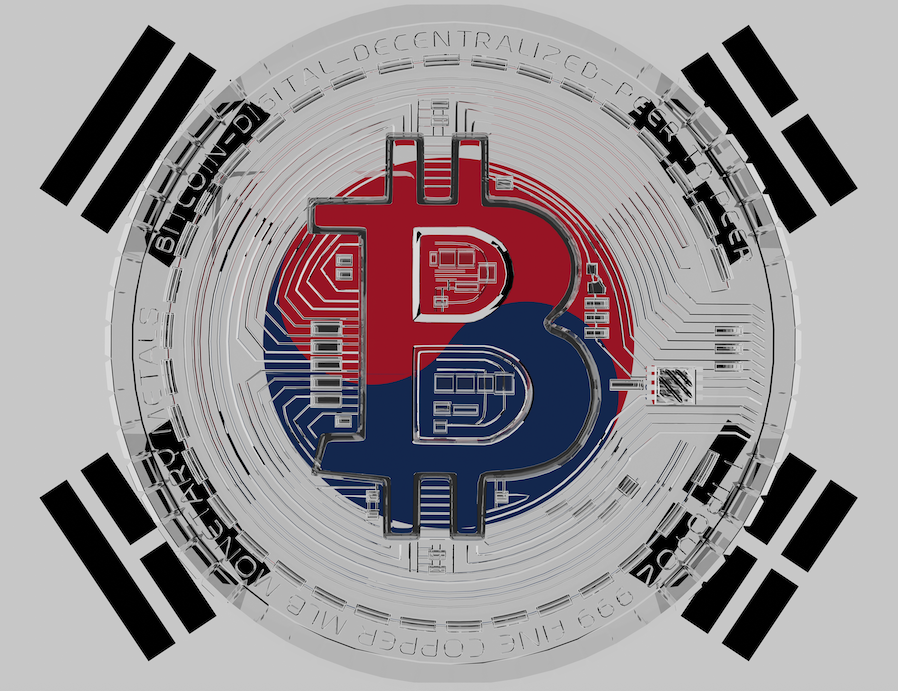
A weakening greenback is being compounded by global de-dollarization and lower interest rates, creating an environment for emerging markets (EM) ETFs to prosper. In turn, more investors are flocking into EM equities, but for more targeted exposure, South Korea could present an intriguing alternative.
For those new to the practice, it’s relatively straightforward. Nearly every investor and advisor has an investment that is on track for a loss this year. Not all investments hit, after all. Selling at a loss helps tamp down a portfolio’s overall gains for the record books, reducing the end-of-year tax bill, “harvesting” losses to offset gains.
As noted by TMX VettaFi Head of Research Todd Rosenbluth, fixed income ETFs are having a banner year amid record inflows. The Vanguard Total Bond Market ETF (BND) and Vanguard Total International Bond ETF (BNDX) were two of the top funds responsible for the $325 billion in net inflows (as of October 15).
The U.S. has become the world’s top producer of natural gas liquids (NGLs) thanks to abundant supplies. Rising worldwide demand for plastics and clean fuels has sent U.S. NGL exports soaring, establishing a compelling long-term growth story for midstream players.
Although specific themes come in and out of favor, thematic investing is here to stay, as investors seek diversified exposure to hot new trends and industry disruption.
Northern Trust Asset Management provided justification for the mounting interest in munis in the fixed income space.
They may have never encountered unidentified flying objects, but something savvy investors can identify with is outperformance. And the Procure Space ETF (UFO) has been doing just that this year: outperforming the S&P 500 with an over 60% gain.
As investor adoption of crypto, retail and institutional, continues to grow exponentially, discussions are typically centered around bitcoin and ethereum. The former is lauded for its store of value while the latter carries more functional utility when taking into account its role in the blockchain network.
While many investors entered 2025 heavily exposed to tech already, that hasn’t stopped markets from identifying other opportunities created by the need for AI computing power, like data centers.
For most investors, energy security probably tends to be an afterthought until an event drives a jump in prices at the pump, as seen with Russia’s invasion of Ukraine. However, energy security is about much more than geopolitics, especially as demand for electricity is poised for growth.
Active fixed income ETFs can provide the refresh many investors want as the year draws to an end in an uncertain rate market.
Pictet Asset Management just added three funds to a 2025 that’s seen a record number of actively managed ETF launches: the Pictet AI Enhanced International Equity ETF (PQNT), Pictet Cleaner Planet ETF (PCLN), and Pictet AI & Automation ETF (PBOT).
As the bond market expects more rate cuts to come after September’s drop of 25 basis points, investors may want to consider intermediate bonds as a way to maximize income.
One of the most interesting changes was Vietnam’s upgrade from frontier to emerging market. This will affect all FTSE indexes as of September 2026, likely with a phased implementation.