Social Security provides important support for millions of retirees. Steve Wendel of Morningstar and advisor Sheila Padden talk about the uncertainty that clouds the program’s future.
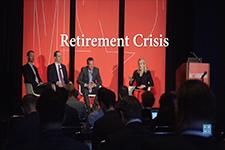
Do we face a retirement crisis? Most Americans may struggle financially in their golden years, says Steve Wendel of Morningstar. Advisor Sheila Padden of Padden Financial Planning says her clients’ biggest concerns are longevity risk and the cost of healthcare.
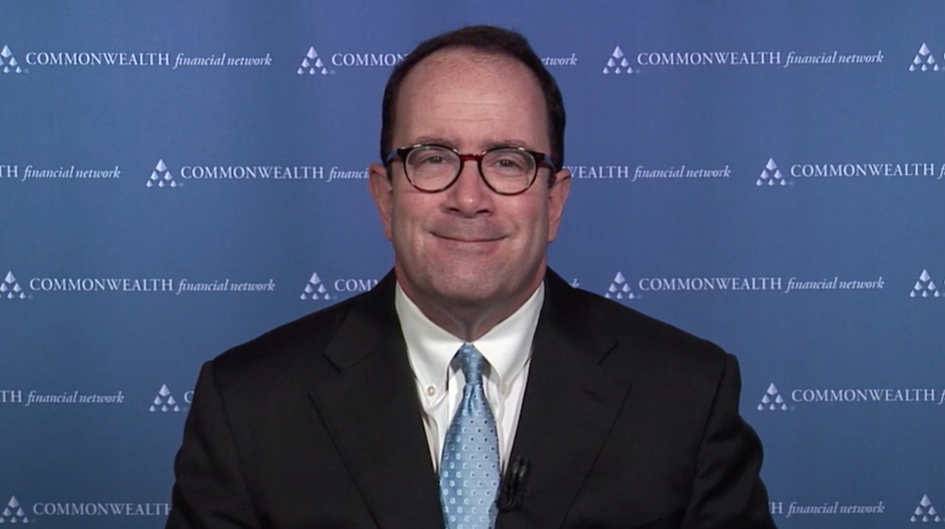
Use better assumptions to better understand retirement costs for clients, says David Blanchett, the head of retirement research at Morningstar.
Brad McMillan, Commonwealth’s CIO, recaps the market and economic news for April. It was another great month, as U.S., emerging, and developed markets were all in the green. Although there were concerns about a slowdown at the end of last month, first-quarter economic growth actually came in well above expectations. Plus, consumer spending picked up, consumer confidence bounced back, and business investment came in stronger than expected. So, should we expect more good times ahead? Stay tuned to find out. Follow Brad at blog.commonwealth.com/independent-market-observer.
Brad McMillan, Commonwealth’s CIO, recaps the market and economic news for March. It was another great month, with U.S., emerging, and developed markets all up. But this strength was a bit strange, considering the weakening seen in the fundamentals. Here in the U.S., both consumer and business confidence took a hit, the yield curve inversion caused many to worry about a pending recession, and analysts lowered their expectations regarding corporate earnings. Given all this, is growth likely to continue? Stay tuned to find out. Follow Brad at blog.commonwealth.com/independent-market-observer.
This year could be interesting. Watch what the Loomis Sayles Full Discretion team has to say about recession risk.
T. Rowe Price equity analyst Paulina Amieva talks to management, suppliers, and customers in Mexico City.
T. Rowe Price equity analyst Andrew Davis visits a busy Ohio train yard.
In a new survey by Northern Trust’s FlexShares, advisors report a stress level that’s 23% higher than national norms, and yet their overall job satisfaction comes in at an impressive 79%.
Reverse mortgages are finding a home in many retirement plans. The income stream may help seniors continue to live at home. Be sure a reverse mortgage fits into the overall financial plan.
Brad McMillan, Commonwealth’s CIO, recaps the market and economic news for February. It was another good month, with U.S. markets, developed markets, and fixed income showing gains. Still, the housing market continued its slowdown, and business investment softened. We also saw a terrible retail spending report. But the market was able to bounce back from the lows seen at the close of 2018, buoyed by the end of the government shutdown. So, will the markets continue to move higher, and what risks are ahead? Stay tuned to find out. Follow Brad at blog.commonwealth.com/independent-market-observer.
When to claim Social Security benefits is a big decision. Eligibility typically begins at age 62, but the longer you wait, the higher your monthly payout will be. The maximum age to start is 70.
Brad McMillan, Commonwealth’s CIO, recaps the market and economic news for January. It was a great month for the financial markets. Despite the government shutdown, signs of an economic slowdown, and dropping consumer and business confidence, U.S. and international markets were up. Plus, job and wage growth were strong, and companies made more money than expected. With the fundamentals solid, even the Federal Reserve hit pause on interest rate increases. So, what should we expect in the month ahead? Stay tuned to find out. Follow Brad at blog.commonwealth.com/independent-market-observer.
How Loomis Sayles investment teams are preparing for the year ahead.
The full US government is back to work, but many key data reports remain unavailable, casting a post-shutdown shadow of uncertainty. What’s missing? Numbers that regularly help Wall Street and Main Street make important decisions for the future.
Brad McMillan, Commonwealth’s CIO, recaps market and economic news for December. It was another bad month in a string of bad months, with U.S. markets down about 10 percent and international markets faring only a bit better, down 5 to 6 percent. A combination of bad news, from a government shutdown, to the ongoing trade war, to the Fed's decision to raise rates, was enough to shake investor confidence just in time for the holidays. Still, the fundamentals continue to look strong. Has the damage been done? Stay tuned to find out. Follow Brad at blog.commonwealth.com/independent-market-observer.
Brad McMillan, Commonwealth’s CIO, provides his 2019 market outlook. As we approach the new year, hiring is strong and both business and consumer confidence remain high. With these solid fundamentals, the financial markets are likely to respond. Earnings should go up, so we should expect to see rising stock prices as well. Of course, there are always worries, including political concerns in the U.S. We may also see slowing growth. All in all, the year ahead looks to be much like earlier years in the cycle. But the name of the game in 2019? Solid fundamentals and, very likely, solid markets.
Brad McMillan, Commonwealth’s CIO, recaps the market and economic news for November. It was a rocky month. Concerns surrounding the midterm elections, the trade conflict between the U.S. and China, and the economic slowdown resulted in market turbulence. Still, the financial markets bounced back. Here in the U.S., the Dow, the S&P 500, and the Nasdaq all had some gains. Abroad, the emerging markets rebounded strongly. Even bonds made money, despite interest rate turmoil. But will this bounce continue? Stay tuned to find out. Follow Brad at blog.commonwealth.com/independent-market-observer.
Brad McMillan, Commonwealth’s CIO, recaps the market and economic news for October. The month lived up to its scary reputation, with both U.S. and international markets down. Plus, housing started to roll over, and retail sales disappointed once again. That’s not to mention the political risks. In the U.S., the midterm elections have increased uncertainty. In Europe, there are concerns over Brexit and political turmoil in Germany. Still, is there reason to believe that things might improve in November? Stay tuned to find out. Follow Brad at blog.commonwealth.com/independent-market-observer.
Brad McMillan, Commonwealth’s CIO, recaps the market and economic news for September. It was a mixed month: the S&P and Dow did well, while the Nasdaq pulled back on weakness in technology. But for the quarter as a whole, all three indices were up substantially. In the U.S., hiring remained strong, wage growth picked up, and consumer confidence reached an 18-year high. There is also a huge amount of confidence in the business world. Overall, we’re in a good place, but is the end of the cycle coming? Stay tuned to learn more. Follow Brad at blog.commonwealth.com/independent-market-observer.
Brad McMillan, Commonwealth’s CIO, recaps the market and economic news for August. It was another good month here in the U.S., with the stock market up across the board. The economy, consumer confidence, and hiring all continued to grow. This growth is translating into corporate profits as well, with 80 percent of companies beating expectations. Still, September is a historically volatile month, and the midterm elections may cause some turbulence. Will these strong fundamentals help carry us forward? Stay tuned to learn more. Follow Brad at blog.commonwealth.com/independent-market-observer.
Brad McMillan, Commonwealth’s CIO, recaps the market and economic news for July. It was a great month for U.S. markets, as the Dow, S&P 500, and Nasdaq were all up. And after a terrible June, both developed and emerging markets bounced back as well. This performance was supported by a strong economy. GDP growth for Q2 came in at the highest level since 2014, both employment and inflation are in healthy territory, and corporate earnings continue to beat expectations. Can this positive momentum continue? Stay tuned to learn more. Follow Brad at blog.commonwealth.com/independent-market-observer.
Brad McMillan, Commonwealth’s CIO, recaps the market and economic news for June. It was a mixed month, as U.S. markets went down with the Dow and up with the S&P 500 and the Nasdaq. Bond markets pulled back a bit on rising rates. There was also pullback abroad, in both developed and emerging markets. Still, the fundamentals are good, and a step-up in second-quarter growth is expected. Job growth is strong, consumer spending is accelerating, and business investment is solid. Are there headwinds ahead? Stay tuned to learn more. Follow Brad at blog.commonwealth.com/independent-market-observer.
Brad McMillan, Commonwealth’s CIO, recaps the market and economic news for May. It was a good month, continuing the recovery from the pullback we saw at the start of the year. In the U.S., markets were up almost across the board. Consumers continue to spend, and businesses remain confident—with manufacturing doing particularly well. Plus, the government is contributing to this growth by cutting taxes and spending more. When we look at emerging and developing markets, however, it's a different story. Stay tuned to learn more. Follow Brad at blog.commonwealth.com/independent-market-observer.
Brad McMillan, Commonwealth’s CIO, recaps the market and economic news for April. It was a good month, as both U.S. and developed markets were up. This news was encouraging, indicating that the economy seems to be bouncing back after two down months. In fact, the fundamentals are quite strong, with company earnings surprising to the upside to a degree we have never seen before. Plus, sales beat expectations, which is a positive reflection of the markets and the economy. But will these trends continue? Stay tuned to find out. Follow Brad at blog.commonwealth.com/independent-market-observer.
In the current rising rate environment, Maury Fertig of Relative Value Partners suggests closed-end fund investors be “cautious” and alert for opportunities.
Fed rate hikes present a “challenging time” for investors, especially those concerned about inflation, says Dorothy Bossung of Lowery Asset Consulting.
Closed-end fund discounts generally widened and distribution reductions increased in the first quarter of 2018, says Mike Taggart of Nuveen.
Brad McMillan, Commonwealth’s CIO, recaps the market and economic news for March. Last month, both U.S. and international markets saw losses. It was the second down month in a row, something we haven't seen in a while. This was due, in part, to markets becoming uncertain on the news of tariffs on China—which rattled companies around the world. Plus, Fed Chair Powell was seen as more hawkish than expected, introducing uncertainty around interest rates. Despite all this, do the fundamentals remain solid? Stay tuned to find out. Follow Brad at blog.commonwealth.com/independent-market-observer.
Periods of volatility in the stock market are not uncommon and may present opportunities to closed-end fund investors, says Maury Fertig of Relative Value Partners.
As the April 17 federal income tax deadline approaches, advisor Dorothy Bossung of Lowery Asset Consulting stresses the importance of asset placement.
Maintaining the connection between investors and their advisors presents a key financial challenge, says Sean Walters of the Investments & Wealth Institute.
Matt Freund, Co-CIO, Head of Fixed Income Strategies, Senior Co-Portfolio Manager, explains why the team tends to take contrarian positions when building a portfolio. To learn more visit: http://bit.ly/AskPM-FI
Matt Freund outlines his current fixed income concerns: high debt levels, inflation and non-U.S. developments including global central bank policy and the strength of international markets, and liquidity. To learn more visit: http://bit.ly/AskPM-FI
Matt Freund, Co-CIO, Head of Fixed Income Strategies, Senior Co-Portfolio Manager, says there are interesting opportunities for a skilled manager in select corners of the credit market. To learn more visit: http://bit.ly/AskPM-FI
Matt Freund cautions investors not to think about the bond market as one single, monolithic market, but to think about sectors and exposures. Here he explains where the team sees opportunities. To learn more visit: http://bit.ly/AskPM-FI
Matt Freund discusses the misperception that yields along the curve have a similar reaction when rates rise. Since the Fed has begun tightening, the long end of the curve has remained well behaved. To learn more visit: http://bit.ly/AskPM-FI
Matt Freund says investors need to remember these three reasons to own fixed income: the asset needs to be cheap, provide needed income or serve as a hedge against other positions in a portfolio. To learn more visit: http://bit.ly/AskPM-FI
Matt Freund explains that there are three main reasons to go active over passive: risk management, the composition of fixed income indices and the changing nature of fixed income indices. To learn more visit: http://bit.ly/AskPM-FI
Matt Freund, Co-CIO, Head of Fixed Income Strategies, Senior Co-Portfolio Manager, discusses what sets the Calamos fixed income approach apart. To learn more visit: http://bit.ly/AskPM-FI
Income seekers may want to consider a range of investment products, including closed-end funds, says Mitchell Goldfeld of RPg Family Wealth Advisory.
Eli Pars says the $300 billion asset class is big enough to yield opportunities yet small enough to still be an investment niche. To learn more visit: http://bit.ly/AskPM_Alt
Eli Pars explains how convertible arbitrage investors may see opportunities where long only equity investors don’t. To learn more visit: http://bit.ly/AskPM_Alt
Eli Pars, Co-CIO, Head of Alternative Strategies and Co-Head of Convertible Strategies, Senior Co-PM, discusses the extensive background of our convertible arbitrage strategy. To learn more visit: http://bit.ly/AskPM_Alt
Eli Pars explains that convertible arbitrage has performed well in most equity market environments—and that the strategy has done its best in declining equity markets historically. To learn more visit: http://bit.ly/AskPM_Alt
Eli Pars outlines the sources of income from convertible arbitrage, including: coupon income from the convertible bond, short interest credit, capital appreciation from convertibles and rebalancing/trading profits. To learn more visit: http://bit.ly/AskPM_Alt
Eli Pars, Co-CIO, Head of Alternative Strategies and Co-Head of Convertible Strategies, Sr. Co-PM, says the goal is to buy low and sell high, generate coupon income and trade around the portfolio. To learn more visit: http://bit.ly/AskPM_Alt
Brad McMillan, Commonwealth’s CIO, recaps the economic news for February. Last month, there was a 10-percent market drawdown in the U.S., something we haven’t seen for almost two years. Although many were worried that this was the “big one,” the markets recovered more than half of their losses by month-end, and the economic fundamentals remain sound. Job growth is strong, business confidence is high, and consumer confidence is at the highest level since 2000. Will this good news continue into March? Stay tuned to find out. Follow Brad at blog.commonwealth.com/independent-market-observer.
Surprises in 2018 may mean investors will need more help from advisors to stay focused on the long term, says Sean Walters of the Investments & Wealth Institute.
Michael Grant, SVP, Senior Portfolio Manager, discusses why the team’s ability to asset allocate equity capital across the entire global equity universe is key in delivering superior returns. To learn more visit: http://bit.ly/AskPM-PLS