Bear flattening trades, inverted yield curves, and frantic style rotations (factor or sector) are not definitive warnings of a market peak. They are extremely informative about where the economy, markets, and investor sentiment stand, but they do not tell investors whether or when the economic or market cycle will turn.
The continued growth of active ETFs reflects a broader shift in portfolio construction across the advisory industry. Advisors increasingly seek investment vehicles that combine flexibility, transparency, scalability, and tax-aware implementation. Dividend growth strategies may align particularly well with the ETF structure because both emphasize long-term investor outcomes and efficient portfolio implementation.
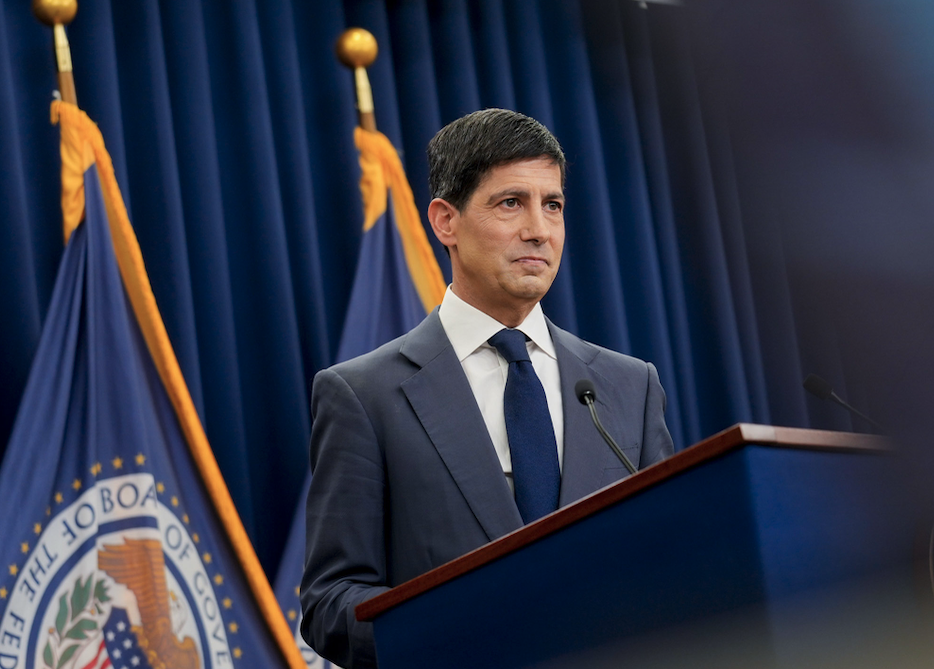
In his zeal to avoid signaling where interest rates are headed, Federal Reserve Chairman Kevin Warsh has obscured something else that’s crucial to investors, analysts and other policymakers: How he would react when challenged by the economy.
Investors are flocking back to Apple Inc. as nervousness about artificial intelligence spending weighs on the stocks of chipmakers and cloud-computing giants.
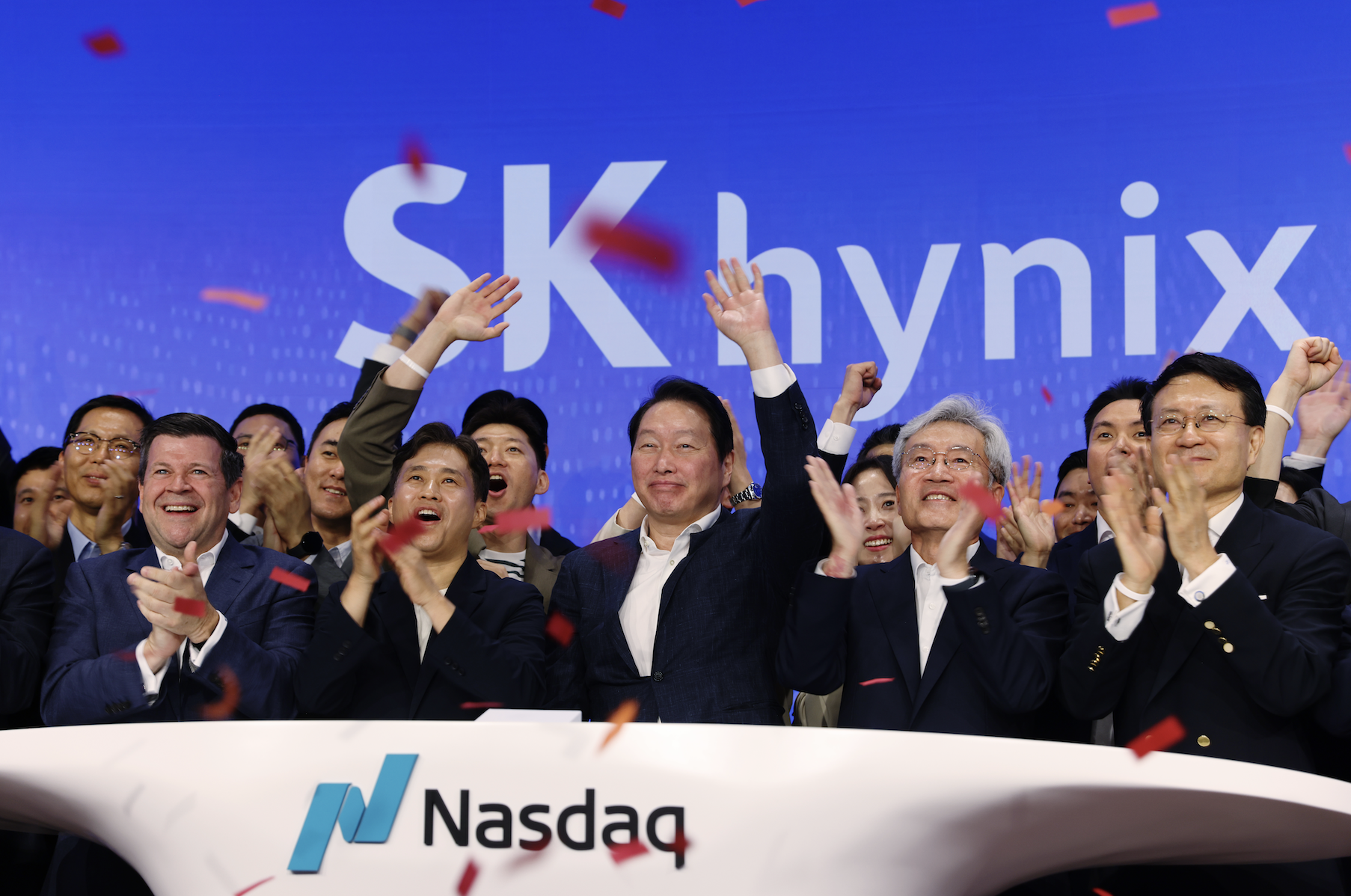
South Korea’s AI-fueled stock rally came under renewed pressure Monday as SK Hynix Inc. tumbled by a record 15%, underscoring growing investor concerns that the boom has become overstretched.
The official data will be released tomorrow, but if past trends continue, the US inflation rate will come in higher than most Americans are used to, but still relatively low.
Investors who piled into SK Hynix’s $28 billion blockbuster Nasdaq debut on Friday should be aware: The business model on which the world’s leading memory chip makers are thriving is set to shift to one that requires a bit more strategic and financial gambling.
Money flowing into President Donald Trump’s newly created accounts for children will initially be invested in a State Street Corp. exchange-traded fund, as the US Treasury Department prepares to roll out the program.
The Federal Aviation Administration is resurrecting the dream of passengers flying faster than the speed of sound after it recently proposed lifting a ban on supersonic flights over land, which has been in place for more than five decades.
The US equity market, with the S&P 500 hovering near all-time highs, is expensive. This isn’t controversial. Depending on which measure you use, US stocks have arguably been overpriced for several years.
New Hampshire’s executive council voted down a proposal to bring the first Bitcoin-backed bond to the municipal market.
Finance Minister Satsuki Katayama pulled a genuine surprise on Friday when she announced toward the end of a regularly scheduled press conference that the government would pursue policies to encourage its massive pension funds to invest more at home. Details were sparse, and the yen wasn’t mentioned directly.
Silicon Valley has long considered itself an egalitarian utopia — a place where rebelling against hierarchy is encouraged and good ideas are supposed to bubble to the top, regardless of who has them. The reality has always been more complicated.
The articles that dominated the views in June were very much focused on the realities of investing, addressing everything from how inflation can affect your returns to incorporating AI into retirement evaluations.
Americans like their electric vehicles to come with a side of gasoline. Sales of conventional hybrid vehicles, which combine internal combustion and electric drivetrains but don’t plug in to recharge, jumped by almost a fifth in the first half of 2026, year over year, while pure battery EVs slumped by a quarter.
Almost two decades ago, when trillions of dollars in private housing debt proved unsustainable, governments had to step in to prevent the worst financial crisis since the Great Depression from eclipsing it.
The busiest airport in New England is tapping the municipal bond market to remodel its facilities and keep up with passenger growth.
It used to be a considered something of a tawdry question, although it could be flattering as well: “What’s your number?” Nowadays, your inquisitor is probably asking about retirement — as in, how much you think you need to retire. And, as it often was before, it’s the wrong question.
One notable group has been absent from the 2026 stock rally: the American tech giants that have charged a nearly four-year bull run.
Widowhood does not happen on paper. It happens in the middle of grief, changing income, tax questions, family expectations, housing decisions, administrative demands, and a profound shift in identity. The math may still work, but the human operating system has changed. And that is why advisors need to stress test — not only for portfolio survival, but for survivor usability.
After years of working with advisors and studying client behavior, the reasons clients leave come down to three core patterns. They are predictable. They are preventable. And they almost always trace back to a conversation that never happened in the first meeting.
I have spent the better part of my career watching how organizations manage access to sensitive data — who has it, who should have it, and how long it takes anyone to notice when those two things stop matching. In financial services, that gap tends to be measured in months.
A wave of profit taking in the gold market has brought a three-year bull run to an end, but there’s little evidence yet that investors are putting on large-scale short positions in anticipation of further declines.
In 2003, the Pentagon’s Defense Advanced Research Projects Agency made a visionary attempt to use prediction markets for geopolitical forecasting. However, it created a huge controversy in Congress and was quickly killed.
Bitcoin tumbled as renewed geopolitical tensions rattled digital asset markets, eclipsing what had been a muted reaction to Strategy Inc.’s latest sale of the token earlier in the week.
After losing roughly $1 trillion in market value in less than two months, Nvidia Corp.’s stock is the cheapest it’s been since before the AI boom kicked off and sent the shares into the stratosphere.
“Productization” has quickly become one of the most widely used terms in wealth management. It appears in strategy decks, conference discussions, and vendor messaging. Yet, despite its popularity, the concept remains poorly understood in practice.
Steven Pinker's latest book digs into why the knowledge we hold in common matters and how it helps society operate more smoothly.
The word fiduciary no longer answers the only question that matters: Whether the advice you are given is shaped by what the advisor earns from giving it. Many advisors will tell you, accurately, that they are fiduciaries, and many will say they have no conflicts without disclosing the ones they hold.
For years, the Magnificent Seven tech giants commanded investors’ attention, dominating the S&P 500 Index and determining which way the overall stock market was headed. Those days are over.
SpaceX joins the Nasdaq 100 Index Tuesday as Wall Street brokerages launch coverage of Elon Musk’s rocket, satellite and artificial intelligence company with a clear consensus: buy the stock.
The higher the rally in technology high-flyers, the louder the anxiety around a new wave of turbulence in the group.
When Mark Zuckerberg gets a bold new business idea, he likes to throw money at it. Last summer, he dropped $14.3 billion for a 49% stake in Scale AI, allowing him to poach its wunderkind founder Alexandr Wang to lead a new project to build artificial-intelligence systems that surpass human intelligence.
Private equity may be our No. 1 economic boogeyman. It is blamed for rising real estate prices, poor medical care, and ruining many of the businesses we used to love.
Every sector chart tells you where the crowd is. Almost none tell you the thing a stock picker actually needs to know: Inside a given sector, how much room is there to beat the average name?
What is remarkable about Livermore is that his rules are still incredibly valuable. The markets he traded in no longer exist. The technology, the communication speeds, and the regulatory framework of his day are unrecognizable compared to today. But the principles and behavioral patterns he identified are as operational in 2026 as they were a hundred years ago.
Personalization is high on the list of improvements because investing is personal. But we need to be careful in delivering personalization and to recognize the important distinctions between risk capacity (the ability to take risk) and risk tolerance (the willingness to take risks).
The US industrial robot industry is characterized by low growth and highly customized projects. Artificial intelligence holds out the hope to change that, especially when it comes to robots that can move and work safely around humans.
A violent rotation in the underbelly of a bullish stock market is extending the worst run for quantitative hedge funds since 2023.
Goldman Sachs Group Inc. sees the yen weakening to 165 per dollar in a year’s time, driven in part by Japan’s interest rate differentials with the US.
Oil held onto its recent run of losses, with traders looking for clues on flows through the Strait of Hormuz as barrels continue to return to the market after months of disruption.
US stock futures climbed early Monday as investors gauged whether the artificial-intelligence trade can regain its footing after one of its sharpest pullbacks in more than two years.
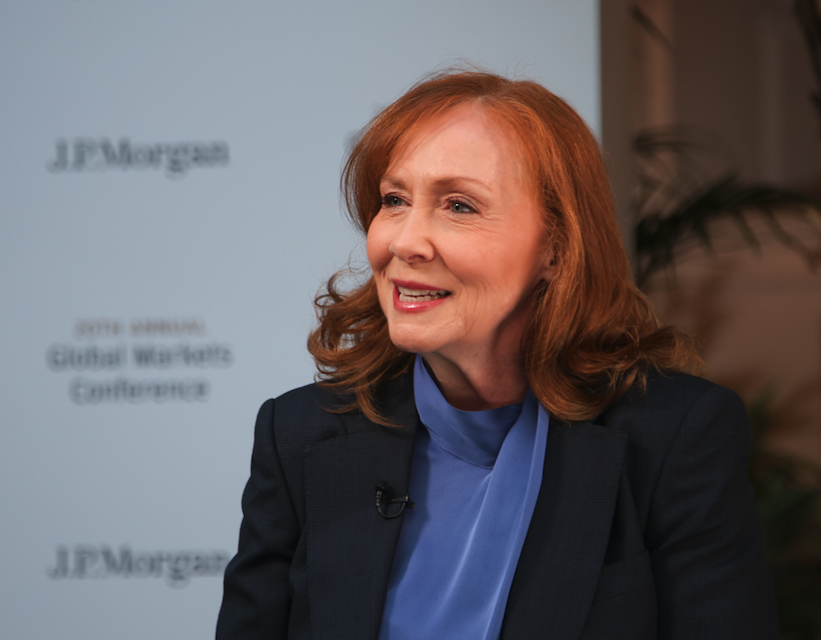
One of JPMorgan Chase & Co.’s most senior executives is leaving the bank after a four-decade career, in which she most recently led its artificial intelligence drive from a coveted spot on its top operating committee.
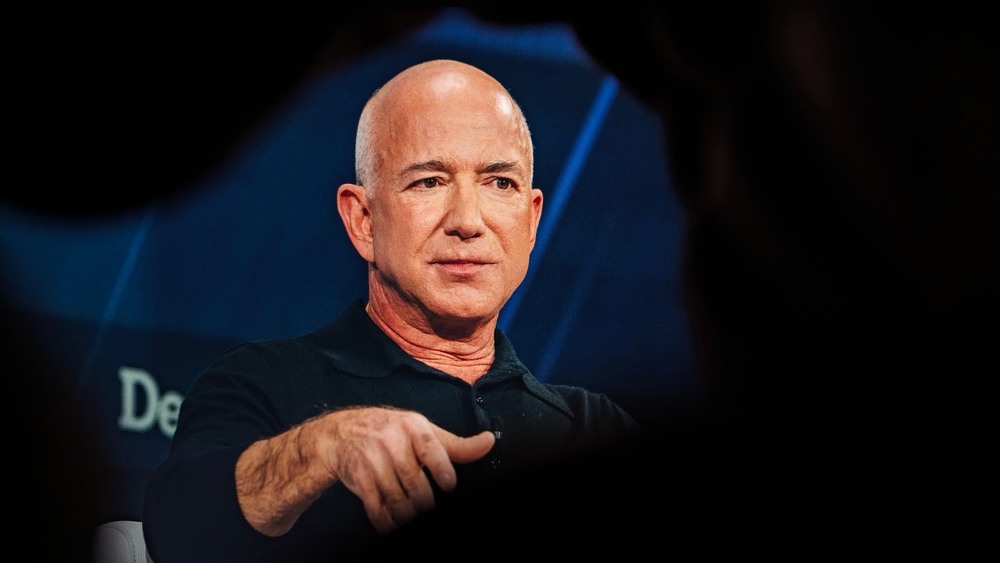
Slate Auto, the electric vehicle start-up backed by Jeff Bezos, is a grand experiment in whether austerity sells — and a warning for the US auto sector.
The artificial intelligence boom has a power problem, and Wall Street is betting billions on companies that promise to solve it — even if some of the technology hasn’t been fully developed yet.
The head of BlackRock Inc.’s beleaguered private credit fund is in the process of leaving the firm, a move that follows months of losses on soured loans and revelations of a US regulatory probe into the unit’s valuation practices.
The business of overseeing individually tailored municipal-bond portfolios has continued to grow rapidly, turning those money managers into the biggest holders of state and local government debt, according to JPMorgan Chase & Co.
With the artificial intelligence race moving so rapidly, even a momentary lag can be costly. Alphabet Inc.’s Google is learning this the hard way: The search giant rapidly caught up with
Federal Reserve Chairman Kevin Warsh said price risks have come down in recent weeks, while repeating his determination to bring inflation back to the US central bank’s 2% target.
This debate also highlights a broader challenge facing markets today — balancing the desire for transparency with the need to encourage long-term thinking. Despite how often companies report results, investors will still need to discern short-term noise from long-term value.