Something still feels off in this economy. It’s booming in many respects, with a strong labor market, healthy corporate and household balance sheets, and a lot of consumption. But some, like JPMorgan Chase & Co. CEO Jamie Dimon, are worried we’re seeing the calm before the storm.
There are costs to living a virtuous life; It requires going without.
The Federal Reserve has finally started to get real. It increased the policy rate target Wednesday by 50 basis points. More rate hikes are expected as the Fed tries to bring down inflation. But will this be enough?
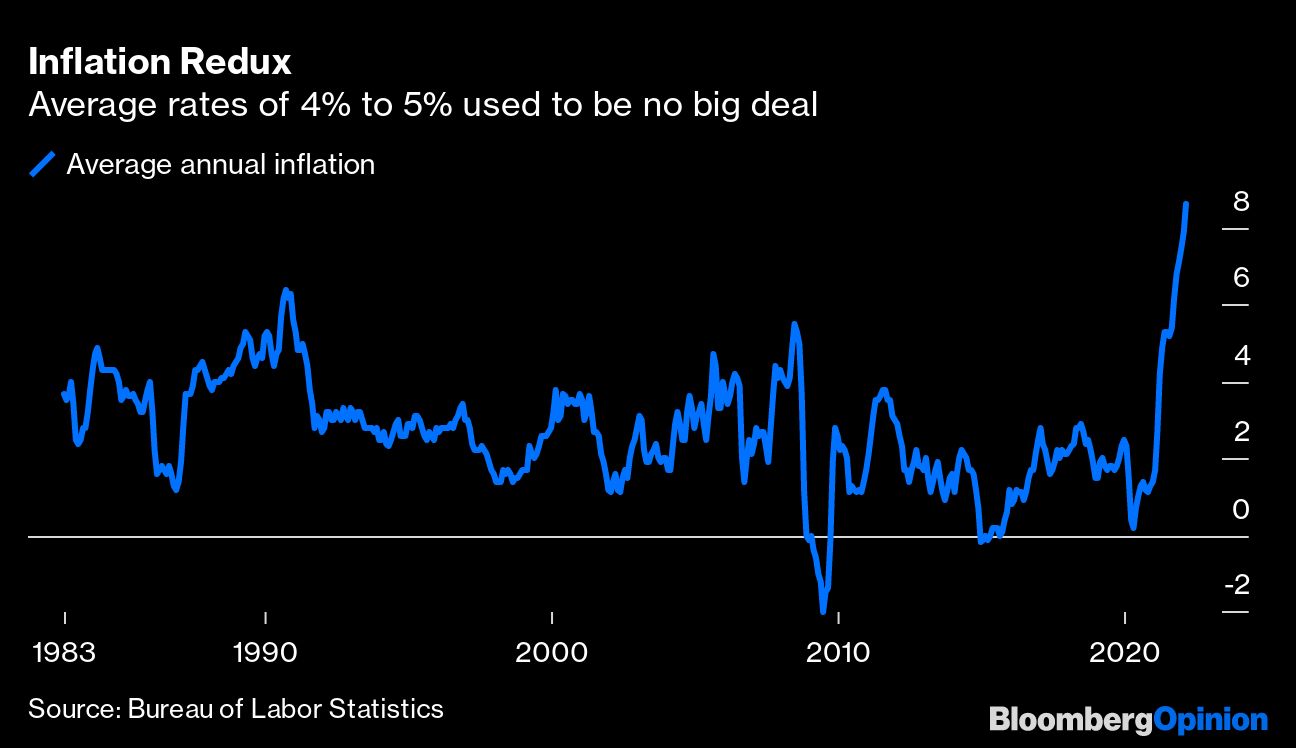
The Fed messed up. Big time. After almost 40 years of low, predictable price growth, inflation is back: 8.5% at last count and it may go higher still. Some of the inflation is related to pandemic re-opening, but some of it came from serious policy errors. Now the Federal Reserve faces some hard choices. It may even need to cause a recession to bring inflation back to manageable levels.
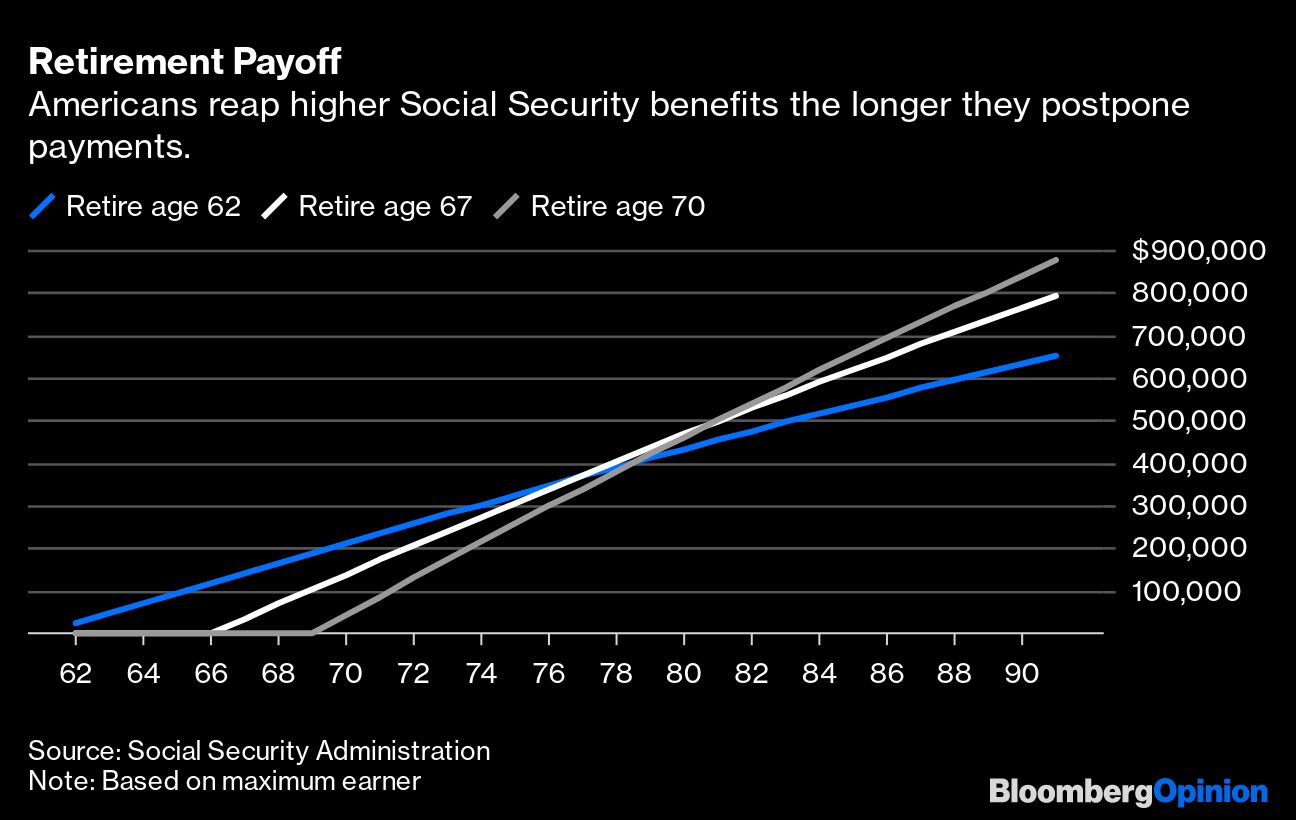
This is a hard time to retire. The market is down 7% from last year and the rate of inflation has risen to 8.5%. Both are brutal to your bottom line when you're on a fixed income. But buck up! As bad as things seem, odds are you are in better shape than your parents or grandparents. And if they got through retirement comfortably, so will you.
If you are under 45 and live in America or Europe, the odds are this past year has been your first real experience with inflation. Other than a blip in 2008, inflation has barely topped 3% in the last 30 years.
Now that inflation is back, it's not going away anytime soon. The Federal Reserve expects it to fall below 3% next year and eventually go back to 2%. But there are reasons to think that’s far too optimistic. We are living in a new world. Even after things get back to normal that could mean inflation averages 4% or even 5% for the foreseeable future.
These are uncertain times, but we’ve never lived with less risk. That may sound crazy coming out of a pandemic that disrupted our lives in uncountable ways — and now we may be on the brink of World War III. But there is a big difference between risk and uncertainty, and each requires different coping strategies.
Even before Russia invaded Ukraine the economy felt pretty dicey. There was inflation, a weird post-pandemic job market, and the prospect of a more hawkish Fed. Now markets are even more volatile as sanctions roil the global outlook. For anyone counting the days until retirement, it's been a harrowing ride.
Something still feels broken in the labor market. There are many jobs and wages are up. But there is also a sense of uncertainty and misery. Service jobs can be grueling, and despite recent growth, people’s wages over the course of their careers aren’t increasing as fast as they once did — especially when you account for inflation. And every day brings more technology that might one day take your job.
Markets this year are putting the risk in risk premium. Any asset that typically pays more than a low-risk bond (or zero return) will expose you to losses from time to time, and that happened a lot last month.
Insights into the economy can be found in surprising places. In a brothel, for instance, how services are priced and who ends up working there can reveal a lot about the state of the business cycle. It also reflects structural changes in our economy and society.
Markets are weird right now. The value of risk-free assets has gone all out of whack, and if that doesn't seem scary, keep reading.
Inflation is why the 4% rule never made any sense.
It’s being called the Great Resignation. Quits are at their highest rate in 20 years and no one seems to understand why. One thing is for sure: the labor market has gone weird.
Volatile, pandemic-riven markets for stocks and bonds has Wall Street ready — again — to declare the traditional 60/40 portfolio split a dead strategy. The prospect of a low-growth, high-inflation economy (stagflation) dims the prospects of both investment categories, and certainly demands a rethink of where to stash your savings.
Behavioral economics is facing a reckoning.
Education can be the best investment you make, unless it's for graduate school. Students seeking advanced degrees make up only 25% of student borrowers, yet they account for nearly half of outstanding student loans.
Several years ago, Allison Schrager walked into the Moonlite BunnyRanch, a legal brothel in Nevada. She was there to study economics – specifically how the owners and sex workers dealt with and reduced the risks of their professions. Allison discusses the lessons from that experience, as well as a number of other professions she has studied - including the recent Jeopardy champion, James Holtzhauer.