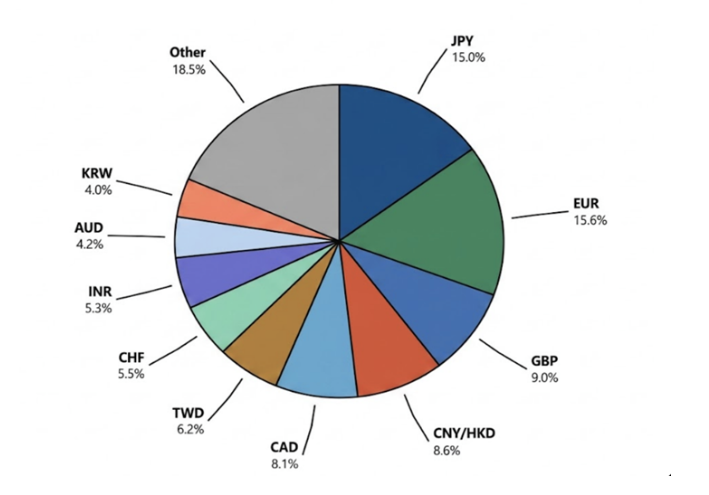
Diversification is finally paying off. After more than a decade of U.S. dominance, international equity ETFs are enjoying monster inflows, outpacing their domestic counterparts for the first time since early 2023. This structural shift is being fueled by a potent mix of shifting earnings momentum abroad and a cyclically weakening dollar.
Many investors are unwittingly making a dual bet: one on foreign corporate earnings, and another on the greenback itself. While the allure of lower P/E ratios in Europe and Asia is drawing capital across the ocean, a cloudier outlook for the dollar — and often does — eviscerate those valuation gains in an unhedged portfolio.
Embedded Currency Exposure
Historically, the dollar has reigned supreme as the world’s ultimate “safe haven” currency, strengthening during periods of global conflict or macro uncertainty as investors sought shelter. However, that traditional dynamic is beginning to crack under the weight of ballooning national debt and unchecked deficit spending. As fiscal pressures mount, concerns over the gradual debasement of the dollar have cast a shadow over its long-term stability as the undisputed global reserve currency. Recognizing these structural vulnerabilities, both institutional investors and global central banks are now slowly starting to diversify their currency exposure.
These brewing fiscal concerns didn’t just stay in the headlines – they translated directly into market performance, as evidenced by the currency whiplash in 2025. The MSCI EAFE Index delivered a robust 24% return in local terms, but a sliding dollar swelled that figure to 31% for U.S. investors. That 7% “currency gift” was a reminder of how quickly the turn of the dollar can provide a tailwind — and how abruptly it can pivot. Historically, an unhedged international ETF does come with higher volatility compared to its hedged counterpart.
International Bond ETFs
In the equity space, unhedged exposure remains the default among most broad international funds. But in fixed income, hedging is the standard for reducing volatility, making most international debt ETFs pure bets on rates and unhedged bond ETFs a much more specialized, speculative choice. The typical total international bond heavyweights, such as the Vanguard Total International Bond Index Fund ETF (BNDX) and the iShares Core International Aggregate Bond ETF (IAGG), are dollar-hedged by design to maintain the low-volatility profile typical of fixed income. Without that hedge, currency attribution could easily dominate interest rate attribution – meaning, a “conservative” international bond fund could well end up behaving more like a volatile currency trade than a stable income producer.