Technological transformation is lifting global activity despite elevated U.S. tariffs and persistent policy uncertainty. Here are five charts that help illustrate this crucial macroeconomic trend.
Similar to the surprisingly resilient pace of U.S. economic growth in 2025 – which we discussed in Macro Signposts earlier this month – global trade and industrial production have also remained robust this year. These are unexpected trends given the significant policy uncertainty and what amounts to the largest tariff hike by a developed market country in a century.
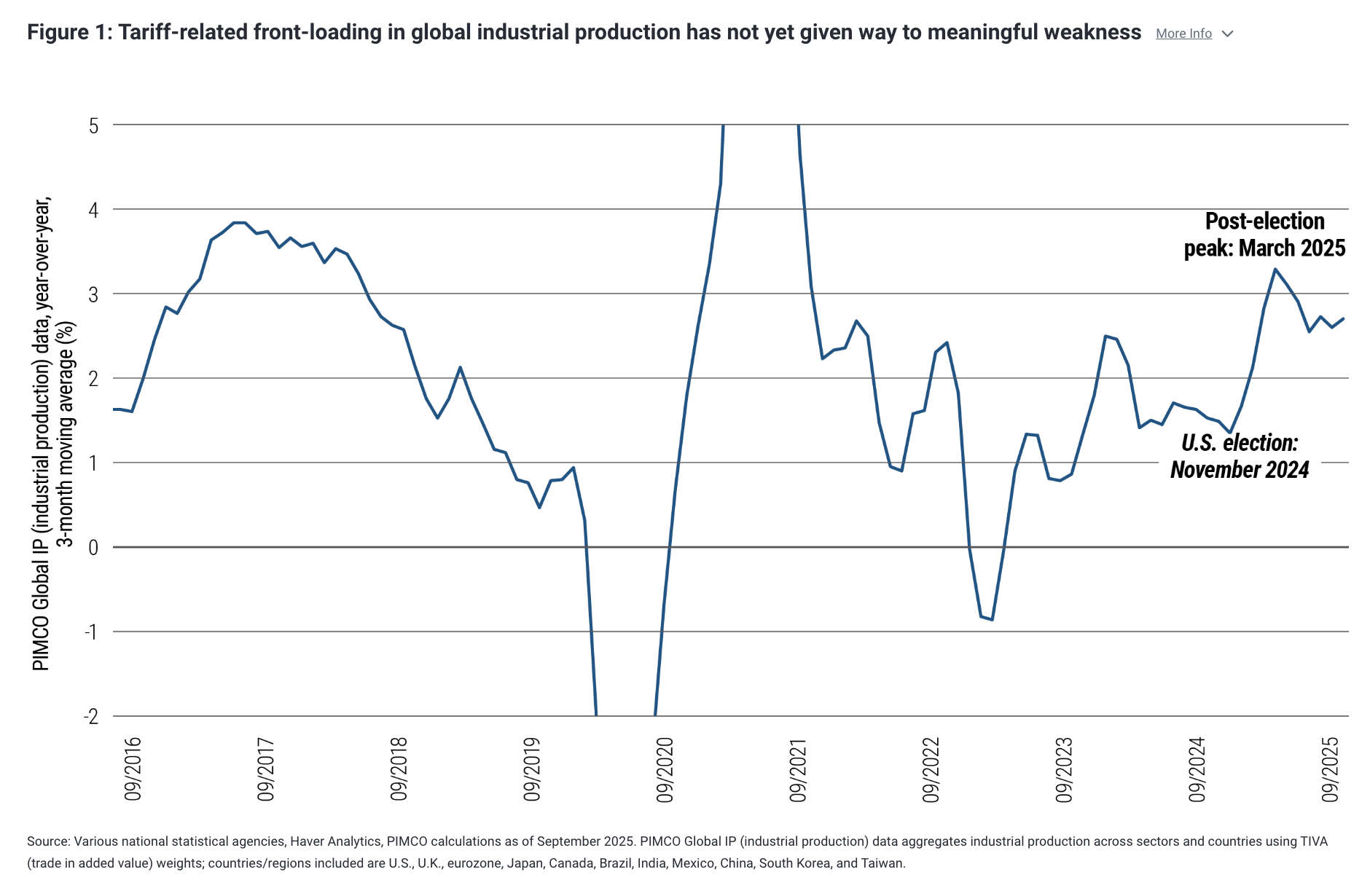
Global industrial production and trade accelerated in early 2025 in anticipation of U.S. tariffs, which many producers believed would be a key feature of the Trump administration’s economic policy – so they front-loaded activity to build inventories in the U.S. Now, several quarters into the new U.S. trade regime, one might expect the front-loading of industrial production would by now be giving way to weakness (see Figure 1). So why isn’t it?

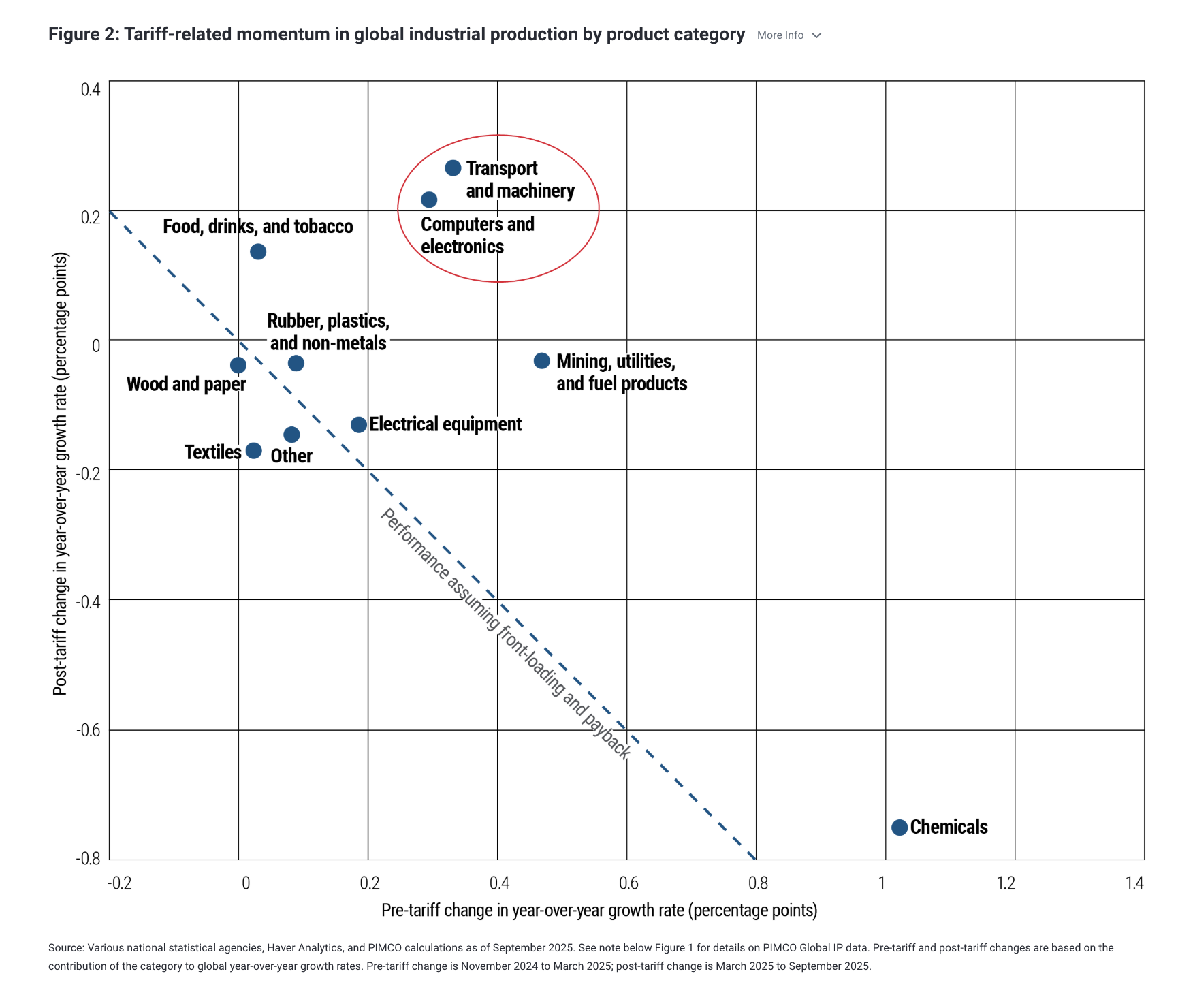
Data suggest this surprising strength in global production – at least in aggregate – is driven heavily by production of computers and components tied to AI infrastructure investment (see Figure 2). Production in most individual categories is exhibiting typical front-loading/payback dynamics surrounding the U.S. tariff announcements, but strength in AI-related equipment – together with auto and electric vehicle production – is bucking the trend, helping lift overall production.
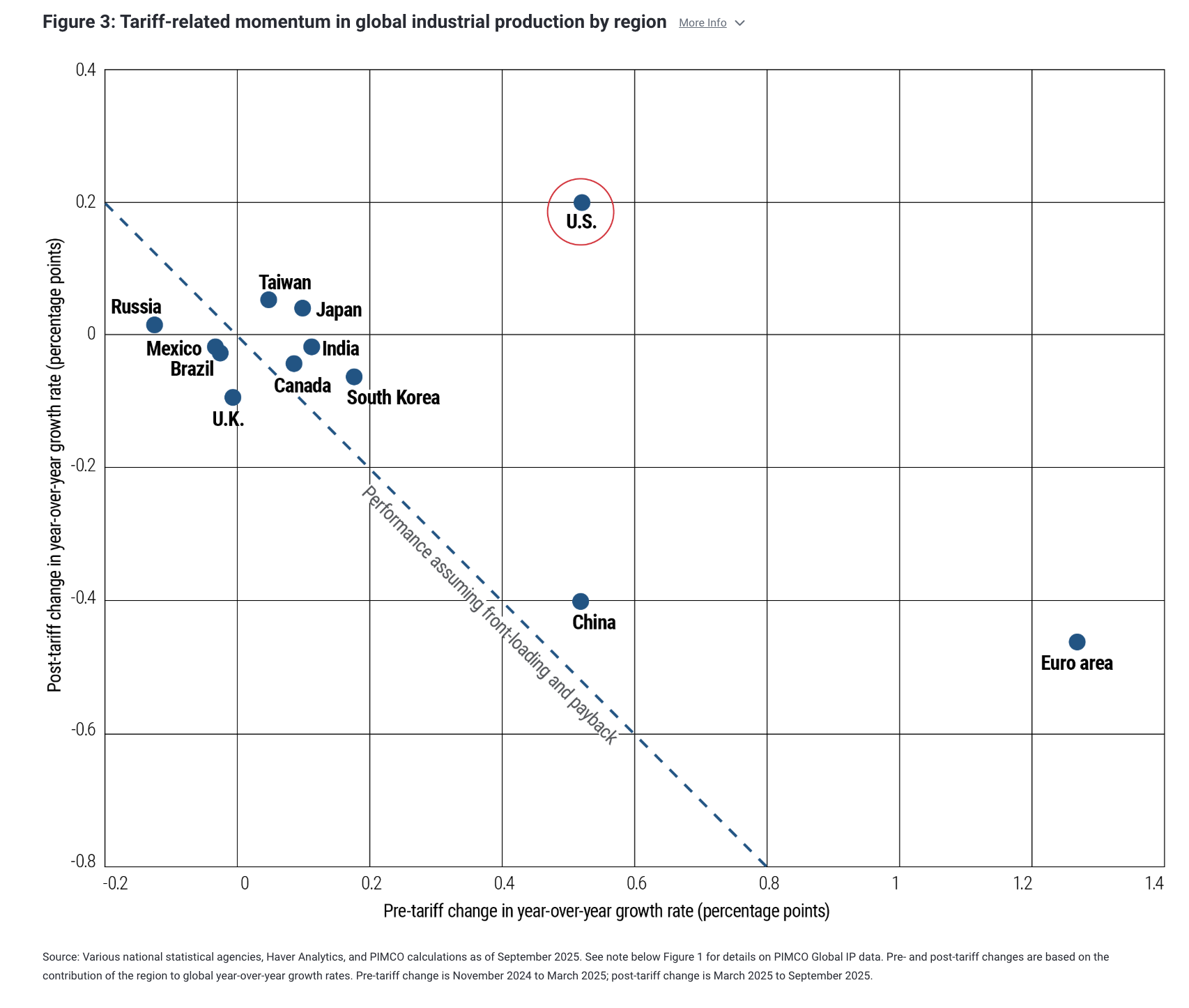
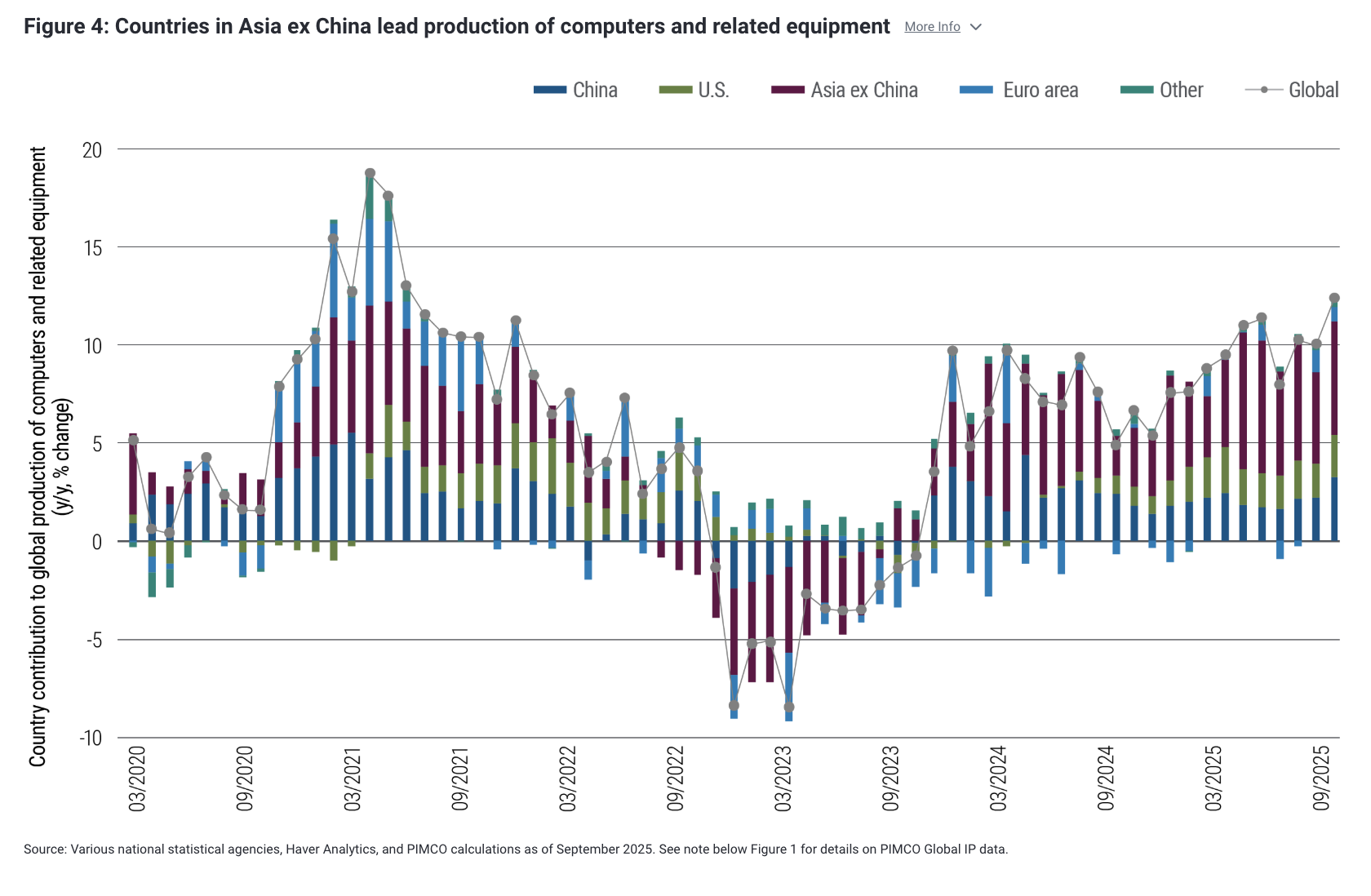
Not every country is benefiting equally from the AI investment theme, but several Asian economies, including Taiwan, Japan, South Korea, and China, have seen meaningful gains in industrial production alongside the U.S. (see Figure 3). Indeed, Asia and to a lesser extent the U.S. are leading the world’s production of computers and related components (see Figure 4).
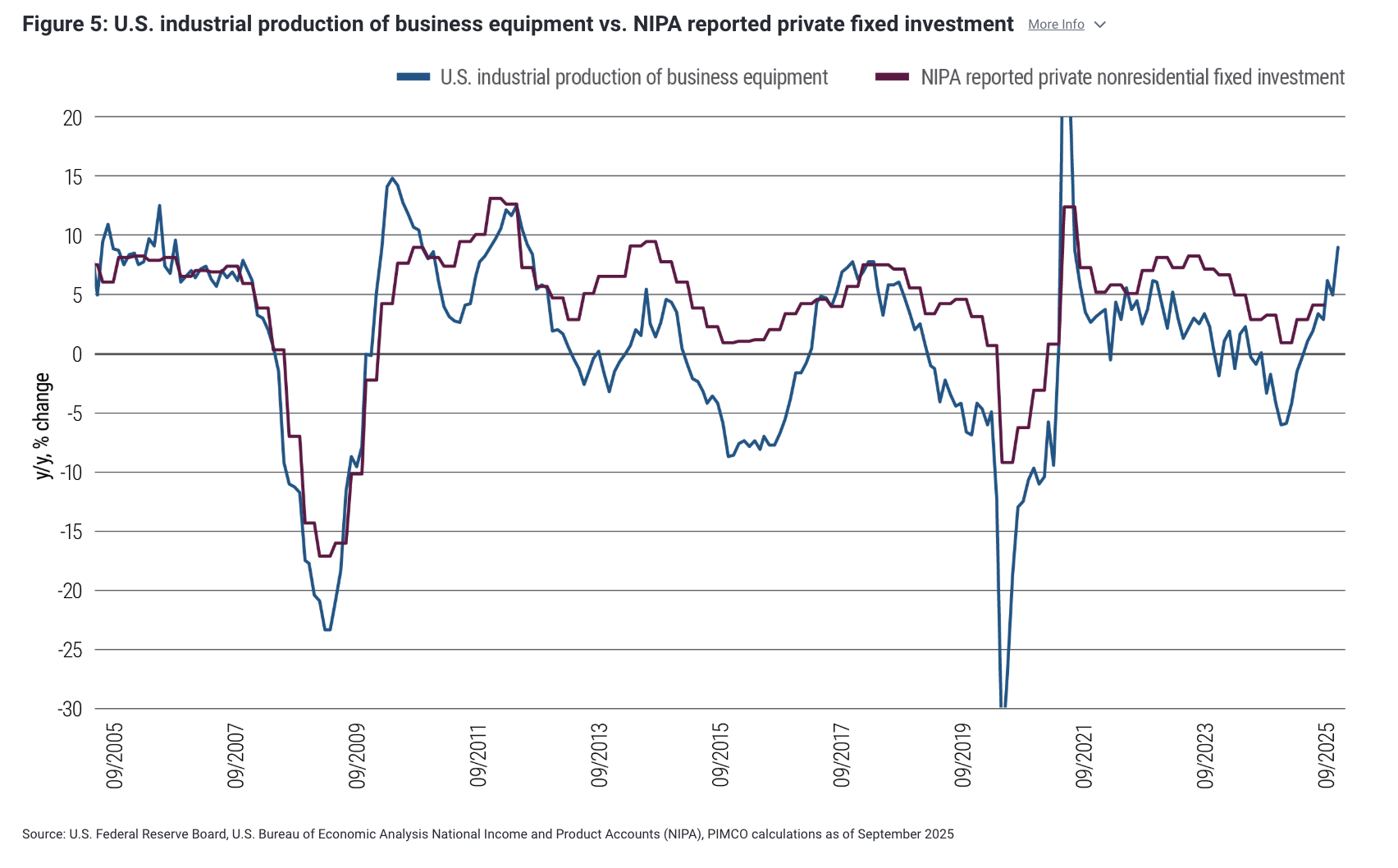
U.S. industrial production has also rebounded after a multi-year slump, largely thanks to technology and related products. Moreover, recent U.S. industrial production trends suggest that business fixed investment may have broadened into other equipment categories in the latter half of 2025, even as AI-related spending remains strong (see Figure 5).
Bottom line: Surprising resilience in global industrial production was another facet of a fast-evolving trend – namely, the surge in AI and its related technologies, components, and infrastructure. It’s reshaping the global economy.
Disclosures
All investments contain risk and may lose value.
Statements concerning financial market trends or portfolio strategies are based on current market conditions, which will fluctuate. There is no guarantee that these investment strategies will work under all market conditions or are appropriate for all investors and each investor should evaluate their ability to invest for the long term, especially during periods of downturn in the market. Outlook and strategies are subject to change without notice.
This material contains the current opinions of the author and such opinions are subject to change without notice. This material is distributed for informational purposes only and should not be considered as investment advice or a recommendation of any particular security, strategy or investment product. Information contained herein has been obtained from sources believed to be reliable, but not guaranteed.
PIMCO as a general matter provides services to qualified institutions, financial intermediaries and institutional investors. Individual investors should contact their own financial professional to determine the most appropriate investment options for their financial situation. This material contains the opinions of the author and such opinions are subject to change without notice. This material has been distributed for informational purposes only and should not be considered as investment advice or a recommendation of any particular security, strategy or investment product. Information contained herein has been obtained from sources believed to be reliable, but not guaranteed. No part of this material may be reproduced in any form, or referred to in any other publication, without express written permission. PIMCO is a trademark of Allianz Asset Management of America LLC in the United States and throughout the world.
CMR2025-1217-5069450
A message from Advisor Perspectives and VettaFi: Discover something new! Click here to register for our upcoming webcasts.
© PIMCO
Read more commentaries by PIMCO