Grounded Government, Sky-High Profits: Airline Stocks Defy Shutdown Turmoil
Membership required
Membership is now required to use this feature. To learn more:
View Membership BenefitsGold is making new all-time highs while its total market cap is now at a record $30 TRILLION. In this week’s webcast, I was joined by industry experts (portfolio manager Ralph Aldis, 321Gold.com founder Bob Moriarty and Canaccord analyst Jamie Brown) to discuss the current state of the precious metals market and share our favorite junior mining picks. A replay of the webcast is available here!
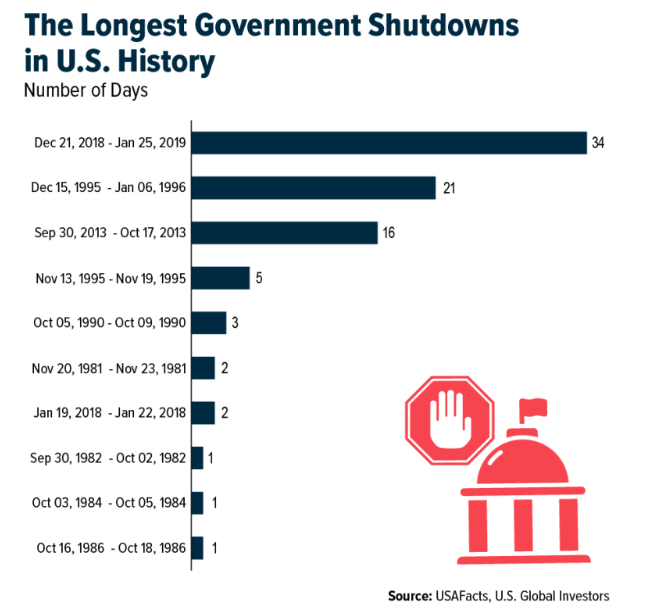
The U.S. government has been shut down since October 1, with no end in sight. This is the first shutdown since 2019, when political gridlock over how to fund President Donald Trump’s border wall kept federal doors closed for a record 34 days. (Spoiler alert: No funding deal was reached, prompting Trump to reallocate Department of Defense funds to pay for the wall.)
This time, the pain is real for many everyday Americans. Hundreds of thousands of federal employees are either furloughed or working without pay. National parks are operating under limited access. Certain home loans aren’t getting to new homebuyers.
And at airports across the country, travelers are encountering longer security lines, delayed flights and air traffic control shortages.
But for investors, especially those with an eye on airlines, the story might not be as grim as it looks on the surface.
Airline Stocks Soared During Last Shutdown
Let’s rewind to December 2018 and January 2019, when the government endured the longest shutdown in its history. Some 800,000 workers went without paychecks, and an estimated $3 billion were shaved off GDP in the fourth quarter of 2018, according to the Congressional Budget Office (CBO).
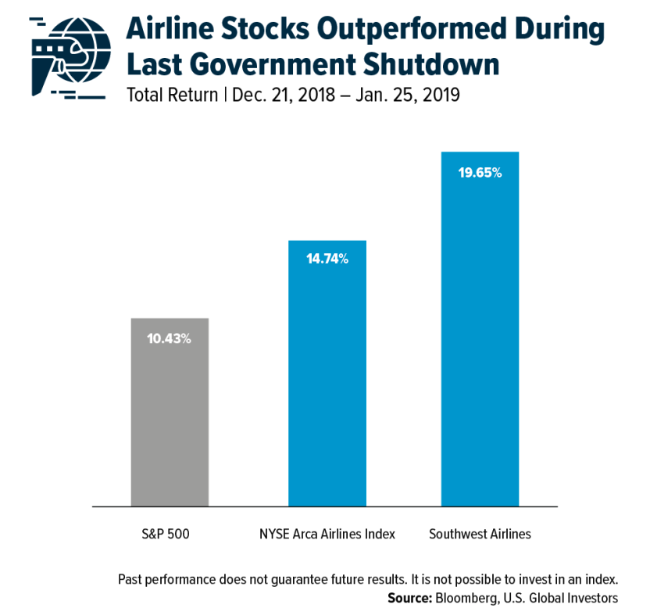
Yet Wall Street told a different story. An index of major airline stocks actually rose nearly 15%, outperforming the market. Southwest Airlines was the top performer, soaring close to 20%. Even though flights were delayed, investors understood that Americans weren’t going to stop flying.
Granted, inbound international travel to the U.S. is expected to decline about 6% this year. But domestic travel—the bread and butter of most U.S. carriers—is still growing nearly 2% year-over-year.
Business travel appears to be rebounding too. A recent Discover Global Network survey found that 74% of companies consider travel essential to their operations, and more than half plan to increase business travel in the coming year.
Airline Resilience
Since the shutdown began, air traffic controllers and TSA agents have been working without pay. Many are calling in sick, leading to longer lines and more flight disruptions. Controller shortages are affecting cities from Boston and Philadelphia to Houston and Dallas. Nashville International alone saw over 40,000 passengers delayed or stranded in a single weekend.
I think the takeaway here is that, even under stress, the commercial aviation system keeps running. I’ve been on flights during past shutdowns, and it’s always business-as-usual. Airlines have learned to operate through turbulence, be it a pandemic, fuel price spikes or political gridlock.
Delta Targeting High-Net Worth Customers
No carrier embodies this resilience better, perhaps, than Delta Air Lines. On its Q3 earnings call, Delta executives emphasized the airline’s focus on the premium traveler—the business class passenger, the frequent flyer, the high-net-worth leisure customer.
“We’re not trying to be everything to everyone,” Delta President Glen Hauenstein said. “Our exposure to a higher-income cohort has enhanced our relative position versus carriers catering to a more stressed, lower- to middle-income environment.”
That strategy appears to be paying off. Delta’s revenues associated with premiere seating jumped 9% year-over-year last quarter, handily outpacing growth in its main cabin. CEO Ed Bastian told CNBC last week that operations remain “smooth,” adding that it would take another 10 days or more of political stalemate before he expects any significant impact.
The World’s Fleet Expected to Double in Size by 2044
If we zoom out beyond Washington’s dysfunction, I believe the long-term picture for global aviation is nothing short of extraordinary.
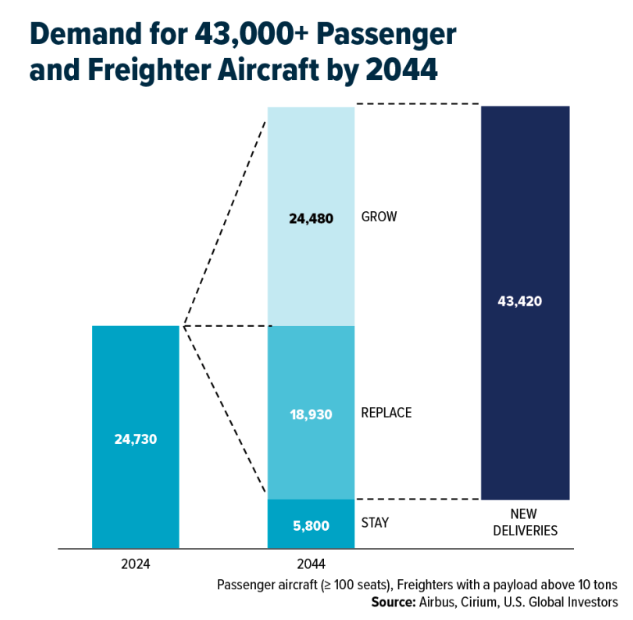
According to Airbus’s Global Market Forecast, the world’s passenger and freighter fleet is expected to double over the next two decades, from 24,700 aircraft today to nearly 50,000 by 2044, adding more than 43,000. That growth will be fueled by the rise of the global middle class—an estimated 1.5 billion new travelers, primarily from Asia and the Middle East.
Even if mature markets like the U.S. grow at a slower pace, international and regional traffic flows are set to explode. Airbus forecasts annual passenger growth of 8.9% in India and 8.5% in emerging Asia.
People Will Continue to Travel
During the 2019 shutdown, airline revenues dipped slightly due to staffing and weather issues, but the industry quickly recovered. Even Southwest, which reported a $10–$15 million revenue hit, went on to post record first-quarter sales once the government reopened.
Today, airlines are even better equipped. Their balance sheets are stronger, their loyalty programs more profitable and their premium seats in higher demand than ever before. While the shutdown may temporarily impact operations, it could also create attractive entry points for long-term investors who recognize that air travel is a secular growth story.
If you’re of a certain age, you know that shutdowns come and go. Congress will eventually strike a deal, government workers will be paid and the headlines will move on. But people will keep flying because the desire to explore, connect and move freely is hardwired into human nature.
Index Summary
- The major market indices finished up this week. The Dow Jones Industrial Average gained 1.56%. The S&P 500 Stock Index rose 1.70%, while the Nasdaq Composite climbed 2.14%. The Russell 2000 small capitalization index gained 2.40% this week.
- The Hang Seng Composite lost 4.11% this week; while Taiwan was flat and the KOSPI rose 3.83%.
- The 10-year Treasury bond yield fell 2 basis points to 4.008%.
Airlines and Shipping
Strengths
- The best performing airline stock for the week was Allegiant, up 9.0%. United’s third-quarter results came in above the top end of guidance, according to CLSA. Premium revenue rose 6% year-over-year, basic economy was up 4%, and loyalty revenue increased 9%. Domestic passenger revenue grew 3.1% year-over-year, as a 6.6% increase in capacity offset a 3.3% decline in PRASM. International passenger revenue was up 0.2%, with a 7.9% capacity increase offsetting a 7.1% decline in PRASM.
- UBS expects global air freight volumes grew, on average, by approximately 4–6% in the third quarter of 2025. However, the absence of a peak sea freight season highlights the importance of a peak air freight season for freight forwarders, in their view.
- While the Essential Air Service (EAS) program was set to run out of funding this weekend, the Department of Transportation (DOT) announced it had secured $41 million, extending the service for several more weeks, according to Raymond James. As of October, the annual contract subsidy rate for SkyWest’s EAS routes amounted to 5% of their projected 2025 earnings per share (EPS).
Weaknesses
- The worst-performing airline stock for the week was Turkish Air, down 7.2%. Following the recent El Segundo refinery fire, West Coast jet fuel prices have risen 18% since October 1. As a result, West Coast crack spreads peaked at over 35 cents per gallon and averaged 28 cents per gallon in the third quarter of 2025, compared to the Gulf Coast average of 20 cents per gallon, according to Bank of America. This is a negative for Alaska Air, whose fuel costs are tied to West Coast jet fuel prices.
- U.S. importers will have only three weeks to accelerate orders ahead of the November 1 deadline. While the May 2025 100% tariff rollback drove a 35% month-over-month increase in U.S. imports from China in July, Bank of America does not expect a similar surge this time due to the shorter lead time, seasonal demand headwinds, and ongoing uncertainty about whether the tariff hike will take effect.
- Grupo Aeroportuario del Sureste’s third-quarter passenger traffic reached 17.3 million, up 0.4% year-over-year but 4% below consensus. However, third-quarter revenue is expected to total 7 billion pesos, an increase of 1% year-over-year and 4% below consensus, according to Bank of America.
Opportunities
- 75% of respondents expect airline fares to rise in 2026, and 74% believe flight budgets will improve, with an average projected increase of 10%. U.S. companies are the most optimistic, forecasting a 16% year-over-year increase in flight budgets, followed by Australia at 11%, according to UBS.
- Morgan Stanley’s latest shipper survey shows growing acceptance of current volatility as the new normal. While the economic outlook dipped slightly and remains well below the long-term average, inventory trends are more encouraging. Shippers planning to increase inventory rose to 23%, above the long-term average and a notable improvement from first-half 2025 lows.
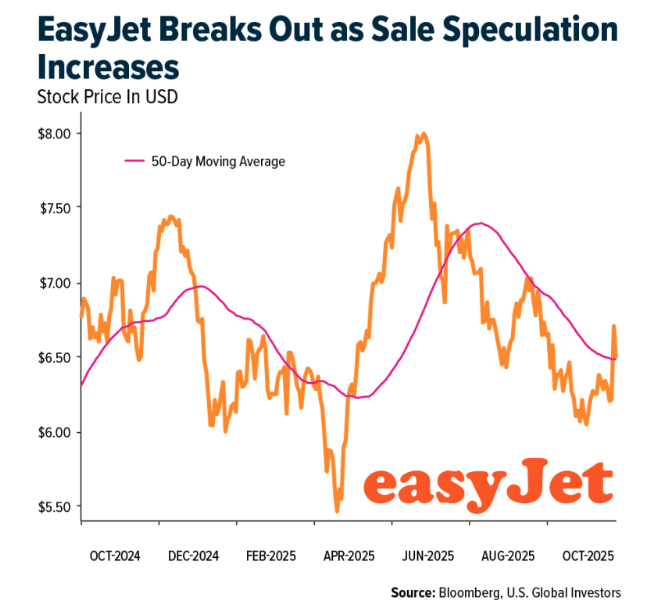
- EasyJet has reportedly attracted interest from MSC (Mediterranean Shipping Company), which may pursue a majority or full acquisition, according to Il Corriere della Sera. The report cited three sources familiar with the discussions.
Threats
- Spirit announced capacity reductions through December, cutting the airline’s fourth-quarter 2025 capacity by 600 basis points. This lowers total domestic capacity growth for the quarter to 1.6%, down from 1.9% last week, according to Bank of America.
- China’s Ministry of Transport announced plans to impose special port fees on U.S.-owned, -operated, -flagged, and -built vessels. The move is in response to the U.S. Trade Representative’s Section 301 measures, which apply additional port fees on Chinese vessels and take effect on October 14. China’s reciprocal port fees will also take effect on October 14, 2025, according to Goldman Sachs.
- According to RBC, Boeing reported 96 new orders in September, bringing the year-to-date total to 821. While delivery and production execution remain top concerns for investors, RBC notes that the increased order activity could provide much-needed near-term cash flow. However, this poses a competitive threat to Airbus, which risks losing market share.
Luxury Goods and International Markets
Strengths
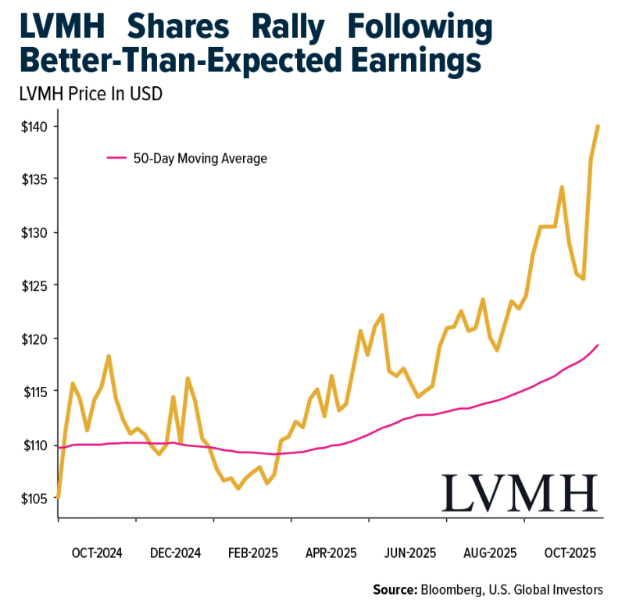
- Bernard Arnault, CEO of LVMH, saw his wealth increase by $19 billion on Wednesday following the company’s stronger-than-expected quarterly earnings report. This marked one of the largest market-based gains in LVMH’s history. Arnault is one of the richest people globally, with a net worth of around $192 billion, placing him behind Elon Musk, the richest person in the world with a net worth of $500 billion.
- The Eurozone trade balance showed improvement in August 2025, with a seasonally adjusted surplus rising to €9.7 billion from €5.3 billion in July 2025. This increase marks a recovery from the sharp narrowing seen earlier, supported by a modest rebound in exports and controlled import growth.
- Laopu Gold, a Chinese gold retailer, led the S&P Global Luxury Index this week with an 18.23% gain. UBS upgraded the stock to “Buy,” citing the potential for a third product price increase this year, which could lift sales and margins in late 2025 and early 2026. The company recently announced price adjustments and continues to expand and upgrade its store network both domestically and internationally.
Weaknesses
- Germany’s (Europe’ largest economy) GDP growth for the third quarter of 2025 was revised down to 0.1%, lower than the earlier estimate of 0.2%. The revision reflects weaker exports and reduced investment in machinery and construction. While consumer spending and government spending provided some support, the overall economy showed slower growth.
- China reported weaker economic data this week, highlighting ongoing challenges in its recovery. The consumer price index (CPI) fell by 0.3% year-on-year in September, deepening deflationary pressures amid weak consumer demand and trade tensions with the U.S. Additionally, money supply growth measured by M2 slowed, reflecting tighter liquidity conditions.
- Cettire, the Australian online luxury marketplace, was the worst-performing stock in the S&P Global Luxury Index this week, falling 16.74%. The drop came amid light news flow, with no major developments behind the sell-off.
Opportunities
- LVMH reported stronger-than-expected quarterly results, marking the first positive surprise among major luxury groups and signaling improving demand trends. Sales rose 1%, representing its first quarterly growth this year, largely driven by a resurgence in demand from mainland China. The report may lend support to peers such as Kering, Richemont, and Hermès, potentially leading to a rebound in the broader luxury sector.
- Tesla’s Gigafactory in Texas has produced 500,000 vehicles since opening and currently has an annual capacity of about 250,000. The facility is positioned to scale up production to between 500,000 and 750,000 vehicles per year as additional infrastructure and optimizations are completed. This expansion supports Tesla’s goal of increasing North American manufacturing output.
- The Lucid Air Sapphire, produced by Lucid Motors, has been named the 2026 German Performance Car of the Year at the German Car of the Year (GCOTY) Awards. This high-performance electric sedan accelerates from 0 to 60 miles per hour in under 2 seconds and offers a range of 427 miles. Priced at €250,000 in Germany, the Air Sapphire sets a new benchmark for electric performance and luxury in the sports sedan segment.
Threats
- The planned 100% tariffs on Chinese imports starting November 1 have raised concerns about a potential equity sell-off due to rising costs and trade disruption. These tariffs, in addition to existing duties, may lead to higher consumer prices and squeeze corporate profits. While negotiations are ongoing and the tariffs could be delayed, the uncertainty is already adding to market volatility amid escalating U.S.-China trade tensions.
- Toyota’s launch of the all-new battery electric C-HR+ SUV in Europe poses a significant threat to Tesla’s market share. Priced lower than Tesla models, the C-HR+ offers an impressive estimated driving range of up to 378 miles on a single charge.
- China sold over 1.6 million new energy vehicles (NEVs) in September 2025, maintaining its lead in the global market. BYD remained the top-selling brand in China with approximately 396,270 NEVs sold—nearly six times more than Tesla, which sold around 71,525 vehicles in the same month. This dominant position continues to fuel BYD’s global expansion while challenging Tesla’s market share.
Energy and Natural Resources
Strengths
- Coffee was the best performing commodity of the week, up 6.54%. Futures held firm despite a narrowing December–March spread, reflecting tight near-term supply due to ongoing weather disruptions in Brazil and Colombia.
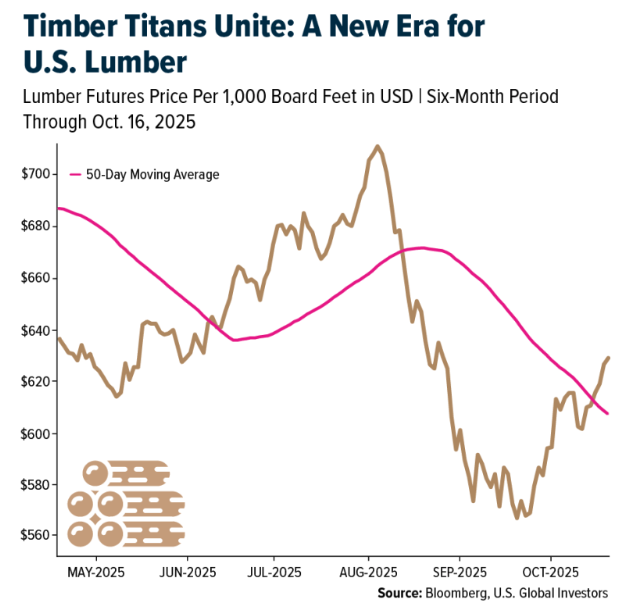
- The merger of Rayonier and PotlatchDeltic boosts U.S. lumber’s ability to offer stable, domestic pricing. The deal streamlines operations, supports local jobs, and improves competitiveness amid ongoing global supply chain volatility.
- State-owned Codelco acquired a stake in I-Pulse Inc., joining other global miners in backing the U.S.–French firm, whose pulsed-power technology (I-ROX) fractures rock with electricity to reduce energy use, emissions, and operating costs in mining. The investment supports Codelco’s strategy to modernize its aging mines, improve ore recovery, and partner on innovation as mining costs and technical challenges escalate.
Weaknesses
- The worst-performing commodity this week was sugar, down 3.73%. FEMSA, a Mexican multinational beverage and retail company—the largest independent Coca-Cola bottler and convenience store operator in Mexico—argued that taxing sugar-free beverages would be counterproductive. They emphasized transparency and open dialogue as key to fair regulation for U.S. imports. Meanwhile, political and market pressures around sugar are rising. Florida’s Fanjul family, worth an estimated $4 billion, benefits from Trump-era tariffs and policies favoring U.S. cane sugar producers, potentially positioning them as key suppliers for Coca-Cola’s new “American sugar” soda line.
- Lithium Americas fell 4.9% after JPMorgan downgraded the stock to underweight, citing limited upside following a 200% rally fueled by the U.S. government’s stake in the company. Analysts view the deal as downside protection rather than strategic value, with lithium’s wider availability and a possible U.S.-China trade thaw posing correction risks.
- Russia’s Arctic LNG 2 plant has resumed exports despite U.S. sanctions, with at least ten shipments since June mainly to China’s Beihai terminal as Moscow tests Washington’s enforcement resolve. This renewed activity precedes President Trump’s meeting with Ukraine’s Volodymyr Zelenskiy, where energy and sanctions policies are expected to dominate amid escalating U.S.-China trade tensions.
Opportunities
- Symbion Power’s Hydro-Link unit signed a $1.5 billion preliminary agreement with the Democratic Republic of Congo to build a 1,160-kilometer transmission line delivering 1,200 megawatts of electricity from Angola’s hydropower plants to Congo’s key copper and cobalt mining region. The U.S.-backed project, aligned with President Trump’s “America First” policy, is expected to source over 30% of materials from U.S. manufacturers and could transform Congo’s mining sector, which faces a power deficit of at least 1,500 megawatts.
- Codelco is seeking to raise its 2026 copper premium to $325 per ton for European customers, up from $234 in recent years and slightly above the $315 planned by rival Aurubis. This move follows production disruptions in Chile that have tightened global supply, with much of Codelco’s output already prioritized for higher-premium U.S. contracts.
- China has imposed new export restrictions on batteries, including lithium-ion batteries, cathode and anode materials, and battery manufacturing machinery, requiring companies to obtain export licenses. Nano One Materials stands to benefit, as it operates the only functional LFP battery production facility in North America and is backed by Rio Tinto PLC and Sumitomo Metal Mining Co., both invested in a reliable North American battery supply chain.
Threats
- The dollar’s dominance is showing early signs of erosion as global policymakers highlight weakening confidence in its safe-haven role amid trade tensions and political interference in monetary policy. While no rival currency yet matches the liquidity and scale of the U.S. system, economists warn that “termite-like” structural pressures—ranging from fiscal instability to de-dollarization trends—could gradually undermine its global preeminence.
- The UK’s rising dependence on intermittent renewables has sharply increased the cost of balancing its electricity grid, with payments to stabilize supply and demand up 25% year-to-date to £2.1 billion. Energy suppliers warn that without new baseload sources like nuclear power and expanded grid infrastructure, consumers will continue to face higher bills despite falling wholesale gas prices.
- Copper’s pullback underscores growing investor anxiety over U.S. credit risks and renewed U.S.–China trade tensions, halting the metal’s rally after briefly breaching $11,000 a ton last week. With the U.S. government shutdown curbing economic visibility and fraud concerns spreading through regional banks, industrial metals broadly weakened as risk appetite faded.
Bitcoin and Digital Assets
Strengths
- Of the cryptocurrencies tracked by CoinMarketCap, the best performer for the week was Pax Gold, rising 5.45%.
- Kraken has acquired a U.S.-licensed futures exchange from IG Group as the crypto heavyweight looks to expand the range of products it can offer directly to American customers. Kraken purchased IG-owned Small Exchange in a deal valued at $100 million, consisting of $32.5 million in cash and $67.5 million in Payward stock, according to Bloomberg.
- Ripple has announced its $1 billion acquisition of GTreasury. The deal gives Ripple access to the corporate treasury market and opens the door to many of the world’s largest and most successful corporate clients, Bloomberg reports.
Weaknesses
- Of the cryptocurrencies tracked by CoinMarketCap, the worst performer for the week was Artificial Superintelligence, down 42.84%.
- Cryptocurrencies continued to decline following a historic wave of liquidations that triggered a sharp weekend selloff, as trade tensions weighed on risk assets. Bitcoin fell as much as 5% to just below $110,000 on Tuesday, while Ethereum dropped 9.3% to below $3,900. The total market value of all cryptocurrencies fell by more than $150 billion within a 24-hour period, according to Bloomberg.
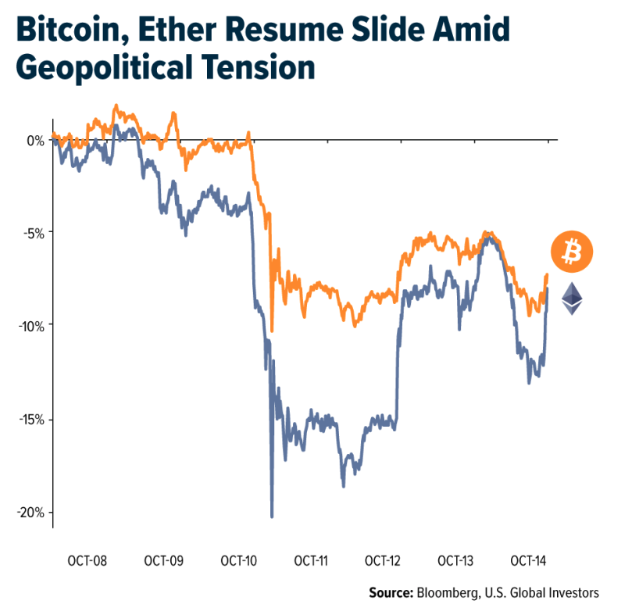
- Bitcoin has failed to live up to its reputation as a safe-haven asset, falling as much as 4% to $103,550 — its lowest level since June. The total value of the crypto market has contracted by over $600 billion since last Friday, with Ether dropping below $3,700 and retreating roughly 25% from its August peak, according to Bloomberg.
Opportunities
- Cantor Fitzgerald LP is under pressure as it pitches Tether Holdings to investors at a potential valuation of $500 billion. The investment bank’s stake in Tether could be worth $25 billion if the company achieves its goals and raises approximately $15 billion, according to Bloomberg.
- Ripple Labs Inc. is leading an effort to raise at least $1 billion to accumulate XRP, the digital token associated with the company, through a special purpose acquisition company. The funds will be housed in a new digital asset treasury, according to Bloomberg.
- The family office of Arthur Hayes is seeking at least $250 million for its debut private equity fund targeting mid-sized crypto firms. The fund plans to invest $40 million to $75 million per deal to acquire up to six companies focused on services such as trading infrastructure and analytics platforms, Bloomberg reports.
Threats
- Hyperliquid, a decentralized exchange, has attracted major investors and billions in trading volume in just two years, with monthly industry volumes exceeding $6 trillion. Hyperliquid’s model—which includes an automated trading pool and token buybacks—has raised concerns among some crypto experts, who warn of potential conflicts of interest and the concentration of power among its validators, Bloomberg reports.
- France is expanding its anti-money laundering checks on crypto exchanges to determine which entities will be granted European Union-wide licenses. The inspections assess the implementation of anti-money laundering and counter-terrorist financing controls. Failure to address findings from the ACPR could lead to sanctions or jeopardize a company’s ability to receive approval under the Markets in Crypto-Assets (MiCA) framework, according to Bloomberg.
- Paxos mistakenly minted $300 trillion worth of PayPal Holdings Inc.’s PYUSD stablecoin during an internal transfer. Paxos immediately identified the error and burned the excess PYUSD. The company stated there was no security breach and that customer funds remain safe. The erroneous transaction was visible on Etherscan and was quietly reversed within minutes, Bloomberg reports.
Defense and Cybersecurity
Strengths
- Northrop Grumman won the U.S. Missile Defense Agency competition to develop and build the Glide Phase Interceptor, a system designed to neutralize hypersonic threats in their most vulnerable flight stage. The program solidifies Northrop’s leadership in missile defense technology and strengthens the U.S. strategic deterrence network amid rising global tensions.
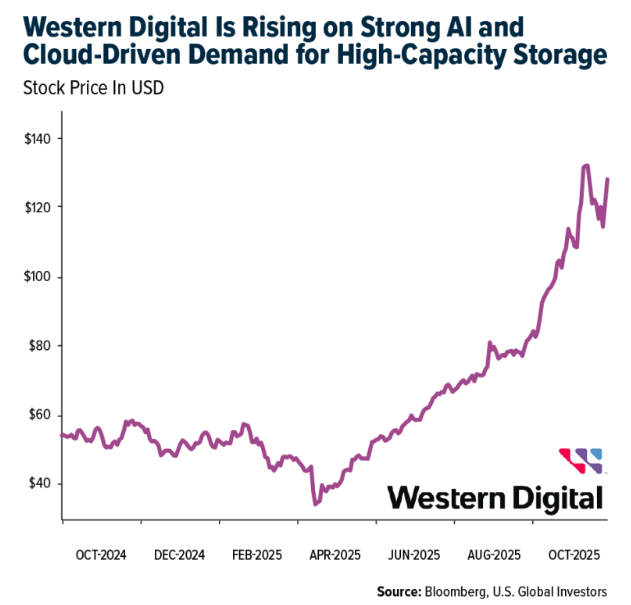
- Western Digital’s stock is climbing as surging demand for data storage from AI and cloud infrastructure drives a scarcity in high-capacity drives. The company is also benefiting from rising prices for hard disk and NAND products amid constrained global supply.
- BWX Technologies was the top-performing stock in the XAR ETF this week, rising 6.86% after securing a $1.6 billion contract from the U.S. Department of Energy to build a high-purity depleted uranium facility, reinforcing confidence in its long-term nuclear business.
Weaknesses
- A major state-backed Chinese cyberattack on F5 Inc. compromised source code and internal vulnerability data, allowing hackers to infiltrate sensitive government and corporate systems. The breach, now labeled an “imminent national security threat” by CISA, underscores systemic weaknesses in supply-chain cybersecurity.
- Elastic disclosed a critical vulnerability in its Elastic Cloud Enterprise platform, tied to improper handling of template variables, posing significant security risks to enterprise users. The incident highlights persistent flaws in cloud software security despite rising corporate investment in AI and data infrastructure.
- Byrna Technologies was the worst-performing stock in the XAR ETF this week, falling 19.73% after CEO Bryan Ganz sold 40,000 shares worth $1.2 million on October 10, 2025, according to a recent SEC filing, raising investor concerns over insider selling.
Opportunities
- A consortium led by BlackRock, including Microsoft and Nvidia, announced a $40 billion acquisition of Aligned Data Centers to expand next-generation cloud and AI infrastructure. The deal marks one of the largest strategic bets on global AI compute capacity to date.
- Rheinmetall will supply Ukraine with Skyranger 35 air-defense systems on Leopard 1 chassis, financed by an EU member using frozen Russian assets. The move reinforces European commitment to Kyiv and boosts Rheinmetall’s order book and reputation as a critical NATO supplier.
- The U.S. Air Force partnered with quantum-networking startup Qunnect to bring quantum communication systems to the battlefield. This initiative positions the military at the forefront of quantum-secure data transmission and signals a broader shift toward post-encryption defense technologies.
Threats
- The U.S. is weighing export controls on Boeing aircraft parts in response to China’s rare-earth restrictions, a tit-for-tat escalation that could strain the aerospace supply chain and intensify trade tensions between Washington and Beijing.
- Continuous Russian attacks on Ukraine’s energy infrastructure, combined with renewed missile strikes and air raids, are pushing the country’s grid toward collapse ahead of winter. The escalation threatens humanitarian stability and complicates Western support logistics.
- Multiple U.S. states, including Oregon, California and Illinois, are suing to block Hewlett-Packard Enterprise’s $14 billion merger with Juniper Networks, citing antitrust concerns. The challenge adds regulatory uncertainty to large-scale tech consolidations and signals a tougher environment for future AI and cloud infrastructure deals.
Gold Market
This week gold futures closed at $4,22340, up $223.00 per ounce, or 5.57%, despite the large sell off on Friday. Gold stocks, as measured by the NYSE Arca Gold Miners Index, ended the week higher by 2.91%. The S&P/TSX Venture Index came in off 1.99%. The U.S. Trade-Weighted Dollar fell 0.57%.
Strengths
- The best-performing precious metal for the week was silver, up 6.29%. Silver remains firmly higher on the week—still showing double-digit gains—but is now cooling from the speculative frenzy that pushed it into overbought territory. The healthy pullback reflects profit-taking and easing delivery concerns, suggesting the rally is maturing rather than reversing, with strong underlying momentum still intact after its 12% weekly surge.
- Orla Mining reported third-quarter production of 79.6 thousand ounces, beating its 71.7 thousand-ounce estimate. That brings year-to-date production to 205.2 thousand ounces, or 75% of the midpoint of its revised 265-285 thousand-ounce 2025 guidance range. The beat was largely driven by the Musselwhite mine, where throughput and head grade exceeded Scotia’s expectations by 8% and 4%, respectively.
- According to the World Gold Council (WGC), net global ETF gold purchases hit a record 146 tons in September 2025, more than double the 54 tons added in August. Total global ETF gold holdings rose to 3,838 tons at month-end, up 31% from the five-year low of 2,938 tons in January 2020, but still 2% below the October 2020 all-time high of 3,915 tons.
Weaknesses
- The weakest-performing precious metal for the week was platinum, still up 0.55%. The Japanese exchange warned that the Japan Physical Platinum ETF has been trading at a sustained premium to its NAV, raising concerns about speculative excess. Weaker fundamentals added pressure, as Jubilee Metals Group reported lower first-quarter PGM output—8,382 ounces versus 9,328 a year earlier—highlighting softness in underlying supply growth despite lofty prices.
- RBC reports that Evolution Mining is tracking below FY26 guidance in what could be a front-loaded production year. Annualized from first-quarter output of 174 thousand ounces, production equates to 696 thousand ounces—below its 710-780 thousand ounce guidance range.
- Silver has soared 79% this year, outpacing gold’s 61% gain. But the surge may be on shaky ground, according to Goldman Sachs, which warns that the rally is being fueled by Fed rate cuts and speculative inflows. With no central-bank safety net and a smaller market, silver remains far more volatile than gold.
Opportunities
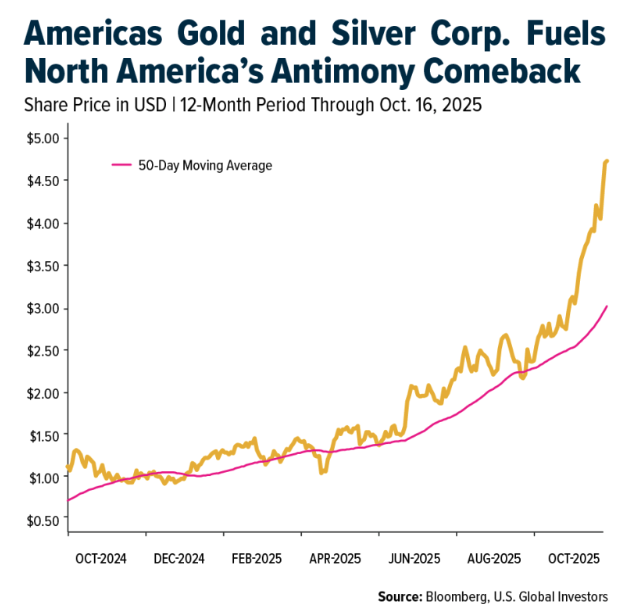
- Americas Gold and Silver’s strong antimony intercepts at its Galena Mine position the company as a dual precious- and critical-minerals producer aligned with U.S. strategic priorities to secure domestic supply chains. Combined with Canada’s welcoming stance toward U.S. investment in critical minerals, this cross-border cooperation could help North America onshore processing, reduce reliance on China, and build a resilient antimony-and-silver supply network.
- Gold has surged this year, but is it overdone? Not according to Goldman Sachs analyst Lina Thomas, who says the rally “remains rooted in strong real demand, not hype.” With gold up 61% this year, she argues we’re seeing a normalization of the gold trade after years of underinvestment. Central banks continue buying record amounts of gold, and private investors are simply catching up as the Fed cuts rates.
- RBC notes that as $3,000-per-ounce gold becomes viewed as the “new normal,” investors see room for the sector to re-rate from trough EV/EBITDA multiples toward mid-cycle averages—still about 10% below historical levels. Regionally, Australian mid-caps have seen premiums soften relative to global majors, while U.S. and Canadian names have re-rated and Chinese miners remain at historic premiums.
Threats
- Bank of America is watching three key downside risks: (1) the Supreme Court’s ruling on President Trump’s tariffs, (2) a possible hawkish pivot by the Fed if economic data improves, and (3) the U.S. midterm elections, which could affect the administration’s economic agenda.
- The investment flows that drove silver to record highs are starting to stall, suggesting a bumpier ride ahead. Silver ETF holdings have risen 117 million ounces this year to about 833 million, but momentum has faded. Inflows totaled 9 million ounces on October 14—the biggest in weeks—only to see small outflows the next day, leaving total holdings flat for the month, according to Bloomberg.
- Bank of America’s October global fund manager survey shows that long gold is now the most crowded trade. About 43% of investors ranked it as such, surpassing the “Magnificent 7” tech stocks at 39%.
U.S. Global Investors, Inc. is an investment adviser registered with the Securities and Exchange Commission (“SEC”). This does not mean that we are sponsored, recommended, or approved by the SEC, or that our abilities or qualifications in any respect have been passed upon by the SEC or any officer of the SEC.
This commentary should not be considered a solicitation or offering of any investment product. Certain materials in this commentary may contain dated information. The information provided was current at the time of publication. Some links above may be directed to third-party websites. U.S. Global Investors does not endorse all information supplied by these websites and is not responsible for their content. All opinions expressed and data provided are subject to change without notice. Some of these opinions may not be appropriate to every investor.
Holdings may change daily. Holdings are reported as of the most recent quarter-end. The following securities mentioned in the article were held by one or more accounts managed by U.S. Global Investors as of (09/30/2025):
United Airlines
United Parcel Service
Grupo Aeroportuario del Sureste
Boeing
Airbus SE
EasyJet PLC
Southwest Airlines
Delta Air Lines
Western Digital Corp.
F5 Inc.
LVMH
Laopu Gold
Tesla
Nano One Materials
Orla Mining
Evolution Mining
Americas Gold & Silver
Tesla
*The above-mentioned indices are not total returns. These returns reflect simple appreciation only and do not reflect dividend reinvestment.
The Dow Jones Industrial Average is a price-weighted average of 30 blue chip stocks that are generally leaders in their industry. The S&P 500 Stock Index is a widely recognized capitalization-weighted index of 500 common stock prices in U.S. companies. The Nasdaq Composite Index is a capitalization-weighted index of all Nasdaq National Market and SmallCap stocks. The Russell 2000 Index® is a U.S. equity index measuring the performance of the 2,000 smallest companies in the Russell 3000®, a widely recognized small-cap index.
The Hang Seng Composite Index is a market capitalization-weighted index that comprises the top 200 companies listed on Stock Exchange of Hong Kong, based on average market cap for the 12 months. The Taiwan Stock Exchange Index is a capitalization-weighted index of all listed common shares traded on the Taiwan Stock Exchange. The Korea Stock Price Index is a capitalization-weighted index of all common shares and preferred shares on the Korean Stock Exchanges.
The Philadelphia Stock Exchange Gold and Silver Index (XAU) is a capitalization-weighted index that includes the leading companies involved in the mining of gold and silver. The U.S. Trade Weighted Dollar Index provides a general indication of the international value of the U.S. dollar. The S&P/TSX Canadian Gold Capped Sector Index is a modified capitalization-weighted index, whose equity weights are capped 25 percent and index constituents are derived from a subset stock pool of S&P/TSX Composite Index stocks. The NYSE Arca Gold Miners Index is a modified market capitalization weighted index comprised of publicly traded companies involved primarily in the mining for gold and silver. The S&P/TSX Venture Composite Index is a broad market indicator for the Canadian venture capital market. The index is market capitalization weighted and, at its inception, included 531 companies. A quarterly revision process is used to remove companies that comprise less than 0.05% of the weight of the index, and add companies whose weight, when included, will be greater than 0.05% of the index.
The S&P 500 Energy Index is a capitalization-weighted index that tracks the companies in the energy sector as a subset of the S&P 500. The S&P 500 Materials Index is a capitalization-weighted index that tracks the companies in the material sector as a subset of the S&P 500. The S&P 500 Financials Index is a capitalization-weighted index. The index was developed with a base level of 10 for the 1941-43 base period. The S&P 500 Industrials Index is a Materials Index is a capitalization-weighted index that tracks the companies in the industrial sector as a subset of the S&P 500. The S&P 500 Consumer Discretionary Index is a capitalization-weighted index that tracks the companies in the consumer discretionary sector as a subset of the S&P 500. The S&P 500 Information Technology Index is a capitalization-weighted index that tracks the companies in the information technology sector as a subset of the S&P 500. The S&P 500 Consumer Staples Index is a Materials Index is a capitalization-weighted index that tracks the companies in the consumer staples sector as a subset of the S&P 500. The S&P 500 Utilities Index is a capitalization-weighted index that tracks the companies in the utilities sector as a subset of the S&P 500. The S&P 500 Healthcare Index is a capitalization-weighted index that tracks the companies in the healthcare sector as a subset of the S&P 500. The S&P 500 Telecom Index is a Materials Index is a capitalization-weighted index that tracks the companies in the telecom sector as a subset of the S&P 500.
The Consumer Price Index (CPI) is one of the most widely recognized price measures for tracking the price of a market basket of goods and services purchased by individuals. The weights of components are based on consumer spending patterns. The Purchasing Manager’s Index is an indicator of the economic health of the manufacturing sector. The PMI index is based on five major indicators: new orders, inventory levels, production, supplier deliveries and the employment environment. Gross domestic product (GDP) is the monetary value of all the finished goods and services produced within a country’s borders in a specific time period, though GDP is usually calculated on an annual basis. It includes all private and public consumption, government outlays, investments and exports less imports that occur within a defined territory.
The S&P Global Luxury Index is comprised of 80 of the largest publicly traded companies engaged in the production or distribution of luxury goods or the provision of luxury services that meet specific investibility requirements.
A message from Advisor Perspectives and VettaFi: Stay ahead of market changes with our daily updates on key market and economic indicators. Visit the AP Charts and Analysis site for our expert insights.
Membership required
Membership is now required to use this feature. To learn more:
View Membership BenefitsSponsored Content
Upcoming Virtual Events View All












