A few weeks ago, Green Bay Packers fans were ecstatic. The addition of quarterback crusher Micah Parsons via trade had energized the defense and led to two dominant performances to open the season. Expectations for the Green and Gold went from playoff team to Super Bowl contender.
But living up to lofty expectations isn’t easy, and a pair of clunkers in recent weeks have curbed fans’ enthusiasm. There are reasons to be optimistic (a bye week may refocus the team and allow the offensive line to get healthy) and reasons for caution (giving up forty points to the Cowboys and questionable in-game decision making).
This Packers season has parallels to today’s financial markets. The Artificial Intelligence (AI) boom has propelled markets higher for the past 3 years. The S&P 500 is up just shy of 15% through 9/30/25, following 20%+ years in 2023 and 2024. High valuations (the S&P trades at 22.8 times next year’s profits vs. the 30-year average of 17 times earnings) and rising margin debt (when investors borrow from their broker to buy stocks), are signs of soaring sentiment - investors expect the good times to keep rolling.
But a cooling job market and sticky inflation could become obstacles to further big gains and provide reason to diversify from an increasingly concentrated US equity market.
What’s Going Right
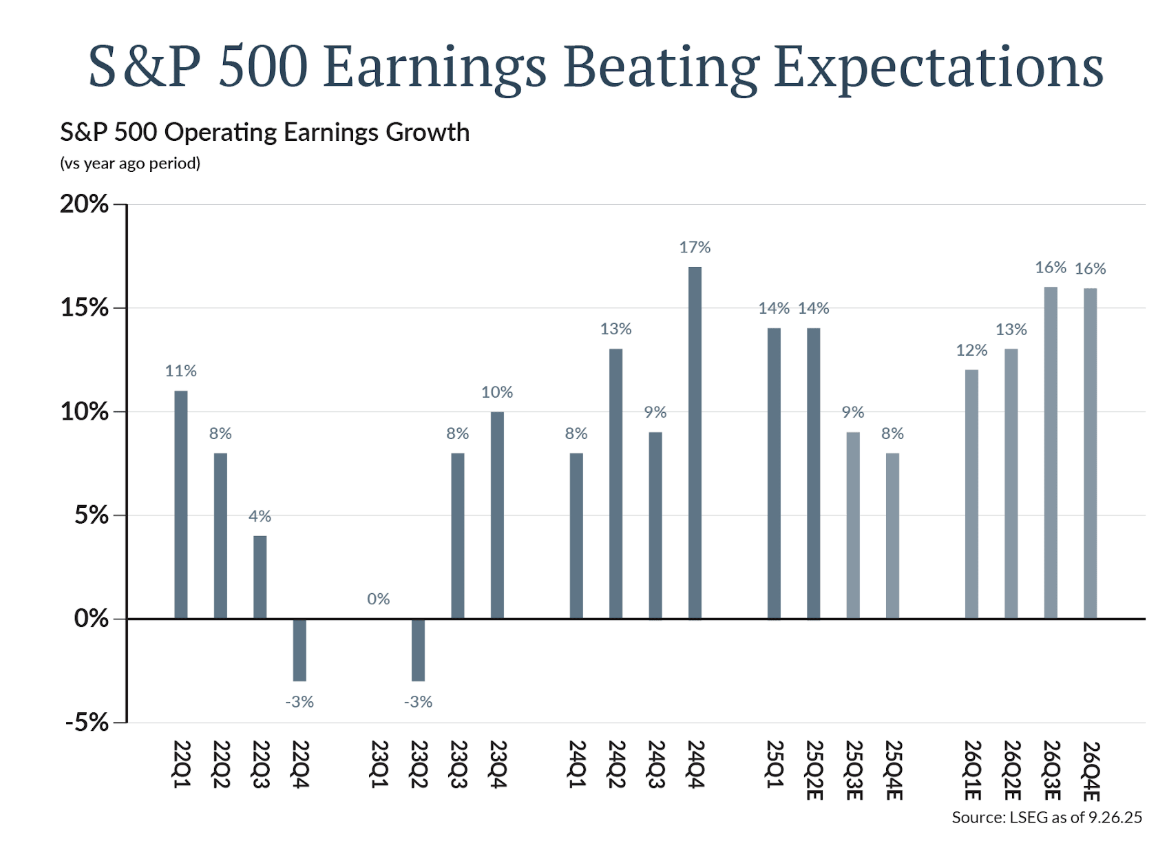
In short, earnings and AI. Profits drive the long-term performance of stocks, and profits continue to rise. S&P 500 earnings grew 13.8% in the second quarter of 2025 vs. the 5.8% increase analysts expected at the start of the quarter. Estimates for the third and fourth quarters have been revised higher, and double-digit earnings growth is projected in 2026 [Figure 1].

How much of this momentum is AI-driven? In a recent research note, JP Morgan noted that AI-related stocks have accounted for 75% of S&P 500 returns, 80% of earnings growth and 90% of capital spending growth since ChatGPT launched in November 2022. This stunning statistic is why the S&P is increasingly concentrated, with the “Magnificent 7” mega-cap technology stocks comprising about 35% of S&P 500 market value.
Could this narrow leadership continue? Of course! But it is a little like asking Micah Parsons to win games by himself. Greater market breadth, with smaller company earnings growth accelerating, would be a sign that markets can hold up even if AI investment slows down from its breakneck pace. We got a glimpse of that in the third quarter, when small-cap value stocks outperformed large-caps and earnings trends for small-cap shares turned higher after moving sideways over the past 2 years. Lower interest rates, as we’ve seen this year, can act as a catalyst for economically sensitive small caps, that often rely on short-term debt to fund operations.
What Could Go Wrong?
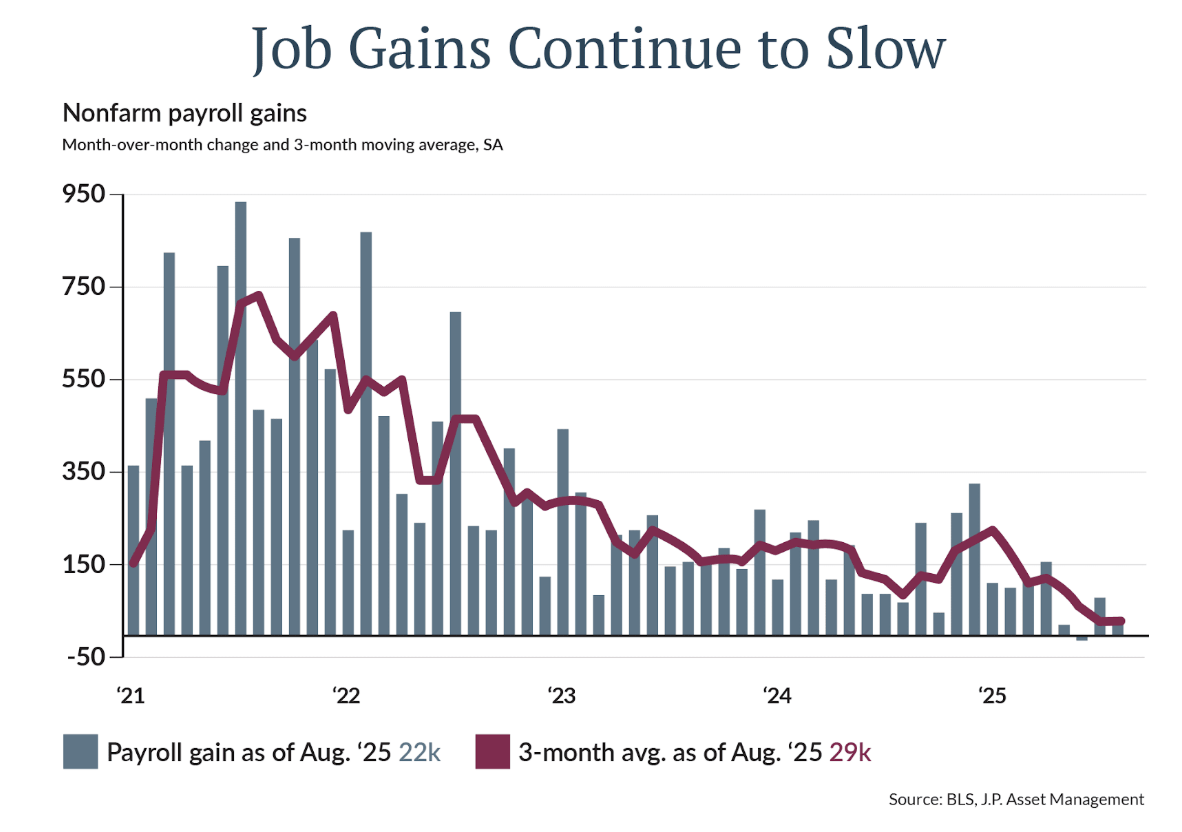
The weakening employment picture is the main macroeconomic concern for investors. Job growth has slowed from a solid pace of ~166K monthly gains in 2024, to just under 30k over the past three months [Figure 2].
Although the unemployment rate remains low at 4.3%, anemic job growth is what prompted the Fed to cut rates in September for the first time in nine months. More cuts are expected, with markets pricing in a 3% Fed Funds rate by this time next year.
Rate-cutting cycles are typically bullish for both stocks and bonds. Bond prices rise as interest rates fall, and corporations benefit from a lower cost of capital and less competition from high-yielding safe assets such as money market funds, where yields are poised to decline.
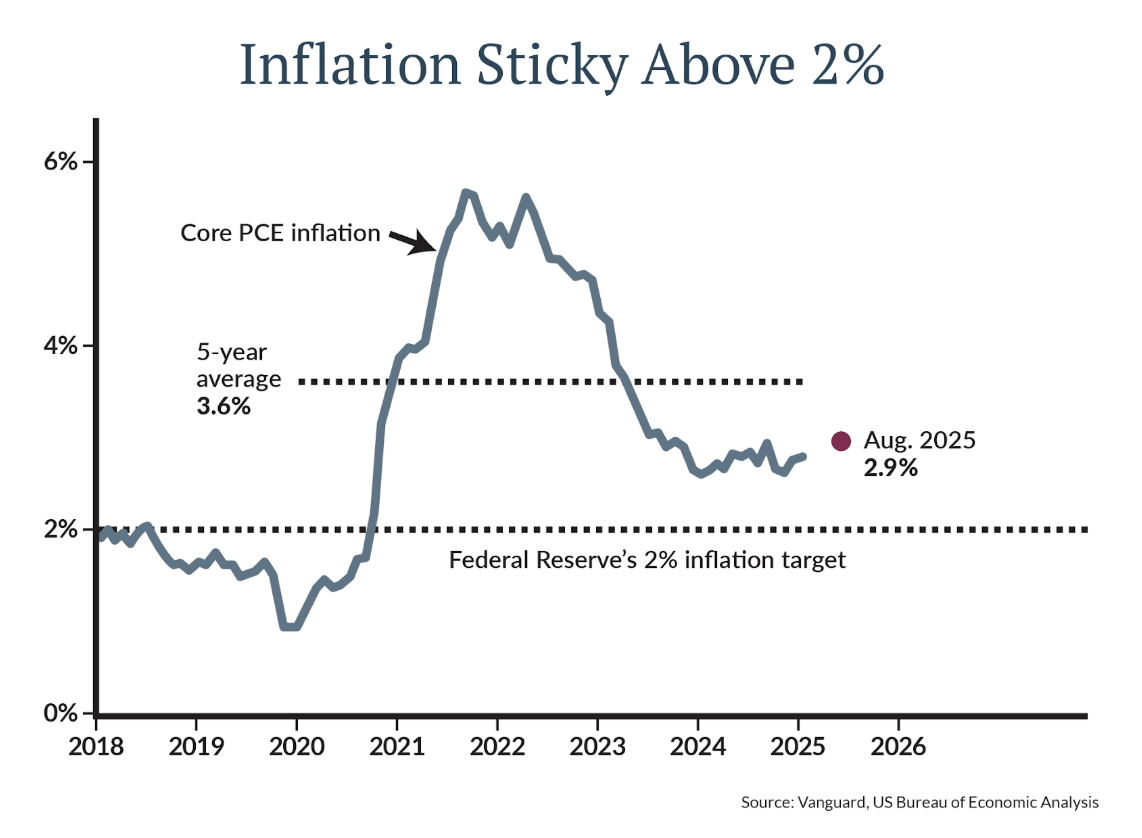
What could complicate this rate-cutting cycle? Inflation. The Fed’s preferred measure of inflation, which excludes food and energy, rose 2.9% in August and has remained above the Fed’s 2% target for 5 years [Figure 3].
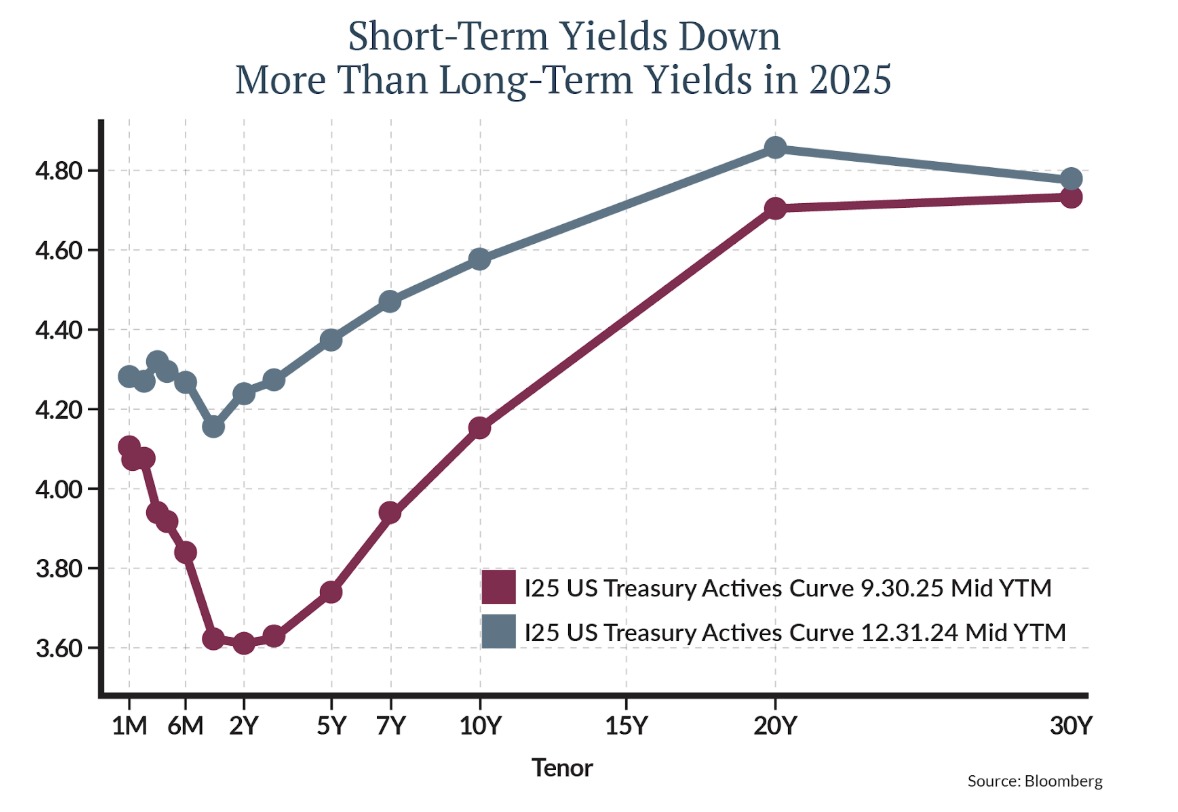
Inflation uncertainty and continued fiscal challenges in the U.S have kept longer-term bond yields above 4%, even as short-term yields have plummeted [Figure 4].
As investors have priced in the outlook for further rate cuts, intermediate-term bonds have seen robust 5%-6% total returns. But high-quality bonds still yield 4%-5%, providing income in addition to serving as ballast to portfolios. This will prove especially valuable if the job market portends a slowing economy. With credit spreads at record tight levels, we remain focused on quality in fixed income and recommend investors consider municipal bonds, which remain attractive for investors in higher tax brackets.
As we’ve recently noted in a previous article, The US Dollar and Why International Stocks are Outperforming YTD, international stock outperformance is highly correlated with a declining dollar in cycles that can last for many years.
Have a Plan
"Everyone has a plan until they get punched in the mouth," is a great saying attributed to retired boxer Mike Tyson. The Packers are learning that expectations don’t matter when you step on the field. You have to prove it every week. Similarly, today’s fully valued market will have to prove it with further earnings gains and broader breadth.
Rate cuts and a relentless AI investment cycle offer reason to believe the bull market can continue, but investors should remain diversified and have a plan if the AI story loses momentum. Neither one player, nor one type of investment, should make or break a team or investment portfolio.
About the author
Brian Schaefer is the VP Portfolio Manager at Johnson Financial Group. As Vice President, Wealth Portfolio Manager, Brian works with individuals, public entities and non-profit organizations to create customized investment solutions. Brian is a member of JFG’s Fixed Income Group and Investment Research team.
A message from Advisor Perspectives and VettaFi: Gain exposure to the evolving digital asset landscape. Learn about CoinShares ETFs.
© Johnson Financial Group
Read more commentaries by Johnson Financial Group