Ceasefires, Chairmen & Consumer Confidence: Navigating a Summer of Surprises
“We didn't start the fire. It was always burning, since the world's been turning. We didn't start the fire. No, we didn't light it, but we tried to fight it.”
-Billy Joel
Ayatollahs in Iran, Russians in Afghanistan (or is it Ukraine?!?)
Those lyrics were adapted from a seminal Billy Joel track released in 1989. Geopolitics is always messy, but seems to be flaring up recently with the ongoing war in Ukraine, the new missile strikes between Israel and Iran, continued fighting in the Gaza Strip, India vs. Pakistan, conflicts in Africa, the list goes on and on (same as the song).
Peace negotiations between European leaders and Iran bore no fruit. U.S. intervention in Iran has been a subject of controversy. Iran responded that it would never surrender and warned of consequences if the U.S. further entered the fighting.
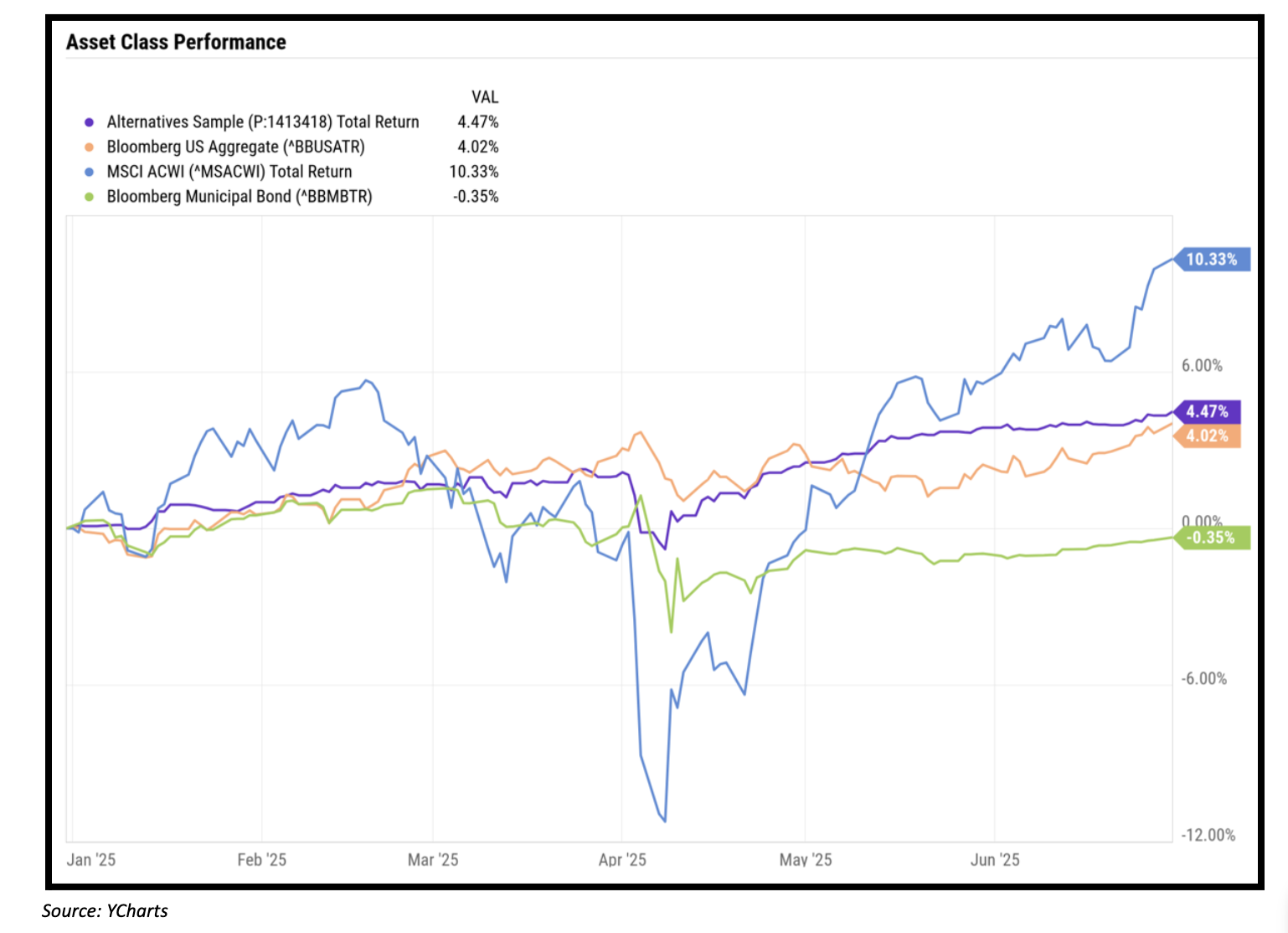
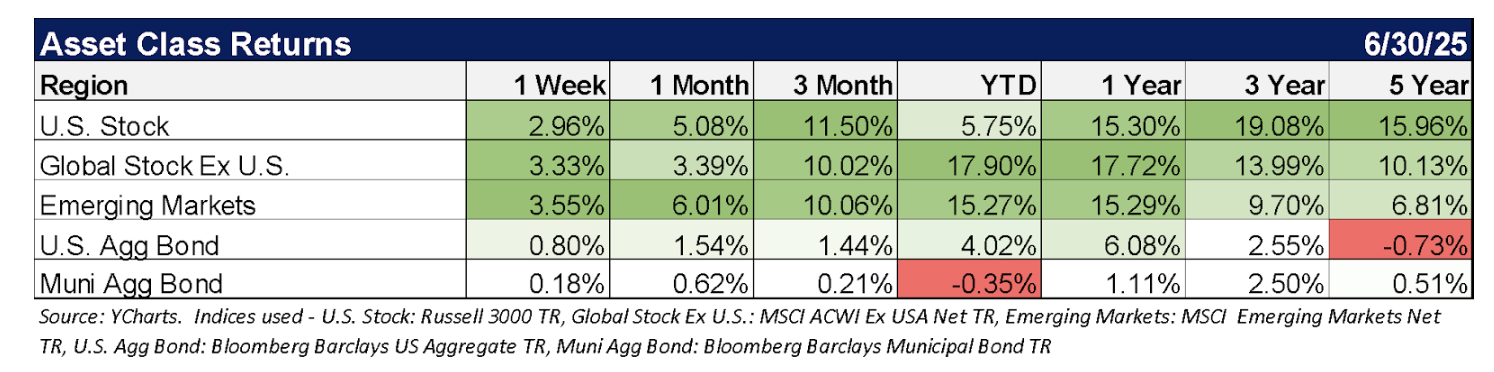
A ceasefire between Israel and Iran, combined with the framework of a trade agreement between the U.S. and China, sent stocks to a new record close. The ceasefire eased concerns about a widespread war in the Middle East and brought oil prices down sharply, which in turn tamed inflation fears. We hope the ceasefire holds and leads to more permanent peace. There was an improvement in sentiment with the Trump administration's recent softening on the self-imposed July 9 deadline for deals.
HOLD... HOLD… HOLD!
On the home front, the Federal Open Markets Committee (FOMC) decided to maintain the Fed Funds Rate at 4.25-4.5% as was widely expected. The Committee’s updated economic projections for 2025 modestly increased unemployment and inflation expectations, with Fed Chair Jerome Powell once again underscoring the uncertainty stemming from tariffs. Journalists questioned whether the Fed remained truly data dependent or if it had shifted toward setting policy based on predicting future data.
The softening economic data and the tame inflation readings suggest that monetary policy should be less restrictive; therefore, the Fed’s actions address the question, even if the Chairman does not want to acknowledge the shift. Powell stuck to his “wait-and-see” monetary policy approach during his semiannual monetary policy report to Congress. The odds of a rate cut at the upcoming July FOMC meeting are slim, although the consensus still calls for two rate cuts before the end of the year. The yield on the 10-year Treasury slipped, and the Dollar declined to its lowest level in five years.